No portrait yet
Chuanqing Erotic
Western Guizhou Province, China, mainly the Bijie and Liupanshui areas, including Zhijin and Nayong counties
Southwestern Mandarin, locally regarded as distinctive Chuanqing speech (Sino-Tibetan, Sinitic)
Chinese folk religion: ancestor veneration, local spirits and household worship of the Wuxian deities
Unrecognized ethnic group officially classified with the Han Chinese; counted among China's undistinguished (unclassified) ethnic populations
About Chuanqing People
The Chuanqing are a people of western Guizhou who say they are not Han Chinese. For some seventy years the national government has declined to add them to its official list. That standoff is the clearest way into who they are. They speak a form of Chinese, farm the same karst hill country as their neighbors, and would go unnoticed on a street in Zhijin or Nayong. Even so, they have kept a separate name and their own account of where they came from for generations. The name is plain: it means roughly those who wear dark cloth, with qing covering the blue-black of indigo. It comes from a time when dress showed which community you belonged to.
Most Chuanqing live around Bijie and Liupanshui, a region of limestone ridges, small farms and coal towns. Their speech is Southwestern Mandarin, the Chinese spoken across much of China's southwest, though many Chuanqing feel their local way of talking sets them apart. Religion is practical and close to home: honoring ancestors, keeping on good terms with local spirits, and worshipping the Wuxian deities at family altars. It all sits inside Chinese folk religion but has its own emphasis.
A people between categories
When the state sorted China's population into recognized nationalities in the 1950s, the Chuanqing asked to be counted as one. Investigators decided they were Han, descended from settlers who had arrived centuries earlier and picked up local habits. Many Chuanqing rejected that ruling. They pointed to customs, dress and family traditions that did not match the Han around them, and some argue their roots lie with the region's older non-Han peoples. The result is an odd limbo. The census counts them as an unclassified group outside the official 56 nationalities, yet identity cards issued in Guizhou have listed Chuanqing as an ethnicity. More than half a million people live in that gap.
Traditional dress, long garments of dark indigo cloth with a wrapped head cloth, now shows up mostly on older women and at festivals. Younger Chuanqing dress like anyone else in provincial China, and as in much of rural Guizhou, many work away in the coastal cities. What keeps the identity going is less costume than insistence: village and family memory, and a steady refusal to let a government classification team settle the question for them.
Related ethnic groups
Groups that share Chuanqing's homeland, region, language, or religious tradition. These are likely candidates for comparative phenotype reference.
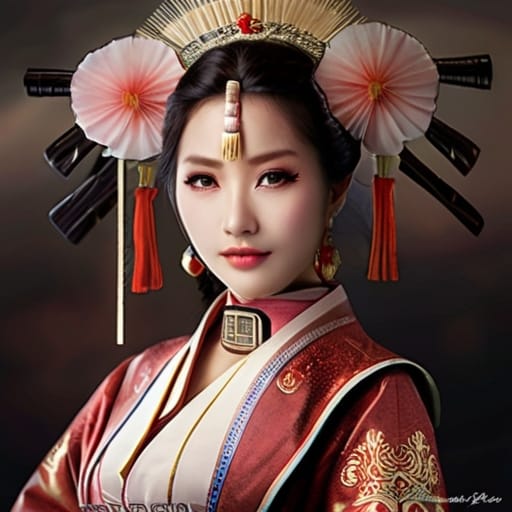
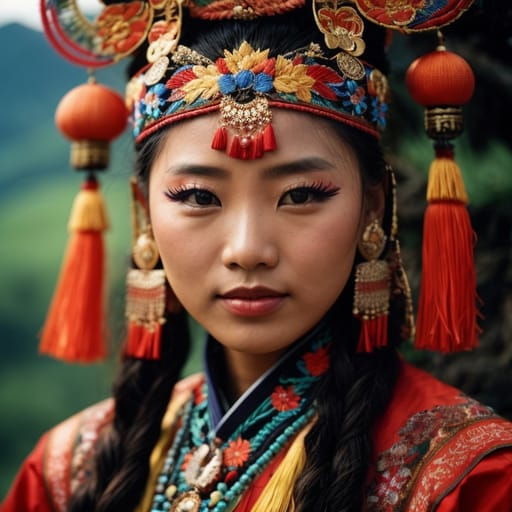
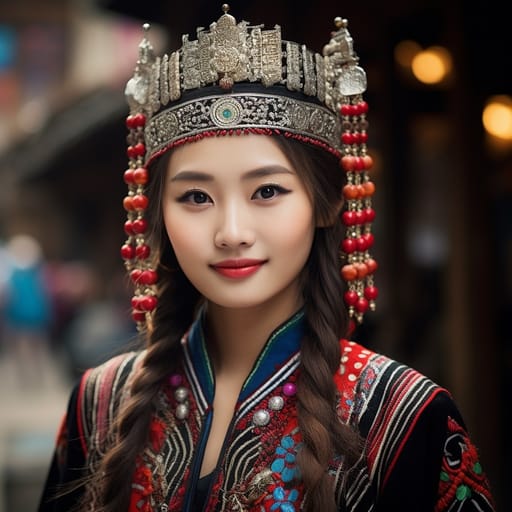
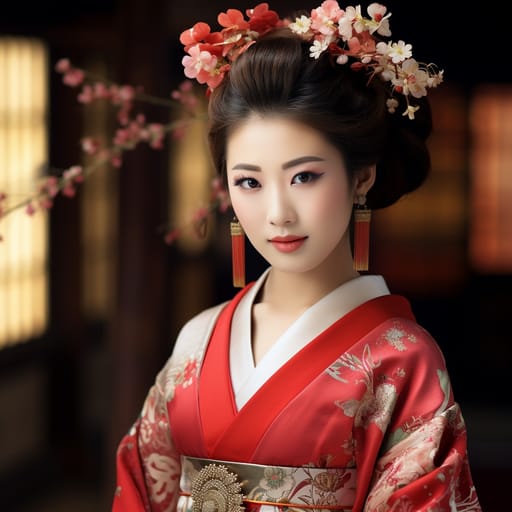
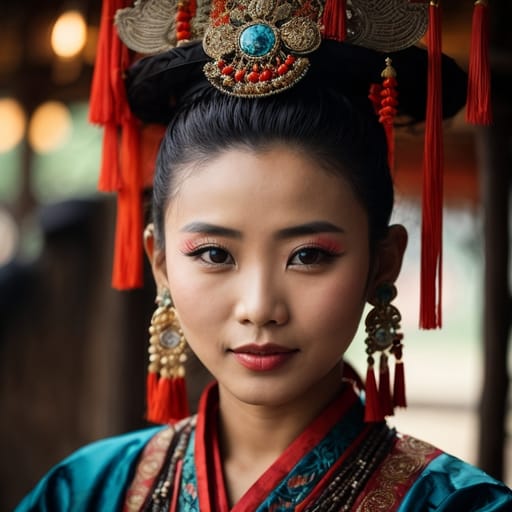
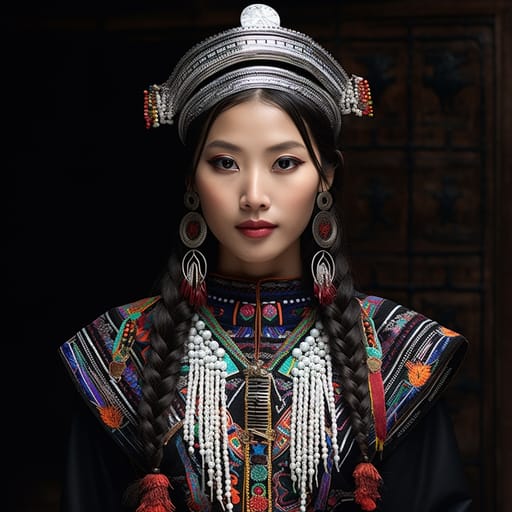
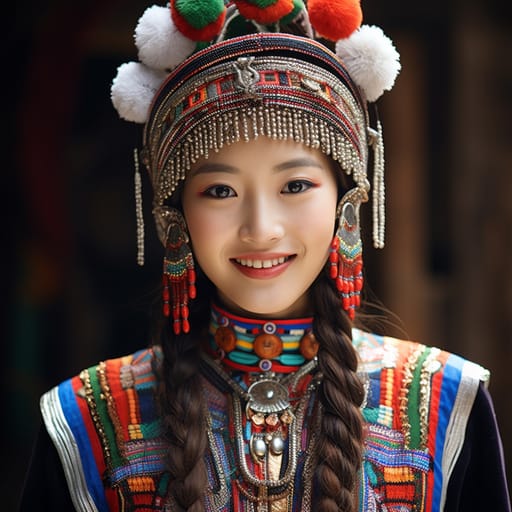
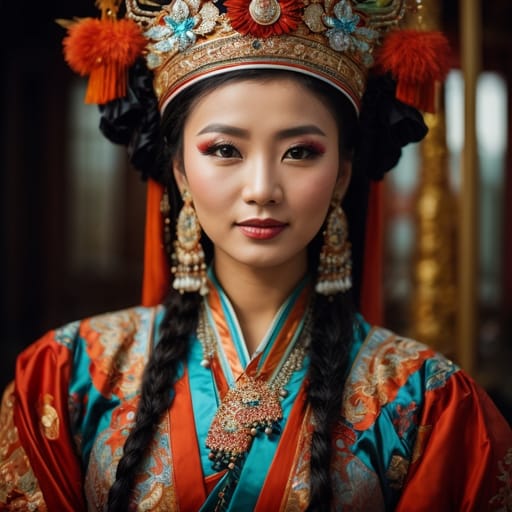
Typical Chuanqing Phenotypes
Reference for AI generation: hair, eyes, skin, facial structure, build
Chuanqing Body & Anatomy Reference
Anatomy by feature, East Asian Sinitic / Mongoloid phenotype
Chuanqing Boobs & Breasts
Chuanqing tits and boobs run small-to-medium cup, modest projection, the classic East Asian Sinitic / Mongoloid bust profile. Chuanqing nipples and areolas show light-pink to medium-brown areolar pigmentation against the light-to-medium skin tone, with areolar diameter typically in the 26-36mm range and forward-set positioning rather than the fuller South Asian or Levantine bust profile. Chuanqing breasts trend firm and modestly projecting; smaller cup size than the South Asian or Western Asian average, a function of the ectomorph-to-mesomorph, lean frame body habitus and the mean adult female BMI 20-23. For anatomically accurate AI-generated Chuanqing nudes the render preserves the small-to-medium cup, modest projection shape, 26-36mm areolas with light-pink to medium-brown pigmentation, and the torso proportions of the East Asian Sinitic / Mongoloid phenotype.
Chuanqing Ass & Hips
Chuanqing hips and butt usually read as small-to-medium, modest projection, narrower hip profile. The skeletal base is narrower iliac crests, less gluteal-femoral fat deposition, the East Asian Sinitic / Mongoloid pattern. Set against the fuller projected glutes of the West African or Polynesian phenotype, the difference is easy to see, and the hip-to-waist ratio is often what identifies Chuanqing women in photos.
Chuanqing Vagina & Pussy
Expect light-pink to medium-brown labial pigmentation, smaller labia minora on Chuanqing women, in keeping with East Asian Sinitic / Mongoloid ancestry. The pubic hair is straight fine texture, sparser distribution than the South Asian norm. Coloring should run evenly from the light to medium skin of the thighs to the labia, and Chuanqing nude imagery should keep the hair's straight fine texture.
Chuanqing Dicks & Penis
Chuanqing dick and penile anatomy in adult AI generation should anchor on the regional reference data: regional mean ~11-12cm erect, moderate girth, and light-brown shaft pigmentation. The Chuanqing cock profile reflects the East Asian Sinitic / Mongoloid population's anthropometric measurements. The shaft pigmentation should track the surrounding light to medium skin tone, and the pubic hair should keep its straight fine texture in the typical inverted-V escutcheon.
Chuanqing Body, Curves & Build
Chuanqing body type: ectomorph-to-mesomorph, lean frame, with mean adult female BMI 20-23. This is the typical East Asian Sinitic / Mongoloid build. Height range, shoulder-to-hip ratio and fat distribution all follow from it, which is what an accurate Chuanqing nude body should show.
Chuanqing Skin Tone & Hair Texture
Chuanqing skin tone falls in the light to medium (Fitzpatrick II-IV) band, the surface signal most often miscalibrated by generic AI nude generators. Chuanqing hair texture is typically straight 1A, fine-to-medium, predominantly black, characteristic of the East Asian Sinitic / Mongoloid phenotype. In Chuanqing nude renders the skin should hold that band consistently across the body.
Explore phenotype categories
Structured taxonomy with peer-reviewed scales · 22 anatomical categories
Erotic Poses & Sex Positions
From the pose catalog: 219 named positions with reference skeletons
Frequently asked questions about Chuanqing people
Where is the Chuanqing homeland?
The Chuanqing homeland is Western Guizhou Province, China, mainly the Bijie and Liupanshui areas, including Zhijin and Nayong counties in East Asia.
What language do Chuanqing people speak?
Chuanqing people primarily speak Southwestern Mandarin, locally regarded as distinctive Chuanqing speech (Sino-Tibetan, Sinitic).
What religion do Chuanqing people practice?
The predominant religion among Chuanqing people is Chinese folk religion: ancestor veneration, local spirits and household worship of the Wuxian deities.






Make your own Chuanqing images
Five a day, free, no credits to buy. The studio starts from this group's phenotype data, so you can set body type, pose and style and keep the traits accurate.
Start with Chuanqing