Help us get this right
Does this portrait look right for Baarin?
Nobody has judged this one yet. You would be the first.
Baarin Erotic
Bairin Left and Bairin Right Banners in Chifeng, southeastern Inner Mongolia, China; smaller Baarin clans in Mongolia.
Baarin dialect of Mongolian (Mongolic, Inner Mongolian group), written in the traditional Mongolian script; Mandarin Chinese widely spoken.
Tibetan Buddhism (Gelug) layered over shamanic and ovoo practice; many are secular.
A Mongol tribe within China's Mongol nationality; one of the five Inner Khalkha otogs in the 16th century; organized as Bairin Left and Right banners under the Qing.
About Baarin People
The Baarin are a Mongol tribe whose name runs the whole length of Mongol written history. They appear in the thirteenth-century Secret History of the Mongols, where the Baarin shaman Khorchi is rewarded for foretelling Temüjin's rise, and they remain a distinct people today, concentrated in two banners of Chifeng in southeastern Inner Mongolia, China: Bairin Left Banner, seated at Lindong, and Bairin Right Banner, seated at Daban. China counts them within the Mongol nationality rather than as a separate ethnic group, but the banner is the unit Baarin people identify with, and that identity has held for nearly four centuries.
Their country sits where the Greater Khingan foothills flatten into steppe: wooded hills to the north, grazing land and, increasingly, farmland in the river valleys, with the Saihan Ula reserve in the Right Banner holding the last stretch of old forest. It is old ground. The ruins of the Liao dynasty's Upper Capital lie beside Lindong, and the Liao imperial tombs and the white pagoda of Qingzhou stand in the Right Banner, so Baarin herders have spent centuries pasturing animals among the remains of a Khitan empire. The Right Banner also yields Balin stone, a soft, variably colored stone prized across China for seal carving.
The Baarin dialect is one of the named subdialects of Inner Mongolian, sitting between the Chakhar speech to the west that underlies China's standard Mongolian and the Khorchin dialects to the east, and it sounds noticeably different from the Khalkha of Mongolia. It is written in the traditional vertical script in schools and on signage, but Chifeng is heavily Han, and most Baarin now move between Mongolian and Mandarin, with the young tilting toward Mandarin.
The tribe gave the Yuan one of its great commanders, Bayan of the Baarin, who led the campaign that finished the Southern Song. In the sixteenth century the Baarin were one of the five otogs of the Inner Khalkha under descendants of Dayan Khan. Ligdan Khan's Chahar wars scattered them in the 1620s, they submitted to the rising Manchu state, and the Qing fixed them into Left and Right banners in 1648. The court then bound the Baarin nobility to the throne by marriage: a daughter of Hong Taiji was wed to a Baarin prince, and the Kangxi Emperor's daughter Princess Rongxian married another and lies buried in the Right Banner.
Religion follows the Inner Mongolian pattern: Gelug Tibetan Buddhism laid over older shamanic practice, with ovoo cairns on the hilltops still circled at summer festivals. Baarin women's ceremonial dress, with its coral and silver headdress, is one of the recognized regional costumes of Inner Mongolia and comes out for weddings and Naadam.
Related ethnic groups
Groups that share Baarin's homeland, region, language, or religious tradition. These are likely candidates for comparative phenotype reference.
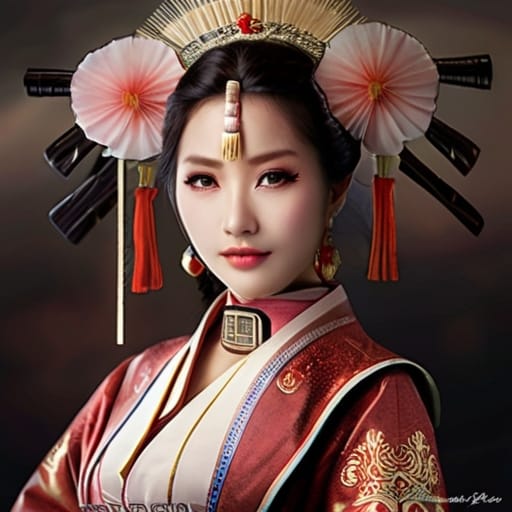
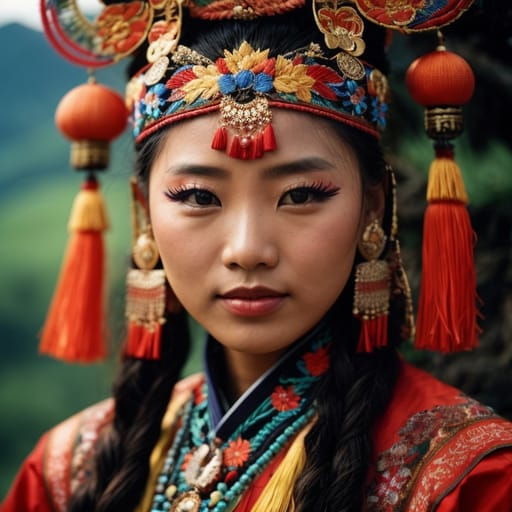
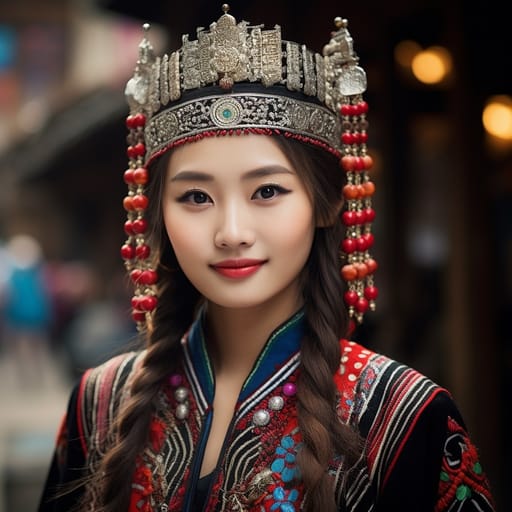

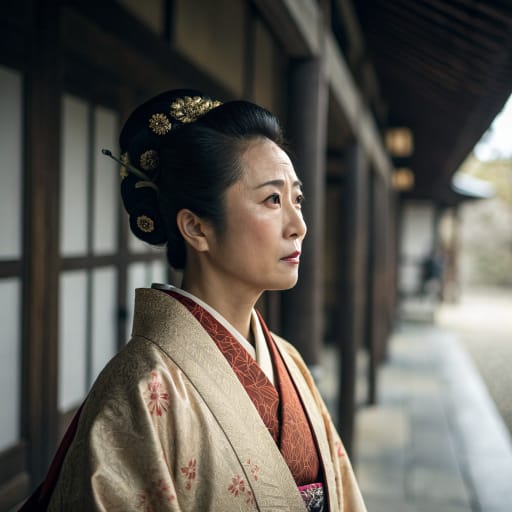
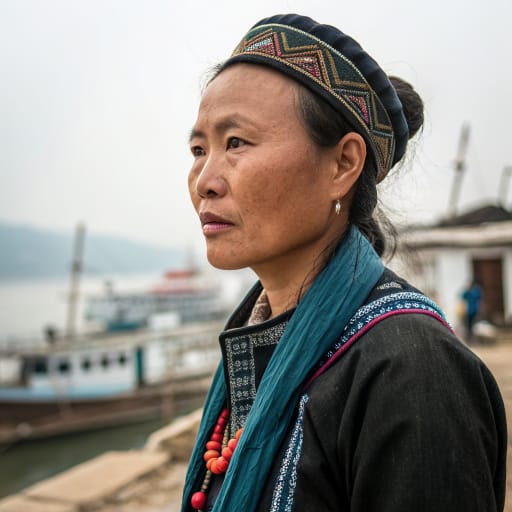
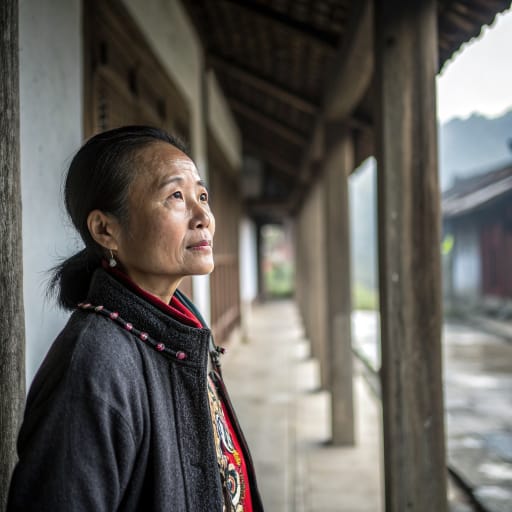
Typical Baarin Phenotypes
Reference for AI generation: hair, eyes, skin, facial structure, build
Baarin Body & Anatomy Reference
Anatomy by feature, East Asian Sinitic / Mongoloid phenotype
Baarin Boobs & Breasts
Bust reference for Baarin women: small-to-medium cup, modest projection, which is typical of East Asian Sinitic / Mongoloid ancestry. Areolas measure about 26-36mm across, with light-pink to medium-brown pigmentation. Body type (ectomorph-to-mesomorph, lean frame) shapes the bust as well, so Baarin tits are usually firm and modestly projecting; smaller cup size than the South Asian or Western Asian average. In AI imagery, keep the forward-set shape rather than drifting toward the fuller South Asian or Levantine bust profile.
Baarin Ass & Hips
The Baarin ass is typically small-to-medium, modest projection, narrower hip profile, which sets it apart from the fuller projected glutes of the West African or Polynesian phenotype. Underneath, the pelvis shows narrower iliac crests, less gluteal-femoral fat deposition, part of the East Asian Sinitic / Mongoloid skeletal pattern. For Baarin butt pics and AI renders, match that silhouette and the overall build (ectomorph-to-mesomorph, lean frame).
Baarin Vagina & Pussy
Baarin pussy and vulvar anatomy presents light-pink to medium-brown labial pigmentation, smaller labia minora, consistent with the East Asian Sinitic / Mongoloid phenotype's pigmentation pattern. Baarin pubic hair is typically straight fine texture, sparser distribution than the South Asian norm, in the inverted-triangle pattern. For anatomically accurate Baarin pussy renders the labial coloration should match the surrounding light to medium skin tone with a continuous gradient, and the hair should keep its straight fine texture.
Baarin Dicks & Penis
Baarin dicks follow the East Asian Sinitic / Mongoloid reference data: regional mean ~11-12cm erect; moderate girth; light-brown shaft pigmentation. Shaft color should track the light to medium skin tone with a smooth change toward the glans, and Baarin pubic hair keeps its straight fine texture.
Baarin Body, Curves & Build
Baarin body type and overall build presents as ectomorph-to-mesomorph, lean frame, with mean adult female BMI 20-23: the characteristic East Asian Sinitic / Mongoloid habitus. Baarin curves and proportions should keep the regional skeletal frame (height, shoulder-to-hip ratio, limb proportions) rather than a generic mesomorph default.
Baarin Skin Tone & Hair Texture
Baarin skin sits in the light to medium (Fitzpatrick II-IV) band. Hair is typically straight 1A, fine-to-medium, predominantly black, in keeping with the East Asian Sinitic / Mongoloid phenotype. In nude renders the skin should stay one even tone from face to body, and body, pubic and head hair should match.
Explore phenotype categories
Structured taxonomy with peer-reviewed scales · 22 anatomical categories
Erotic Poses & Sex Positions
From the pose catalog: 219 named positions with reference skeletons
Frequently asked questions about Baarin people
Where is the Baarin homeland?
The Baarin homeland is Bairin Left and Bairin Right Banners in Chifeng, southeastern Inner Mongolia, China; smaller Baarin clans in Mongolia. in East Asia.
What language do Baarin people speak?
Baarin people primarily speak Baarin dialect of Mongolian (Mongolic, Inner Mongolian group), written in the traditional Mongolian script; Mandarin Chinese widely spoken..
What religion do Baarin people practice?
The predominant religion among Baarin people is Tibetan Buddhism (Gelug) layered over shamanic and ovoo practice; many are secular..






Make your own Baarin images
Five a day, free, no credits to buy. The studio starts from this group's phenotype data, so you can set body type, pose and style and keep the traits accurate.
Start with Baarin