No portrait yet
Seediq Erotic
Central Mountain Range of Taiwan: Ren'ai Township in Nantou County, and the Wanrong and Zhuoxi area of Hualien County
Seediq (Austronesian, Atayalic branch), with Tgdaya, Toda and Truku dialects; Mandarin also spoken
Mostly Christian (Presbyterian and Catholic), layered over traditional gaya ancestral law and utux spirit beliefs
Three dialect communities: Tgdaya, Toda and Truku; formerly classified under the Atayal, closely related to the separately recognized Truku people
About Seediq People
The Seediq are a mountain people of central Taiwan whose name means simply people, and whose separate identity was for most of the twentieth century folded into that of their Atayal neighbors. Taiwan formally recognized them as a distinct group in 2008, the fourteenth of the island's official indigenous peoples. Their homeland is the steep forested country of the Central Mountain Range: the upper Zhuoshui watershed around Ren'ai Township in Nantou County, and the eastern valleys of Hualien County, settled by families who crossed the ridge generations ago. Roughly ten thousand people identify as Seediq today. Their language is Austronesian, in the small Atayalic branch found only in Taiwan, and it has three dialects, Tgdaya, Toda and Truku, that double as the names of its three communities. The split matters. The Truku on the Hualien side won recognition as a separate people in 2004, and whether Truku speakers are a Seediq subgroup or a nation of their own is still argued in both counties. Fluent speakers are concentrated among the elderly, though revitalization programs run through local schools and churches.
What held Seediq society together was gaya, a body of ancestral law covering marriage, hunting rights, hospitality and revenge. Breaking gaya invited misfortune from the utux, the ancestral spirits, and setting it right could demand a sacrifice or a headhunting raid. Facial tattoos marked adulthood: a man earned the chin tattoo by taking a head, a woman earned cheek tattoos by mastering the backstrap loom, and only the tattooed could cross the rainbow bridge to join the ancestors after death. Japanese colonial authorities banned both practices in the early 1900s. Most Seediq today are Presbyterian or Catholic, and church life sits alongside a revived interest in gaya as cultural rather than religious law. The defining historical moment is the Wushe Incident of October 1930, when the Tgdaya chief Mona Rudao led six villages in an attack on a Japanese school athletic meet, killing around 130 Japanese. The colonial army answered with aircraft, artillery, poison gas and rival Seediq auxiliaries. Hundreds of Seediq died, many by hanging themselves in the forest rather than surrender, and the survivors were confined to a riverside settlement now called Qingliu. The 2011 film Warriors of the Rainbow: Seediq Bale brought the story to a mass audience and made Seediq Bale, meaning true person, a phrase most Taiwanese now recognize. Women's weaving, in red and white ramie patterned with diamond motifs said to be the eyes of the ancestors, remains the most visible living craft.
Related ethnic groups
Groups that share Seediq's homeland, region, language, or religious tradition. These are likely candidates for comparative phenotype reference.

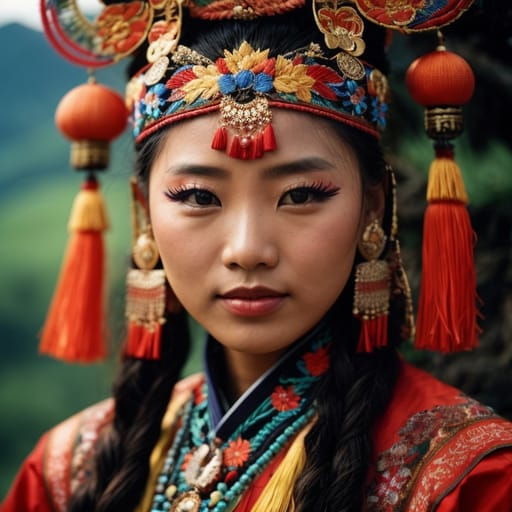
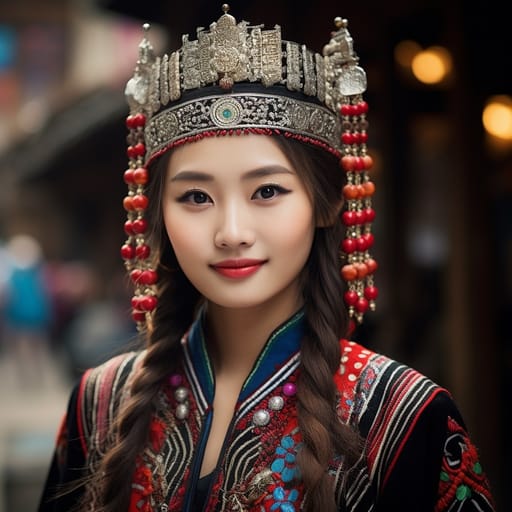

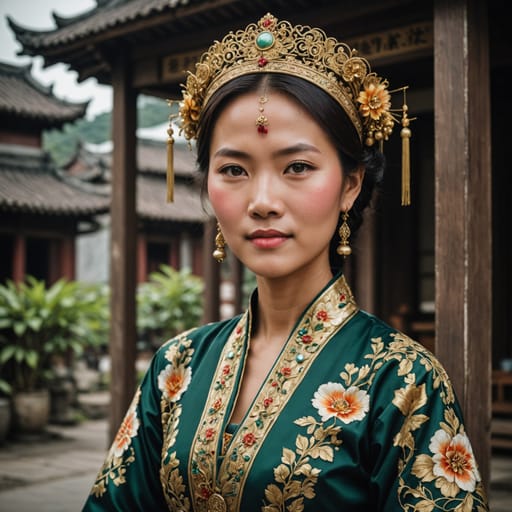
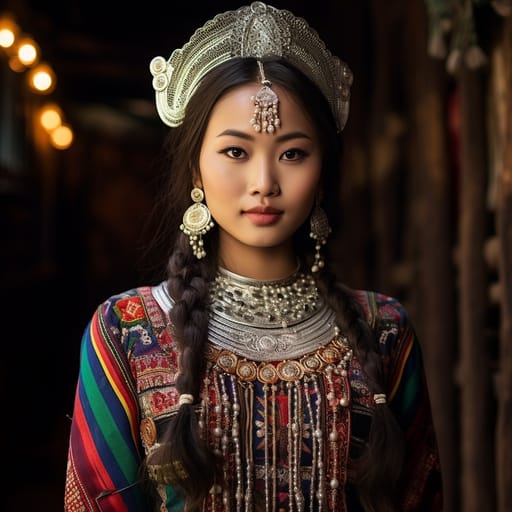
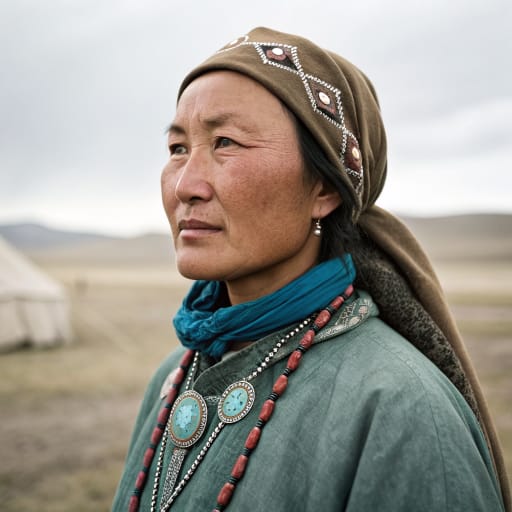
Typical Seediq Phenotypes
Reference for AI generation: hair, eyes, skin, facial structure, build
Seediq Body & Anatomy Reference
Per-feature anatomical profile for AI nude generation: East Asian Sinitic / Mongoloid phenotype
Seediq Boobs & Breasts
The typical Seediq bust is small-to-medium cup, modest projection, in line with the wider East Asian Sinitic / Mongoloid pattern. Areolas usually fall in the 26-36mm range, with light-pink to medium-brown areolar pigmentation against the light-to-medium skin tone. Compared with the fuller South Asian or Levantine bust profile, Seediq breasts sit forward and are generally firm and modestly projecting; smaller cup size than the South Asian or Western Asian average. A faithful AI render of Seediq tits keeps that shape and areola size.
Seediq Ass & Hips
Butt shape among Seediq women: small-to-medium, modest projection, narrower hip profile, over narrower iliac crests, less gluteal-femoral fat deposition. This follows East Asian Sinitic / Mongoloid ancestry and looks quite unlike the fuller projected glutes of the West African or Polynesian phenotype. An accurate Seediq ass in adult AI imagery keeps both the silhouette and the overall build (ectomorph-to-mesomorph, lean frame) instead of a generic average.
Seediq Vagina & Pussy
Vulvar anatomy among Seediq women: light-pink to medium-brown labial pigmentation, smaller labia minora. Pubic hair tends to be straight fine texture, sparser distribution than the South Asian norm, in the usual inverted-triangle pattern. Both follow East Asian Sinitic / Mongoloid pigmentation, which is why Seediq pussy renders should not fall back on a pale, sparse Western template.
Seediq Dicks & Penis
The Seediq cock profile, from East Asian Sinitic / Mongoloid anthropometric data: regional mean ~11-12cm erect; moderate girth; light-brown shaft pigmentation. Pubic hair has a straight fine texture and forms the usual inverted-V pattern. Whether Seediq men are circumcised follows religious and cultural practice rather than phenotype.
Seediq Body, Curves & Build
Build and curves among Seediq women follow the East Asian Sinitic / Mongoloid pattern: ectomorph-to-mesomorph, lean frame, mean adult female BMI 20-23. Proportions matter as much as skin tone, so Seediq figures should keep their regional height and limb ratios.
Seediq Skin Tone & Hair Texture
The Seediq skin range is light to medium (Fitzpatrick II-IV), and hair tends to be straight 1A, fine-to-medium, predominantly black. That combination marks the East Asian Sinitic / Mongoloid phenotype, and skin tone is the trait AI generators most often get wrong for Seediq women.
Explore phenotype categories
Structured taxonomy with peer-reviewed scales · 22 anatomical categories
Erotic Poses & Sex Positions
From the pose catalog: 219 named positions with reference skeletons
Frequently asked questions about Seediq people
Where is the Seediq homeland?
The Seediq homeland is Central Mountain Range of Taiwan: Ren'ai Township in Nantou County, and the Wanrong and Zhuoxi area of Hualien County in East Asia.
What language do Seediq people speak?
Seediq people primarily speak Seediq (Austronesian, Atayalic branch), with Tgdaya, Toda and Truku dialects; Mandarin also spoken.
What religion do Seediq people practice?
The predominant religion among Seediq people is Mostly Christian (Presbyterian and Catholic), layered over traditional gaya ancestral law and utux spirit beliefs.






Make your own Seediq images
Five a day, free, no credits to buy. The studio starts from this group's phenotype data, so you can set body type, pose and style and keep the traits accurate.
Start with Seediq