Help us get this right
Does this portrait look right for Druze?
One tap. It takes a second and it is recorded.
6 say it looks right, 5 say it looks off.
Druze Erotic
About Druze People
Theology and the uqqal–juhhal structure
Druze theology is built on a strict monotheism in which the divine is conceived as unknowable and beyond all attribution, combined with a doctrine of tanasukh (transmigration of souls) that has no parallel in any other Levantine religious tradition: at death the Druze soul is held to transfer immediately into the body of a newborn Druze child, and the population of Druze souls is therefore closed and finite from the moment of the religion's foundation. This is one of the doctrinal foundations of the endogamy rule: conversion in is impossible because no new Druze soul can be generated; conversion out is rejected because the Druze soul cannot occupy a non-Druze body.
The community is partitioned between the uqqal ("the initiated," "the wise") and the juhhal ("the ignorant" — not pejorative in Druze usage, simply the uninitiated lay majority). Only the uqqal have access to the Rasa'il al-Hikma ("Epistles of Wisdom"), the six-volume canonical text of the Druze religion compiled in the early eleventh century under Hamza ibn Ali and Baha al-Din al-Muqtana; only the uqqal attend the khalwa — the white-painted Druze religious house found in every Druze village — on Thursday evenings for the closed prayer service. The visible mark of the uqqal is the white turban-and-robe combination for men and the white head-covering with black robe for women; the juhhal majority is not religiously distinguished by dress in everyday life.
Political history of the community
The Druze emerged from the early-eleventh-century missionary activity of the Fatimid Ismaili da'wa in the mountains of southern Lebanon and the Hauran. From the late twelfth century forward, two successive feudal Druze emirates dominated Mount Lebanon: the Ma'an dynasty (c. 1500–1697) under whose Emir Fakhr-al-Din II (r. 1591–1635) the Druze-Maronite condominium of Mount Lebanon first took political form, and the Shihab dynasty (1697–1842) under whose later Sunni and then Maronite emirs the political balance of the mountain shifted away from a Druze majority. The 1860 Mount Lebanon civil war between Druze and Maronite communities — with several thousand Maronite dead in the Druze massacres of that year, followed by French intervention — was the event that triggered the Ottoman Mutasarrifiyya of Mount Lebanon (1861–1918) and is the immediate political ancestor of the modern Lebanese sectarian system.
The Syrian Druze political tradition is anchored on the Atrash family of Jabal al-Druze. Sultan al-Atrash (1891–1982) led the 1925–1927 Great Syrian Revolt against French Mandate rule — the largest single anti-colonial uprising in interwar Syria and a foundational episode in the Syrian national narrative — from his Druze base in Suweida province. The Syrian Druze community's preservation of substantial communal autonomy through the Mandate, the early Ba'athist period, and the Hafez al-Assad and Bashar al-Assad eras rests in significant part on the political capital accumulated in 1925–1927. The 2011–present Syrian civil war produced sustained Druze-community mobilisation around Suweida: the community generally avoided the Free Syrian Army and the Islamist opposition factions, retained a wary relationship with the Assad central government, and as of the 2024–2025 collapse of the Assad state has emerged as one of the more cohesive surviving regional power centres in southern Syria.
The Israeli Druze and the Golan Heights
The Israeli Druze community, principally settled across 16 villages in the Galilee and on Mount Carmel, has the distinct legal status produced by the 1956 agreement with Israeli Druze religious leadership to accept conscription into the IDF on the same terms as Jewish Israelis — the only non-Jewish Israeli community for which this is the case. The 2018 Nation-State Law and the subsequent Druze community protest highlighted the tension internal to this arrangement: Druze IDF service rates remain among the highest of any Israeli community while the formal constitutional status of the Druze within an explicitly Jewish nation-state remains contested.
The Druze of the Golan Heights — concentrated in Majdal Shams, Mas'ada, Buq'ata, and Ein Qiniyye — constitute a distinct sub-community whose political situation differs sharply from the Galilee Druze. The territory was occupied by Israel in 1967, effectively annexed by the 1981 Golan Heights Law, and the Druze majority of the territory has predominantly retained Syrian citizenship and declined Israeli citizenship through more than five decades of Israeli administration. The post-2011 Syrian civil war complicated this position considerably: the Golan Druze became increasingly cut off from their Suweida-based religious leadership, and the share of younger Golan Druze accepting Israeli citizenship has risen markedly since 2015, though the community-level orientation toward Syria remains intact.
Related ethnic groups
Groups that share Druze's homeland, region, language, or religious tradition. These are likely candidates for comparative phenotype reference.
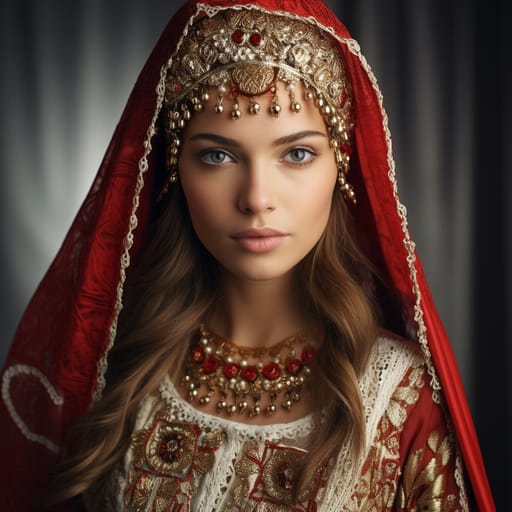
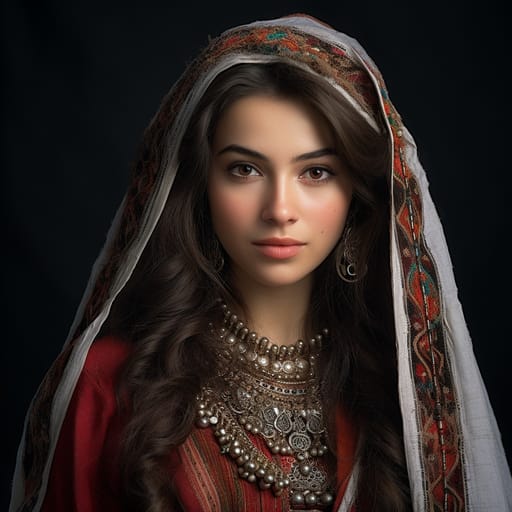
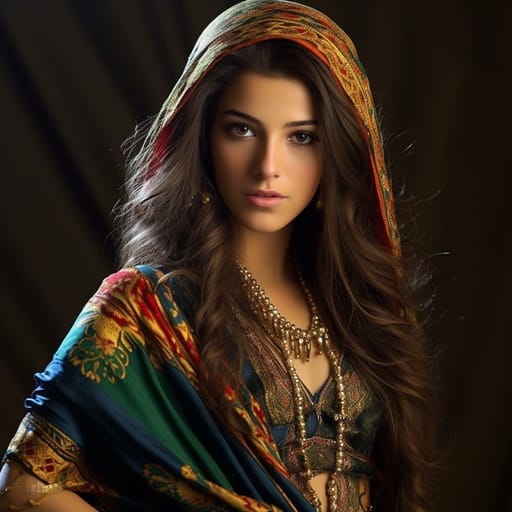
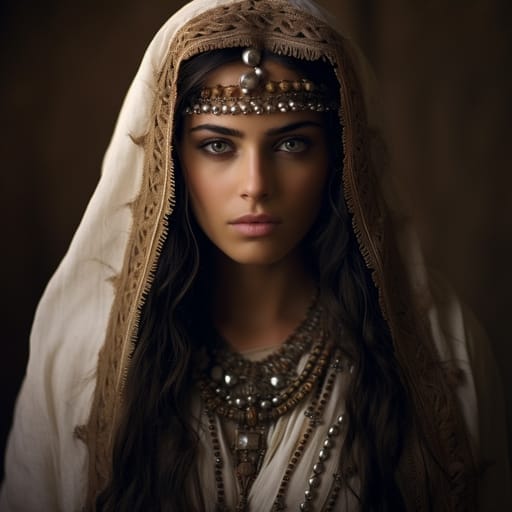
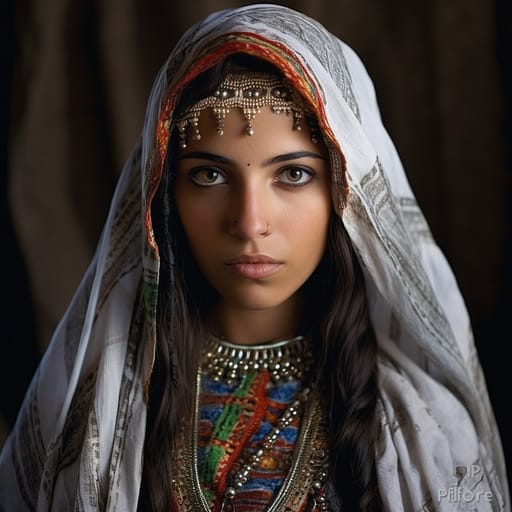
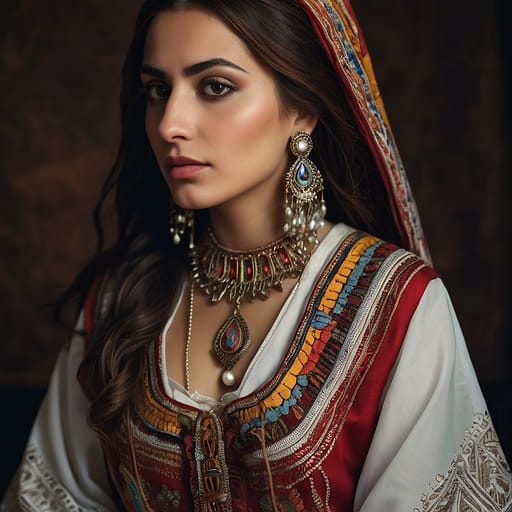
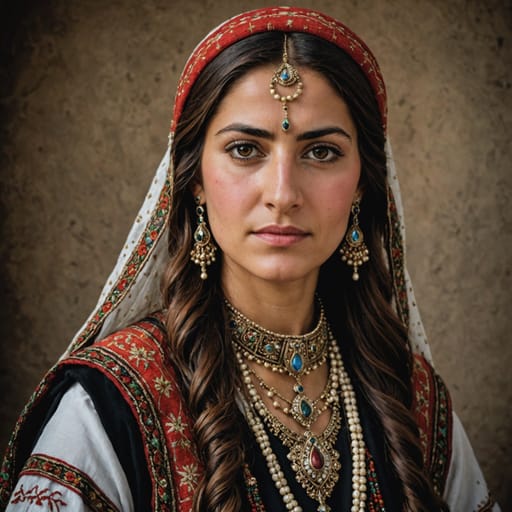
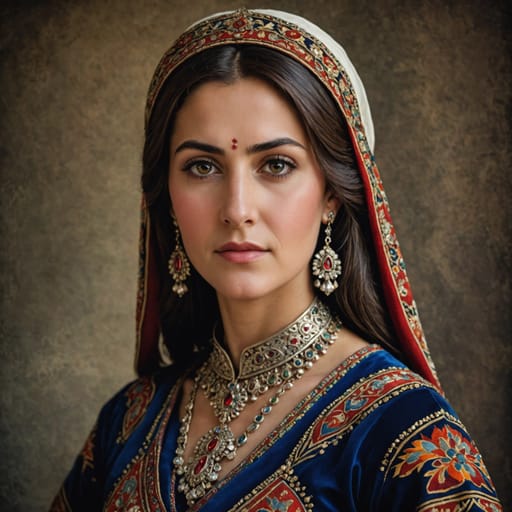
Geographic Distribution: Druze populations across 3 countries
Each row is ranked by the group's share of that country's population, with the source citation drawn from published census and demographic surveys. Click through for the full per-country phenotype profile.
| Country | Share | Source |
|---|---|---|
| Lebanon | 3.0% | Estimates; Lebanese Druze (~3%, ~280,000+); concentrated in the Mount Lebanon governorate plus the Chouf, Aley, plus Hasbaya regions. The largest national Druze population (vs Syria, Israel) |
| Syria | 3.0% | Estimates; Syrian Druze (~3%, ~700,000+); the largest national Druze population, concentrated in the Jabal al-Druze / Suweida region in southern Syria plus the Damascus countryside |
| Israel | 2.0% | Israel CBS 2023 estimates; Israeli Druze (~2%, ~150,000+); concentrated in the Galilee (Daliyat al-Karmel, Isfiya, Beit Jann, plus other communities) plus the Golan Heights (where the Druze community is predominantly Syrian-citizenship-holding). The Druze are a distinct ethno-religious community following the syncretic Druze religion (incorporating elements of Islamic, Gnostic, Neoplatonic, and other source-religious traditions). Cross-border populations in Lebanon (~280,000+), Syria (~700,000+), and Jordan (~32,000+) |
Typical Druze Phenotypes
Reference for AI generation: hair, eyes, skin, facial structure, build
Druze Body & Anatomy Reference
Anatomy by feature, Levantine / Mediterranean Middle Eastern phenotype
Druze Boobs & Breasts
Druze tits and boobs run medium-to-large cup, full, moderate-to-high projection, the classic Levantine / Mediterranean Middle Eastern bust profile. Druze nipples and areolas show medium-brown to dark-brown areolar pigmentation against the olive-to-light-brown skin tone, with areolar diameter typically in the 32-46mm range and forward-set positioning rather than the smaller East Asian bust profile. Druze breasts trend full and soft, fuller projection than the North-African Berber norm, a function of the mesomorph with fuller hip-and-bust deposition body habitus and the mean adult female BMI 25-28. For anatomically accurate AI-generated Druze nudes the render preserves the medium-to-large cup, full, moderate-to-high projection shape, 32-46mm areolas with medium-brown to dark-brown pigmentation, and the torso proportions of the Levantine / Mediterranean Middle Eastern phenotype.
Druze Ass & Hips
Druze hips and butt usually read as medium-to-full, moderate projection, broader hip profile. The skeletal base is medium-to-wide iliac crests, fuller gluteal-femoral deposition, the Levantine / Mediterranean Middle Eastern pattern. Set against the slim East Asian narrow-hip profile, the difference is easy to see, and the hip-to-waist ratio is often what identifies Druze women in photos.
Druze Vagina & Pussy
Expect medium-brown to dark-brown labial pigmentation, fuller labia minora on Druze women, in keeping with Levantine / Mediterranean Middle Eastern ancestry. The pubic hair is wavy-to-coiled medium-coarse dark texture, dense distribution. Coloring should run evenly from the olive to medium-brown skin of the thighs to the labia, and Druze nude imagery should keep the hair's wavy-to-coiled medium-coarse dark texture.
Druze Dicks & Penis
Druze dick and penile anatomy in adult AI generation should anchor on the regional reference data: regional mean ~14cm erect, moderate-to-above-average girth, and medium-brown shaft pigmentation. The Druze cock profile reflects the Levantine / Mediterranean Middle Eastern population's anthropometric measurements. The shaft pigmentation should track the surrounding olive to medium-brown skin tone, and the pubic hair should keep its wavy-to-coiled medium-coarse dark texture in the typical inverted-V escutcheon.
Druze Body, Curves & Build
Druze body type: mesomorph with fuller hip-and-bust deposition, with mean adult female BMI 25-28. This is the typical Levantine / Mediterranean Middle Eastern build. Height range, shoulder-to-hip ratio and fat distribution all follow from it, which is what an accurate Druze nude body should show.
Druze Skin Tone & Hair Texture
Druze skin tone falls in the olive to medium-brown (Fitzpatrick III-V) band, the surface signal most often miscalibrated by generic AI nude generators. Druze hair texture is typically wavy-to-curly 2B-3B, predominantly dark-brown to black, characteristic of the Levantine / Mediterranean Middle Eastern phenotype. In Druze nude renders the skin should hold that band consistently across the body.
Explore phenotype categories
Structured taxonomy with peer-reviewed scales · 22 anatomical categories
Notable Druze People
94 reference figures, sourced from Wikipedia
- Naim Araidi, Israeli writer and poet in Hebrew and Arabic, Israeli Ambassador to Norway.
- Emin Arslan, born in current-day Lebanon (Ottoman Syria), diplomat, writer, and editor
- Suliman Bashear, Israeli scholar, writer, and professor
- Sami Makarem, Lebanese-American writer, painter, and scholar
- Reda Mansour, Israeli Hebrew poet and writer and former Israeli ambassador to Ecuador, Braz…
- Salman Masalha, Israeli poet, essayist, translator, and researcher
- Salman Natour, Israeli writer, journalist, and playwright.
- Samih al-Qasim, Israeli poet.
- Rami Zeedan, Israeli political scientist, historian, professor, and author.
- Raghida Dergham, Lebanese-American journalist.
- Mona Abou Hamza, Lebanese TV presenter
- Casey Kasem, American TV and radio presenter (notably American Top 40) and actor, of Leban…
- Gadeer Mreeh, Israeli journalist and politician, member of the Israeli Knesset, anchor of H…
- Nahida Nakad, Lebanese-Italian senior correspondent, TV executive, and author; former Edito…
- Faisal al-Qassem, Syrian television talkshow host of The Opposite Direction on Al Jazeera, base…
- Alim Abdallah, Israeli deputy commander of the IDF 401st Brigade of the 91st Division, lieut…
- Ehsan Daxa, Israeli commander of the IDF 401st Armored Brigade, colonel.
- Ghassan Alian, Israeli commander of the IDF Golani Brigade, head of the Coordinator of Gover…
- Imad Fares, Israeli Brigadier General, commander of the IDF Givati Brigade, commander of …
- Issam Zahreddine, Major General of the Syrian Republican Guard who has played a major role in t…
- Salman Habaka, Israeli commander of the IDF 188th Armored Brigade's 53rd Battalion killed in…
- Salim Hatoum, Syrian Major. Led overthrow of the government of Amin al-Hafez in 1966.
- Yousef Mishleb, Israeli general; commander of the IDF Etzion Regional Brigade, commander of t…
- Nada Nadim Prouty, Lebanese intelligence professional who worked with the FBI and CIA in counter…
- Salman Zarka, Israeli physician and current Director of Ziv Medical Center in Safed; Israel…
- Farid al-Atrash, Syrian male singer, composer, and actor.
- Asmahan, Syrian female singer and actress.
- Ramy Ayach, Lebanese singer
- Fahd Ballan, Syrian male singer.
- Loai Ali, Israeli singer and actor
- Ziad Aboultaif, Canadian MP for Edmonton Manning.
- Labib Hussein Abu Rokan, Israeli MP and religious judge.
- Abdullah Abu Ma'aruf, Israeli MP and physician.
- Hamad Amar, Israeli MP.
- Assad Assad, Israeli MP, army colonel, and diplomat
- Jabar Asakla, Israeli member of the Knesset, now secretary of the Hadash Party
- Zeidan Atashi, Israeli MP and diplomat
- Amal Nasser el-Din, Israeli MP and author, awarded the Israel Prize, the Prime Minister's Prize f…
- Salah-Hassan Hanifes, Israeli MP
- Akram Hasson, Israeli member of the Knesset, Kadima's leader, marking the first time a Druz…
- Ayoob Kara, Israeli MP, deputy speaker, Israeli Minister of Communications, Israeli Deput…
- Jabr Moade, Israeli MP and deputy minister
- Fateen Mulla, Israeli member of the Knesset, Deputy Minister in the Prime Minister's Office.
- Mohamed Nafa, Israeli MP
- Said Nafa, Israeli MP and lawyer
- Shachiv Shnaan, Israeli member of parliament
- Salah Tarif, Israeli government minister, MP, and army captain
- Majalli Wahabi, Israeli member of the Knesset; briefly President of Israel, IDF lieutenant-co…
- Ayman Safadi, Deputy Prime Minister and Jordan's Minister of Foreign Affairs.
- Rashid Talaa, First Prime Minister of Jordan.
- Akram Chehayeb, Lebanese Minister and MP
- Ghazi Aridi, Lebanese minister and MP
- Majid Arslan, Lebanese Defense Minister for over 40 years
- Shakib Arslan, Lebanese politician, writer, poet, and historian
- Talal Arslan, Lebanese minister and MP
- Fakhr-al-Din II, Ruler (emir) of Lebanon from 1590 to 1633; united Lebanon and parts of Syria …
- Kamal Jumblatt, Lebanese MP, minister, writer, author, and poet
- Walid Jumblatt, Lebanese minister and leader of the Progressive Socialist Party
- Marwan Hamadeh, Lebanese minister and MP
- Marwan Kheireddin, Lebanese minister
- Faisal Al Sayegh, Lebanese MP
- Wiam Wahhab, Lebanese politician
- Sultan Pasha al-Atrash, Syrian Leader and Commander of the Syrian Revolt of 1925.
- Mansur al-Atrash, Syrian politician, Interim head of state, journalist, founding member of the …
- Shibli al-Aysami, former Syrian Vice president and Gen Sec of the Ba'ath Arab Socialist Party
- Tarek El Aissami, Venezuelan interior and justice minister.
- Al-Hakim bi-Amr Allah, central religious figure of the faith and sixth Imam-Caliph of the Fatimid Ca…
- Hamza ibn-'Ali ibn-Ahmad, founding religious leader
- Amin Tarif, Israeli religious leader
- Mowafak Tarif, Israeli religious leader
- Abu Mohammad Jawad Walieddine, Head of Authority of Senior Sheikhs
- Zidan Amar, Israeli footballer.
- Weaam Amasha, Israeli footballer playing for F.C. Tira and the Israeli national junior team
- Ahad Azam, Israeli footballer playing for Bnei Eilat and the Israeli national junior team
- Amir Nasar A Din, Israeli footballer
- Sari Falah, Israeli footballer playing for Bnei Sakhnin, the Israeli national junior team…
- Amir Halaby, Israeli footballer[citation needed]
- Shareef Keouf, Israeli footballer playing for Maccabi Haifa and the Israeli national junior …
- Mahran Lala, Israeli footballer playing for Hapoel Tel Aviv.
- Nazar Mahmud, Israeli figure skater
- Raja Rafe, Syrian footballer
- Kenny Hasan Sayef, American-Israeli footballer playing for Maccabi Haifa and the Israeli nationa…
- Saleh Shahin, Israeli Paralympic medalist rower
- Farid Mansour, Lebanese sculptor and painter
- Nabil Kanso, Lebanese-American painter
- Michael Netzer, American-Israeli graphical artist
- Nadia Aboulhosn, Lebanese-American plus-size model and blogger
- Azzam Azzam, Israeli textile worker, former Israeli prisoner in Egypt
- Amal Clooney, Lebanese-British lawyer, married to George Clooney
- al-Darazi, 11th-century Isma'ili preacher and early leader of the Druze faith
- Angelina Fares, Israeli beauty pageant contestant. She was a finalist in Miss Israel 2007.
- Tiran Fero, Israeli teenager removed from life support and held hostage by members of the…
- Majdi Halabi, disappeared and discovered Israeli soldier
- Samir Kuntar, Lebanese Hezbollah militant
Erotic Poses & Sex Positions
From the pose catalog: 219 named positions with reference skeletons
Frequently asked questions about Druze people
Where is the Druze homeland?
The Druze homeland is Israel, Lebanon, Syria, Jordan in Western Asia.
What countries do Druze people live in?
Druze populations are documented across 3 countries: Lebanon, Syria, Israel.
What does a typical Druze woman look like?
Druze women typically have black to dark brown hair, straight to wavy, and prominent dark eyebrows. Eyes are mostly brown, with hazel, green and occasionally blue more common than in neighboring Levantine Arab populations, and skin spans Fitzpatrick III to V. Faces tend to be oval, with a tall, narrow nasal bridge and fuller lips.






Make your own Druze images
Five a day, free, no credits to buy. The studio starts from this group's phenotype data, so you can set body type, pose and style and keep the traits accurate.
Start with Druze