Help us get this right
Does this portrait look right for Mazandaranis?
One tap. It takes a second and it is recorded.
2 say it looks right, 0 say it looks off.
Mazandaranis Erotic
Mazandaran, Iran
Indo-European / Indo-Iranian / Iranian / Western Iranian / Caspian Languages / Mazandarani
Islam / Shia Islam
About Mazandaranis People
The Mazandaranis live on the wrong side of the Alborz, geographically speaking — the wet side, the side that catches the Caspian's weather and turns it into rice paddies, citrus groves, and forest so dense the Persian word for it, jangal, gave English its jungle. That mountain wall is the central fact of their history. It cut them off from the Iranian plateau enough to keep their language alive after centuries in which Persian flattened most of its cousins, and it gave the region a reputation, deserved or not, for stubbornness. The Arab armies that took the rest of Iran in the seventh century spent another hundred and fifty years trying to subdue Tabaristan, as Mazandaran was then called, and even after conversion the area held onto local Zaydi and Ismaili dynasties long after orthodoxy had settled elsewhere.
Mazandarani itself is a Caspian language, sister to Gilaki spoken just to the west, and it sits at an awkward angle to standard Persian — close enough that Persians sometimes call it a dialect, distant enough that a Tehrani won't follow a conversation between two villagers. It preserves grammatical features Persian has lost, including a richer verb system and remnants of grammatical gender. Almost everyone is bilingual now; the language is increasingly something used at home and with elders rather than in public, and Iranian census numbers undercount it for that reason.
Religiously the Mazandaranis are Twelver Shia, like most Iranians, but the older Zaydi past and a long-running tradition of Sufi orders give the local practice a slightly different texture — shrines to local saints, seasonal pilgrimages, a relationship with the dead that feels more domestic than doctrinal. Daily life still bends around the rice harvest and the silk and tea that came in later, and the pre-Islamic agricultural calendar shows up in festivals like Tirgan, observed here with more vigor than in much of the country. The food is its own argument for the place: heavy on garlic, sour orange, smoked fish, and the local olive groves around Rudbar — a cuisine that has almost nothing in common with the saffron-and-pistachio kitchen of Isfahan a few hundred kilometers south. Wrestling, particularly the local varzesh-e bastani-adjacent traditions, remains a point of regional pride, and Mazandaran has produced a disproportionate share of Iran's Olympic wrestlers.
Related ethnic groups
Groups that share Mazandaranis's homeland, region, language, or religious tradition. These are likely candidates for comparative phenotype reference.
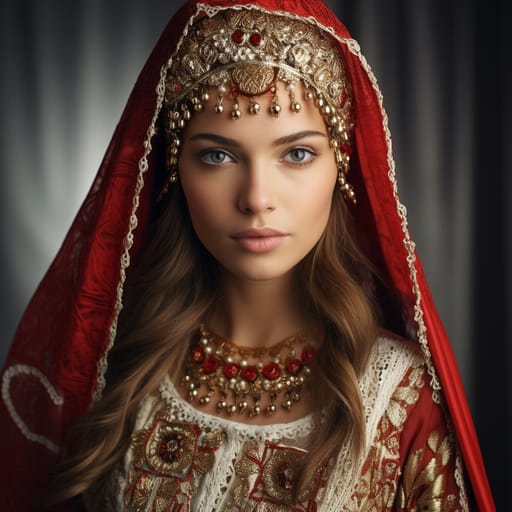
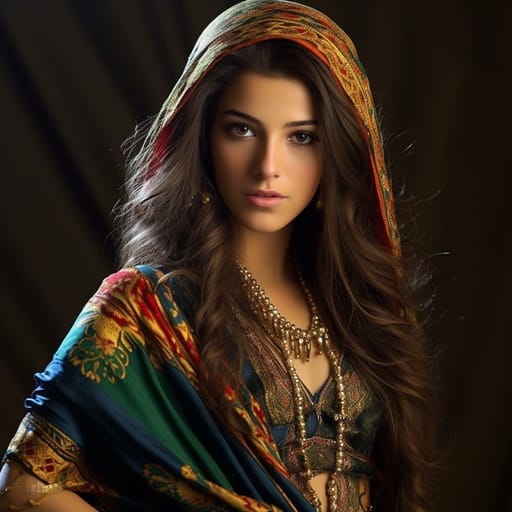
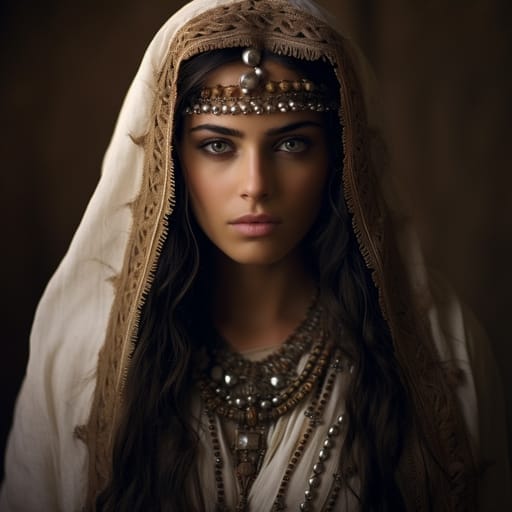
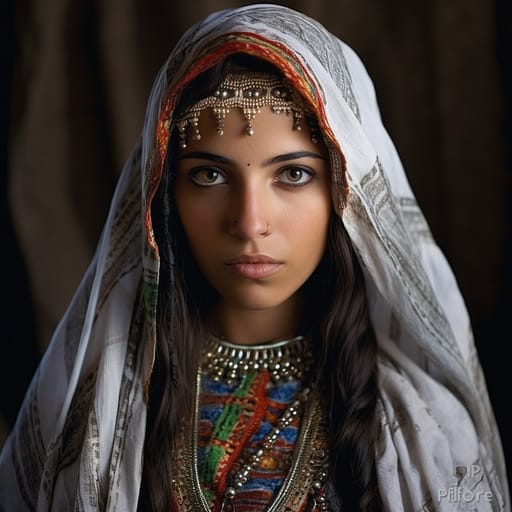
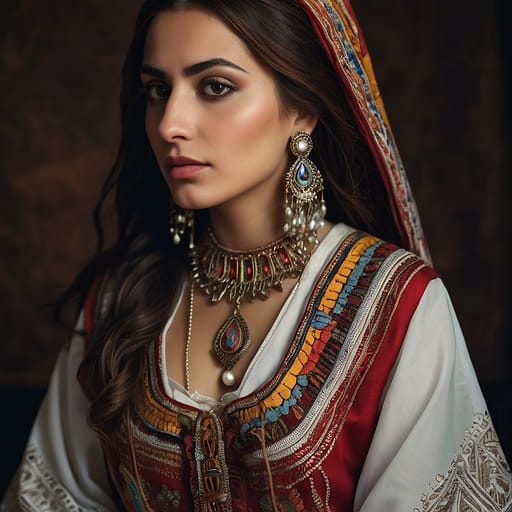
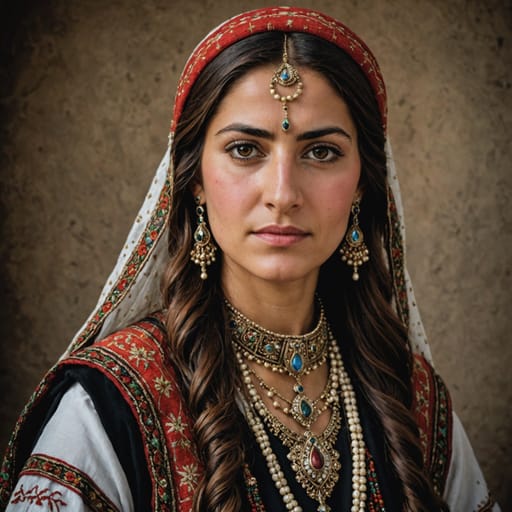
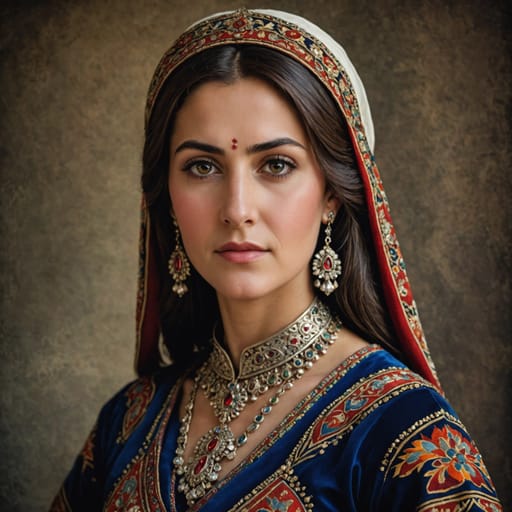
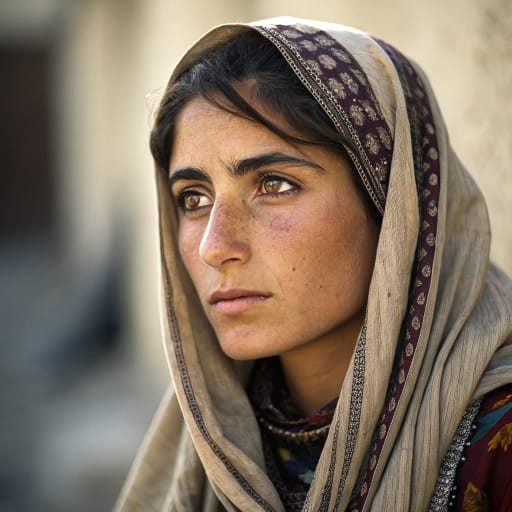
Typical Mazandaranis Phenotypes
Reference for AI generation: hair, eyes, skin, facial structure, build
Mazandaranis sit on the Caspian's southern shore, and their phenotype reflects that geography — they trend lighter and slightly more Europoid than the Iranian plateau average, with a Caspian-Iranic substrate distinct from Persians of Tehran or Isfahan. Hair is most often dark brown to black, with a meaningful minority of medium-brown and chestnut tones; texture is typically straight to gently wavy, rarely tightly curled. Body and facial hair density is high, consistent with the broader Iranian pattern — full beards in men, defined brows in both sexes.
Eyes run dark brown most commonly, but light eyes appear at noticeably higher rates than in southern or central Iran — hazel, green, and grey-blue surface in maybe one in six to one in five, particularly in the Alborz foothill villages. The eye is almond-shaped, set under a flat or moderately defined brow ridge, with no epicanthic fold. Skin sits in Fitzpatrick II–IV, with olive undertones; many Mazandaranis tan readily but start the year noticeably pale, and humidity off the Caspian keeps the complexion smoother and less sun-cured than plateau Iranians of the same age.
The face tends toward a long, narrow build — straight to slightly convex nasal bridge, medium alar width, and a nose that's prominent without being heavy. Lips are medium-full, the upper lip often defined rather than thin. Cheekbones are moderate; the jaw narrows to a defined chin, giving the face an oval rather than square outline. Stature is mid-range for the region, men averaging around 172–174 cm, with lean-to-medium builds and proportionally long limbs. Heavy mesomorphy is uncommon.
Within the group, the Galeshi and mountain-dwelling subgroups of the Alborz interior carry the lightest pigmentation — green and grey eyes are concentrated there — while coastal and lowland Mazandaranis lean darker and slightly more Mediterranean in cast. Across both, the through-line is a Caspian-Iranic phenotype: dark-haired, often light-eyed, olive-skinned, and finely featured.
Data depth
42/100Coverage of image-grounded phenotype observations · drives AI generation diversity
- Sample size
- 12/40· 5 images
- Image quality
- 30/30· 60% high
- Confidence
- 0/20· mean 0.22
- Source diversity
- 0/10· wikipedia
- ·Small sample (n<10)
- ·Low overall confidence
- ·Wikipedia-only source, not population-representative
Observed Distribution: Image Sample
Empirical observations from analyzed photographs · supplementary signal, not population truth
Sample: 5 images analyzed (5 wikipedia). Quality: 3 high, 1 medium, 1 low, 0 very_low. Avg analyzer confidence: 0.22.
Skin tone (Fitzpatrick): III (20%), IV (20%), unclear (60%)
Hair color: black (20%), gray/white (20%), unclear (60%)
Hair texture: straight (20%), curly (20%), covered (20%), unclear (40%)
Eye color: dark brown (20%), unclear (80%)
Epicanthic fold: 0% present, 40% absent, 60% unclear
Caveats: Sample size 5 is small, so the observed distribution should be treated as suggestive, not definitive. Low average analyzer confidence: many photos partially obscured or historical. Sample is 100% Wikipedia notable people, which skews toward male, public-life, and modern figures, not population-representative.
Last aggregated: May 7, 2026
Explore phenotype categories
Structured taxonomy with peer-reviewed scales · 22 anatomical categories
Notable Mazandaranis People
12 reference figures, sourced from Wikipedia
- Muhammad ibn Jarir al-Tabari, was a Persian world historian and theologian (the most famous and widely infl…
- Ibn Isfandiyar, historian, author of a history of Tabaristan (Tarikh-i Tabaristan).
- Mírzá Asadu’llah Fádil Mázandarání, Iranian Bahá'í scholar.
- Musa ibn Khalil Mazandarani, 19th century Persian scribe and scholar.
- Omar Tiberiades, d.c.815), Persian astrologer and architect.
- Arash, mythical hero
- Maziar, king of the region from 825 - 839
- Abu Makhlad Abdallah, statesman
- Ali ibn Sahl Rabban al-Tabari, His stature, however, was eclipsed by his more famous pupil, Muhammad ibn Zak…
- Abul Hasan al-Tabari, a 10th-century Iranian physician.
- Fakhr al-Din al-Razi, Theologian and philosopher.
- Baha'u'llah, The founder of the Baha'i Faith who was born and brought up in Nur, Mazandaran
Erotic Poses & Sex Positions
From the pose catalog: 219 named positions with reference skeletons
Frequently asked questions about Mazandaranis people
Where is the Mazandaranis homeland?
The Mazandaranis homeland is Mazandaran, Iran in Western Asia.
What language do Mazandaranis people speak?
Mazandaranis people primarily speak Indo-European / Indo-Iranian / Iranian / Western Iranian / Caspian Languages / Mazandarani.
What religion do Mazandaranis people practice?
The predominant religion among Mazandaranis people is Islam / Shia Islam.






Make your own Mazandaranis images
Five a day, free, no credits to buy. The studio starts from this group's phenotype data, so you can set body type, pose and style and keep the traits accurate.
Start with Mazandaranis