Help us get this right
Does this portrait look right for Igbo?
One tap. It takes a second and it is recorded.
4 say it looks right, 3 say it looks off.
Igbo Erotic
Igboland (Nigeria)
Christianity
Anioma, Aro, Edda, Ekpeye, Etche, Ezaa, Ika, Ikwerre, Ikwo, Isu, Izzi, Mbaise, Mgbo, Ngwa, Nri-Igbo, Ogba, Ohafia, Ohuhu, Onitsha-Ado, Ukwuani, Waawa
About Igbo People
The Igbo are one of Nigeria's three demographic anchors, concentrated in the southeastern forest belt between the Niger River and the Cross River, a landscape of dense bush, palm groves, and a thousand market towns rather than a single cultural capital. That decentralization is the first thing to know about them. Pre-colonial Igboland had no kings over most of its territory; authority sat with councils of elders, age grades, title societies, and the village assembly, with religious specialists and oracle shrines (the Aro Chukwu oracle most famously) projecting influence across long distances through trade and pilgrimage rather than conquest. The republican habit runs deep, and it shapes how Igbo communities still organize themselves today: by lineage, by hometown union, by negotiation rather than decree.
The language is Igbo, a Niger-Congo tongue with such pronounced dialectal variation that the standardized literary form ("Standard Igbo") was a twentieth-century construction, stitched together from several dialects and still regarded warily by speakers whose own variety was left out. Subgroup names (Nri-Igbo, Aro, Ngwa, Mbaise, Ohafia, Onitsha, Ikwerre, Ukwuani, Anioma, and many more) are not folkloric labels but live identities tied to specific clusters of towns, each with its own accent, masquerade traditions, and quarrels with the standard form. The Nri kingdom in the north of Igboland is the closest thing to a sacral center: a ritual polity whose eze historically conferred ceremonial authority across the region without ever ruling it.
Christianity, overwhelmingly, is the public religion now: Catholic and Anglican strongholds laid down in the colonial period, with Pentecostal churches the loudest current growth. But the older cosmology hasn't been simply replaced. Chi, the personal spirit-double assigned to each individual at birth, still threads through everyday speech and naming. Ofo staffs and ancestral shrines retain weight in lineage matters. Title-taking systems like ozo, the second burial, masquerade societies (mmanwu), and the elaborate etiquette around kola nut all sit alongside the church without obvious contradiction. The other defining inflection point is the Biafran war of 1967-1970, a famine-haunted secession crisis whose memory still organizes Igbo politics and diaspora identity. Trade and education are the cultural prestige tracks; the Igbo apprenticeship system (igba boi), in which a senior trader settles a junior into business after years of service, is one of the more interesting wealth-distribution mechanisms operating in West Africa today.
Related ethnic groups
Groups that share Igbo's homeland, region, language, or religious tradition. These are likely candidates for comparative phenotype reference.
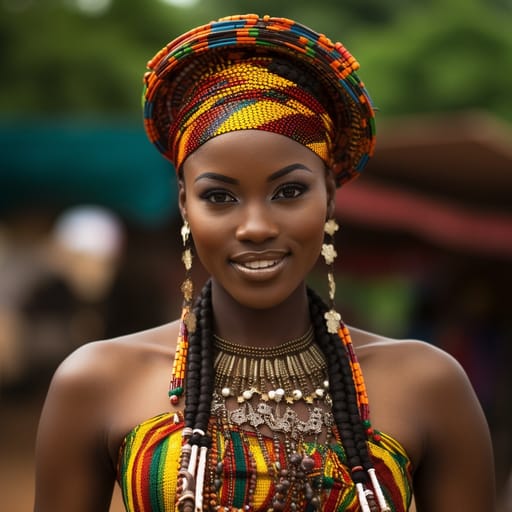
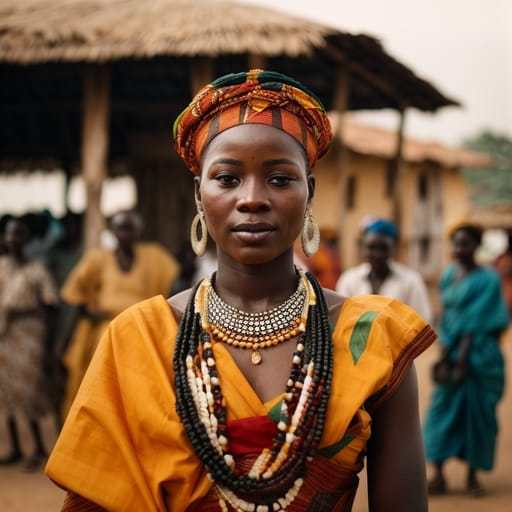
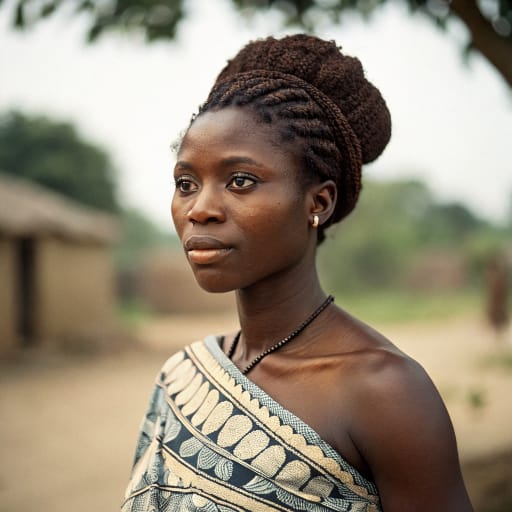
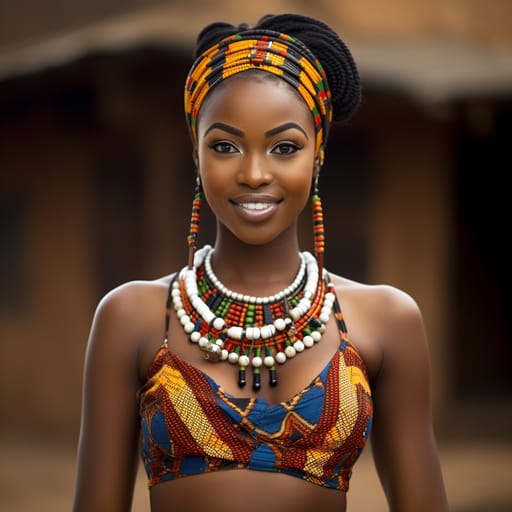
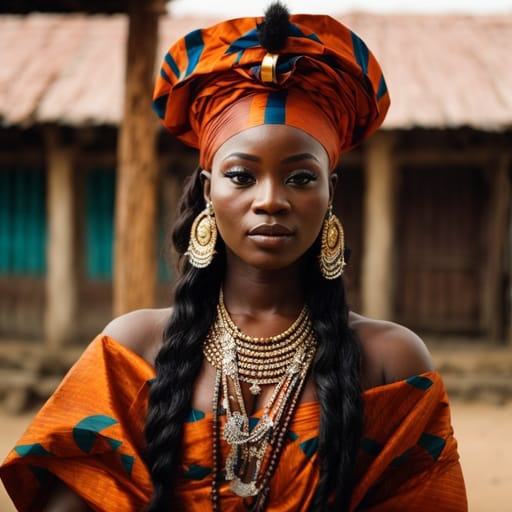
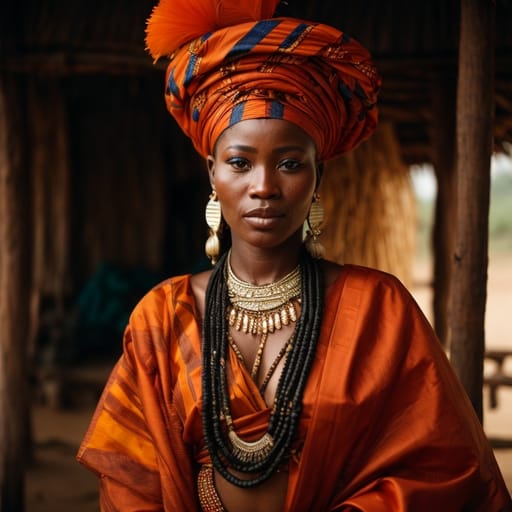
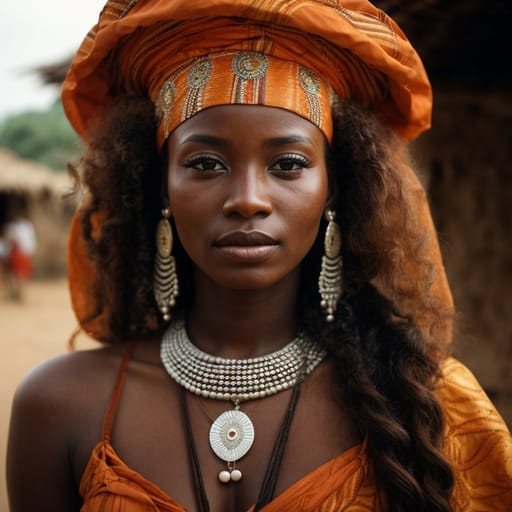
Geographic Distribution: Igbo populations across 1 country
Each row is ranked by the group's share of that country's population, with the source citation drawn from published census and demographic surveys. Click through for the full per-country phenotype profile.
| Country | Share | Source |
|---|---|---|
| Nigeria | 18.0% | Nigerian demographic estimates; Igbo / Ibo (~18%, ~40M+); Niger-Congo source population, predominantly southeastern Nigeria. The Biafran War (1967-1970) was substantially driven by Igbo separatism |
Typical Igbo Phenotypes
Reference for AI generation: hair, eyes, skin, facial structure, build
Igbo phenotype sits firmly within the West African range but carries its own structural tendencies, particularly around facial proportion and build. Skin tone runs from medium-deep brown to deep brown-black, mostly Fitzpatrick V-VI, with warm red-brown and umber undertones rather than the cooler blue-black common further east in Sudan. The pageant lineage the group is known for (Ezinne Akudo, Unoaku Anyadike, Bianca Odumegwu-Ojukwu) sits in the medium-deep range; rural and southeastern Igbo populations skew darker, while Anioma and Ikwerre branches at the western edge sometimes carry slightly lighter, redder tones from generational contact with neighboring Edo and Ijaw groups.
Hair is Type 4, predominantly 4B-4C (tightly coiled, low natural sheen, dense and shrinkage-prone) and almost uniformly black or very dark brown. Straight or wavy hair does not occur natively. Eyes are dark brown to near-black; the epicanthic fold is absent, eye shape is open and almond to slightly rounded, and lashes tend to be thick and dense. Eyebrows are typically full and well-defined.
Facial structure is where Igbo phenotype gets specific. Noses tend toward a moderate bridge with a defined, often slightly rounded tip and broad-but-not-flat alar base, narrower on average than Yoruba or Hausa norms. Lips are full top and bottom, usually evenly proportioned rather than with the heavier lower-lip dominance seen in some Bantu groups. Cheekbones are high and forward-set; jawlines are clean and angular in men, more tapered and heart-shaped in women. The overall facial impression is sculpted rather than soft.
Build skews tall and lean. Igbo men commonly reach 5'10"-6'2"; women average noticeably taller than the Nigerian mean, with long limbs, narrow waists, and naturally muscular legs and glutes. Body fat distribution is gluteofemoral rather than abdominal. Actors like Chiwetel Ejiofor, Nonso Anozie, and Uzo Aduba sit comfortably within these proportions: long-limbed, broad-shouldered, strong-jawed, with the dense Type 4 hair and deep-brown skin that anchor the group's typical look.
Igbo Body & Anatomy Reference
West African Niger-Congo phenotype: anatomy reference for AI nude generation
Igbo Boobs & Breasts
The typical Igbo bust is medium-to-large cup, full, projecting, in line with the wider West African Niger-Congo pattern. Areolas usually fall in the 35-50mm range, with deep-brown to near-black areolar pigmentation against the medium-to-deep-brown skin tone. Compared with the smaller conical Cushitic East African profile, Igbo breasts sit forward and are generally fuller and more projecting than the East African norm. A faithful AI render of Igbo tits keeps that shape and areola size.
Igbo Ass & Hips
Butt shape among Igbo women: wide-set, full, heavily projected glutes, over wide iliac crests, broad gynoid pelvic pattern, high glute-to-waist ratio. This follows West African Niger-Congo ancestry and looks quite unlike the slim narrow-hip Cushitic East African profile. An accurate Igbo ass in adult AI imagery keeps both the silhouette and the overall build (mesomorph with strong gluteal-femoral fat distribution) instead of a generic average.
Igbo Vagina & Pussy
Vulvar anatomy among Igbo women: deep-brown to near-black labial pigmentation, fuller labia minora. Pubic hair tends to be tightly-coiled coarse texture, densely distributed, in the usual inverted-triangle pattern. Both follow West African Niger-Congo pigmentation, which is why Igbo pussy renders should not fall back on a pale, sparse Western template.
Igbo Dicks & Penis
The Igbo cock profile, from West African Niger-Congo anthropometric data: regional mean ~14-15cm erect; above-average girth, ~13cm circumference; deep-brown-to-near-black shaft pigmentation. Pubic hair has a tightly-coiled coarse texture and forms the usual inverted-V pattern. Whether Igbo men are circumcised follows religious and cultural practice rather than phenotype.
Igbo Body, Curves & Build
Build and curves among Igbo women follow the West African Niger-Congo pattern: mesomorph with strong gluteal-femoral fat distribution, mean adult female BMI 24-27. Proportions matter as much as skin tone, so Igbo figures should keep their regional height and limb ratios.
Igbo Skin Tone & Hair Texture
The Igbo skin range is medium-brown to deep-brown (Fitzpatrick V-VI), and hair tends to be tight 4A-4C coil, often worn natural, braided, or relaxed. That combination marks the West African Niger-Congo phenotype, and skin tone is the trait AI generators most often get wrong for Igbo women.
Data depth
82/100Coverage of image-grounded phenotype observations · drives AI generation diversity
- Sample size
- 40/40· 52 images
- Image quality
- 27/30· 54% high
- Confidence
- 15/20· mean 0.77
- Source diversity
- 0/10· wikipedia
- ·Wikipedia-only source, not population-representative
Observed Distribution: Image Sample
Empirical observations from analyzed photographs · supplementary signal, not population truth
Sample: 52 images analyzed (52 wikipedia). Quality: 28 high, 19 medium, 5 low, 0 very_low. Avg analyzer confidence: 0.77.
Skin tone (Fitzpatrick): III (2%), IV (8%), V (33%), VI (52%), unclear (6%)
Hair color: black (69%), gray/white (19%), light/medium brown (4%), other (2%), unclear (6%)
Hair texture: straight (15%), wavy (12%), curly (2%), coily (54%), covered (12%), unclear (6%)
Eye color: dark brown (87%), other (2%), unclear (12%)
Epicanthic fold: 0% present, 88% absent, 12% unclear
Caveats: Sample is 100% Wikipedia notable people, which skews toward male, public-life, and modern figures, not population-representative.
Last aggregated: May 7, 2026
Explore phenotype categories
Structured taxonomy with peer-reviewed scales · 22 anatomical categories
- SkinFitzpatrick I to VI, undertone, pigmentation
- EyesColor, shape, eyelid, epicanthic fold
- Head hairColor, Andre Walker texture, hairline
- Body shapeHeath-Carter somatotype, WHR, frame
- NoseBridge, tip, nostril, alar width
- Lips & mouthVolume, Cupid’s bow, philtrum
Measured in Igbo portraits
Notable Igbo People
100 reference figures, sourced from Wikipedia
- Music
- Odinani
- Debbie Collins, Miss World 2016 Nigeria representative
- Unoaku Anyadike, Most Beautiful Girl in Nigeria 2015, Miss World 2015 Nigeria representative
- Iheoma Nnadi, Most Beautiful Girl in Nigeria 2014, Miss World 2014 Nigeria representative
- Ezinne Akudo, Miss Nigeria 2013
- Sylvia Nduka, Most Beautiful Girl in Nigeria 2011, Miss World 2011 Nigeria representative
- Fiona Amuzie-Iredu, Most Beautiful Girl in Nigeria 2010, Miss World 2010 Nigeria representative
- Glory Umunna, Most Beautiful Girl in Nigeria 2009, Miss World 2009 Nigeria representative
- Adaeze Igwe, Most Beautiful Girl in Nigeria 2008, Miss World 2008 Nigeria representative, …
- Munachi Nwankwo, Most Beautiful Girl in Nigeria 2007, Miss World 2007 Nigeria representative
- Chinenye Ochuba, Most Beautiful Girl in Nigeria 2002, Miss World 2002 Top 10 finalist, African…
- Sabina Umeh, Most Beautiful Girl in Nigeria 1990
- Bianca Odumegwu-Ojukwu, Most Beautiful Girl in Nigeria 1988, Miss Africa 1988, Miss Intercontinental …
- Lynda Chuba-Ikpeazu, Miss Africa 1987, 2nd Nigerian to represent Nigeria in Miss Universe 1987 aft…
- Chidimma Adetshina, Most Beautiful Girl in Nigeria 2007. She represented Nigeria at the Miss Univ…
- Ikenna Bryan Okwara, Mr Nigeria 2007, semi-finalist Mister World 2007
- Ngo Okafor, arguably the internet's most downloaded black male model.
- Oluchi Onweagba, winner of Face of Africa 1998; she has starred in shows for Gucci, Carolina H…
- Collete Nwadike, winner of the Exquisite Face of the Universe Pageant, winner of Miss Tourism …
- DJ Coublon, awarded Producer of the Year by All Africa Music Awards (AFRIMA)
- Masterkraft, won Music Producer of the Year at both the City People Entertainment Awards a…
- Tyler, the Creator, Grammy award-winning artist
- Rexxie, Nigerian record producer and DJ
- Annie Ilonzeh, starred in General Hospital, Charlie's Angels, Arrow, Drop Dead Diva, Empire,…
- Antonia Okonma, starred as Darlene Cake in the ITV series Bad Girls
- Ashley Madekwe, film credits include Bambi in the ITV2 series Secret Diary of a Call Girl, As…
- Carmen Ejogo, hosted the Saturday Disney morning show. Film credits include Love's Labour's…
- Caroline Chikezie, Her movie roles include Sasha Williams in As If, Elaine Hardy in Footballers'…
- Charles Venn, known for his roles as Ray Dixon in EastEnders, Jacob Masters in Casualty, Cu…
- Chike Nwoffiah, actor, theater director and filmmaker. Listed as one of the "Top Ten Most Inf…
- Chiké Okonkwo, starred as PC Clark in New Tricks and DC Callum Gada in Paradox. He currently…
- Chiwetel Ejiofor, Award-winning and two-time Golden Globe Award-nominated actor, Brother of CNN…
- Cyril Nri, actor, writer and director who starred as Superintendent "Adam Okaro" in the …
- Enuka Okuma, starred in Rookie Blue, Madison, Sue Thomas: F.B.Eye, Hillside
- Megalyn Echikunwoke, starred as Tara Price in CSI: Miami, Isabelle Tyler in The 4400 and as Mari M…
- Nonso Anozie, starred as Tank in RocknRolla, Sergeant Dap in Ender's Game, Abraham Kenyatta…
- Phina Oruche, actress, radio presenter and former model who starred as Liberty Baker in ITV…
- Tracy Ifeachor, known for roles in Blooded, Billionaire Ransom, Casualty, Doctor Who, Strike …
- Uzo Aduba, starred as Suzanne "Crazy Eyes" Warren on the Netflix original series Orange …
- Kelechi Eke, is the founder of The African Film Festival (TAFF) and the creator of movie s…
- Blair Underwood, American television and film actor nominated for a 2009 Golden Globe Award fo…
- Forest Whitaker, American actor, producer, and director who won an Academy Award for his perfo…
- Paul Robeson, multi-lingual American actor, athlete, Basso cantante concert singer, writer,…
- Amaechi Muonagor, actor and producer. Igodo, Without Goodbye, Most Wanted Kidnappers, Jack and …
- Bob-Manuel Udokwu, Lifetime Achievement award winner at the 10th Africa Movie Academy Awards
- Chacha Eke, starred in The End is Near, Commander in Chief, Clap of Thunder, Two Hearts
- Chidi Mokeme, actor and ex host of the Gulder Ultimate Search Reality-show
- Chika Ike, winner of the Actors Guild of Nigeria (AGN) Award for Most Disciplined Actress
- Chinedu "Aki" Ikedieze, He is best known for his character "Aki", playing alongside Osita Iheme in th…
- Chioma Chukwuka, actress and movie producer, winner of the Africa Movie Academy Award for Best…
- Cynthia Shalom, actress and producer, winner of Next Movie Star reality show season 11
- Chizzy Alichi, winner City People Entertainment Awards Best New Actress Of The Year (English…
- Clem Ohameze, starred in Ije: The Journey
- Ebele Okaro, Best Supporting Actress 2017 Africa Magic Viewers Choice Awards
- Ebube Nwagbo, starred in Arrested by Love, Eyes of the Nun, Before My Eyes, Against My Bloo…
- Ejike Asiegbu, former President of the Actors Guild of Nigeria.
- Enyinna Nwigwe, best known for The Wedding Party, Black November, Black Gold
- Francis Agu, actor. Best known for his role on the long-running Nigerian television series…
- Genevieve Nnaji, winner Africa Movie Academy Award for Best Actress in a Leading Role, Africa …
- Hanks Anuku, often stars as a villain in many Nollywood films. Brother of Miss Nigeria 198…
- Jim Iyke, one of the stars of the movie Last Flight to Abuja
- John Okafor, acted in more than 200 movies including Mr.Ibu (2004), Mr.Ibu in London (2004…
- Stephanie Okereke, Best Actress, English and Best Actress of the year 2003, Reel Awards 2003, al…
- Adaora Onyechere, co-anchor of morning show Kakaaki on AIT
- Ebuka Obi-Uchendu, Big Brother Naija and Rubbing minds host
- Keme Nzerem, Channel 4 News news anchor and reporter.
- Tobechi Nneji, "Most listened-to OAP in all of Eastern Nigeria at mid-day" according to This…
- Zain Asher, news anchor at CNN, sister of actor Chiwetel Ejiofor
- Ben Enwonwu
- Ada Udechukwu
- Akwaeke Emezi
- Africanus Horton, also known as James Beale, he was a writer and folklorist from Sierra Leone
- Buchi Emecheta
- Catherine Obianuju Acholonu
- Chika Unigwe
- Chimamanda Ngozi Adichie, best known for Half of a Yellow Sun
- Chinua Achebe, novelist, poet and critic, best known for his award-winning novel Things Fall…
- Chinweizu Ibekwe
- Chris Abani, notable for his first novel, Masters of the Board, which was about a Neo-Nazi…
- Christopher Okigbo
- Chukwuemeka Ike
- Cyprian Ekwensi
- E. Nolue Emenanjo
- Edward Wilmot Blyden, Liberian educator, clergyman and Pan-Africanist
- Elizabeth Isichei, prominent historian
- Emma Ugolee
- F. Nnabuenyi Ugonna
- Flora Nwapa
- Ifeanyi Chijindu
- Ifeoma Onyefulu
- Jeff Unaegbu
- Joy Chinwe Eyisi, best known for her Common Errors in the Use of English
- Michael Echeruo
- Okey Ndibe
- Okwui Enwezor
- Olaudah Equiano, also known as Gustavus Vassa, was a writer and abolitionist
- Onuora Nzekwu
- Onyeka Nwelue
- Nkem Nwankwo
Erotic Poses & Sex Positions
From the pose catalog: 219 named positions with reference skeletons
Frequently asked questions about Igbo people
Where is the Igbo homeland?
The Igbo homeland is Igboland (Nigeria) in Western Africa.
What countries do Igbo people live in?
Igbo populations are documented across 1 country: Nigeria.
What language do Igbo people speak?
Igbo people primarily speak Niger-Congo / Igbo.
What religion do Igbo people practice?
The predominant religion among Igbo people is Christianity.
What does a typical Igbo woman look like?
Igbo women typically have deep brown to brown-black skin, mostly Fitzpatrick V to VI with warm red-brown undertones, and tightly coiled black hair. Eyes are dark brown and almond-shaped with thick lashes and full brows, and faces tend to be sculpted, with high cheekbones, a heart-shaped jaw, a moderate nasal bridge and full, evenly proportioned lips. Women are often tall, with long limbs, narrow waists and muscular legs.






Make your own Igbo images
Five a day, free, no credits to buy. The studio starts from this group's phenotype data, so you can set body type, pose and style and keep the traits accurate.
Start with Igbo