Help us get this right
Does this portrait look right for Abidji?
Nobody has judged this one yet. You would be the first.
Abidji Erotic
Sikensi Department and surrounding villages such as Gomon, in the Agnéby-Tiassa Region northwest of Abidjan, southern Côte d'Ivoire.
Abidji (Niger-Congo, Kwa, Lagoon group); French widely spoken as a second language.
Mostly Christian (Catholic and Protestant), with ancestral religion still central to rites such as Dipri.
One of the lagoon peoples (peuples lagunaires) of southern Côte d'Ivoire; closest in language to the Adioukrou and Abé.
About Abidji People
Ask most Ivorians what they know about the Abidji and you usually get one word back: Dipri. Once a year the village of Gomon, the best-known host of the festival, stays indoors through a night of enforced silence. At dawn, dancers in trance come out into the streets. Some slash their own abdomens with knives, and ritual specialists close the wounds with plant medicines. Outsiders fixate on the blood. For the Abidji the point is cleansing: the festival drives out sorcery and misfortune, calls old conflicts into the open and renews the bond between a village and the powers of its land. It draws crowds from Abidjan, but it is not put on for them.
Outside that festival, the Abidji are a farming people of the forest belt northwest of Abidjan, centered on the town of Sikensi in the Agnéby-Tiassa Region. They belong to the cluster Ivorians call the lagoon peoples, the small, closely packed societies of the southern coast and its hinterland, and their language shows it. Abidji is a tonal Kwa language. Its nearest relatives are Adioukrou and Abé, not the large Akan languages to the east. Most speakers also use French, and Abidjan is close enough that family ties, schooling and work run back and forth between the villages and the city all the time.
Cocoa, coffee and oil palm pay for daily life, with cassava, plantain and other food crops grown for the household and the market. Most Abidji go to church, mainly Catholic or Protestant, yet the ancestral religion has not been pushed aside. Many families hold both at once, going to church while still meeting the obligations Dipri places on a village. Like the other lagoon societies, the Abidji came under French rule as the colony tightened its grip on the south in the early twentieth century, and cash crops, mission schools and new land rules reshaped village life over the following decades. What came through that pressure most visibly is the ritual calendar, which still decides when a village can be loud and when it must fall silent and stay indoors.
Related ethnic groups
Groups that share Abidji's homeland, region, language, or religious tradition. These are likely candidates for comparative phenotype reference.
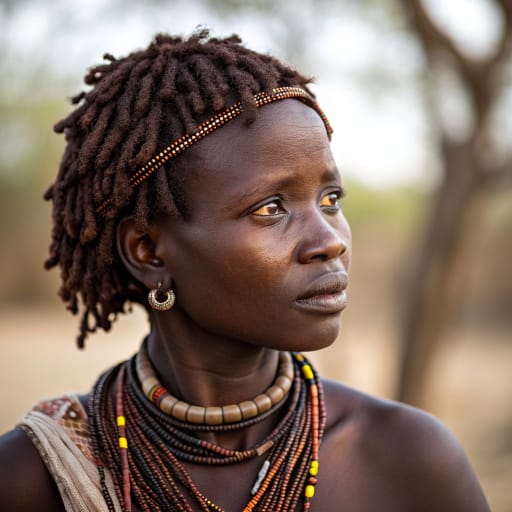
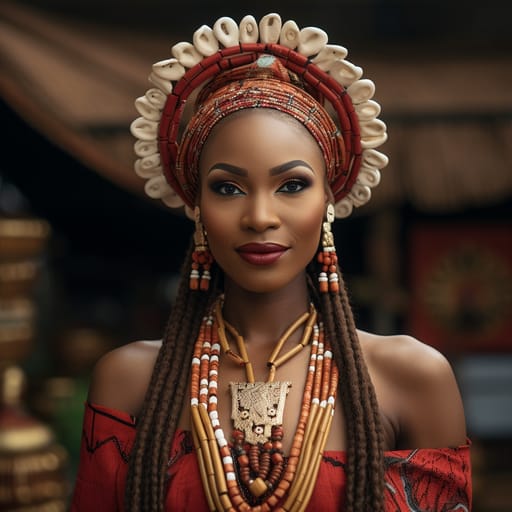
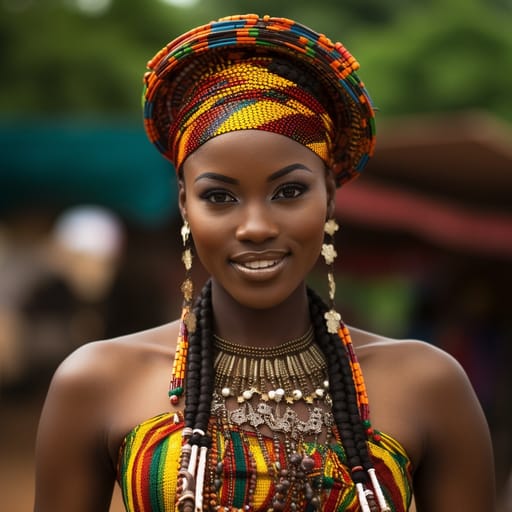
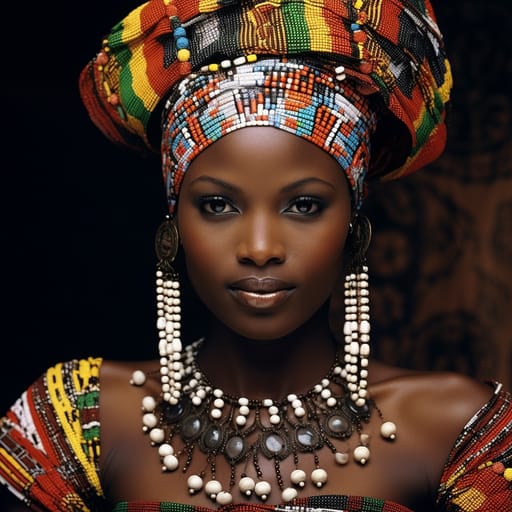
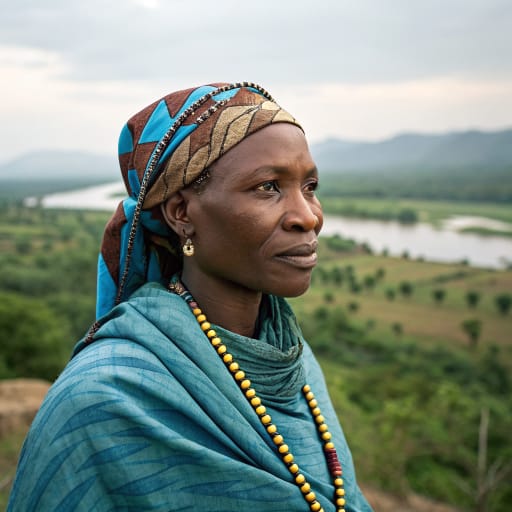
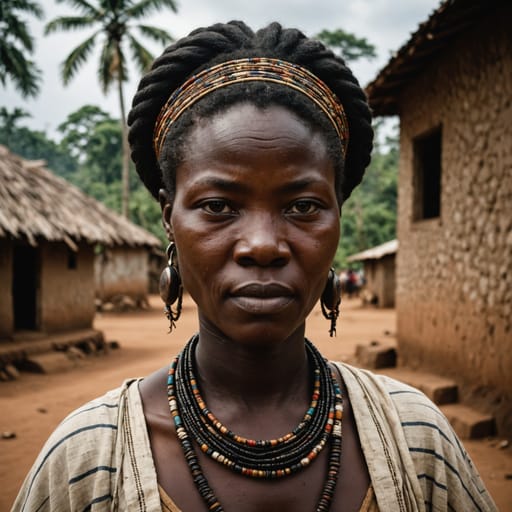
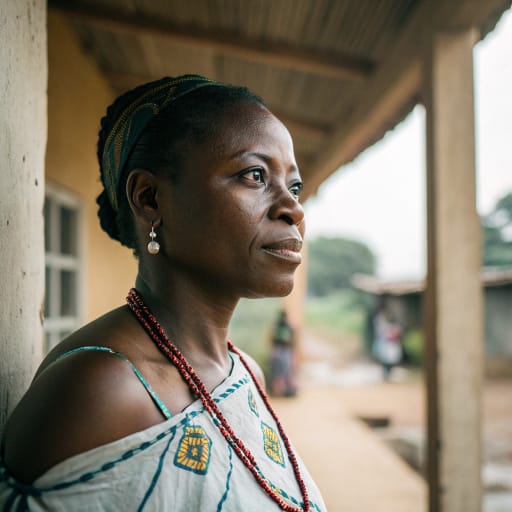
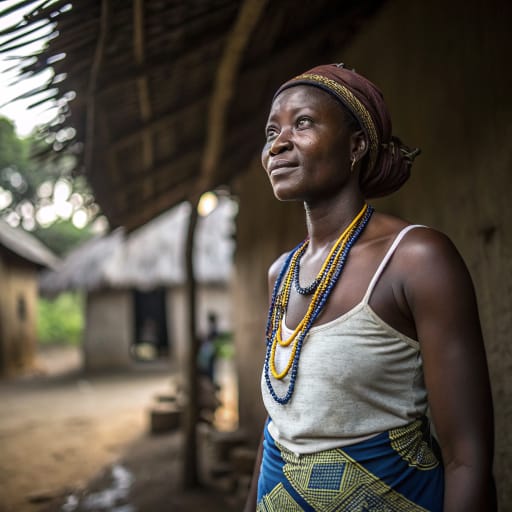
Typical Abidji Phenotypes
Reference for AI generation: hair, eyes, skin, facial structure, build
Abidji Body & Anatomy Reference
Anatomy by feature, West African Niger-Congo phenotype
Abidji Boobs & Breasts
The typical Abidji bust is medium-to-large cup, full, projecting, in line with the wider West African Niger-Congo pattern. Areolas usually fall in the 35-50mm range, with deep-brown to near-black areolar pigmentation against the medium-to-deep-brown skin tone. Compared with the smaller conical Cushitic East African profile, Abidji breasts sit forward and are generally fuller and more projecting than the East African norm. A faithful AI render of Abidji tits keeps that shape and areola size.
Abidji Ass & Hips
Butt shape among Abidji women: wide-set, full, heavily projected glutes, over wide iliac crests, broad gynoid pelvic pattern, high glute-to-waist ratio. This follows West African Niger-Congo ancestry and looks quite unlike the slim narrow-hip Cushitic East African profile. An accurate Abidji ass in adult AI imagery keeps both the silhouette and the overall build (mesomorph with strong gluteal-femoral fat distribution) instead of a generic average.
Abidji Vagina & Pussy
Vulvar anatomy among Abidji women: deep-brown to near-black labial pigmentation, fuller labia minora. Pubic hair tends to be tightly-coiled coarse texture, densely distributed, in the usual inverted-triangle pattern. Both follow West African Niger-Congo pigmentation, which is why Abidji pussy renders should not fall back on a pale, sparse Western template.
Abidji Dicks & Penis
The Abidji cock profile, from West African Niger-Congo anthropometric data: regional mean ~14-15cm erect; above-average girth, ~13cm circumference; deep-brown-to-near-black shaft pigmentation. Pubic hair has a tightly-coiled coarse texture and forms the usual inverted-V pattern. Whether Abidji men are circumcised follows religious and cultural practice rather than phenotype.
Abidji Body, Curves & Build
Build and curves among Abidji women follow the West African Niger-Congo pattern: mesomorph with strong gluteal-femoral fat distribution, mean adult female BMI 24-27. Proportions matter as much as skin tone, so Abidji figures should keep their regional height and limb ratios.
Abidji Skin Tone & Hair Texture
The Abidji skin range is medium-brown to deep-brown (Fitzpatrick V-VI), and hair tends to be tight 4A-4C coil, often worn natural, braided, or relaxed. That combination marks the West African Niger-Congo phenotype, and skin tone is the trait AI generators most often get wrong for Abidji women.
Explore phenotype categories
Structured taxonomy with peer-reviewed scales · 22 anatomical categories
Erotic Poses & Sex Positions
From the pose catalog: 219 named positions with reference skeletons
Frequently asked questions about Abidji people
Where is the Abidji homeland?
The Abidji homeland is Sikensi Department and surrounding villages such as Gomon, in the Agnéby-Tiassa Region northwest of Abidjan, southern Côte d'Ivoire. in Western Africa.
What language do Abidji people speak?
Abidji people primarily speak Abidji (Niger-Congo, Kwa, Lagoon group); French widely spoken as a second language..
What religion do Abidji people practice?
The predominant religion among Abidji people is Mostly Christian (Catholic and Protestant), with ancestral religion still central to rites such as Dipri..






Make your own Abidji images
Five a day, free, no credits to buy. The studio starts from this group's phenotype data, so you can set body type, pose and style and keep the traits accurate.
Start with Abidji