Help us get this right
Does this portrait look right for Soninke?
The portrait with the most votes becomes this group’s image across the site.
1 says it looks right, 0 say it looks off.
This portrait replaced one that 3 of 5 readers said looked off.
Soninke Erotic
Islam / Sunni Islam
Haratin
About Soninke People
The Soninke trace themselves to the Ghana Empire, the first of the great Sahelian states, flourishing from roughly the 4th to the 13th century in what is now southeastern Mauritania and western Mali. That memory is not abstract. It shapes how Soninke communities understand themselves: as the founders of trans-Saharan commerce, the people who first organized gold and salt into an economy that pulled the medieval Mediterranean toward the Sahel. When the empire fragmented, its people scattered, and that scattering is the defining fact of Soninke life today. They are everywhere along the upper Senegal River (in Mali, Mauritania, Senegal, the Gambia), and they are also in Paris, Bamako, Dakar, and dozens of mining and construction towns across central Africa. The diaspora is the culture.
Their language, Soninke, sits in the northwestern branch of Mande, alongside Bambara and Mandinka, though it diverged early enough that a Bambara speaker and a Soninke speaker cannot easily understand each other. Islam arrived among them earlier than among most West African peoples (the ruling class of ancient Ghana converted in the 11th century), and Sunni practice, mostly Maliki, is now woven into ordinary life rather than performed as a separate religious sphere. Soninke clerics, the modinu, were among the great long-distance Islamic scholars of the western Sudan, and that scholarly tradition still gives the community a particular gravity in religious matters across the region.
Soninke society retains a hereditary stratification that anthropologists describe as caste-like: nobles, artisan groups (smiths, leatherworkers, griots), and descendants of enslaved people. The Haratin, often grouped with or near the Soninke in Mauritania, are the descendants of formerly enslaved Black populations within Arab-Berber society, and their relationship to mainstream Soninke identity is contested and politically charged: slavery was only legally abolished in Mauritania in 1981, and its social residues are still being argued over. Among the Soninke proper, the practice of long male labor migration is centuries old and predates colonial economies; it produced the village-level institution of the kafo, a mutual aid association that pools remittances for mosques, wells, and schools back home. A Soninke man working construction in Île-de-France and sending money to a village near Kayes is participating in something that has been recognizable for at least two hundred years.
Related ethnic groups
Groups that share Soninke's homeland, region, language, or religious tradition. These are likely candidates for comparative phenotype reference.
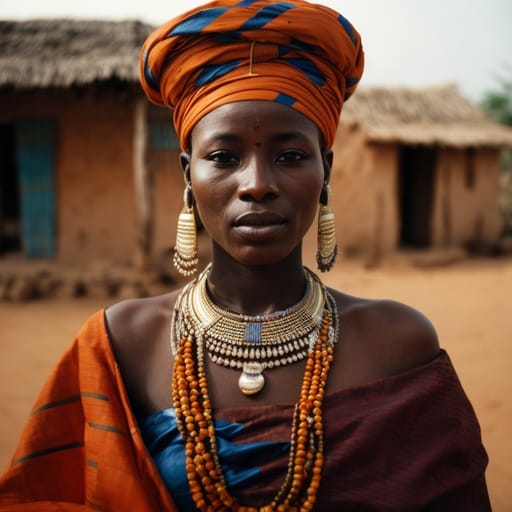
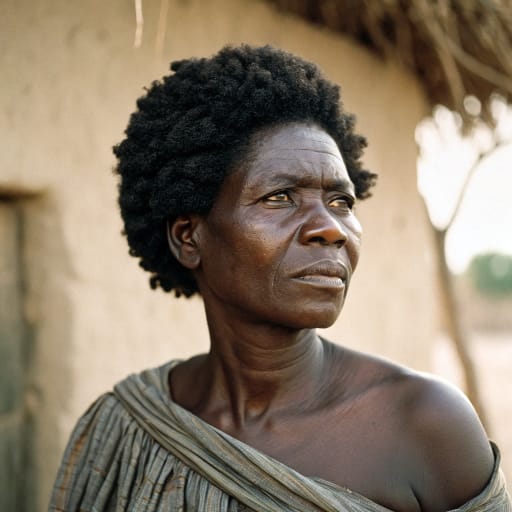
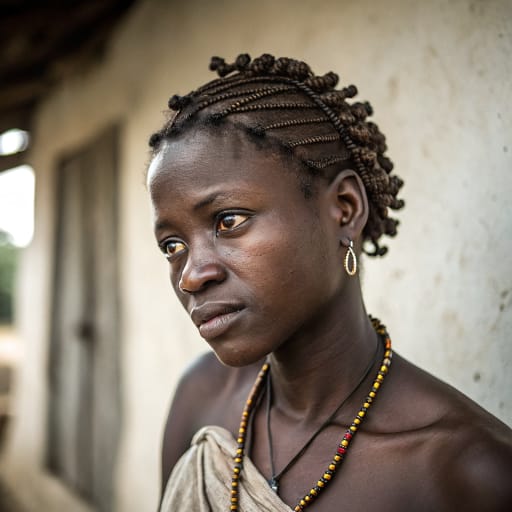
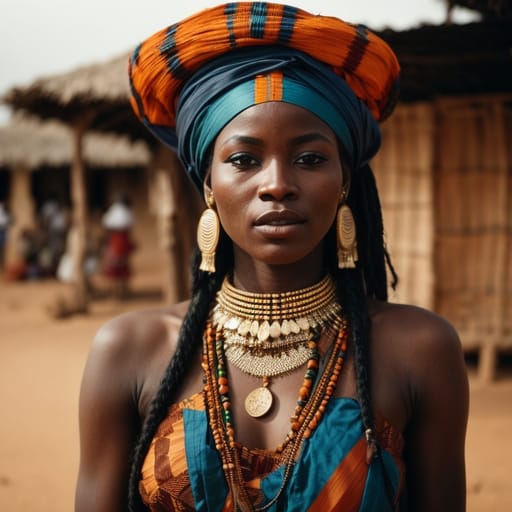
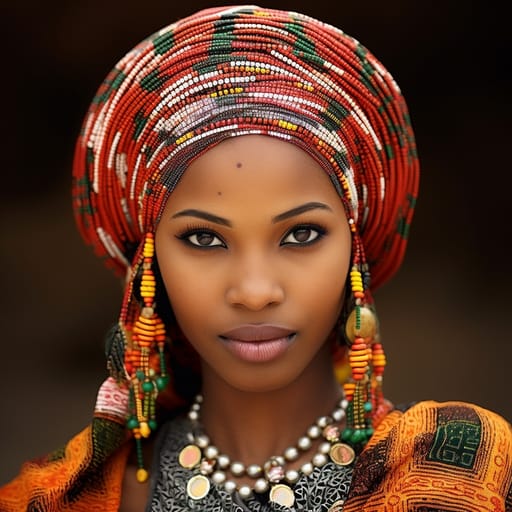
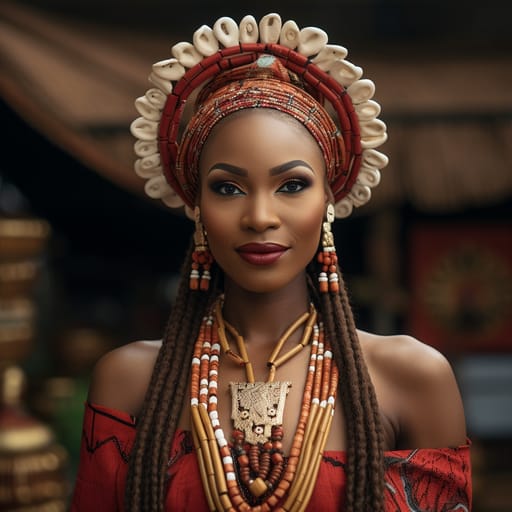
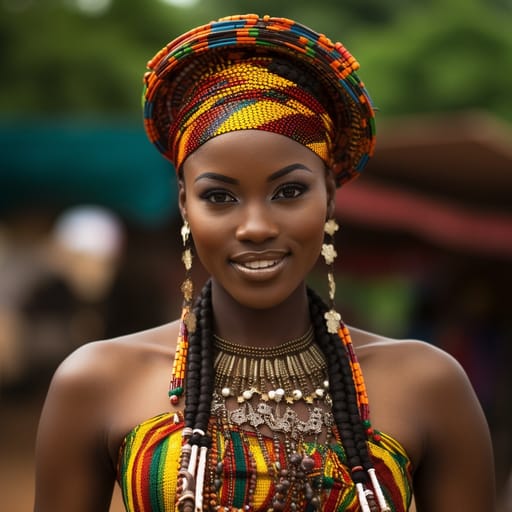
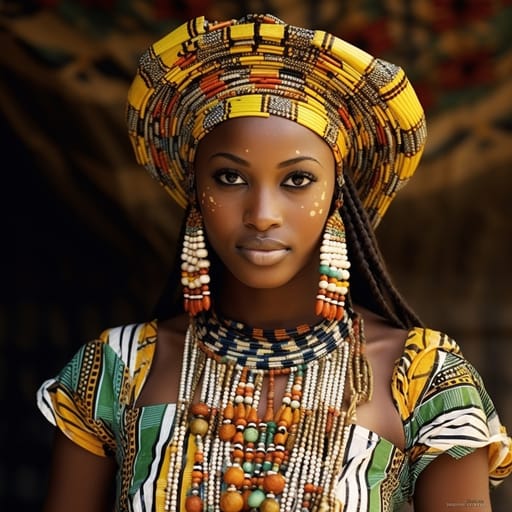
Geographic Distribution: Soninke populations across 1 country
Each row is ranked by the group's share of that country's population, with the source citation drawn from published census and demographic surveys. Click through for the full per-country phenotype profile.
| Country | Share | Source |
|---|---|---|
| Mali | 9.4% | Mali 2009 Census; Soninke (~9.4%); Mande source population, cross-border with Senegalese, Mauritanian, and Gambian Soninke |
Typical Soninke Phenotypes
Reference for AI generation: hair, eyes, skin, facial structure, build
The Soninke phenotype is rooted in the classic West African Sahel, a population that has lived for over a millennium along the Senegal River and the dry savanna belt of Mali, Mauritania, and eastern Senegal. Skin tone clusters firmly in Fitzpatrick VI, with deep brown to near-black tones and warm reddish-brown undertones from prolonged sun exposure on open savanna; the lighter end of Fitzpatrick V appears in mixed-heritage individuals but is uncommon in core populations. Hair is overwhelmingly Type 4 (tightly coiled to kinky, with Type 4B and 4C textures dominant) and almost uniformly very dark brown to black. Adult men commonly shave close or wear short cuts; women's styles range from braided cornrows to wrapped scarves, so the natural texture is often less visible in public images than the underlying coil pattern would suggest.
Eyes are dark brown to near-black, with no epicanthic fold and a generally wide, almond-to-round palpebral opening. Facial structure tends toward broad, slightly flared alar bases with a low-to-medium nasal bridge, full lips with pronounced vermilion borders, and well-defined cheekbones over a relatively narrow lower face, the elongated, lean head shape characteristic of Sahelian Mande peoples rather than the rounder facial geometry of forest-zone West Africans. Jaws are often firm but not heavy.
Build is the most distinctive structural marker: Soninke men typically run tall and lean, with long limbs, narrow hips, and low body fat, the same Sahelian morphology that produces the steady stream of professional footballers in this group, from N'Golo Kanté to Frédéric Kanouté. Stature ranges roughly 175-188 cm in men, with women proportionally tall and slender-framed in youth, often gaining fuller hips and bust with age.
The Haratin sub-group, historically tied to Soninke and Moorish societies in Mauritania, shares the same dark skin and Type 4 hair but sometimes shows slightly finer facial features and narrower noses, reflecting older admixture along the Saharan trade corridor.
Soninke Body & Anatomy Reference
Per-feature anatomical profile for AI nude generation: West African Niger-Congo phenotype
Soninke Boobs & Breasts
Bust reference for Soninke women: medium-to-large cup, full, projecting, which is typical of West African Niger-Congo ancestry. Areolas measure about 35-50mm across, with deep-brown to near-black pigmentation. Body type (mesomorph with strong gluteal-femoral fat distribution) shapes the bust as well, so Soninke tits are usually fuller and more projecting than the East African norm. In AI imagery, keep the forward-set shape rather than drifting toward the smaller conical Cushitic East African profile.
Soninke Ass & Hips
The Soninke ass is typically wide-set, full, heavily projected glutes, which sets it apart from the slim narrow-hip Cushitic East African profile. Underneath, the pelvis shows wide iliac crests, broad gynoid pelvic pattern, high glute-to-waist ratio, part of the West African Niger-Congo skeletal pattern. For Soninke butt pics and AI renders, match that silhouette and the overall build (mesomorph with strong gluteal-femoral fat distribution).
Soninke Vagina & Pussy
Soninke pussy and vulvar anatomy presents deep-brown to near-black labial pigmentation, fuller labia minora, consistent with the West African Niger-Congo phenotype's pigmentation pattern. Soninke pubic hair is typically tightly-coiled coarse texture, densely distributed, in the inverted-triangle pattern. For anatomically accurate Soninke pussy renders the labial coloration should match the surrounding medium-brown to deep-brown skin tone with a continuous gradient, and the hair should keep its tightly-coiled coarse texture.
Soninke Dicks & Penis
Soninke dicks follow the West African Niger-Congo reference data: regional mean ~14-15cm erect; above-average girth, ~13cm circumference; deep-brown-to-near-black shaft pigmentation. Shaft color should track the medium-brown to deep-brown skin tone with a smooth change toward the glans, and Soninke pubic hair keeps its tightly-coiled coarse texture.
Soninke Body, Curves & Build
Soninke body type and overall build presents as mesomorph with strong gluteal-femoral fat distribution, with mean adult female BMI 24-27: the characteristic West African Niger-Congo habitus. Soninke curves and proportions should keep the regional skeletal frame (height, shoulder-to-hip ratio, limb proportions) rather than a generic mesomorph default.
Soninke Skin Tone & Hair Texture
Soninke skin sits in the medium-brown to deep-brown (Fitzpatrick V-VI) band. Hair is typically tight 4A-4C coil, often worn natural, braided, or relaxed, in keeping with the West African Niger-Congo phenotype. In nude renders the skin should stay one even tone from face to body, and body, pubic and head hair should match.
Data depth
85/100Coverage of image-grounded phenotype observations · drives AI generation diversity
- Sample size
- 35/40· 39 images
- Image quality
- 30/30· 62% high
- Confidence
- 20/20· mean 0.85
- Source diversity
- 0/10· wikipedia
- ·Wikipedia-only source, not population-representative
Observed Distribution: Image Sample
Empirical observations from analyzed photographs · supplementary signal, not population truth
Sample: 39 images analyzed (39 wikipedia). Quality: 24 high, 14 medium, 1 low, 0 very_low. Avg analyzer confidence: 0.85.
Skin tone (Fitzpatrick): II (3%), V (8%), VI (90%)
Hair color: black (79%), gray/white (10%), blonde (5%), unclear (5%)
Hair texture: straight (3%), wavy (3%), coily (69%), bald (3%), shaved (13%), covered (10%)
Eye color: dark brown (97%), blue (3%)
Epicanthic fold: 0% present, 100% absent, 0% unclear
Caveats: Sample is 100% Wikipedia notable people, which skews toward male, public-life, and modern figures, not population-representative.
Last aggregated: May 7, 2026
Explore phenotype categories
Structured taxonomy with peer-reviewed scales · 22 anatomical categories
Notable Soninke People
90 reference figures, sourced from Wikipedia
- Doussou Bagayoko, Malian musician
- Mamadou Bagayoko, Malian footballer
- Siaka Bagayoko, Malian footballer
- Abdoulaye Bathily, Senegalese historian and politician
- Djegui Bathily, Senegalese Judoka
- Germain Berthé, Malian footballer
- Ousmane Berthé, Malian footballer
- Hassoun Camara, French footballer
- Khassa Camara, Mauritanian footballer
- Soninke Camara, Malian musician
- Zoumana Camara, French footballer
- Papiss Cissé, Senegalese footballer
- Lassana Hawa Cissokho, Malian musician
- Moussa Diagana, Mauritanian writer
- Ismaël Diakité, Mauritanian footballer
- Souleymane Diamouténé, Malian footballer
- Fousseni Diawara, Malian footballer
- Diaby Doua, Malian musician
- Boubacari Doucouré, French footballer
- Cheick Doucouré, Malian footballer
- Kamory Doumbia, Malian footballer
- Moussa Doumbia, Malian footballer
- Boukary Dramé, Senegalese footballer
- Chéché Dramé, Malian musician
- Mamadou Lamine Dramé, was a 19th-century marabout who fought against French colonization
- Demba Ganda Fadiga, Malian musician
- Diadia Fadiga, Malian musician
- Ganda Fadiga, Malian griot
- Khalilou Fadiga, Senegalese footballer
- Babou Fofana, Malian footballer
- Gueïda Fofana, French footballer
- Guessouma Fofana, Mauritanian footballer
- Lamine Gassama, Senegalese footballer
- Mamoudou Gassama, undocumented migrant from Mali
- Omaré Gassama, Mauritanian footballer
- Omar Gassama, Gambian politician
- Sadio Gassama, Malian politician
- Bingourou Kamara, Senegalese footballer
- Frédéric Kanouté, Malian footballer
- Sadio Kanouté, Malian footballer
- N'Golo Kanté, French footballer
- Ibrahima Kébé, Senegalese visual artist
- Babacar Khouma, Senegalese footballer
- Sékou Koïta, Malian footballer
- Mademba Konté, Malian musician
- Yimbi Kumma, Malian rapper
- Linky LK, Malian rapper
- Mamadou Demba Magassa, Malian musician
- Mohamed Magassouba, Malian football coach
- Moussa Marega, Malian footballer
- Moussa Niakhaté, Senegalese footballer
- Falaye Sacko, Malian footballer
- Lamine Sakho, Senegalese footballer
- Harouna Samaké, Malian Kamale N'goni player
- Issaka Samaké, Malian footballer
- Soumaila Samaké, Malian basketball player
- Yéah Samaké, Malian entrepreneur and politician
- Mamadou Samassa, Malian footballer
- Diadie Samassékou, Malian footballer
- Oumou Sangaré, Malian musician
- Younousse Sankharé, Senegalese footballer
- Landing Savané, Senegalese politician
- Sitapha Savané, Senegalese basketball player
- Djibril Sidibé, Malian footballer
- Gabourey Sidibe, American actress
- Mahamadou Sidibé, Malian footballer
- Kaïdama Sidibé, former Prime Minister of Mali
- Muhammed B. Sissoho, Gambian Soninke TV & Radio talk show host
- Sidney Sokhona, Mauritanian filmmaker
- Bintou Soumbounou, Malian musician
- Maimouna Soumbounou, Malian musician
- Fanta Souroukou, Malian musician
- Youssouf Sabaly, Senegalese footballer
- Myriam Soumaré, French track and field athlete
- Yacouba Sylla, Malian footballer
- Abubacarr Tambadou, former Minister of Justice of the Gambia
- Adama Tamboura, Malian footballer
- Aïce Tamoura, Malian musician
- Demba Tandia, Malian musician
- Mamadou Tandja, former President of Niger from 1999 to 2010
- Sidy Bonco Tangoudia, Malian musician
- Djelimady Tounkara, Malian musician
- Maakan Tounkara, French handball player
- Mamadou Tounkara, Spanish footballer
- Bassala Touré, Malian footballer
- Halima Kissima Touré, Malian musician
- Balemé Kandji Traoré, Malian musician
- Molla Wagué, Malian footballer
- Moussa Wagué, Senegalese footballer
- Moustapha Soumaré, Malian diplomat and UN Special Representative
Erotic Poses & Sex Positions
From the pose catalog: 219 named positions with reference skeletons
Frequently asked questions about Soninke people
Where is the Soninke homeland?
The Soninke homeland is Mali in Western Africa.
What countries do Soninke people live in?
Soninke populations are documented across 1 country: Mali.
What language do Soninke people speak?
Soninke people primarily speak Niger-Congo / Mande / Soninke.
What religion do Soninke people practice?
The predominant religion among Soninke people is Islam / Sunni Islam.
What does a typical Soninke woman look like?
Soninke women typically have very dark skin, mostly Fitzpatrick VI with warm reddish-brown undertones, and tightly coiled very dark brown to black hair, often braided or covered. Faces tend to be long and lean, with well-defined cheekbones, a broad nose with a low-to-medium bridge and full lips with pronounced borders. Women are proportionally tall and slender when young, often gaining fuller hips and bust with age.






Make your own Soninke images
Five a day, free, no credits to buy. The studio starts from this group's phenotype data, so you can set body type, pose and style and keep the traits accurate.
Start with Soninke