Help us get this right
Does this portrait look right for Bozo?
Nobody has judged this one yet. You would be the first.
Bozo Erotic
Islam
About Bozo People
The Bozo are the river people of the inland Niger Delta, the long stretch of floodplain and shifting channels that runs through central Mali roughly between Ségou and Timbuktu. Their reputation, even among their neighbors, is built on the water: they are the fishermen who read the Niger's annual flood the way farmers elsewhere read the soil. When the river rises in late summer and floods the delta into a temporary inland sea, Bozo families move with it, working from narrow planked pirogues and pole-driven canoes; when the water retreats, they harvest the fish stranded in shrinking pools. This rhythm — flood, dispersal, retreat, concentration — has shaped settlement, diet, marriage, and labor for centuries.
Their language belongs to the Mande branch of Niger–Congo, putting them in the same broad family as Bambara, Soninke, and Mandinka, though Bozo itself is internally varied enough that linguists usually describe it as a small cluster of related tongues rather than a single uniform language — Tieyaxo, Jenaama, Tiema Cewe, and Sorogama are the main divisions, each tied to a particular reach of the river. Most Bozo are Muslim, and have been for generations, but the practical religion of the delta carries an older substrate: river spirits, ancestral pacts, and ritual specialists who handle the dangers of deep water and dangerous fish. Islam supplies the calendar and the funerary rites; the river still has its own etiquette.
The Bozo claim a long association with Djenné, the mud-brick city whose great mosque stands on a delta island, and oral tradition often credits them as among the founders of the site. Their relationship with the neighboring Bambara, Songhai, Fulani, and Dogon is governed by the famous Malian institution of sinankuya — a system of joking-cousin alliances that licenses ritualized teasing between specific groups and, more importantly, obliges them to keep the peace and offer hospitality. With the Dogon in particular, the Bozo share a deep cousinship that both peoples take seriously.
What outsiders tend to miss is how specialized the work is. A Bozo fisherman is not simply someone who fishes; the techniques — collective net drives, weirs across narrowing channels, seasonal camps far from home villages — are inherited knowledge, and the right to fish particular waters is a matter of customary law as carefully tracked as land tenure is elsewhere.
Related ethnic groups
Groups that share Bozo's homeland, region, language, or religious tradition. These are likely candidates for comparative phenotype reference.
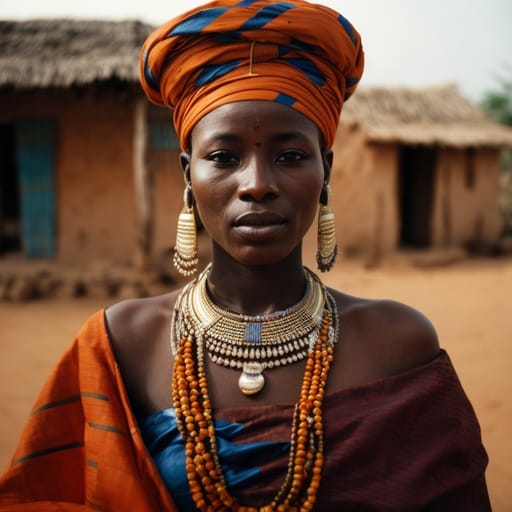
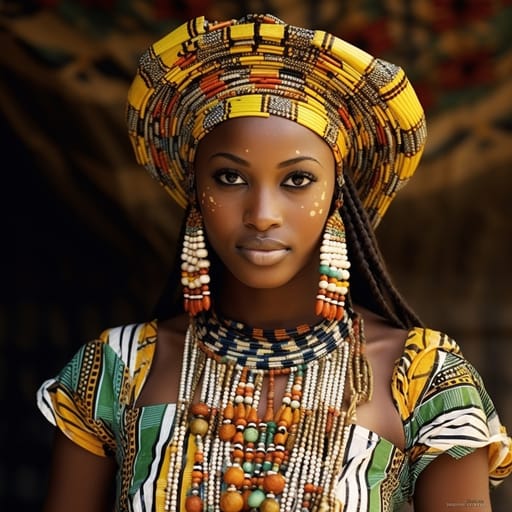
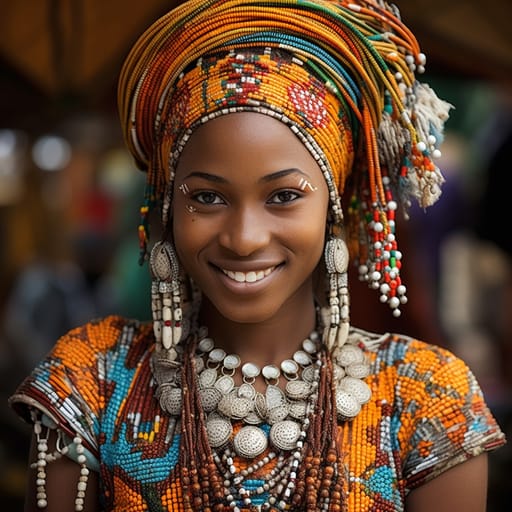
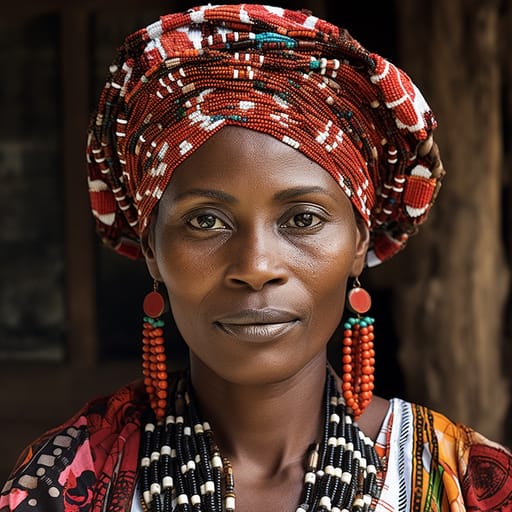
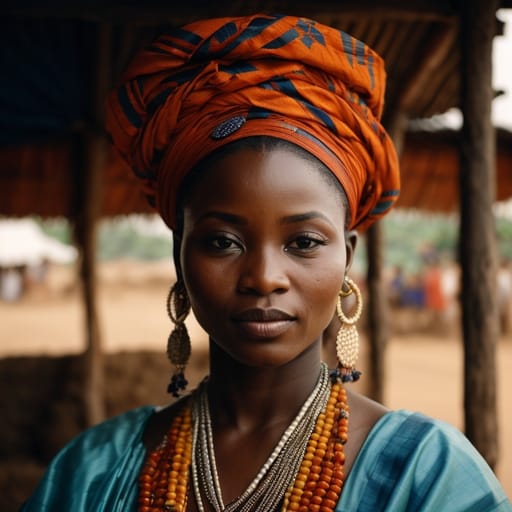
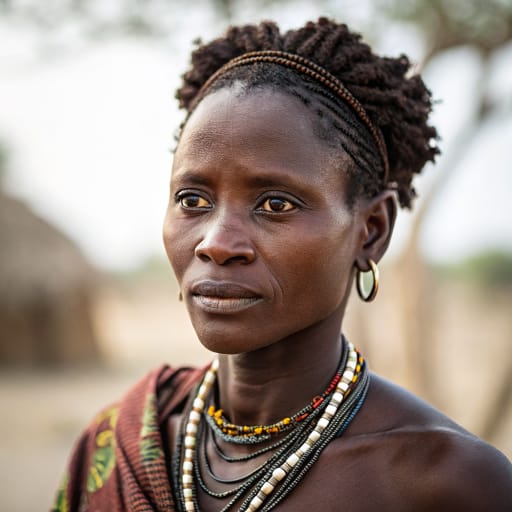
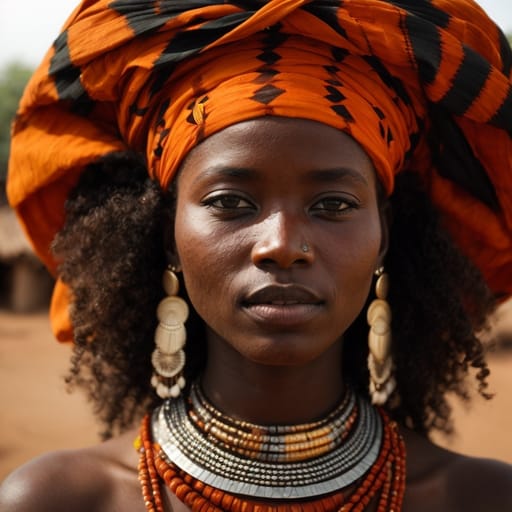
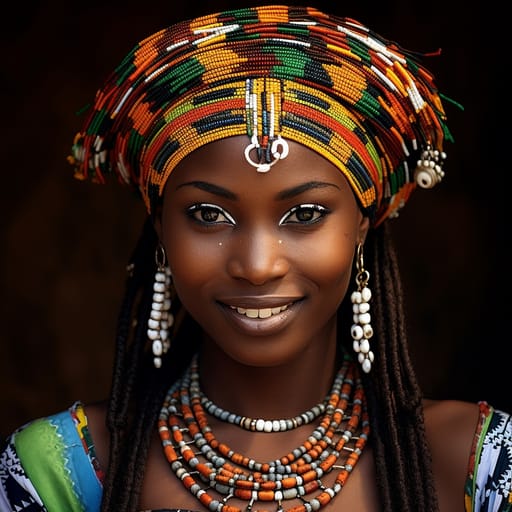
Typical Bozo Phenotypes
Reference for AI generation: hair, eyes, skin, facial structure, build
The Bozo are a small Mande-speaking fishing people of the Inner Niger Delta, and their phenotype tracks closely with neighboring Mande groups (Bambara, Soninke, Marka) rather than with the Fulani or Songhai who share the same river. The distinctive thing is not a single dramatic feature but a cohesive Sahelian-riverine build: tall, lean, narrow-framed bodies shaped by generations on pirogues and in waist-deep water, paired with very dark skin held that way by year-round sun on open water.
Hair is almost uniformly black and tightly coiled — Type 4b–4c — with the same fine, dense curl pattern common across western Mande populations. Greying tends to come late and shows up first at the temples. Eyes are dark brown to near-black; the epicanthic fold is absent, and eye shape runs almond to slightly rounded with clearly defined upper lids. Brows are full and often arched.
Skin tone sits firmly at Fitzpatrick VI — deep brown to near-black with warm, slightly reddish undertones rather than the bluish cast seen further south in the rainforest belt. Sun exposure on the river keeps tones even and dark across the body, with limited contrast between covered and uncovered skin.
Facial structure is recognizably West African but on the leaner end: nose bridges are low to medium with moderate alar width — narrower than coastal Akan or Yoruba averages, broader than Fulani. Lips are full but proportionate, cheekbones high and visible because of the low body-fat norm, and jawlines tend to be defined rather than soft. Foreheads are often broad.
Build is the most anthropometrically distinctive element. Bozo men commonly stand 175–185 cm with very low body fat, long limbs, narrow hips, and the hard, ropy musculature of working fishermen — shoulders, forearms, and back. Women run tall and slender by regional standards, with narrow waists, modest hips, and the same long-limbed proportions. Childhood obesity is essentially absent in traditional Bozo communities.
Bozo Body & Anatomy Reference
West African Niger-Congo phenotype: anatomy reference for AI nude generation
Bozo Boobs & Breasts
Bozo boobs follow the West African Niger-Congo profile: medium-to-large cup, full, projecting. Areolar diameter is usually 35-50mm, and the coloring is deep-brown to near-black areolar pigmentation against the medium-to-deep-brown skin tone. Breast shape tracks body composition (mesomorph with strong gluteal-femoral fat distribution, mean adult female BMI 24-27), so Bozo breasts tend to be fuller and more projecting than the East African norm. Expect a forward-set shape, not the smaller conical Cushitic East African profile.
Bozo Ass & Hips
Bozo ass and hip morphology presents as wide-set, full, heavily projected glutes, distinctly different from the slim narrow-hip Cushitic East African profile. The Bozo pelvic profile shows wide iliac crests, broad gynoid pelvic pattern, high glute-to-waist ratio, anchored in the West African Niger-Congo skeletal pattern. Bozo butt shots in adult AI imagery should render the wide-set, full, heavily projected glutes silhouette with the overall build (mesomorph with strong gluteal-femoral fat distribution) and the fat distribution typical of the West African Niger-Congo phenotype.
Bozo Vagina & Pussy
Bozo pussy anatomy typically shows deep-brown to near-black labial pigmentation, fuller labia minora. Pubic hair is usually tightly-coiled coarse texture, densely distributed. In AI-generated Bozo nudes, labial color should blend into the medium-brown to deep-brown skin with a gradual transition, and the hair should keep its tightly-coiled coarse texture.
Bozo Dicks & Penis
Penis reference for Bozo men: regional mean ~14-15cm erect, above-average girth, ~13cm circumference. Coloring: deep-brown-to-near-black shaft pigmentation. An accurate Bozo cock in AI imagery matches the surrounding medium-brown to deep-brown skin rather than a generic porn default. Circumcision depends on religion and custom, not ancestry.
Bozo Body, Curves & Build
The Bozo figure is generally mesomorph with strong gluteal-femoral fat distribution, with mean adult female BMI 24-27, characteristic of West African Niger-Congo ancestry. AI image tools tend to flatten regional body types into a few stock shapes; here the Bozo build is kept as its own reference.
Bozo Skin Tone & Hair Texture
Skin: medium-brown to deep-brown (Fitzpatrick V-VI). Hair: tight 4A-4C coil, often worn natural, braided, or relaxed. Both are typical of West African Niger-Congo ancestry. The most common mistake in AI nudes of Bozo women is a body rendered lighter than the face.
Data depth
0/100Coverage of image-grounded phenotype observations · drives AI generation diversity
- Sample size
- 0/40· 0 images
- Image quality
- 0/30· 0% high
- Confidence
- 0/20
- Source diversity
- 0/10
- ·No image observations yet
Explore phenotype categories
Structured taxonomy with peer-reviewed scales · 22 anatomical categories
Erotic Poses & Sex Positions
From the pose catalog: 219 named positions with reference skeletons
Frequently asked questions about Bozo people
Where is the Bozo homeland?
The Bozo homeland is Mali in Western Africa.
What language do Bozo people speak?
Bozo people primarily speak Niger-Congo / Mande / Bozo.
What religion do Bozo people practice?
The predominant religion among Bozo people is Islam.






Make your own Bozo images
Five a day, free, no credits to buy. The studio starts from this group's phenotype data, so you can set body type, pose and style and keep the traits accurate.
Start with Bozo