Help us get this right
Does this portrait look right for Aizi?
Nobody has judged this one yet. You would be the first.
Aizi Erotic
Shores and islands of the western Ébrié Lagoon, around Jacqueville and west of Abidjan, southern Côte d'Ivoire.
Tiagbamrin and Mobumrin (Kru, Niger-Congo) and Aproumu (Kwa, Niger-Congo); French widely used.
Mostly Christian (Harrist, Catholic, Protestant), with older lagoon spirit and ancestor observances persisting.
Three language communities: Tiagbamrin (Lélé), Mobumrin and Aproumu speakers. Counted among the lagoon peoples (lagunaires) of southern Côte d'Ivoire.
About Aizi People
The Aizi are lagoon people in the most literal sense. Their villages, roughly a dozen of them, ring the western reach of the Ébrié Lagoon in southern Côte d'Ivoire, around Jacqueville and west of Abidjan. The best known, Tiagba, sits on an island with part of its housing raised on stilts over the water. What holds the Aizi together is not a single language or a single origin story. It is the lagoon itself, and a long history as the specialist fishers of this stretch of coast, trading smoked fish to farming neighbors such as the Adioukrou and the Alladian for palm oil and cassava.
That shared trade covers a striking linguistic split. The Aizi speak three languages, and they do not all belong to the same family. Tiagbamrin and Mobumrin are Kru languages, eastern outliers of a family that otherwise runs west from here across southwestern Côte d'Ivoire into Liberia, set down in a neighborhood where the nearest neighbors speak Kwa. The third, Aproumu, was long filed alongside them until linguists took a closer look and found it was Kwa after all. Village traditions tell a matching story: founders arriving from different directions, some from Kru country, others from neighboring lagoon groups, and becoming one people by living and fishing side by side. One French ethnographer titled a study of them L'Aïzi pluriel, the plural Aizi, and the label fits.
Most Aizi today are Christian. This coast was swept in 1913 and 1914 by the Liberian preacher William Wadé Harris, and the Harrist church that grew from his tour still stands beside Catholic and Protestant congregations across the lagoon country, while regard for the spirits of particular waters and for the ancestors has not entirely gone away. Daily life runs on fish and attiéké, the steamed cassava couscous that is the signature food of the Ivorian lagoons, with coconut, oil palm and rubber plots supplying cash.
The pressures are those of a small people living next to a very big city. Arguments over who may fish the lagoon, and with what size of net, have flared since the 1970s as outside crews moved in. Pollution and overfishing have thinned the catch. The bridge that replaced the Jacqueville ferry in 2015 brought the city's weekend traffic closer. French and the neighbors' languages are strong among the young, and all three Aizi languages have small speaker bases. The villages, though, are still there on the water, and the canoes still go out.
Related ethnic groups
Groups that share Aizi's homeland, region, language, or religious tradition. These are likely candidates for comparative phenotype reference.
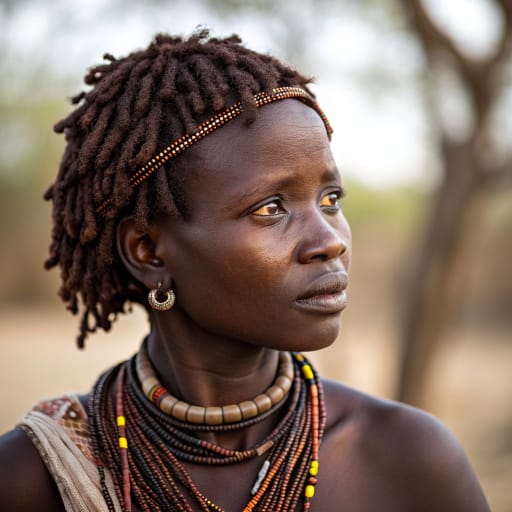
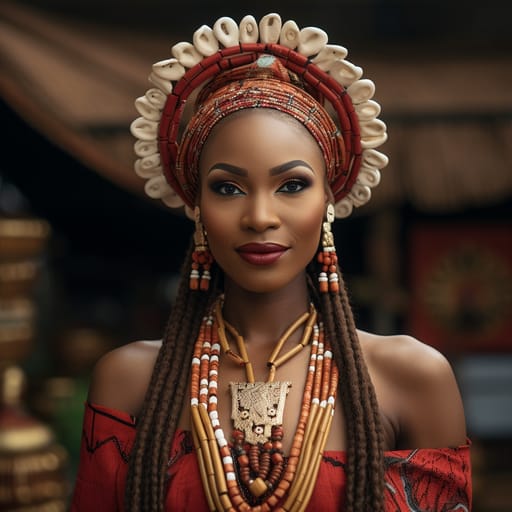
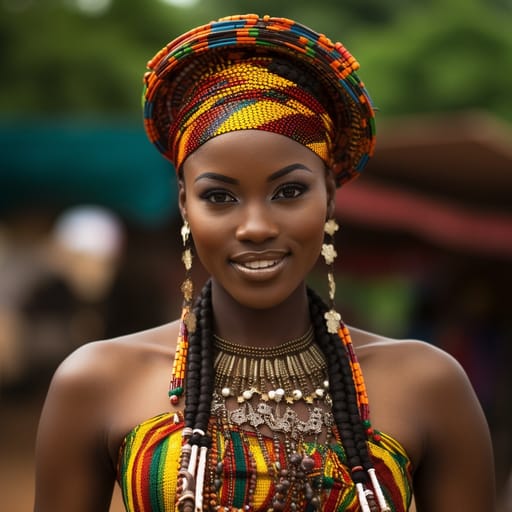
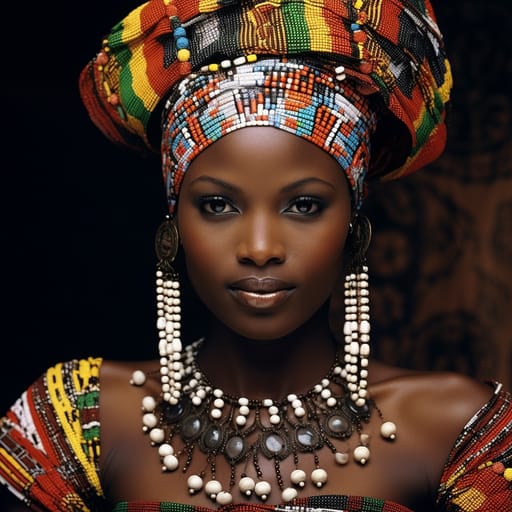
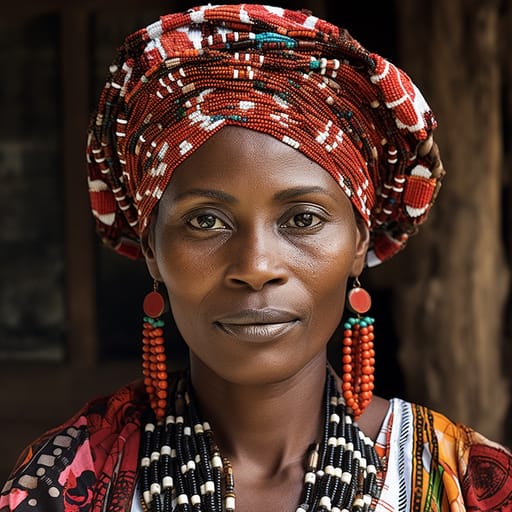
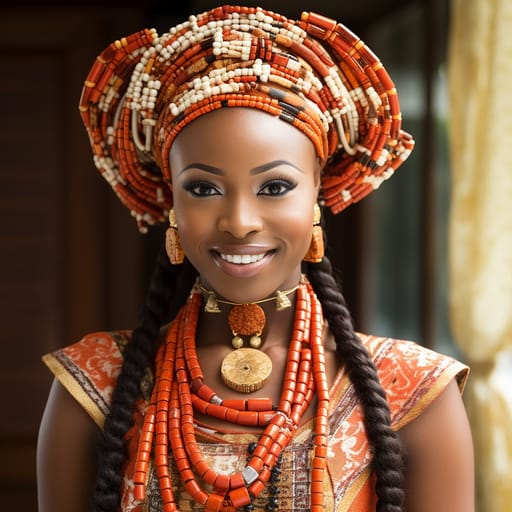
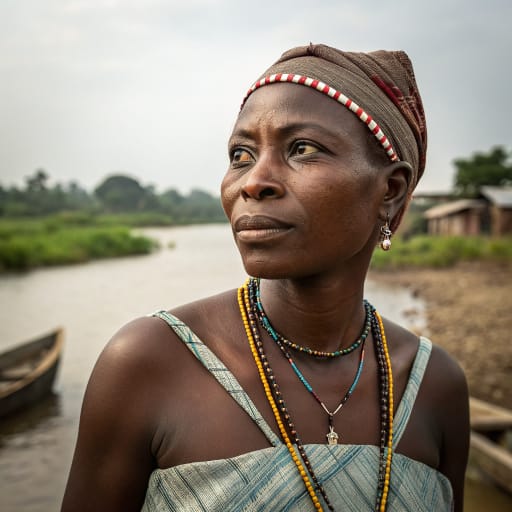
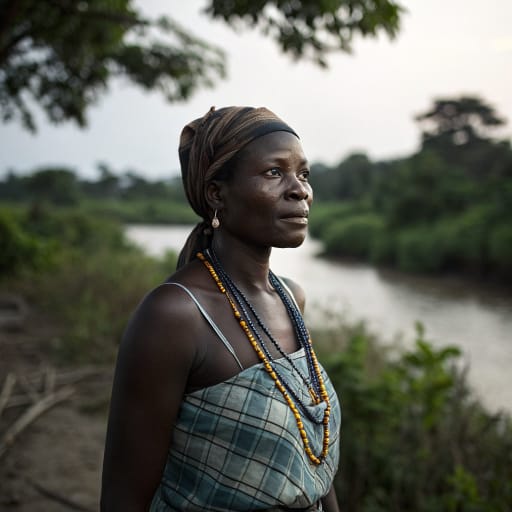
Typical Aizi Phenotypes
Reference for AI generation: hair, eyes, skin, facial structure, build
Aizi Body & Anatomy Reference
Per-feature anatomical profile for AI nude generation: West African Niger-Congo phenotype
Aizi Boobs & Breasts
The typical Aizi bust is medium-to-large cup, full, projecting, in line with the wider West African Niger-Congo pattern. Areolas usually fall in the 35-50mm range, with deep-brown to near-black areolar pigmentation against the medium-to-deep-brown skin tone. Compared with the smaller conical Cushitic East African profile, Aizi breasts sit forward and are generally fuller and more projecting than the East African norm. A faithful AI render of Aizi tits keeps that shape and areola size.
Aizi Ass & Hips
Butt shape among Aizi women: wide-set, full, heavily projected glutes, over wide iliac crests, broad gynoid pelvic pattern, high glute-to-waist ratio. This follows West African Niger-Congo ancestry and looks quite unlike the slim narrow-hip Cushitic East African profile. An accurate Aizi ass in adult AI imagery keeps both the silhouette and the overall build (mesomorph with strong gluteal-femoral fat distribution) instead of a generic average.
Aizi Vagina & Pussy
Vulvar anatomy among Aizi women: deep-brown to near-black labial pigmentation, fuller labia minora. Pubic hair tends to be tightly-coiled coarse texture, densely distributed, in the usual inverted-triangle pattern. Both follow West African Niger-Congo pigmentation, which is why Aizi pussy renders should not fall back on a pale, sparse Western template.
Aizi Dicks & Penis
The Aizi cock profile, from West African Niger-Congo anthropometric data: regional mean ~14-15cm erect; above-average girth, ~13cm circumference; deep-brown-to-near-black shaft pigmentation. Pubic hair has a tightly-coiled coarse texture and forms the usual inverted-V pattern. Whether Aizi men are circumcised follows religious and cultural practice rather than phenotype.
Aizi Body, Curves & Build
Build and curves among Aizi women follow the West African Niger-Congo pattern: mesomorph with strong gluteal-femoral fat distribution, mean adult female BMI 24-27. Proportions matter as much as skin tone, so Aizi figures should keep their regional height and limb ratios.
Aizi Skin Tone & Hair Texture
The Aizi skin range is medium-brown to deep-brown (Fitzpatrick V-VI), and hair tends to be tight 4A-4C coil, often worn natural, braided, or relaxed. That combination marks the West African Niger-Congo phenotype, and skin tone is the trait AI generators most often get wrong for Aizi women.
Explore phenotype categories
Structured taxonomy with peer-reviewed scales · 22 anatomical categories
Erotic Poses & Sex Positions
From the pose catalog: 219 named positions with reference skeletons
Frequently asked questions about Aizi people
Where is the Aizi homeland?
The Aizi homeland is Shores and islands of the western Ébrié Lagoon, around Jacqueville and west of Abidjan, southern Côte d'Ivoire. in Western Africa.
What language do Aizi people speak?
Aizi people primarily speak Tiagbamrin and Mobumrin (Kru, Niger-Congo) and Aproumu (Kwa, Niger-Congo); French widely used..
What religion do Aizi people practice?
The predominant religion among Aizi people is Mostly Christian (Harrist, Catholic, Protestant), with older lagoon spirit and ancestor observances persisting..






Make your own Aizi images
Five a day, free, no credits to buy. The studio starts from this group's phenotype data, so you can set body type, pose and style and keep the traits accurate.
Start with Aizi