Help us get this right
Does this portrait look right for Aja?
One tap. It takes a second and it is recorded.
1 says it looks right, 0 say it looks off.
Aja Erotic
Traditional African religions
About Aja People
The Aja are one of the founding populations of the Gbe-speaking world that stretches across the coastal hinterlands of southern Benin and southeastern Togo. Their oral histories trace the group's origin to Tado, an inland town on the Mono River, from which migrations in the late medieval period seeded the kingdoms that would become Allada, Whydah, and ultimately Dahomey. In other words: the Aja are not a peripheral people in this corner of West Africa but a root stock. The Fon and the Ewe, far better known internationally, both branched out of the Aja matrix, and the cultural debt is still visible in shared deities, shared agricultural rhythms, and the close family resemblance of their languages.
Aja proper is a Gbe language, sitting between Ewe to the west and Fon to the east, and a competent Aja speaker can usually follow conversations in either neighbor with a little effort. The homeland is a belt of low plateaus and palm-fringed lowlands east of the Mono — farming country, where maize, cassava, yams, and oil palm anchor the household economy and where small market towns like Aplahoué and Azové serve as commercial hubs. Most rural Aja still live in compounds organized around a male lineage head, with land tenure following patrilineal descent and inheritance disputes adjudicated as much by elders as by the state.
Religiously, the Aja are part of the Vodun world that they themselves helped shape. The pantheon is large and locally inflected: Mawu and Lisa as the creator pair, Sakpata for smallpox and the earth, Hevioso for thunder, Dan the serpent. Christianity and, to a lesser extent, Islam have both made inroads, but conversion in this region tends to be additive rather than replacing — a baptized Aja farmer may still consult a bokonon diviner before a major decision, and family shrines remain active even in households that attend church on Sundays. Annual yam festivals and ancestor remembrance ceremonies continue to organize the ritual calendar.
The historical wound the Aja carry is the Atlantic slave trade. The coastal Aja kingdoms were both victims and, uncomfortably, intermediaries; the Fon kingdom of Dahomey, an Aja offshoot, became one of the most aggressive slave-exporting powers on the Bight of Benin. A significant share of the enslaved Africans who ended up in Haiti and Bahia were Aja or Aja-descended, which is why Aja vocabulary and Aja deities still surface, in lightly disguised form, in Haitian Vodou and Brazilian Candomblé.
Related ethnic groups
Groups that share Aja's homeland, region, language, or religious tradition. These are likely candidates for comparative phenotype reference.
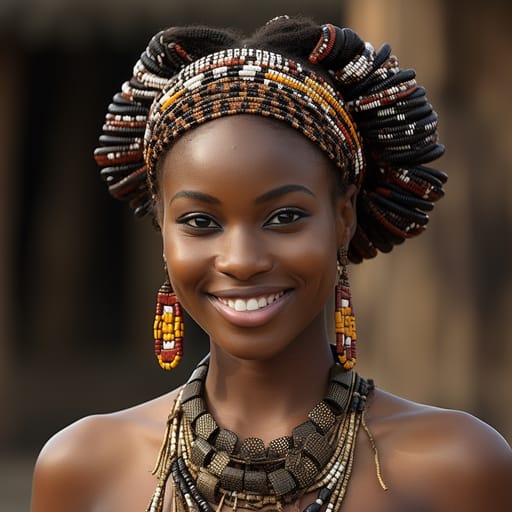
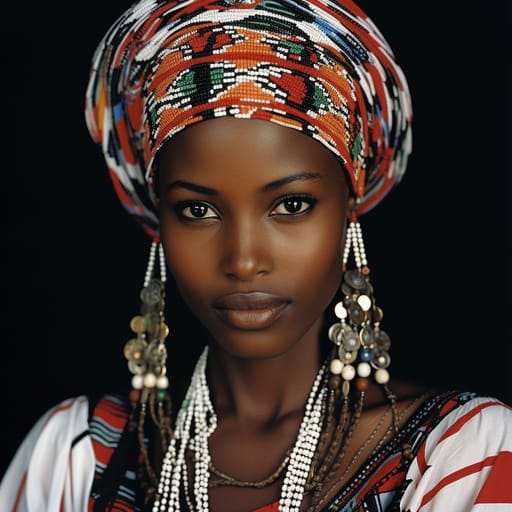
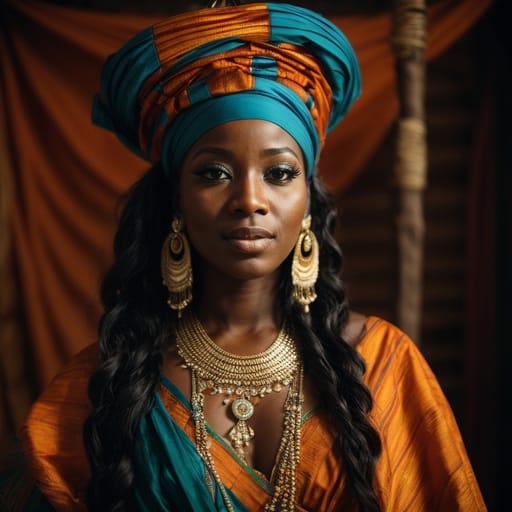
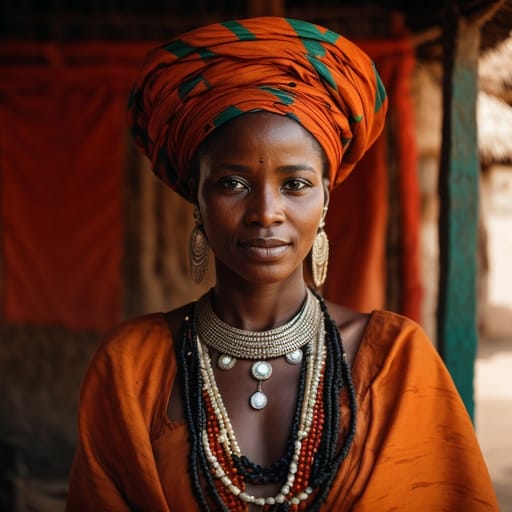
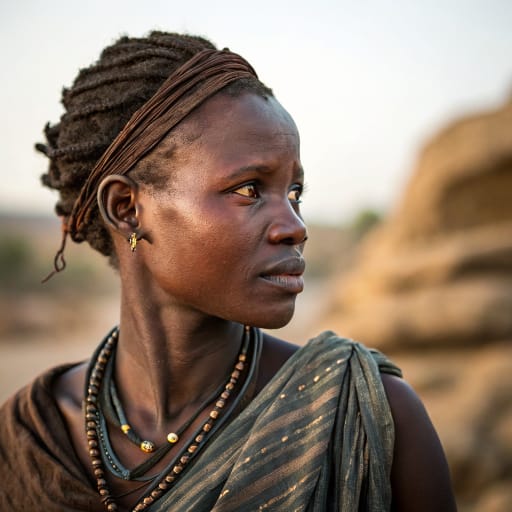
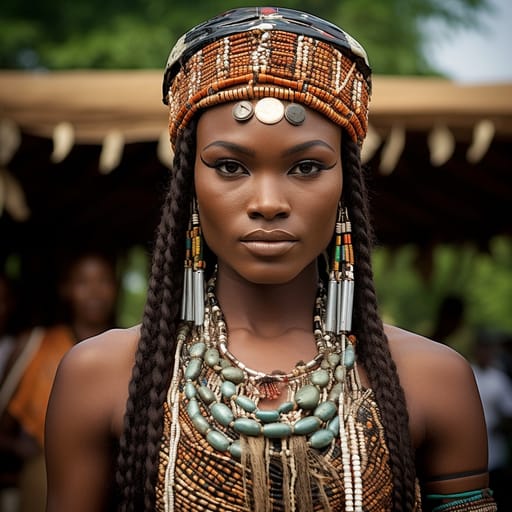
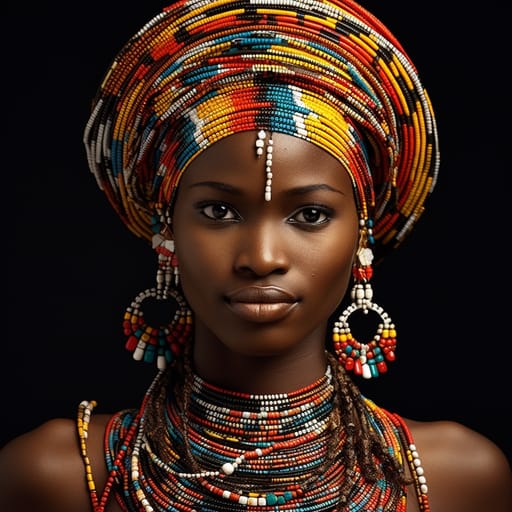
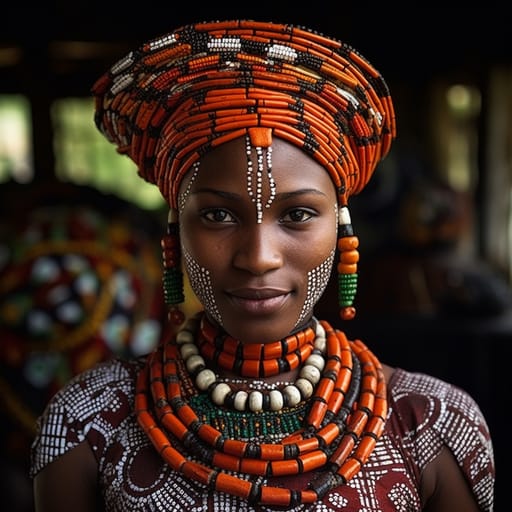
Typical Aja Phenotypes
Reference for AI generation: hair, eyes, skin, facial structure, build
The Aja are a Gbe-speaking population concentrated in the Mono and Couffo river basins of southwestern Benin and southeastern Togo, and their phenotype reads as classic coastal West African with the slim, long-limbed build common to the Gbe cluster (Aja, Ewe, Fon, Mina). They are close kin to the Fon and Ewe and share a phenotype that sits between the taller, more gracile Ewe to the west and the broader, sturdier Yoruba populations to the east.
Hair is almost uniformly Type 4 — tightly coiled, springy, with a high shrinkage ratio — and natural color ranges from true black to a softer brown-black; sun-bleached coppery tips are common in farming and fishing communities. Eyes run dark brown to near-black, with no epicanthic fold, set under a moderately developed brow ridge; the eye opening tends to be wide and almond-shaped rather than rounded.
Skin tone falls predominantly in Fitzpatrick V–VI, ranging from a warm medium-brown seen in inland farming villages to deep cocoa and near-ebony tones along the coastal lagoons. Undertones lean red-brown and golden rather than the bluish or olive cast found in some Sahelian groups. Cheekbones are moderately high and broad, the nose typically has a low-to-medium bridge with a wider alar base, and lips are full with a clearly defined cupid's bow — though nose width varies noticeably, with some Aja showing the narrower bridge more associated with Mahi and northern Fon neighbors.
Build is generally lean and long-limbed, with men averaging around 170–172 cm and women 158–162 cm. Shoulders are typically narrow to medium, hips moderate, and musculature wiry rather than bulky — a body composition shaped by generations of farming, fishing, and palm-oil work. Sub-group variation is modest: the Aja-Tado in Togo skew slightly taller and lighter-skinned than the Aja-Hwedo of the Beninese coast, who tend toward deeper pigmentation and a stockier frame from lagoon-fishing livelihoods.
Aja Body & Anatomy Reference
Anatomy by feature, West African Niger-Congo phenotype
Aja Boobs & Breasts
Aja boobs follow the West African Niger-Congo profile: medium-to-large cup, full, projecting. Areolar diameter is usually 35-50mm, and the coloring is deep-brown to near-black areolar pigmentation against the medium-to-deep-brown skin tone. Breast shape tracks body composition (mesomorph with strong gluteal-femoral fat distribution, mean adult female BMI 24-27), so Aja breasts tend to be fuller and more projecting than the East African norm. Expect a forward-set shape, not the smaller conical Cushitic East African profile.
Aja Ass & Hips
Aja ass and hip morphology presents as wide-set, full, heavily projected glutes, distinctly different from the slim narrow-hip Cushitic East African profile. The Aja pelvic profile shows wide iliac crests, broad gynoid pelvic pattern, high glute-to-waist ratio, anchored in the West African Niger-Congo skeletal pattern. Aja butt shots in adult AI imagery should render the wide-set, full, heavily projected glutes silhouette with the overall build (mesomorph with strong gluteal-femoral fat distribution) and the fat distribution typical of the West African Niger-Congo phenotype.
Aja Vagina & Pussy
Aja pussy anatomy typically shows deep-brown to near-black labial pigmentation, fuller labia minora. Pubic hair is usually tightly-coiled coarse texture, densely distributed. In AI-generated Aja nudes, labial color should blend into the medium-brown to deep-brown skin with a gradual transition, and the hair should keep its tightly-coiled coarse texture.
Aja Dicks & Penis
Penis reference for Aja men: regional mean ~14-15cm erect, above-average girth, ~13cm circumference. Coloring: deep-brown-to-near-black shaft pigmentation. An accurate Aja cock in AI imagery matches the surrounding medium-brown to deep-brown skin rather than a generic porn default. Circumcision depends on religion and custom, not ancestry.
Aja Body, Curves & Build
The Aja figure is generally mesomorph with strong gluteal-femoral fat distribution, with mean adult female BMI 24-27, characteristic of West African Niger-Congo ancestry. AI image tools tend to flatten regional body types into a few stock shapes; here the Aja build is kept as its own reference.
Aja Skin Tone & Hair Texture
Skin: medium-brown to deep-brown (Fitzpatrick V-VI). Hair: tight 4A-4C coil, often worn natural, braided, or relaxed. Both are typical of West African Niger-Congo ancestry. The most common mistake in AI nudes of Aja women is a body rendered lighter than the face.
Data depth
0/100Coverage of image-grounded phenotype observations · drives AI generation diversity
- Sample size
- 0/40· 0 images
- Image quality
- 0/30· 0% high
- Confidence
- 0/20
- Source diversity
- 0/10
- ·No image observations yet
Explore phenotype categories
Structured taxonomy with peer-reviewed scales · 22 anatomical categories
Erotic Poses & Sex Positions
From the pose catalog: 219 named positions with reference skeletons
Frequently asked questions about Aja people
Where is the Aja homeland?
The Aja homeland is Benin, Togo in Western Africa.
What language do Aja people speak?
Aja people primarily speak Niger-Congo / Kwa / Gbe / Adja.
What religion do Aja people practice?
The predominant religion among Aja people is Traditional African religions.






Make your own Aja images
Five a day, free, no credits to buy. The studio starts from this group's phenotype data, so you can set body type, pose and style and keep the traits accurate.
Start with Aja