Help us get this right
Does this portrait look right for Kpelle?
One tap. It takes a second and it is recorded.
1 says it looks right, 0 say it looks off.
Kpelle Erotic
Traditional African religions
About Kpelle People
The Kpelle are the largest single ethnic group in Liberia and a substantial population across the border in Guinea's Nzérékoré region — together close to two million people occupying the forested middle belt that separates the coastal peoples from the savanna kingdoms to the north. Their country is rice country: upland rice grown on rotated forest plots, supplemented by cassava, plantains, and the small-scale gold and diamond panning that has shaped local economies for over a century. Villages are organized around lineages, and authority traditionally moves through a council of elders rather than a single chief, though the colonial and postcolonial states layered paramount chieftaincies on top of older arrangements.
Their language belongs to the southwestern branch of Mande and divides into two main varieties — Liberian Kpelle and Guinean Kpelle (often called Guerzé on the Guinean side) — mutually intelligible but written with different orthographies, including the indigenous Kpelle syllabary devised by Chief Gbili of Sanoyea in the 1930s, one of the few scripts invented in twentieth-century West Africa to gain real local use. Mande languages connect them broadly to the Mandinka and Bambara further north, but the Kpelle sit at the forest edge of that family, sharing more cultural ground with their immediate neighbors — Loma, Mano, Kissi — than with the savanna Mande proper.
Religious life runs on parallel tracks. Public Christianity and a smaller Muslim presence overlay an older system organized around the Poro society for men and the Sande (or Bundu) society for women — initiation institutions that take adolescents into bush schools for extended periods of training in law, medicine, history, and the practical adulthood of their gender. These societies are not folklore; they remain functioning legal and educational bodies in many Kpelle communities, and their masked figures are not performances but office-holders. Divination, especially the consultation of specialists who read patterns to diagnose social trouble, sits alongside whatever church or mosque a person attends without obvious contradiction.
The civil wars that consumed Liberia between 1989 and 2003 fell heavily on Kpelle territory, displacing villages, fracturing the chain of initiation that secret societies depend on, and pushing many Kpelle into Monrovia or across the Guinean border. The rebuilding since has been uneven — rural roads remain difficult, and the relationship between customary authority and the Liberian state is still being renegotiated village by village.
Related ethnic groups
Groups that share Kpelle's homeland, region, language, or religious tradition. These are likely candidates for comparative phenotype reference.
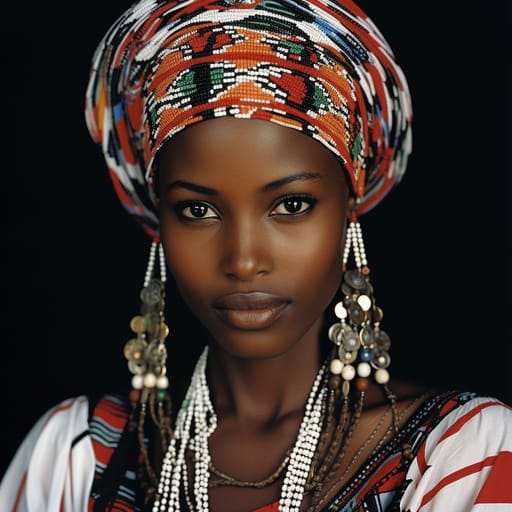
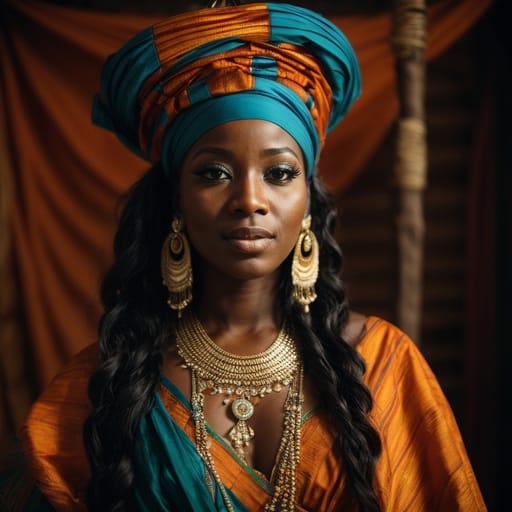
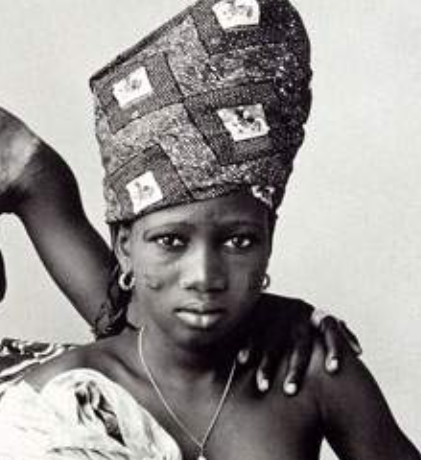
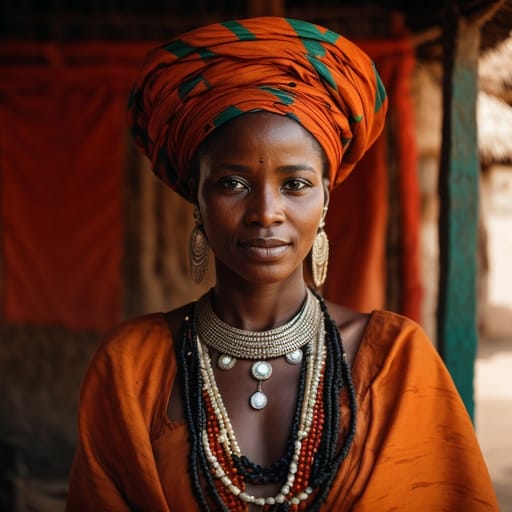
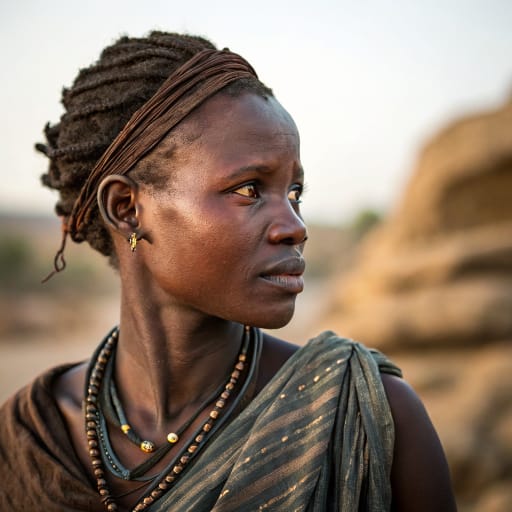
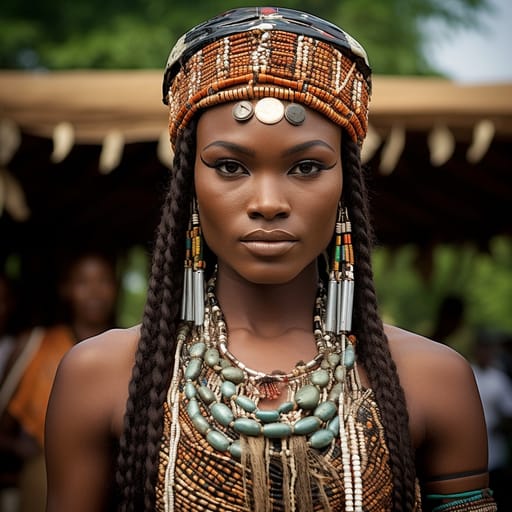
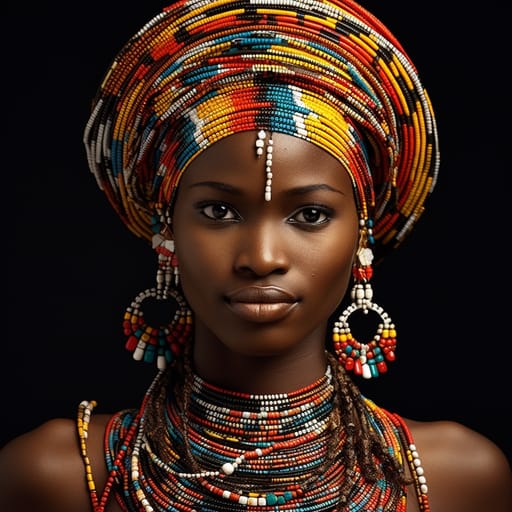
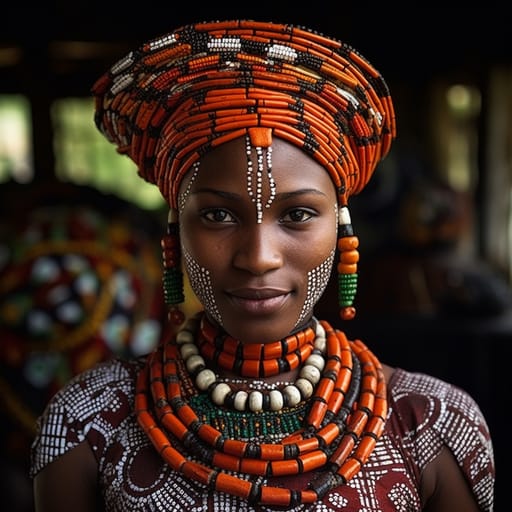
Typical Kpelle Phenotypes
Reference for AI generation: hair, eyes, skin, facial structure, build
The Kpelle phenotype sits firmly within the Mande cluster of Upper Guinean West Africa, with a build and bone structure that tends toward the wiry and long-limbed rather than the broad, stocky frame more common further east in the Akan belt. Skin tone runs deep — predominantly Fitzpatrick VI, with warm red-brown to near-black undertones; lighter Fitzpatrick V tones surface occasionally in mixed-heritage individuals like the Pogba brothers, whose Guinean Kpelle lineage shows in jaw width and brow shape more than in tone.
Hair is almost uniformly Type 4, with tightly coiled 4B and 4C textures dominant; natural color is jet to very dark brown, with the reddish sun-bleaching seen on children's hair in the rural interior. Hairlines tend to be low and squared rather than rounded. Eyes are dark brown to near-black, almond-shaped, set under a flat, broad supraorbital ridge; epicanthic folds are absent. Eyebrows are dense and arched relatively low over the orbit.
Facially, the Kpelle profile reads as broad and architectural. Noses are wide at the alar base with low, gently rounded bridges — the platyrrhine form typical of Guinean forest-belt populations, distinct from the narrower Fula nose found in the same countries. Lips are full, with a pronounced vermilion border on both upper and lower; the philtrum tends to be short. Cheekbones are high and laterally projected, and the jaw is square with a defined gonial angle, giving the face a strong frontal silhouette. Foreheads are often tall and slightly sloped.
Build skews tall and athletic — the sprinter and footballer concentration on the notable-people list is not coincidental. Mesomorphic, long-femured, narrow-hipped frames are common in men, with shoulder-to-waist ratios that show clearly even at lean body fat. Women tend toward an hourglass distribution with fuller glutes and thighs over a relatively narrow waist, and a slightly forward pelvic tilt that is common across the region. Sub-group variation between Liberian and Guinean Kpelle is minor; Guinean populations show slightly more Mande-Fula admixture in nose and lip structure, while Liberian Kpelle tend to retain the broader, heavier features.
Kpelle Body & Anatomy Reference
Anatomy by feature, West African Niger-Congo phenotype
Kpelle Boobs & Breasts
Bust reference for Kpelle women: medium-to-large cup, full, projecting, which is typical of West African Niger-Congo ancestry. Areolas measure about 35-50mm across, with deep-brown to near-black pigmentation. Body type (mesomorph with strong gluteal-femoral fat distribution) shapes the bust as well, so Kpelle tits are usually fuller and more projecting than the East African norm. In AI imagery, keep the forward-set shape rather than drifting toward the smaller conical Cushitic East African profile.
Kpelle Ass & Hips
The Kpelle ass is typically wide-set, full, heavily projected glutes, which sets it apart from the slim narrow-hip Cushitic East African profile. Underneath, the pelvis shows wide iliac crests, broad gynoid pelvic pattern, high glute-to-waist ratio, part of the West African Niger-Congo skeletal pattern. For Kpelle butt pics and AI renders, match that silhouette and the overall build (mesomorph with strong gluteal-femoral fat distribution).
Kpelle Vagina & Pussy
Kpelle pussy and vulvar anatomy presents deep-brown to near-black labial pigmentation, fuller labia minora, consistent with the West African Niger-Congo phenotype's pigmentation pattern. Kpelle pubic hair is typically tightly-coiled coarse texture, densely distributed, in the inverted-triangle pattern. For anatomically accurate Kpelle pussy renders the labial coloration should match the surrounding medium-brown to deep-brown skin tone with a continuous gradient, and the hair should keep its tightly-coiled coarse texture.
Kpelle Dicks & Penis
Kpelle dicks follow the West African Niger-Congo reference data: regional mean ~14-15cm erect; above-average girth, ~13cm circumference; deep-brown-to-near-black shaft pigmentation. Shaft color should track the medium-brown to deep-brown skin tone with a smooth change toward the glans, and Kpelle pubic hair keeps its tightly-coiled coarse texture.
Kpelle Body, Curves & Build
Kpelle body type and overall build presents as mesomorph with strong gluteal-femoral fat distribution, with mean adult female BMI 24-27: the characteristic West African Niger-Congo habitus. Kpelle curves and proportions should keep the regional skeletal frame (height, shoulder-to-hip ratio, limb proportions) rather than a generic mesomorph default.
Kpelle Skin Tone & Hair Texture
Kpelle skin sits in the medium-brown to deep-brown (Fitzpatrick V-VI) band. Hair is typically tight 4A-4C coil, often worn natural, braided, or relaxed, in keeping with the West African Niger-Congo phenotype. In nude renders the skin should stay one even tone from face to body, and body, pubic and head hair should match.
Data depth
65/100Coverage of image-grounded phenotype observations · drives AI generation diversity
- Sample size
- 15/40· 7 images
- Image quality
- 30/30· 71% high
- Confidence
- 20/20· mean 0.86
- Source diversity
- 0/10· wikipedia
- ·Small sample (n<10)
- ·Wikipedia-only source, not population-representative
Observed Distribution: Image Sample
Empirical observations from analyzed photographs · supplementary signal, not population truth
Sample: 7 images analyzed (7 wikipedia). Quality: 5 high, 2 medium, 0 low, 0 very_low. Avg analyzer confidence: 0.86.
Skin tone (Fitzpatrick): VI (100%)
Hair color: black (86%), blonde (14%)
Hair texture: coily (86%), covered (14%)
Eye color: dark brown (86%), unclear (14%)
Epicanthic fold: 0% present, 86% absent, 14% unclear
Caveats: Sample size 7 is small, so the observed distribution should be treated as suggestive, not definitive. Sample is 100% Wikipedia notable people, which skews toward male, public-life, and modern figures, not population-representative.
Last aggregated: May 7, 2026
Explore phenotype categories
Structured taxonomy with peer-reviewed scales · 22 anatomical categories
Notable Kpelle People
20 reference figures, sourced from Wikipedia
- Félix Balamou, Guinean basketball player
- Moussa Dadis Camara, former Guinean military officer
- Ousmane Doré, Guinean politician
- Daniel Goumou, Guinean footballer
- Boniface Haba, Guinean footballer
- Paul Haba, Guinean sprinter
- Édouard Nyankoye Lamah, Guinean politician
- Remy Lamah, current Minister of Health and Public Hygiene of Guinea
- Alexandre Cécé Loua, Guinean diplomat
- Isabelle Kolkol Loua, Guinean producer and director
- Joseph Loua, Guinean sprinter
- Sény Malomou, Guinean musician
- Claude Pivi, former Guinean military officer
- Paul Pogba, French footballer
- Mathias Pogba, Guinean footballer
- Florentin Pogba, Guinean footballer
- Charles Fassou Sagno, Guinean politician
- Jean-Baptiste Zébélamou, Guinean writer
- Maurice Togba Zogbélémou, former Minister of Justice of Guinea
- Pepe Koulemou, Former Senator, Lawyer
Erotic Poses & Sex Positions
From the pose catalog: 219 named positions with reference skeletons
Frequently asked questions about Kpelle people
Where is the Kpelle homeland?
The Kpelle homeland is Liberia, Guinea in Western Africa.
What language do Kpelle people speak?
Kpelle people primarily speak Niger-Congo / Mande / Kpelle.
What religion do Kpelle people practice?
The predominant religion among Kpelle people is Traditional African religions.






Make your own Kpelle images
Five a day, free, no credits to buy. The studio starts from this group's phenotype data, so you can set body type, pose and style and keep the traits accurate.
Start with Kpelle