Help us get this right
Does this portrait look right for Dogon?
Nobody has judged this one yet. You would be the first.
Dogon Erotic
Bandiagara Escarpment (Mali)
Traditional African religions
Ampari Dogon
About Dogon People
The Dogon are best known for the place they live: a long sandstone cliff in central Mali called the Bandiagara Escarpment, where their villages sit stacked against the rock, their granaries climb the slopes, and their dead are placed in caves cut high into the face. They moved into this country sometime around the fourteenth or fifteenth century, by most accounts pushing into the cliffs to keep their religion and their independence intact while Islam spread across the surrounding savanna. That defensive posture shaped almost everything that followed — the architecture, the cosmology, the unusually intact ritual life that drew French ethnographers in the 1930s and made the Dogon, for better and worse, one of the most heavily documented peoples in West Africa.
"Dogon" is more a regional label than a single ethnic identity. The cliff communities speak a cluster of languages — Ampari, Tomo Kan, Jamsay, Toro So and a dozen others — that are mutually unintelligible and grouped under Dogon as a small, somewhat anomalous branch of Niger–Congo. A village a day's walk away can be effectively foreign. What holds the Dogon together as a people is less language than a shared ritual framework: a complex cosmology built around the creator Amma and the ancestral Nommo, an agricultural calendar tied to the millet cycle, and a system of masked dances performed at funerals and at the great Sigi ceremony that recurs roughly every sixty years.
Daily life leans on the staples of Sahelian farming — millet, sorghum, onions grown in tiny irrigated plots along the cliff base — supplemented by the work of specialized castes: blacksmiths, leatherworkers, and griots who occupy a position both essential and socially apart. Each village keeps a toguna, a low men's shelter with a deliberately short roof that forces anyone inside to sit, and a hogon, a ritual elder whose feet are not supposed to touch bare earth. Islam and, more recently, Christianity have made real inroads, but traditional practice remains the substrate; many Dogon move between systems without much sense of contradiction. The picture has darkened in the last decade. Jihadist insurgency and intercommunal conflict between Dogon and Fulani communities have made parts of the plateau dangerous, displaced thousands, and put the long ceremonial calendar — the part of Dogon life outsiders most romanticize — under genuine pressure.
Related ethnic groups
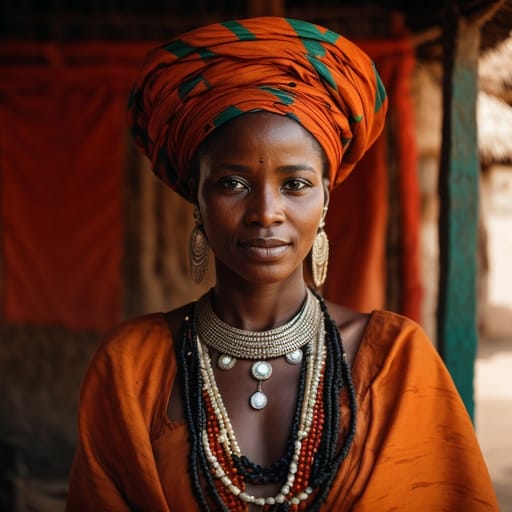
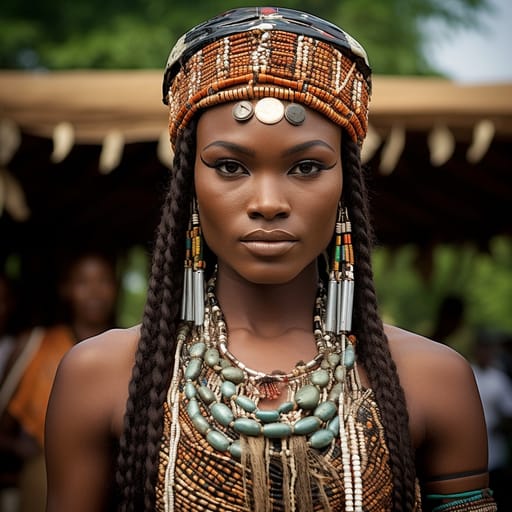
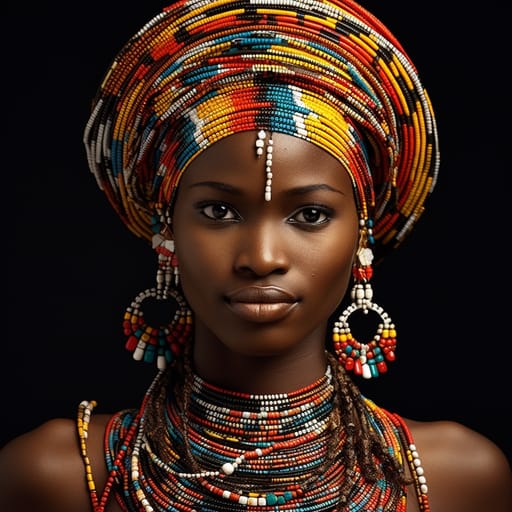
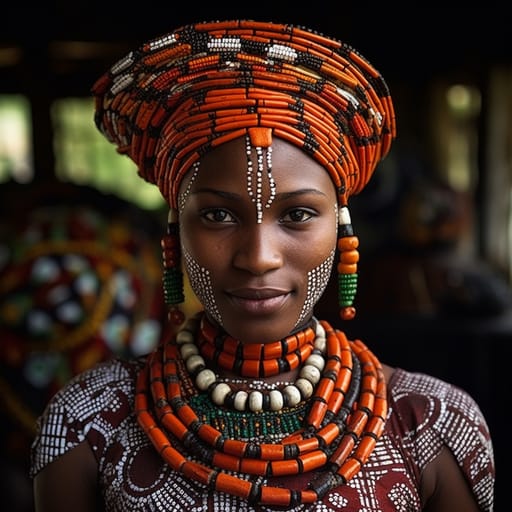
Groups that share Dogon's homeland, region, language, or religious tradition. These are likely candidates for comparative phenotype reference.
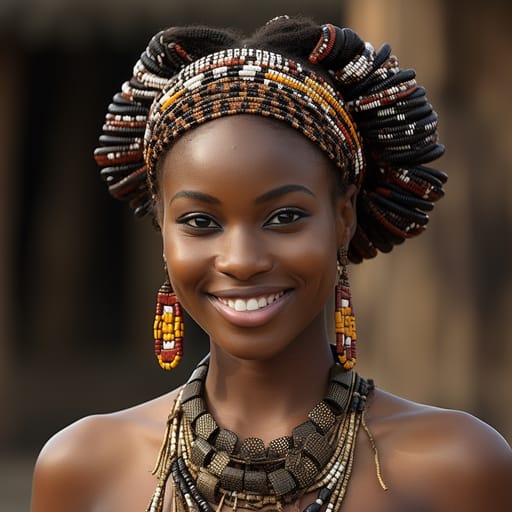
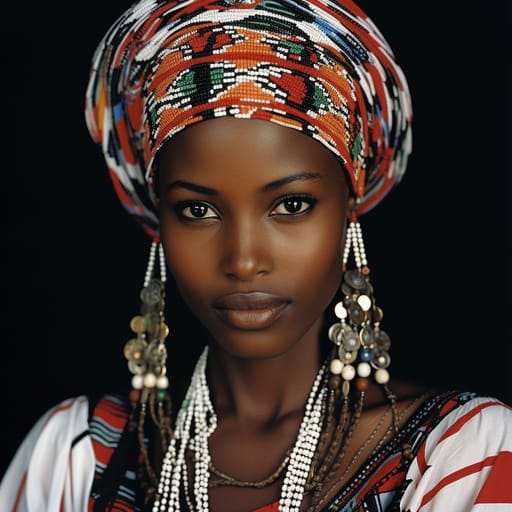
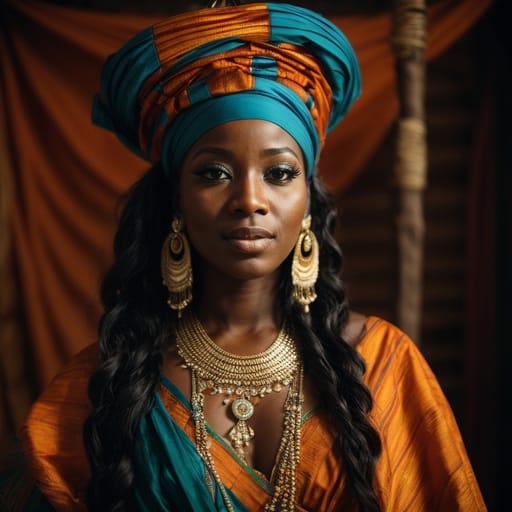
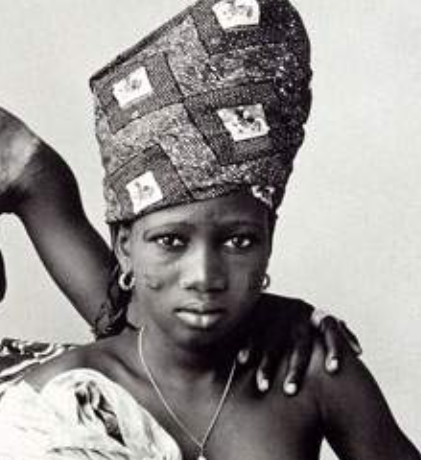
Geographic Distribution: Dogon populations across 1 country
Each row is ranked by the group's share of that country's population, with the source citation drawn from published census and demographic surveys. Click through for the full per-country phenotype profile.
| Country | Share | Source |
|---|---|---|
| Mali | 4.4% | Mali 2009 Census; Dogon (~4.4%); concentrated on the Bandiagara Escarpment, notable for distinctive cultural-religious traditions documented extensively in 20th-c. ethnography |
Typical Dogon Phenotypes
Reference for AI generation: hair, eyes, skin, facial structure, build
The Dogon present a phenotype shaped by long isolation on the Bandiagara Escarpment, the sandstone cliffs of central Mali where the group has lived since at least the 15th century. Skin tone sits firmly at Fitzpatrick VI — deep brown to near-black with cool, blue-undertoned darkness rather than the reddish or olive cast seen further west in coastal Senegambia. Years of high-UV exposure on the open plateau reinforce the pigmentation; older Dogon often show a matte, weathered finish on cheeks and forearms while the chest and inner arms remain noticeably smoother and a shade lighter.
Hair is overwhelmingly Type 4C — tightly coiled, dense, with the small-diameter spring pattern typical of West African Sahel populations. Color is uniformly black, greying late. Eyes are dark brown to almost black; the iris frequently reads as a single tone against the sclera at distance. No epicanthic fold. The eye opening tends to be wide and almond-shaped, set under a moderately heavy brow ridge that's more pronounced in men than the regional average.
Facial structure is the Dogon's most distinctive register. Cheekbones are high and broad, the midface relatively flat, and the jawline squared rather than tapered — a configuration that photographs well in profile and is part of why Dogon faces recur in West African ethnographic imagery. Noses are broad-based with low, wide bridges and full alae; lips are full on both upper and lower, with a clearly defined philtrum. Foreheads are tall and often slightly sloped.
Build runs lean and sinewy. Adult male stature averages around 170 cm, women around 160 cm — moderate by West African standards, neither tall like the Dinka nor short like forest-zone groups. Shoulders are narrow, limbs long relative to torso, with low body fat sustained by a millet-and-onion subsistence diet and the daily vertical climbing the escarpment demands. The Ampari sub-group shows no marked phenotypic departure from the broader Dogon pattern.
Dogon Body & Anatomy Reference
Per-feature anatomical profile for AI nude generation: West African Niger-Congo phenotype
Dogon Boobs & Breasts
Bust reference for Dogon women: medium-to-large cup, full, projecting, which is typical of West African Niger-Congo ancestry. Areolas measure about 35-50mm across, with deep-brown to near-black pigmentation. Body type (mesomorph with strong gluteal-femoral fat distribution) shapes the bust as well, so Dogon tits are usually fuller and more projecting than the East African norm. In AI imagery, keep the forward-set shape rather than drifting toward the smaller conical Cushitic East African profile.
Dogon Ass & Hips
The Dogon ass is typically wide-set, full, heavily projected glutes, which sets it apart from the slim narrow-hip Cushitic East African profile. Underneath, the pelvis shows wide iliac crests, broad gynoid pelvic pattern, high glute-to-waist ratio, part of the West African Niger-Congo skeletal pattern. For Dogon butt pics and AI renders, match that silhouette and the overall build (mesomorph with strong gluteal-femoral fat distribution).
Dogon Vagina & Pussy
Dogon pussy and vulvar anatomy presents deep-brown to near-black labial pigmentation, fuller labia minora, consistent with the West African Niger-Congo phenotype's pigmentation pattern. Dogon pubic hair is typically tightly-coiled coarse texture, densely distributed, in the inverted-triangle pattern. For anatomically accurate Dogon pussy renders the labial coloration should match the surrounding medium-brown to deep-brown skin tone with a continuous gradient, and the hair should keep its tightly-coiled coarse texture.
Dogon Dicks & Penis
Dogon dicks follow the West African Niger-Congo reference data: regional mean ~14-15cm erect; above-average girth, ~13cm circumference; deep-brown-to-near-black shaft pigmentation. Shaft color should track the medium-brown to deep-brown skin tone with a smooth change toward the glans, and Dogon pubic hair keeps its tightly-coiled coarse texture.
Dogon Body, Curves & Build
Dogon body type and overall build presents as mesomorph with strong gluteal-femoral fat distribution, with mean adult female BMI 24-27: the characteristic West African Niger-Congo habitus. Dogon curves and proportions should keep the regional skeletal frame (height, shoulder-to-hip ratio, limb proportions) rather than a generic mesomorph default.
Dogon Skin Tone & Hair Texture
Dogon skin sits in the medium-brown to deep-brown (Fitzpatrick V-VI) band. Hair is typically tight 4A-4C coil, often worn natural, braided, or relaxed, in keeping with the West African Niger-Congo phenotype. In nude renders the skin should stay one even tone from face to body, and body, pubic and head hair should match.
Data depth
0/100Coverage of image-grounded phenotype observations · drives AI generation diversity
- Sample size
- 0/40· 0 images
- Image quality
- 0/30· 0% high
- Confidence
- 0/20
- Source diversity
- 0/10
- ·No image observations yet
Explore phenotype categories
Structured taxonomy with peer-reviewed scales · 22 anatomical categories
Erotic Poses & Sex Positions
From the pose catalog: 219 named positions with reference skeletons
Frequently asked questions about Dogon people
Where is the Dogon homeland?
The Dogon homeland is Bandiagara Escarpment (Mali) in Western Africa.
What countries do Dogon people live in?
Dogon populations are documented across 1 country: Mali.
What language do Dogon people speak?
Dogon people primarily speak Niger-Congo / Dogon.
What religion do Dogon people practice?
The predominant religion among Dogon people is Traditional African religions.






Make your own Dogon images
Five a day, free, no credits to buy. The studio starts from this group's phenotype data, so you can set body type, pose and style and keep the traits accurate.
Start with Dogon