Help us get this right
Does this portrait look right for Yakö?
Nobody has judged this one yet. You would be the first.
Yakö Erotic
Yakurr Local Government (Nigeria)
Christianity
About Yakö People
The Yakö are a cluster of five villages in the Cross River basin of southeastern Nigeria — Umor, Idomi, Nko, Ekuri, and Nkpani — sitting in the rolling forest country of what is now Yakurr Local Government Area. They are best known to outsiders through the work of the British anthropologist Daryll Forde, whose mid-twentieth-century studies of Umor became one of the canonical descriptions of double descent: every Yakö belongs simultaneously to a patrilineal kin group, which holds land and houses, and a matrilineal one, which inherits movable wealth and certain ritual offices. It is an unusual arrangement, and it shapes almost everything about how the villages organize labour, property, and dispute.
The language sits in the Upper Cross branch of the Cross River family, part of the wider Niger–Congo phylum. It is not mutually intelligible with the Lokö, Mbembe, and Agoi speech communities that ring it, though centuries of trade and intermarriage have left a tangle of loanwords moving in both directions. Villages are large by regional standards — Umor has historically been one of the bigger settlements in the middle Cross River — and each is divided into wards that operate with a striking degree of autonomy, governed by a stack of age-grade associations, priestly councils, and ward heads whose authority is checked against one another rather than fused into a single chief.
Most Yakö today identify as Christian, and the major denominations have been present for generations, but the ritual calendar of the older religion has not vanished. The First Fruits ceremony tied to the new yam, the cults associated with fertility and the dead, and the ward-based priesthoods continue to mark out the year alongside the Sunday services, sometimes uneasily, more often by quiet accommodation. Yam remains the prestige crop and the centre of feast-giving; cassava, oil palm, and cocoa do the everyday economic work. Marriage payments, funeral obligations, and the right to clear a particular patch of forest are still negotiated through the double-descent groups Forde mapped, even where the language people use to describe them has shifted toward the vocabulary of church and state. The Yakö are not a museum piece for anthropology students; they are a working society that happens to have left an outsized footprint on the discipline.
Related ethnic groups
Groups that share Yakö's homeland, region, language, or religious tradition. These are likely candidates for comparative phenotype reference.
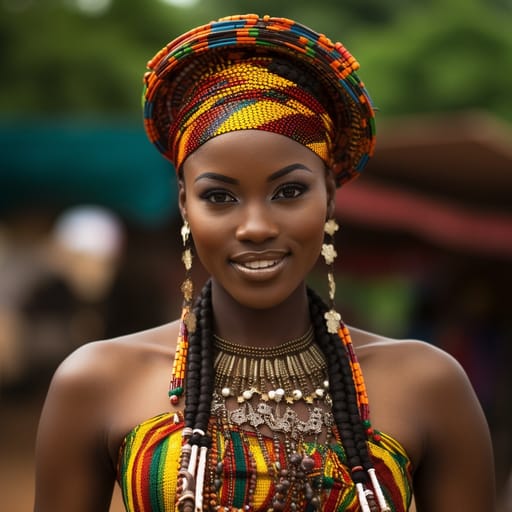
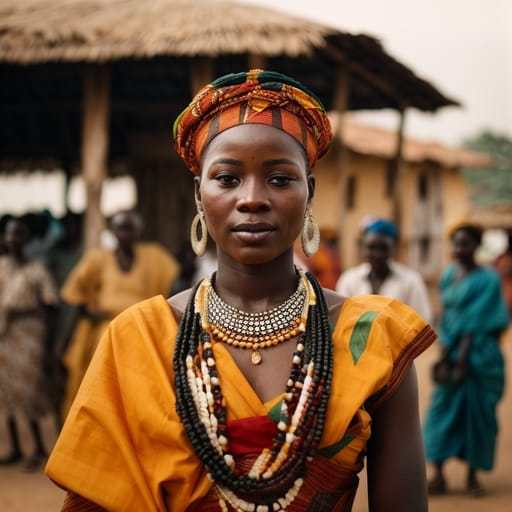
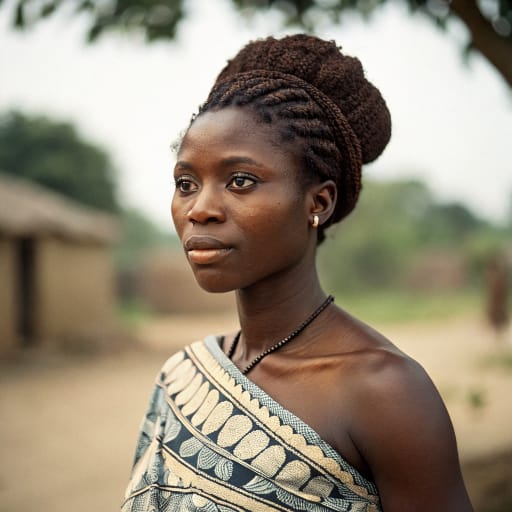
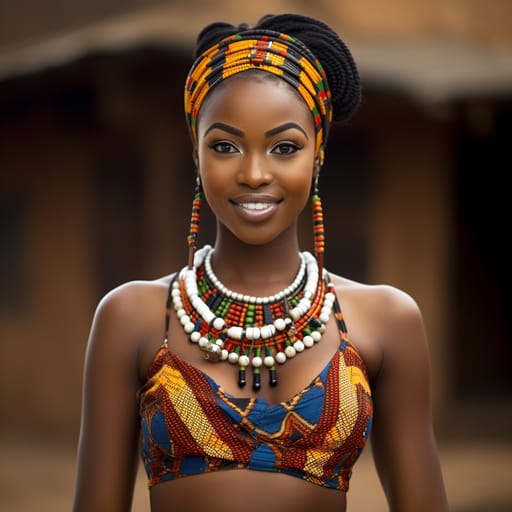
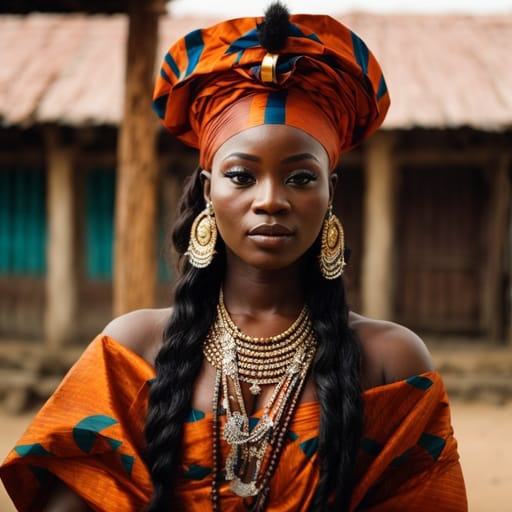

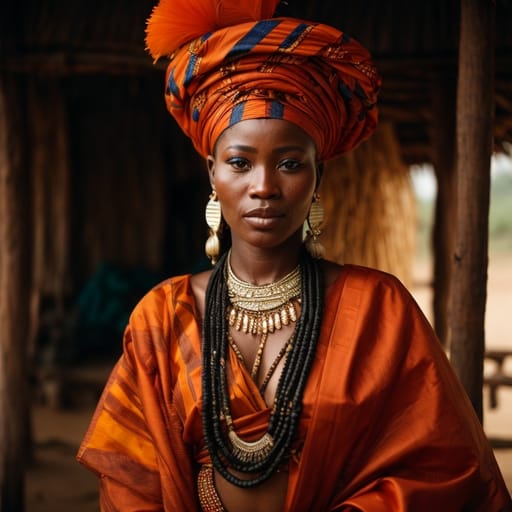
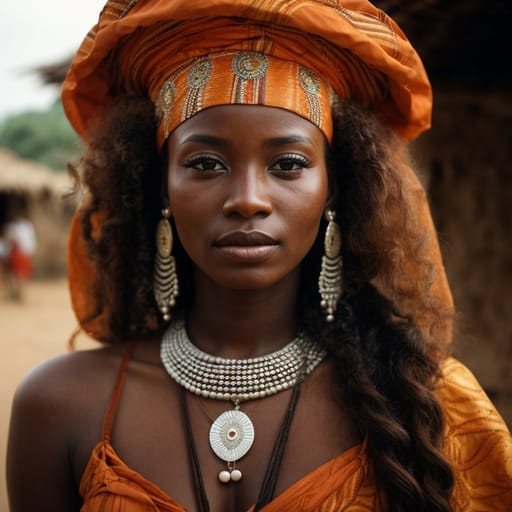
Typical Yakö Phenotypes
Reference for AI generation: hair, eyes, skin, facial structure, build
The Yakö are a Cross River people of southeastern Nigeria, and their phenotype reflects that corridor between the Niger Delta forest belt and the Cameroon highland zone — distinct from the Yoruba and Igbo profiles most outsiders associate with Nigeria. Skin tone clusters in the deeper end of Fitzpatrick VI: a true cool-to-neutral dark brown with red-mahogany undertones rather than the olive-warm cast common further west. Sun exposure in the humid Cross River basin keeps tone fairly uniform across the body, with little of the face-vs-body contrast seen in drier Sahel populations.
Hair is overwhelmingly Type 4 — tightly coiled, dense, with a fine-to-medium strand diameter that holds shape well in traditional styling. Natural color is uniformly black-brown; reddish sun-bleached tips show in children and outdoor laborers but the base shaft stays dark. Eyes are dark brown to near-black, occasionally with a warm amber cast in strong light. The epicanthic fold is absent; lid morphology is open and almond-shaped, with a clean upper crease. Brows tend to be heavy and well-defined, set fairly low.
Facial structure is where the Yakö read as Cross River rather than generic West African. Noses are broad at the alar base but with a more pronounced bridge than is typical of forest Yoruba — closer to the structured profiles seen in Efik and Ejagham neighbors. Lips are full, with a fuller lower than upper. Cheekbones sit high and wide, and the jawline is square in men, softer and more oval in women, often with a strong chin point. Actor Efa Iwara is a reasonable anchor for the male facial template — broad cheekbones, defined jaw, deep skin tone.
Build runs medium-tall and athletically proportioned. Men commonly fall in the 170–180 cm range with broad shoulders and lean musculature; women tend toward an hourglass distribution with full hips and bust over a relatively narrow waist. Ekoi-cluster sub-village variation is minor and shows mostly in stature, not in hair, skin, or facial features.
Yakö Body & Anatomy Reference
West African Niger-Congo phenotype: anatomy reference for AI nude generation
Yakö Boobs & Breasts
The typical Yakö bust is medium-to-large cup, full, projecting, in line with the wider West African Niger-Congo pattern. Areolas usually fall in the 35-50mm range, with deep-brown to near-black areolar pigmentation against the medium-to-deep-brown skin tone. Compared with the smaller conical Cushitic East African profile, Yakö breasts sit forward and are generally fuller and more projecting than the East African norm. A faithful AI render of Yakö tits keeps that shape and areola size.
Yakö Ass & Hips
Butt shape among Yakö women: wide-set, full, heavily projected glutes, over wide iliac crests, broad gynoid pelvic pattern, high glute-to-waist ratio. This follows West African Niger-Congo ancestry and looks quite unlike the slim narrow-hip Cushitic East African profile. An accurate Yakö ass in adult AI imagery keeps both the silhouette and the overall build (mesomorph with strong gluteal-femoral fat distribution) instead of a generic average.
Yakö Vagina & Pussy
Vulvar anatomy among Yakö women: deep-brown to near-black labial pigmentation, fuller labia minora. Pubic hair tends to be tightly-coiled coarse texture, densely distributed, in the usual inverted-triangle pattern. Both follow West African Niger-Congo pigmentation, which is why Yakö pussy renders should not fall back on a pale, sparse Western template.
Yakö Dicks & Penis
The Yakö cock profile, from West African Niger-Congo anthropometric data: regional mean ~14-15cm erect; above-average girth, ~13cm circumference; deep-brown-to-near-black shaft pigmentation. Pubic hair has a tightly-coiled coarse texture and forms the usual inverted-V pattern. Whether Yakö men are circumcised follows religious and cultural practice rather than phenotype.
Yakö Body, Curves & Build
Build and curves among Yakö women follow the West African Niger-Congo pattern: mesomorph with strong gluteal-femoral fat distribution, mean adult female BMI 24-27. Proportions matter as much as skin tone, so Yakö figures should keep their regional height and limb ratios.
Yakö Skin Tone & Hair Texture
The Yakö skin range is medium-brown to deep-brown (Fitzpatrick V-VI), and hair tends to be tight 4A-4C coil, often worn natural, braided, or relaxed. That combination marks the West African Niger-Congo phenotype, and skin tone is the trait AI generators most often get wrong for Yakö women.
Data depth
55/100Coverage of image-grounded phenotype observations · drives AI generation diversity
- Sample size
- 10/40· 3 images
- Image quality
- 30/30· 67% high
- Confidence
- 15/20· mean 0.84
- Source diversity
- 0/10· wikipedia
- ·Small sample (n<10)
- ·Wikipedia-only source, not population-representative
Observed Distribution: Image Sample
Empirical observations from analyzed photographs · supplementary signal, not population truth
Sample: 3 images analyzed (3 wikipedia). Quality: 2 high, 1 medium, 0 low, 0 very_low. Avg analyzer confidence: 0.84.
Skin tone (Fitzpatrick): VI (100%)
Hair color: gray/white (67%), black (33%)
Hair texture: coily (67%), shaved (33%)
Eye color: dark brown (100%)
Epicanthic fold: 0% present, 100% absent, 0% unclear
Caveats: Sample size 3 is small, so the observed distribution should be treated as suggestive, not definitive. Sample is 100% Wikipedia notable people, which skews toward male, public-life, and modern figures, not population-representative.
Last aggregated: May 7, 2026
Explore phenotype categories
Structured taxonomy with peer-reviewed scales · 22 anatomical categories
Notable Yakö People
9 reference figures, sourced from Wikipedia
- Okoi Arikpo, Longest-serving Foreign Minister of the Federal Republic of Nigeria, & Pionee…
- Clement Ebri, former Governor of Cross River State.
- Eteng Okoi-Obuli, Minister of Agriculture, Second Republic.
- Ibok-Ete Ekwe Ibas, Vice Admiral, and Former Chief of Naval Staff
- Usani Uguru Usani, Former Minister of Niger Delta.
- Etowa Eyong Arikpo, Former Attorney General, and Chief Justice of Cross River State
- Okoi Ikpi Itam, Former Chief Justice of Cross River State.
- Eka Ikpi Braide, Pioneer Vice-Chancellor, Cross River University of Science & Technology, and …
- Efa Iwara, Nigerian actor and rapper
Erotic Poses & Sex Positions
From the pose catalog: 219 named positions with reference skeletons
Frequently asked questions about Yakö people
Where is the Yakö homeland?
The Yakö homeland is Yakurr Local Government (Nigeria) in Western Africa.
What language do Yakö people speak?
Yakö people primarily speak Niger-Congo / Cross River / Yakö.
What religion do Yakö people practice?
The predominant religion among Yakö people is Christianity.






Make your own Yakö images
Five a day, free, no credits to buy. The studio starts from this group's phenotype data, so you can set body type, pose and style and keep the traits accurate.
Start with Yakö