Help us get this right
Does this portrait look right for Ahanta?
Nobody has judged this one yet. You would be the first.
Ahanta Erotic
The southwestern coast of Ghana, in the Western Region, from Sekondi-Takoradi west toward the Ankobra River, including Busua, Dixcove, Butre, Princes Town and Cape Three Points.
Ahanta (Niger-Congo, Kwa, Central Tano, Bia branch), with Fante and Twi widely spoken alongside it
Predominantly Christian, with Akan traditional religion and coastal observances still practiced
An Akan people, grouped linguistically with the Nzema and Jwira-Pepesa in the Bia cluster; organized under the Ahanta paramountcy seated at Busua
About Ahanta People
The Ahanta hold a short and consequential stretch of Ghana's southwestern shore, running roughly from Sekondi west toward the Ankobra River, with Cape Three Points shoving out into the Gulf of Guinea as the southern tip of the country. It is a coast of rocky headlands, surf beaches and lagoon mouths, and it made the Ahanta fishermen and traders before it made them anything else. European buyers came early and did not leave: within a few miles of one another stand Dutch, English and Brandenburg-Prussian forts at Butre, Dixcove, Princes Town and Sekondi, most of them seventeenth century. That density says something about Ahanta leverage. They had goods worth competing for and enough independence to make the competition work for them. The treaty their Butre chiefs signed with the Dutch in 1656 was still in force in 1872, when the Netherlands handed its Gold Coast holdings to Britain.
They are Akan and matrilineal in the Akan way: descent, inheritance and the right to sit on a stool pass through the mother's line, so a man's heirs are his sister's children rather than his own. The language is not the Twi outsiders expect. Ahanta sits in the Bia branch, nearer to Nzema next door than to Fante or Asante Twi, and it is losing ground: Fante and Twi run the schools, the markets and the radio, and plenty of younger Ahanta now speak those first. Most Ahanta are Christian, with older observances still holding along the water, where Tuesday belongs to the sea and no canoe goes out. The shared festival is Kundum, which the Ahanta keep with the Nzema, moving town by town along the coast over weeks of drumming, dancing and rites meant to clear out the past year's bad luck.
One episode marks the Ahanta more sharply than any fort. In 1837 the chief Badu Bonsu II killed several Dutch officials, among them the acting governor. The Dutch caught him, hanged him and took his head. It went to the Netherlands and sat in a Leiden medical collection for more than a century and a half, forgotten until a Dutch novelist went looking for it in 2005. Ghana got it back in 2009 and buried it properly. Ahanta country today is also the address of Ghana's oil business: Takoradi is the onshore base for the offshore fields, and since 2007 the fishing towns behind it have been absorbing rigs, wages and newcomers on terms they did not set.
Related ethnic groups
Groups that share Ahanta's homeland, region, language, or religious tradition. These are likely candidates for comparative phenotype reference.
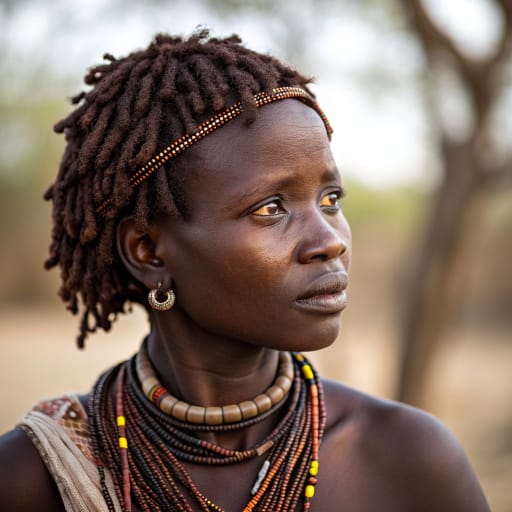
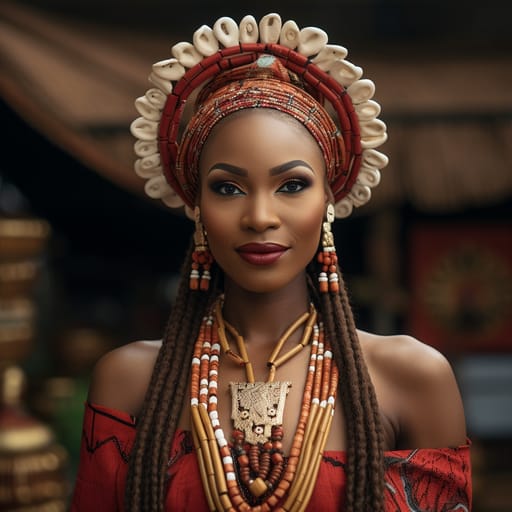
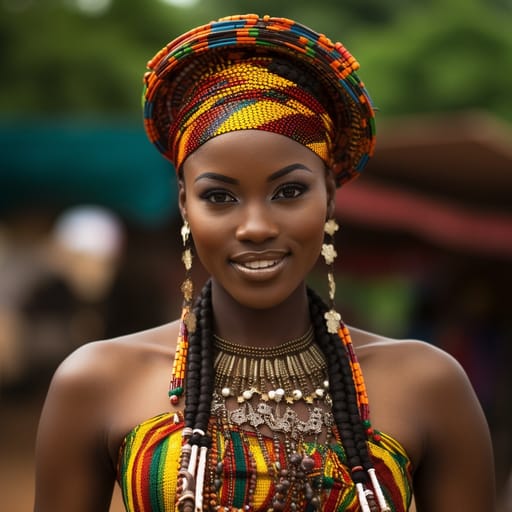
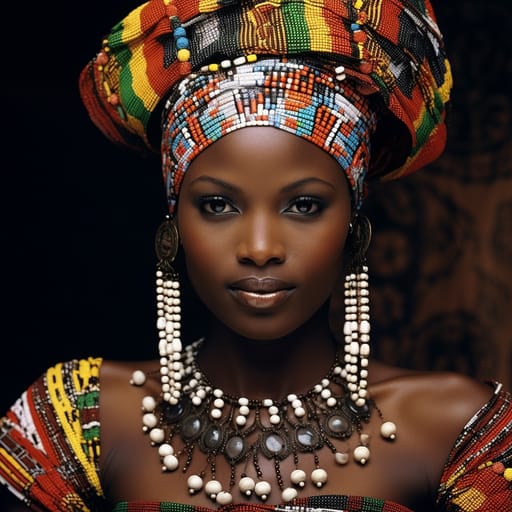
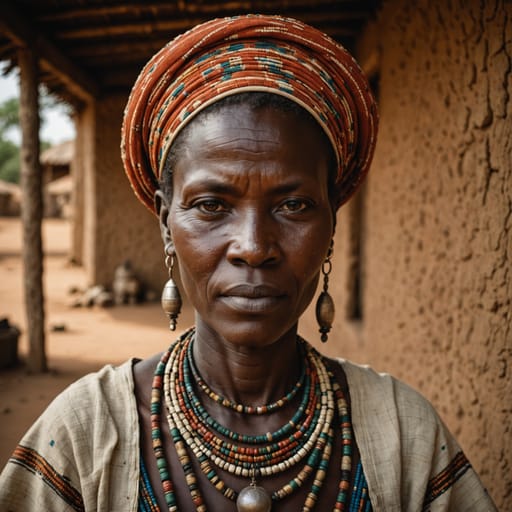
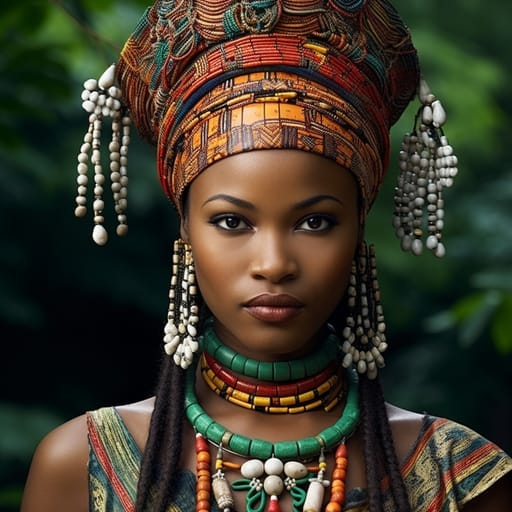
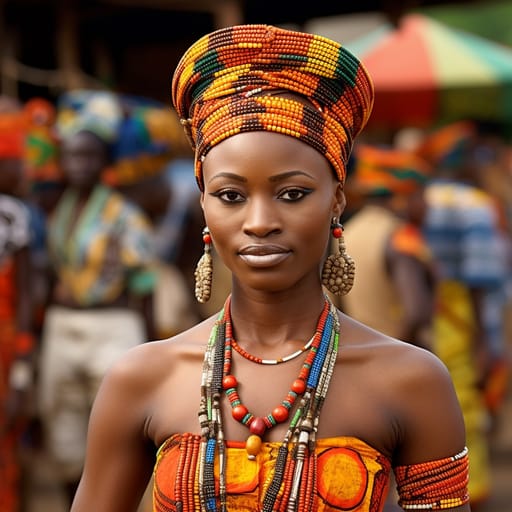
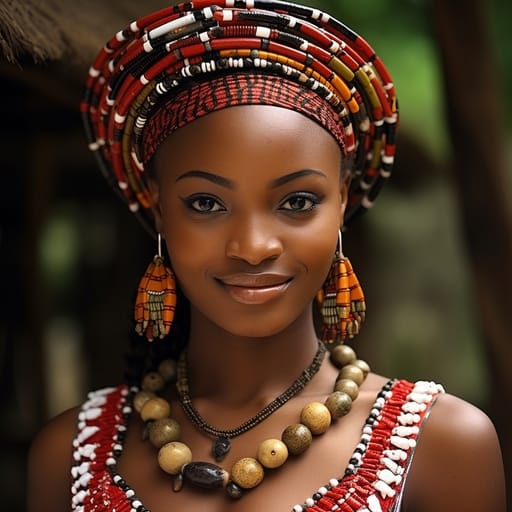
Typical Ahanta Phenotypes
Reference for AI generation: hair, eyes, skin, facial structure, build
Ahanta Body & Anatomy Reference
Per-feature anatomical profile for AI nude generation: West African Niger-Congo phenotype
Ahanta Boobs & Breasts
Bust reference for Ahanta women: medium-to-large cup, full, projecting, which is typical of West African Niger-Congo ancestry. Areolas measure about 35-50mm across, with deep-brown to near-black pigmentation. Body type (mesomorph with strong gluteal-femoral fat distribution) shapes the bust as well, so Ahanta tits are usually fuller and more projecting than the East African norm. In AI imagery, keep the forward-set shape rather than drifting toward the smaller conical Cushitic East African profile.
Ahanta Ass & Hips
The Ahanta ass is typically wide-set, full, heavily projected glutes, which sets it apart from the slim narrow-hip Cushitic East African profile. Underneath, the pelvis shows wide iliac crests, broad gynoid pelvic pattern, high glute-to-waist ratio, part of the West African Niger-Congo skeletal pattern. For Ahanta butt pics and AI renders, match that silhouette and the overall build (mesomorph with strong gluteal-femoral fat distribution).
Ahanta Vagina & Pussy
Ahanta pussy and vulvar anatomy presents deep-brown to near-black labial pigmentation, fuller labia minora, consistent with the West African Niger-Congo phenotype's pigmentation pattern. Ahanta pubic hair is typically tightly-coiled coarse texture, densely distributed, in the inverted-triangle pattern. For anatomically accurate Ahanta pussy renders the labial coloration should match the surrounding medium-brown to deep-brown skin tone with a continuous gradient, and the hair should keep its tightly-coiled coarse texture.
Ahanta Dicks & Penis
Ahanta dicks follow the West African Niger-Congo reference data: regional mean ~14-15cm erect; above-average girth, ~13cm circumference; deep-brown-to-near-black shaft pigmentation. Shaft color should track the medium-brown to deep-brown skin tone with a smooth change toward the glans, and Ahanta pubic hair keeps its tightly-coiled coarse texture.
Ahanta Body, Curves & Build
Ahanta body type and overall build presents as mesomorph with strong gluteal-femoral fat distribution, with mean adult female BMI 24-27: the characteristic West African Niger-Congo habitus. Ahanta curves and proportions should keep the regional skeletal frame (height, shoulder-to-hip ratio, limb proportions) rather than a generic mesomorph default.
Ahanta Skin Tone & Hair Texture
Ahanta skin sits in the medium-brown to deep-brown (Fitzpatrick V-VI) band. Hair is typically tight 4A-4C coil, often worn natural, braided, or relaxed, in keeping with the West African Niger-Congo phenotype. In nude renders the skin should stay one even tone from face to body, and body, pubic and head hair should match.
Explore phenotype categories
Structured taxonomy with peer-reviewed scales · 22 anatomical categories
Erotic Poses & Sex Positions
From the pose catalog: 219 named positions with reference skeletons
Frequently asked questions about Ahanta people
Where is the Ahanta homeland?
The Ahanta homeland is The southwestern coast of Ghana, in the Western Region, from Sekondi-Takoradi west toward the Ankobra River, including Busua, Dixcove, Butre, Princes Town and Cape Three Points. in Western Africa.
What language do Ahanta people speak?
Ahanta people primarily speak Ahanta (Niger-Congo, Kwa, Central Tano, Bia branch), with Fante and Twi widely spoken alongside it.
What religion do Ahanta people practice?
The predominant religion among Ahanta people is Predominantly Christian, with Akan traditional religion and coastal observances still practiced.






Make your own Ahanta images
Five a day, free, no credits to buy. The studio starts from this group's phenotype data, so you can set body type, pose and style and keep the traits accurate.
Start with Ahanta