Help us get this right
Does this portrait look right for Mende?
Nobody has judged this one yet. You would be the first.
Mende Erotic
Sierra Leone (Southern and Eastern Provinces)
Islam
About Mende People
The Mende are one of the two demographic anchors of Sierra Leone, making up roughly a third of the country alongside the Temne to the north. Their homeland is the forested southern and eastern interior — rolling country between the coastal mangroves and the Guinea highlands, watered by the Sewa, Moa, and Jong rivers and built around farming towns where rice, cassava, and palm oil have organized daily life for generations. Mende settlement is dense rather than nomadic; villages cluster, and chiefdoms have remained the load-bearing unit of local politics from the precolonial era into the present, surviving the British protectorate, independence, and the civil war of the 1990s with their authority more or less intact.
The Mende language belongs to the southwestern branch of Mande, sharing deep structural ties with Loko, Bandi, and Loma across the Liberian border, but only distant cousinship with the larger Mande languages of the Sahel like Bambara or Soninke. It is tonal, written in Latin script today, though in the 1920s a Mende chief named Kisimi Kamara devised an indigenous syllabary, Ki-ka-ku, which still surfaces in scholarly references to African writing systems even if it never displaced the Roman alphabet in everyday use. Most Mende are Muslim, but Islam here is layered rather than puritan — it sits comfortably alongside older institutions, and a Mende Muslim is rarely in conflict with the Mende ritual calendar.
That ritual calendar is governed by the sodalities, the secret societies that remain the most distinctive Mende institution. The Poro initiates men; the Sande (sometimes called Bondo) initiates women; both have parallel structures, parallel authorities, and a real say in community life that runs underneath the formal civic apparatus. Sande is unusual in West Africa for being the only documented context in which women wear masks in public ceremony — the Sowei helmet mask, with its glossy black surface, ringed neck, and small composed features, is the visible face of female authority and is one of the more recognized art objects to come out of the region. Mende carving more broadly favors that same restraint: smooth volumes, downcast eyes, an inward composure rather than expressive drama. The aesthetic suits the people who made it — pragmatic, hierarchical, more interested in the dignity of the office than the personality holding it.
Related ethnic groups
Groups that share Mende's homeland, region, language, or religious tradition. These are likely candidates for comparative phenotype reference.
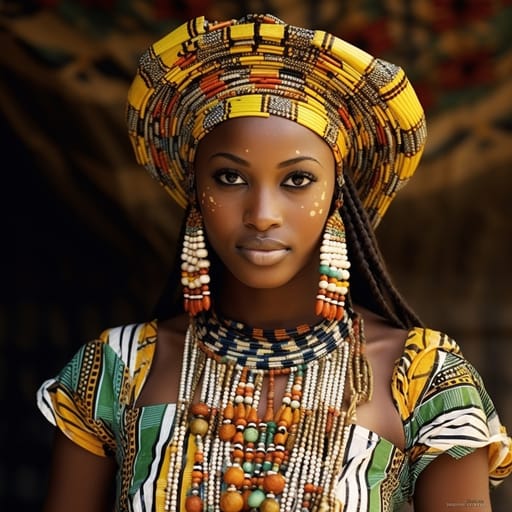
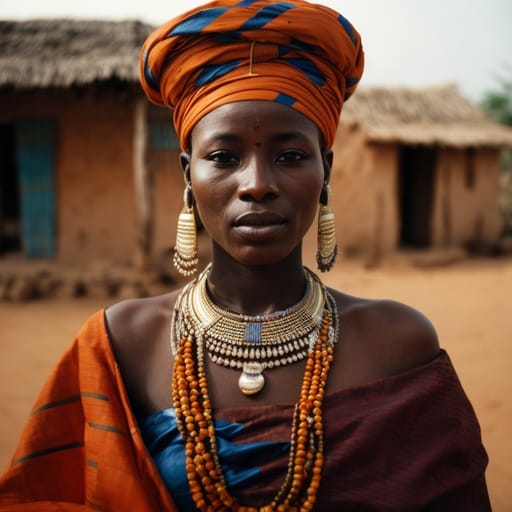
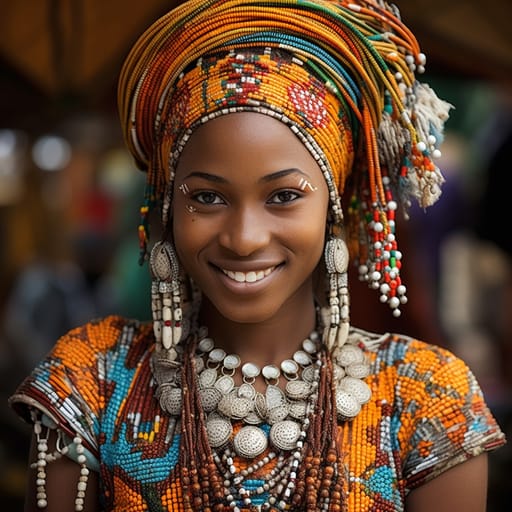
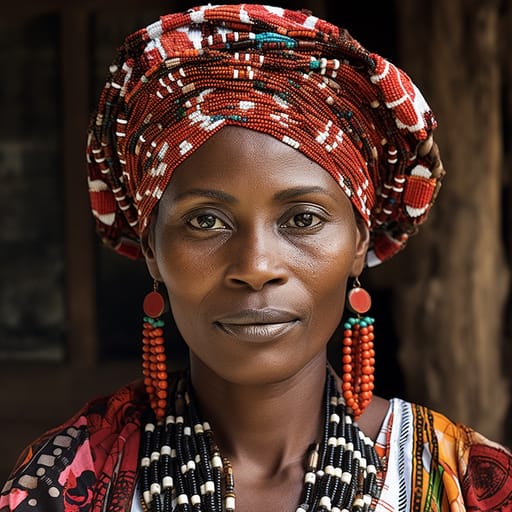
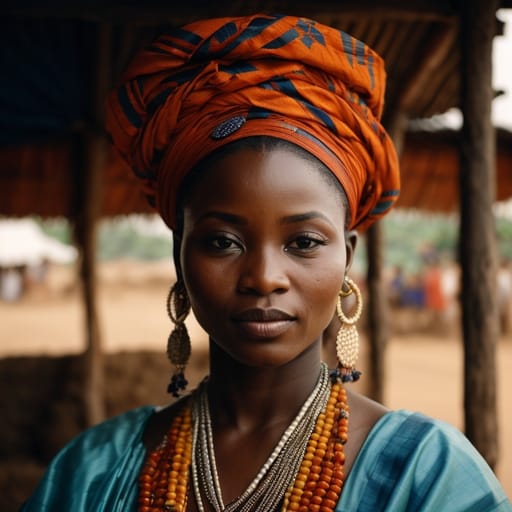
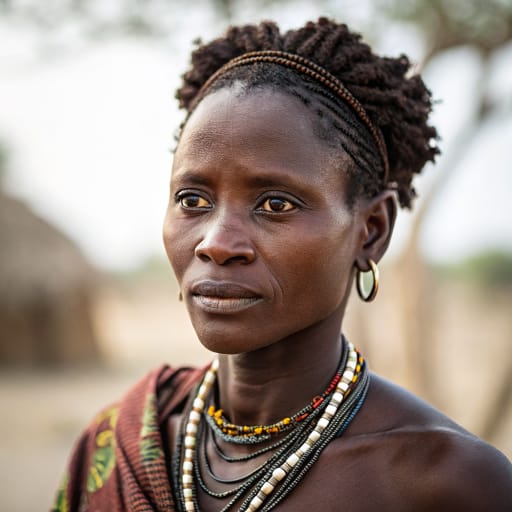
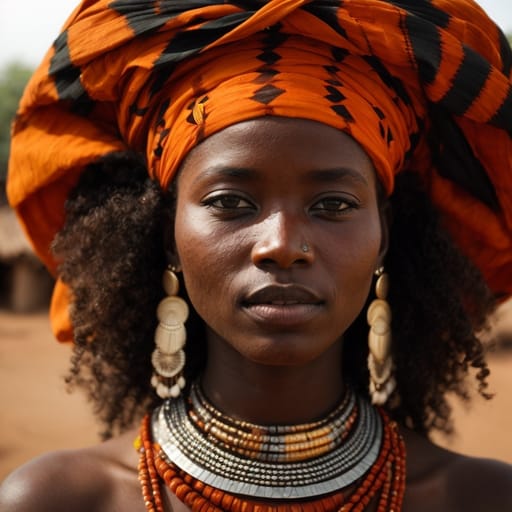
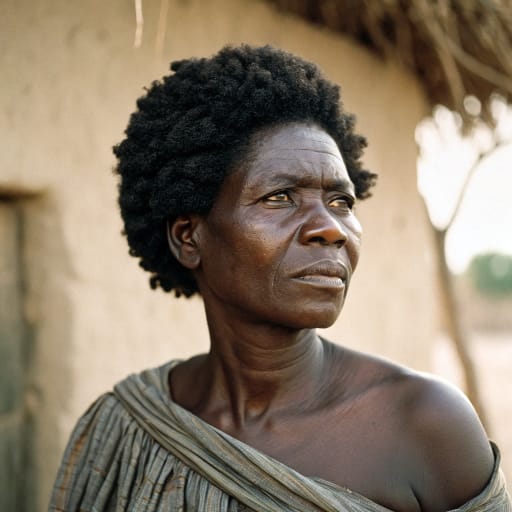
Geographic Distribution: Mende populations across 1 country
Each row is ranked by the group's share of that country's population, with the source citation drawn from published census and demographic surveys. Click through for the full per-country phenotype profile.
| Country | Share | Source |
|---|---|---|
| Sierra Leone | 31.4% | Sierra Leone 2015 Census; Mende (~31.4%); Mande source population, predominantly southern Sierra Leone |
Typical Mende Phenotypes
Reference for AI generation: hair, eyes, skin, facial structure, build
The Mende phenotype sits firmly within the West African Atlantic-coastal range, with the deep skin tones, tightly coiled hair, and broad mid-facial structure characteristic of the Upper Guinea forest belt — though with enough internal variation that no single description captures everyone from Bo to Kenema.
Hair is almost universally Type 4 — tightly coiled to kinky, dense, and dark brown to black. Coil pattern tends toward the tighter 4B–4C end rather than the looser springs seen further east. Premature greying is uncommon before middle age. Eyes are dark brown to near-black; lighter eyes are vanishingly rare. Eyelid morphology is the standard sub-Saharan pattern — no epicanthic fold, with a moderately full upper lid and clearly defined lash line. The eye shape itself reads as slightly almond, not round.
Skin tone clusters in Fitzpatrick V–VI, running from a warm medium-brown to a deep, near-black brown with red or olive undertones. The actor Sahr Ngaujah sits roughly mid-range; many rural Mende from the southern provinces tan deeper still under year-round equatorial sun. Sun damage and weathering are minimal compared to lighter populations — the phenotype is built for the climate.
Facial structure is the most distinctive register. Noses tend to be short to medium in length with a low, broad bridge and notably wide alae — the platyrrhine pattern is pronounced. Lips are full, often with a well-defined vermilion border on both upper and lower. Cheekbones sit moderately high and broad; jawlines are squarer in men and softer-rounded in women, with the chin often slightly receded relative to the lip plane. Foreheads tend to be tall and rounded.
Build is medium-statured by global standards — men typically 168–175 cm, women proportionally — with relatively long limbs, narrow hips, and lean musculature visible in the country's footballers. Body fat distribution favors the gluteofemoral region in women, with comparatively narrow waists. Subgroup variation between Kpa-Mende and Sewa-Mende branches is cultural and dialectal rather than visibly phenotypic.
Mende Body & Anatomy Reference
Per-feature anatomical profile for AI nude generation: West African Niger-Congo phenotype
Mende Boobs & Breasts
Bust reference for Mende women: medium-to-large cup, full, projecting, which is typical of West African Niger-Congo ancestry. Areolas measure about 35-50mm across, with deep-brown to near-black pigmentation. Body type (mesomorph with strong gluteal-femoral fat distribution) shapes the bust as well, so Mende tits are usually fuller and more projecting than the East African norm. In AI imagery, keep the forward-set shape rather than drifting toward the smaller conical Cushitic East African profile.
Mende Ass & Hips
The Mende ass is typically wide-set, full, heavily projected glutes, which sets it apart from the slim narrow-hip Cushitic East African profile. Underneath, the pelvis shows wide iliac crests, broad gynoid pelvic pattern, high glute-to-waist ratio, part of the West African Niger-Congo skeletal pattern. For Mende butt pics and AI renders, match that silhouette and the overall build (mesomorph with strong gluteal-femoral fat distribution).
Mende Vagina & Pussy
Mende pussy and vulvar anatomy presents deep-brown to near-black labial pigmentation, fuller labia minora, consistent with the West African Niger-Congo phenotype's pigmentation pattern. Mende pubic hair is typically tightly-coiled coarse texture, densely distributed, in the inverted-triangle pattern. For anatomically accurate Mende pussy renders the labial coloration should match the surrounding medium-brown to deep-brown skin tone with a continuous gradient, and the hair should keep its tightly-coiled coarse texture.
Mende Dicks & Penis
Mende dicks follow the West African Niger-Congo reference data: regional mean ~14-15cm erect; above-average girth, ~13cm circumference; deep-brown-to-near-black shaft pigmentation. Shaft color should track the medium-brown to deep-brown skin tone with a smooth change toward the glans, and Mende pubic hair keeps its tightly-coiled coarse texture.
Mende Body, Curves & Build
Mende body type and overall build presents as mesomorph with strong gluteal-femoral fat distribution, with mean adult female BMI 24-27: the characteristic West African Niger-Congo habitus. Mende curves and proportions should keep the regional skeletal frame (height, shoulder-to-hip ratio, limb proportions) rather than a generic mesomorph default.
Mende Skin Tone & Hair Texture
Mende skin sits in the medium-brown to deep-brown (Fitzpatrick V-VI) band. Hair is typically tight 4A-4C coil, often worn natural, braided, or relaxed, in keeping with the West African Niger-Congo phenotype. In nude renders the skin should stay one even tone from face to body, and body, pubic and head hair should match.
Data depth
47/100Coverage of image-grounded phenotype observations · drives AI generation diversity
- Sample size
- 24/40· 17 images
- Image quality
- 18/30· 35% high
- Confidence
- 5/20· mean 0.52
- Source diversity
- 0/10· wikipedia
- ·Modest sample (n<25)
- ·Low overall confidence
- ·Wikipedia-only source, not population-representative
Observed Distribution: Image Sample
Empirical observations from analyzed photographs · supplementary signal, not population truth
Sample: 17 images analyzed (17 wikipedia). Quality: 6 high, 8 medium, 2 low, 1 very_low. Avg analyzer confidence: 0.52.
Skin tone (Fitzpatrick): VI (65%), unclear (35%)
Hair color: black (35%), gray/white (18%), unclear (47%)
Hair texture: coily (47%), covered (18%), unclear (35%)
Eye color: dark brown (59%), unclear (41%)
Epicanthic fold: 0% present, 65% absent, 35% unclear
Caveats: Sample size 17 is modest, so secondary patterns may not be reliable. Low average analyzer confidence: many photos partially obscured or historical. Sample is 100% Wikipedia notable people, which skews toward male, public-life, and modern figures, not population-representative.
Last aggregated: May 7, 2026
Explore phenotype categories
Structured taxonomy with peer-reviewed scales · 22 anatomical categories
Notable Mende People
44 reference figures, sourced from Wikipedia
- John Oponjo Benjamin, former leader of the Sierra Leone People's Party (SLPP) and Finance minister …
- Solomon Ekuma Berewa, former Vice-President of Sierra Leone from 2002 to 2007 and former Sierra Leo…
- Augustine Bockarie, member of parliament of Sierra Leone representing Kono District.
- Sam Bockarie, former leader of the Revolutionary United Front indicted for war crimes.
- Joseph B. Dauda, former Sierra Leone minister of finance, former member of parliament and form…
- Albert Joe Demby, former vice-president of Sierra Leone.
- Joseph Ganda, Sierra Leonean Archbishop.
- Shirley Gbujama, Sierra Leone Minister of Foreign Affairs from 1996 to 1997 and Sierra Leone m…
- Ella Koblo Gulama, the first woman to be elected in the parliament of Sierra Leone and the first…
- Septimus Kaikai, Sierra Leone minister of Information and Communication from 2002 to 2007
- John Karimu, former Sierra Leone minister of Finance and former Commissioner of the Sierra…
- Allieu Kondewa, former commander of the Civil Defence Forces and convicted war criminal.
- Bernadette Lahai, Sierra Leonean politician and currently a member of Parliament representing K…
- David Lansana, former Head of State of Sierra Leone, convicted of treason and subsequently e…
- Albert Margai, second prime minister of Sierra Leone from 1964 to 1967; the brother of Sir M…
- Charles Francis Margai, Sierra Leonean politician and leader of the People's Movement for Democratic …
- Milton Margai, Sierra Leone's first prime minister from 1961 to 1964.
- Francis Minah, Sierra Leone's minister of Justice and Attorney General from 1978 to 1985 and…
- Mary Musa, current mayor of Koidu.
- Solomon Musa, vice chairman of the NPRC, a military government that ruled Sierra Leone from…
- Samuel Hinga Norman, founder and leader of the Civil Defence Forces, indicted for war crimes.
- Joe Robert Pemagbi, current Sierra Leone ambassador to the United Nations.
- Bindi Hindowa Samba, paramount chief of Bo District.
- Hindolo Trye, former Sierra Leone Minister of Tourism and Cultural Affairs.
- David Woobay, current mayor and Council Chairman of Moyamba.
- Emmerson Amidu Bockarie, Sierra Leonean musician.
- Isata Mahoi, Sierra Leonean actress.
- Sahr Ngaujah, actor and director.
- Patrick Bantamoi, Sierra Leonean football player.
- Kemokai Kallon, former Sierra Leonean football player.
- Mohamed Kallon, Sierra Leonean football player.
- Musa Kallon, former Sierra Leonean football player.
- Sahr Lahai, Sierra Leonean football player.
- Alpha Lansana, Sierra Leonean football player.
- Mustapha Sama, Sierra Leonean football player.
- Gibrilla Woobay, Sierra Leonean football player.
- Osman Yunis, Sierra Leonean football player.
- Sullay Kaikai, Sierra Leone football player.
- Tejan Koroma, American football player
- Augustine Gbao, former leader of the Revolutionary United Front and convicted war criminal
- Moinina Fofana, former commander of the Civil Defense Forces and convicted war criminal
- Joseph Cinqué, born Sengbe Pieh, victim of the Atlantic slave trade and leader of the rebell…
- Justin Mensah-Coker, rugby union player.
- Lady Agatha Danbury, In the Bridgerton series, is said to be descended from the Kpa-Mende Bo Tribe…
Erotic Poses & Sex Positions
From the pose catalog: 219 named positions with reference skeletons
Frequently asked questions about Mende people
Where is the Mende homeland?
The Mende homeland is Sierra Leone (Southern and Eastern Provinces) in Western Africa.
What countries do Mende people live in?
Mende populations are documented across 1 country: Sierra Leone.
What language do Mende people speak?
Mende people primarily speak Niger-Congo / Mande / Mende.
What religion do Mende people practice?
The predominant religion among Mende people is Islam.






Make your own Mende images
Five a day, free, no credits to buy. The studio starts from this group's phenotype data, so you can set body type, pose and style and keep the traits accurate.
Start with Mende