Help us get this right
Does this portrait look right for Serer?
Nobody has judged this one yet. You would be the first.
Serer Erotic
Islam
Laalaa, Ndut, Niominka, Serer-Noon, Palor, Saafi
About Serer People
The Serer are one of the older continuously identifiable peoples of the Senegambian coast, occupying a wedge of country that runs from the Sine and Saloum river deltas inland toward the groundnut basin. They are best understood not as a single tribe but as a federation of related communities — the riverine Niominka of the mangrove islands, the Saafi and Ndut and Noon of the western hills behind Thiès, the Palor and Laalaa — bound together by shared cosmology and a deep skepticism toward outside authority. For centuries the kingdoms of Sine and Saloum, ruled by Serer aristocracies, held out against the jihadist movements that swept Senegambia in the nineteenth century, which is why Serer Catholicism and Serer traditional religion both survived in pockets that would otherwise have been Islamized much earlier.
The language sits inside the Atlantic branch of Niger–Congo, closely related to Fula and to Wolof but mutually unintelligible with either, and the smaller "Cangin" languages spoken by the western sub-groups are distinct enough that linguists treat them as a separate cluster rather than dialects of Serer proper. Today most Serer are Muslim, many follow the Tijaniyya or Mouride brotherhoods that dominate Senegalese Islam, and a meaningful Catholic minority remains — Léopold Sédar Senghor, the poet and first president of Senegal, came from this Catholic Serer milieu and drew heavily on Serer cosmology in his writing. Underneath both faiths, the older religious vocabulary persists: Roog, the high god, the pangool ancestral spirits, and a priestly class of saltigué who are still consulted, particularly during the annual Xooy divination ceremony at Fatick, when seers publicly forecast the rains, harvests, and political fortunes of the coming year.
Day-to-day Serer life has been shaped by an unusually sophisticated agrarian system — the Serer of the groundnut basin practice an agroforestry regime built around the Faidherbia albida tree, which fertilizes the soil under millet fields and has allowed the same land to be farmed continuously for centuries without collapse, a fact that agronomists keep rediscovering. The Niominka, by contrast, are fishers and shellfish gatherers whose villages on the Saloum islands move with the tides and the oyster season. Wrestling — laamb — is a Serer contribution to Senegalese national culture, and the country's biggest stars still tend to come from Sine.
Related ethnic groups
Groups that share Serer's homeland, region, language, or religious tradition. These are likely candidates for comparative phenotype reference.
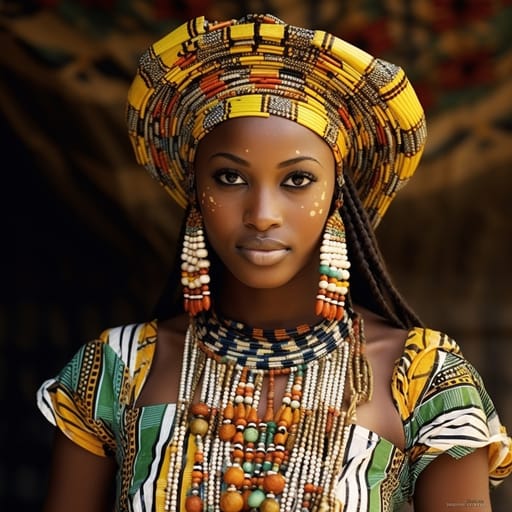
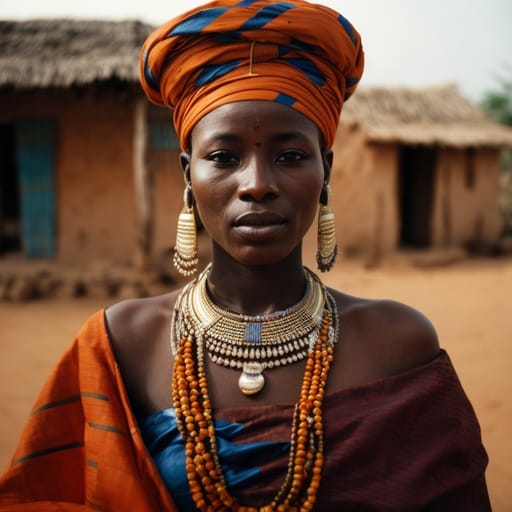
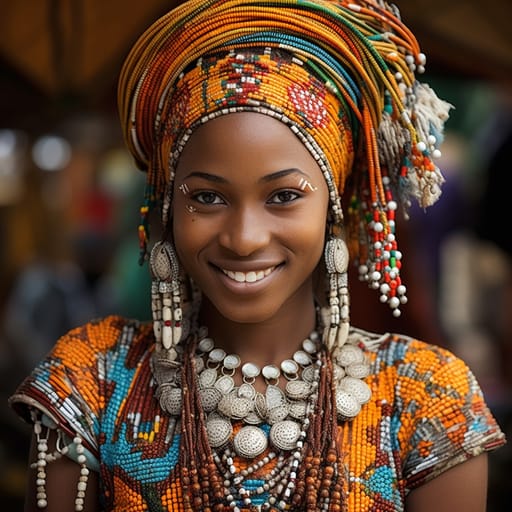
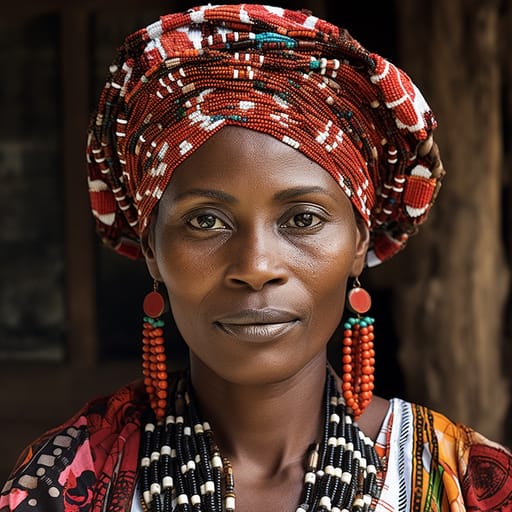
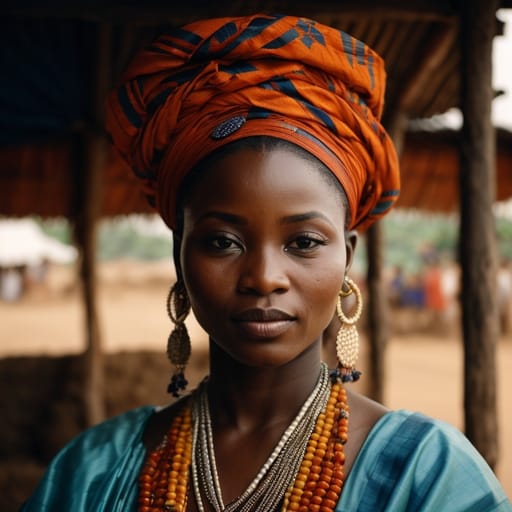
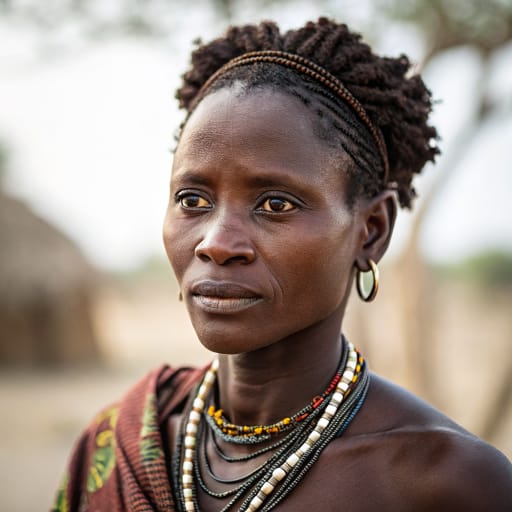
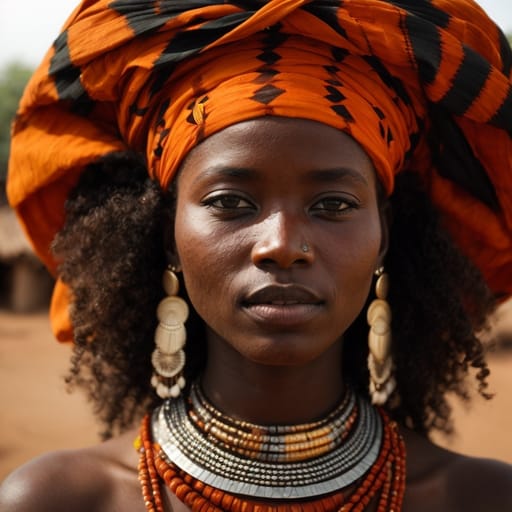
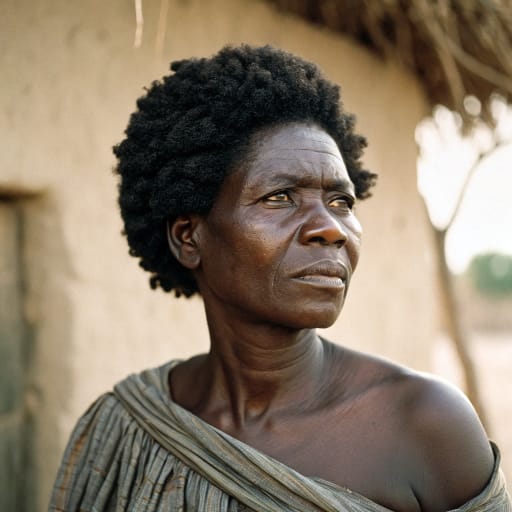
Geographic Distribution: Serer populations across 1 country
Each row is ranked by the group's share of that country's population, with the source citation drawn from published census and demographic surveys. Click through for the full per-country phenotype profile.
| Country | Share | Source |
|---|---|---|
| Senegal | 14.9% | Senegal 2013 Census; Serer (~14.9%); Niger-Congo source population |
Typical Serer Phenotypes
Reference for AI generation: hair, eyes, skin, facial structure, build
The Serer phenotype sits within the broader Senegambian Atlantic-coast cluster, but with its own consistencies. Skin tone runs deep — predominantly Fitzpatrick VI, with warm red-brown to near-black undertones rather than the cooler blue-black common further east in the Sahel. Cool-undertone deep brown shows up in the Niominka coastal fishing populations of the Saloum delta, who carry slightly more historical admixture from inland Mandé and northern Wolof neighbors.
Hair is consistently Type 4 — tightly coiled to z-pattern coily, with high density and low natural sheen. Color is uniformly black-brown; rust or auburn highlights occasionally appear in children and in sun-exposed adults. Facial and body hair is moderate, less than in Fulani neighbors. Eyes are dark brown to near-black, with no epicanthic fold and almond-to-round palpebral apertures; sclera tends to be unusually clear. Eyebrows are typically thick and well-defined.
Facial structure is where the Serer read as distinct from surrounding Wolof and Fulani populations. The nose is broad at the base with full alae and a low-to-medium bridge — wider than Fulani noses, less projecting than Mandinka. Lips are full and well-everted, with a pronounced cupid's bow. Cheekbones are high and laterally set, jawlines square in men and softly defined in women, giving the face a notably wide, sculptural cast. Léopold Sédar Senghor's bone structure is a useful anchor for the classic Serer face.
Build trends tall and lean — men commonly 175–185 cm, women 165–175 cm — with long limbs, narrow hips, and low body fat in rural populations. Footballers like El Hadji Diouf and Ismaïla Sarr reflect the typical wiry, fast-twitch build. The interior agriculturalist sub-groups — Saafi, Ndut, Palor, Laalaa, Serer-Noon — are slightly shorter and more compactly built than the coastal Niominka, who skew taller and leaner from generations of fishing-village life on the Atlantic edge.
Serer Body & Anatomy Reference
Per-feature anatomical profile for AI nude generation: West African Niger-Congo phenotype
Serer Boobs & Breasts
The typical Serer bust is medium-to-large cup, full, projecting, in line with the wider West African Niger-Congo pattern. Areolas usually fall in the 35-50mm range, with deep-brown to near-black areolar pigmentation against the medium-to-deep-brown skin tone. Compared with the smaller conical Cushitic East African profile, Serer breasts sit forward and are generally fuller and more projecting than the East African norm. A faithful AI render of Serer tits keeps that shape and areola size.
Serer Ass & Hips
Butt shape among Serer women: wide-set, full, heavily projected glutes, over wide iliac crests, broad gynoid pelvic pattern, high glute-to-waist ratio. This follows West African Niger-Congo ancestry and looks quite unlike the slim narrow-hip Cushitic East African profile. An accurate Serer ass in adult AI imagery keeps both the silhouette and the overall build (mesomorph with strong gluteal-femoral fat distribution) instead of a generic average.
Serer Vagina & Pussy
Vulvar anatomy among Serer women: deep-brown to near-black labial pigmentation, fuller labia minora. Pubic hair tends to be tightly-coiled coarse texture, densely distributed, in the usual inverted-triangle pattern. Both follow West African Niger-Congo pigmentation, which is why Serer pussy renders should not fall back on a pale, sparse Western template.
Serer Dicks & Penis
The Serer cock profile, from West African Niger-Congo anthropometric data: regional mean ~14-15cm erect; above-average girth, ~13cm circumference; deep-brown-to-near-black shaft pigmentation. Pubic hair has a tightly-coiled coarse texture and forms the usual inverted-V pattern. Whether Serer men are circumcised follows religious and cultural practice rather than phenotype.
Serer Body, Curves & Build
Build and curves among Serer women follow the West African Niger-Congo pattern: mesomorph with strong gluteal-femoral fat distribution, mean adult female BMI 24-27. Proportions matter as much as skin tone, so Serer figures should keep their regional height and limb ratios.
Serer Skin Tone & Hair Texture
The Serer skin range is medium-brown to deep-brown (Fitzpatrick V-VI), and hair tends to be tight 4A-4C coil, often worn natural, braided, or relaxed. That combination marks the West African Niger-Congo phenotype, and skin tone is the trait AI generators most often get wrong for Serer women.
Data depth
69/100Coverage of image-grounded phenotype observations · drives AI generation diversity
- Sample size
- 28/40· 23 images
- Image quality
- 26/30· 52% high
- Confidence
- 15/20· mean 0.79
- Source diversity
- 0/10· wikipedia
- ·Modest sample (n<25)
- ·Wikipedia-only source, not population-representative
Observed Distribution: Image Sample
Empirical observations from analyzed photographs · supplementary signal, not population truth
Sample: 23 images analyzed (23 wikipedia). Quality: 12 high, 9 medium, 2 low, 0 very_low. Avg analyzer confidence: 0.79.
Skin tone (Fitzpatrick): V (4%), VI (91%), unclear (4%)
Hair color: black (61%), gray/white (22%), blonde (4%), unclear (13%)
Hair texture: coily (74%), shaved (9%), covered (13%), unclear (4%)
Eye color: dark brown (96%), unclear (4%)
Epicanthic fold: 0% present, 96% absent, 4% unclear
Caveats: Sample size 23 is modest, so secondary patterns may not be reliable. Sample is 100% Wikipedia notable people, which skews toward male, public-life, and modern figures, not population-representative.
Last aggregated: May 7, 2026
Explore phenotype categories
Structured taxonomy with peer-reviewed scales · 22 anatomical categories
Notable Serer People
46 reference figures, sourced from Wikipedia
- Wolof, From the Serer Wolof word reer meaning 'misplaced', i.e. doubting the truth o…
- Arabic, From "the Arabic word seereer meaning sahir magician or one who practices mag…
- Pulaar, From a Pulaar word meaning separation, divorce, or break, again referring to …
- Saltigue, priesthood)
- Persecution of Serers, By Muslims By Christians
- Sène, var : Sene or Sain)
- Diène, Diene (var : Diène) or Jein
- Dièye, or Jaye (var : Jaay) etc... are all typical Serer surnames.
- Léopold Sedar Senghor, first president of Senegal from 1960 to 1980
- Abdou Diouf, second president of Senegal and former secretary general of the Organisation …
- Ngalandou Diouf, the first African elected to office in French West Africa
- Al Njie, Senegalese footballer
- Marième Faye Sall, current First Lady of Senegal (as of 2020); wife of President Macky Sall (who…
- Fallou Diagne, Senegalese footballer
- Fatou Diome, Senegalese author
- Safi Faye, Senegalese film director and ethnologist
- Alhaji Alieu Ebrima Cham Joof, late Senegambian historian, politician and colonial-era advocate for Gambia's…
- Bai Modi Joof, Gambian lawyer and champion of free speech
- Laïty Kama, Senegalese Lawyer and the first president of the International Criminal Tribu…
- Issa Laye Thiaw, Senegalese historian and theologian
- Alioune Sarr, Senegalese historian and politician
- Isatou Njie-Saidy, former Vice-president of Gambia
- Bassirou Diomaye Faye, fifth president of Senegal
- Yandé Codou Sène, Senegalese griot and musician
- Youssou N'Dour, Senegalese musician
- Mame Biram Diouf, Senegalese footballer
- Robert Diouf, Senegalese wrestler
- El Hadji Diouf, Senegalese footballer
- Khaby Lame, Senegalese-born Italian social media personality
- Ismaïla Sarr, Senegalese footballer
- Malang Sarr, Senegalese footballer
- Oulimata Sarr, Senegalese politician
- Moustapha Name, Senegalese footballer
- Ousmane Ndong, Senegalese footballer
- Abdoulaye Faye, Senegalese footballe
- Joseph Henry Joof, Gambian lawyer and politician
- Marie Samuel Njie, Gambian singer,
- Pap Saine, Gambian editor and publisher
- Ibrahima Sarr, Mauritanian journalists and politician
- List of presidents of Senegal, As of 2024, Senegal has had five presidents after independence. The first, se…
- Mossane, Serer-themed)
- ISBN, Diouf, Mamadou & Leichtman, Mara, New perspectives on Islam in Senegal: conve…
- Mwakikagile, Godfrey, Ethnic Diversity and Integration in the Gambia. Page 224
- Sonko Godwin, Patience, Leaders of Senegambia Region, Reactions To European Infiltration 19th-20th Ce…
- ASIN, Sonko Godwin, Patience, Ethnic Groups of The Senegambia Region, A Brief Histo…
- Asante, Molefi Kete, ; Mazama, Ama; Encyclopedia of African Religion, SAGE Publications (2008), p.…
Erotic Poses & Sex Positions
From the pose catalog: 219 named positions with reference skeletons
Frequently asked questions about Serer people
Where is the Serer homeland?
The Serer homeland is Senegal in Western Africa.
What countries do Serer people live in?
Serer populations are documented across 1 country: Senegal.
What language do Serer people speak?
Serer people primarily speak Niger-Congo / Atlantic / Senegambian / Serer.
What religion do Serer people practice?
The predominant religion among Serer people is Islam.






Make your own Serer images
Five a day, free, no credits to buy. The studio starts from this group's phenotype data, so you can set body type, pose and style and keep the traits accurate.
Start with Serer