Help us get this right
Does this portrait look right for Bissa?
Nobody has judged this one yet. You would be the first.
Bissa Erotic
Islam
About Bissa People
The Bissa live in the southeastern corner of Burkina Faso, in the dry savanna country around Garango and Zabré, with substantial communities across the borders into northern Ghana and Togo. They are a Mande-speaking people in a region dominated by Gur languages — their neighbors the Mossi, who surround them on most sides, speak something quite different, and the Bissa have held onto their own tongue while absorbing centuries of Mossi political and cultural pressure. The language itself splits into two main varieties, Barka and Lebir, distinct enough that speakers from opposite ends of Bissa country sometimes find each other hard going.
Their identity is bound up with a particular crop. The Bissa are the groundnut growers of Burkina Faso, and peanuts are not just an export earner but a marker of who they are — Bissa traders move them through markets across the region, and Bissa cuisine leans on the nut in ways that distinguish it from the millet-and-sorghum baseline of the wider Sahel. Subsistence agriculture still anchors village life, supplemented by small-scale trade and, increasingly, remittances from kin who have left for Ouagadougou or Abidjan.
Islam reached the Bissa gradually rather than through conquest, spreading through trade contacts and Mossi neighbors over the past few centuries, and it sits today over an older substrate of practices tied to ancestors, the land, and lineage spirits. Most Bissa are Muslim in self-identification and observance, but funerals, naming ceremonies, and decisions about farming or marriage often draw on customs that predate the mosque, and the two systems coexist without much obvious friction. Authority in the village runs through chiefs and elder councils, with the head of a lineage carrying weight on questions of land and inheritance.
Historically the Bissa were never centralized into a single kingdom — they organized themselves at the level of the village and the clan, which meant they were politically vulnerable to the Mossi states that grew up around them, and from the eighteenth century onward they paid tribute and lost people to slave raiding routes that ran south to the coast. The colonial period folded them into French Upper Volta with little ceremony. What survived all of it is a strong sense of being Bissa specifically — not Mossi, not Gurma, not Hausa — and a language they have not surrendered.
Related ethnic groups
Groups that share Bissa's homeland, region, language, or religious tradition. These are likely candidates for comparative phenotype reference.
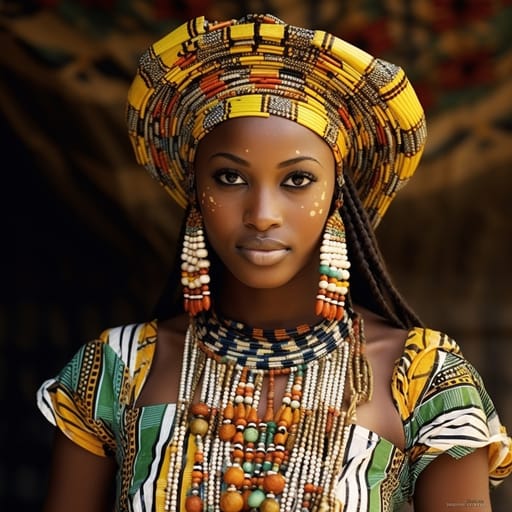
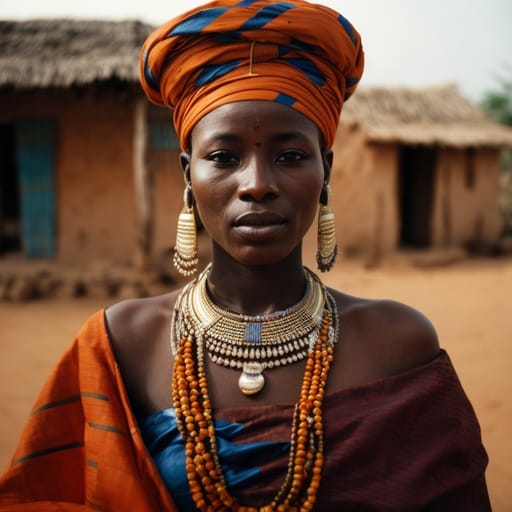
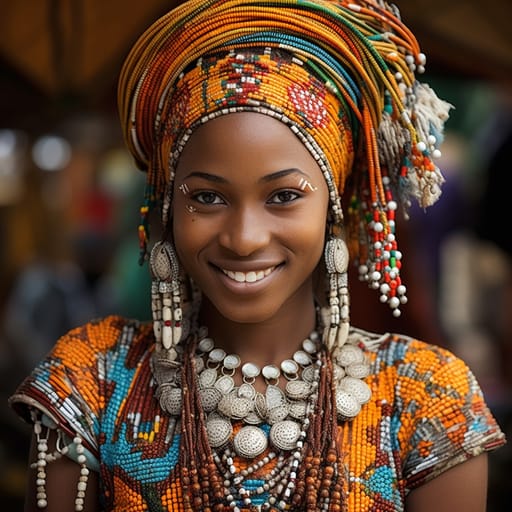
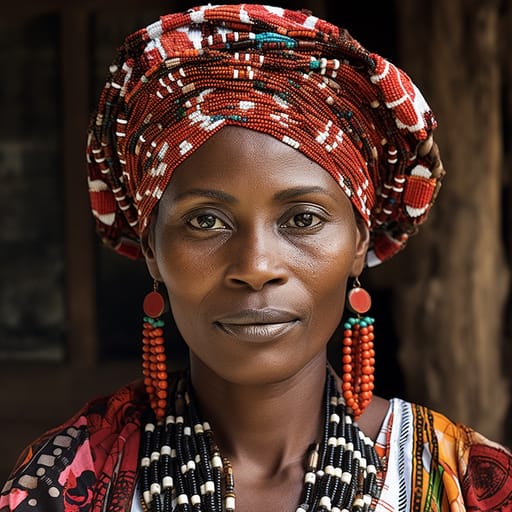
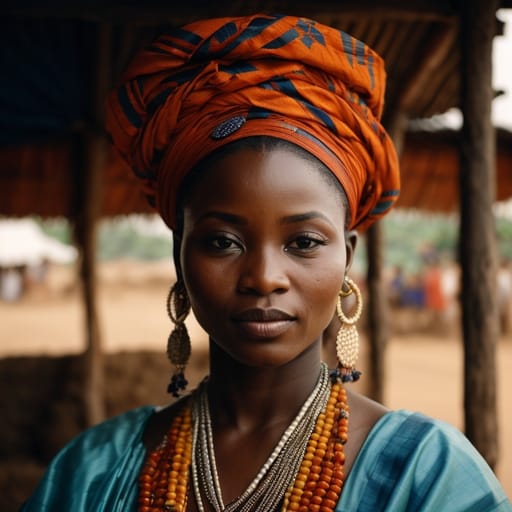
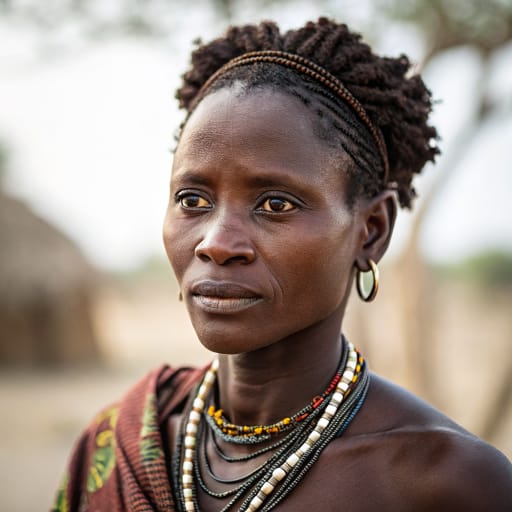
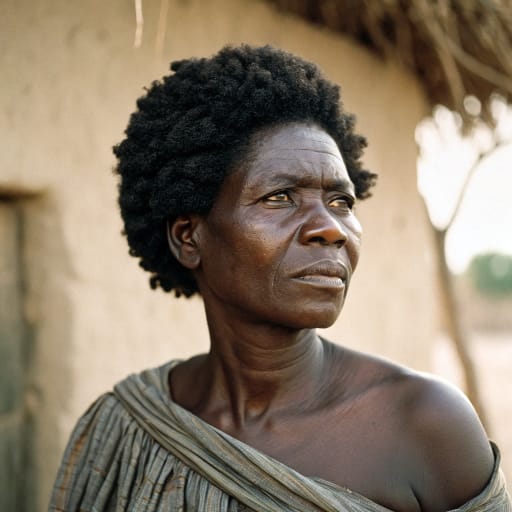
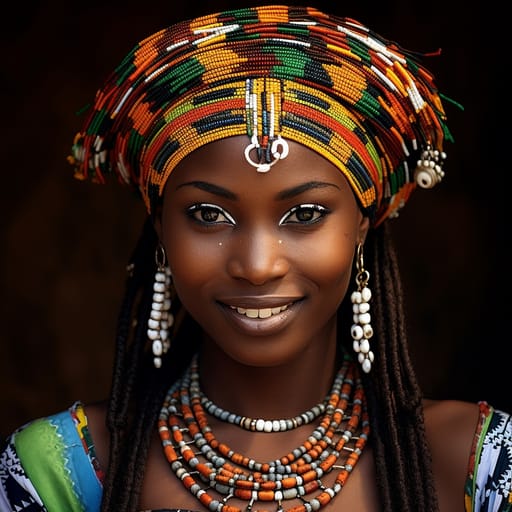
Typical Bissa Phenotypes
Reference for AI generation: hair, eyes, skin, facial structure, build
The Bissa are a Mande-speaking population concentrated in southern Burkina Faso along the Ghanaian and Togolese borders, and they sit phenotypically within the wider West African Sahel-savanna belt — closer in appearance to neighboring Mossi and northern Ghanaian groups than to either the deeper-pigmented forest populations to the south or the lighter Sahelian populations further north. The dominant register is medium-to-dark brown skin, broadly Fitzpatrick V to VI, with warm reddish or umber undertones rather than the cooler blue-black tones common in coastal Nigerian or South Sudanese groups. Sun-exposed agricultural communities trend visibly darker than urban Ouagadougou-based Bissa.
Hair is almost universally Type 4 — tightly coiled, dense, with the small-diameter spirals typical of West African populations. Natural color is near-uniformly very dark brown to black; reddish or sun-bleached tips appear in children and outdoor laborers but true non-black variation is essentially absent. Eyes are dark brown to near-black, with no epicanthic fold and a relatively horizontal palpebral fissure; lighter eye colors are rare and almost always indicate recent admixture.
Facial structure tends toward moderately broad noses with low-to-medium bridges and rounded, flared alae — less platyrhine than equatorial forest groups but distinctly broader than Fulani or Tuareg neighbors. Lips are full, with notable upper-lip eversion. Cheekbones are prominent but not as architecturally angular as in Nilotic populations; the jawline reads softer and more rounded, giving a fuller midface. Foreheads are typically broad.
Build is generally medium — average male stature falls in the roughly 168–172 cm range, shorter than Mossi or Senegambian Wolof, with moderate shoulder breadth and an even mesomorphic-to-ectomorphic distribution. Women tend toward fuller hips and pronounced gluteofemoral fat deposition, a regional pattern shared across the Voltaic peoples. There are no major branch-level subgroup splits in Bissa phenotype; the small Lebir-versus-Barka linguistic divide produces no visible morphological distinction.
Bissa Body & Anatomy Reference
West African Niger-Congo phenotype: anatomy reference for AI nude generation
Bissa Boobs & Breasts
Bissa boobs follow the West African Niger-Congo profile: medium-to-large cup, full, projecting. Areolar diameter is usually 35-50mm, and the coloring is deep-brown to near-black areolar pigmentation against the medium-to-deep-brown skin tone. Breast shape tracks body composition (mesomorph with strong gluteal-femoral fat distribution, mean adult female BMI 24-27), so Bissa breasts tend to be fuller and more projecting than the East African norm. Expect a forward-set shape, not the smaller conical Cushitic East African profile.
Bissa Ass & Hips
Bissa ass and hip morphology presents as wide-set, full, heavily projected glutes, distinctly different from the slim narrow-hip Cushitic East African profile. The Bissa pelvic profile shows wide iliac crests, broad gynoid pelvic pattern, high glute-to-waist ratio, anchored in the West African Niger-Congo skeletal pattern. Bissa butt shots in adult AI imagery should render the wide-set, full, heavily projected glutes silhouette with the overall build (mesomorph with strong gluteal-femoral fat distribution) and the fat distribution typical of the West African Niger-Congo phenotype.
Bissa Vagina & Pussy
Bissa pussy anatomy typically shows deep-brown to near-black labial pigmentation, fuller labia minora. Pubic hair is usually tightly-coiled coarse texture, densely distributed. In AI-generated Bissa nudes, labial color should blend into the medium-brown to deep-brown skin with a gradual transition, and the hair should keep its tightly-coiled coarse texture.
Bissa Dicks & Penis
Penis reference for Bissa men: regional mean ~14-15cm erect, above-average girth, ~13cm circumference. Coloring: deep-brown-to-near-black shaft pigmentation. An accurate Bissa cock in AI imagery matches the surrounding medium-brown to deep-brown skin rather than a generic porn default. Circumcision depends on religion and custom, not ancestry.
Bissa Body, Curves & Build
The Bissa figure is generally mesomorph with strong gluteal-femoral fat distribution, with mean adult female BMI 24-27, characteristic of West African Niger-Congo ancestry. AI image tools tend to flatten regional body types into a few stock shapes; here the Bissa build is kept as its own reference.
Bissa Skin Tone & Hair Texture
Skin: medium-brown to deep-brown (Fitzpatrick V-VI). Hair: tight 4A-4C coil, often worn natural, braided, or relaxed. Both are typical of West African Niger-Congo ancestry. The most common mistake in AI nudes of Bissa women is a body rendered lighter than the face.
Data depth
0/100Coverage of image-grounded phenotype observations · drives AI generation diversity
- Sample size
- 0/40· 0 images
- Image quality
- 0/30· 0% high
- Confidence
- 0/20
- Source diversity
- 0/10
- ·No image observations yet
Explore phenotype categories
Structured taxonomy with peer-reviewed scales · 22 anatomical categories
Erotic Poses & Sex Positions
From the pose catalog: 219 named positions with reference skeletons
Frequently asked questions about Bissa people
Where is the Bissa homeland?
The Bissa homeland is Burkina Faso in Western Africa.
What language do Bissa people speak?
Bissa people primarily speak Niger-Congo / Mande / Bissa.
What religion do Bissa people practice?
The predominant religion among Bissa people is Islam.






Make your own Bissa images
Five a day, free, no credits to buy. The studio starts from this group's phenotype data, so you can set body type, pose and style and keep the traits accurate.
Start with Bissa