Help us get this right
Does this portrait look right for Gola?
Nobody has judged this one yet. You would be the first.
Gola Erotic
Islam
About Gola People
The Gola occupy a stretch of forest country straddling the Liberia–Sierra Leone border, in the upland rainforest belt that runs inland from the coast. They are one of the older populations in the region — linguists generally treat Gola as a small, isolated branch of Niger–Congo, not closely tied to the Mande languages that surround it on most sides, which suggests the Gola were settled in this forest before the larger southward Mande expansions reshaped the area. That deep-rooted quality matters: neighbors like the Vai, Mende, and Kpelle came later, and the cultural traffic has run in both directions ever since.
What most defines Gola social life from the inside is the institution of the bush schools — Poro for men, Sande for women — the secret societies that, across this part of West Africa, handle the long passage from childhood into adult standing. The Gola are widely credited with being among the originating cultures of these societies, and Poro and Sande remain the spine of village authority, dispute resolution, and ritual knowledge in Gola country. The masked figures associated with Sande, in particular, are one of the few traditions in sub-Saharan Africa where masking is performed by women, and Gola carving and masquerade feed directly into the regional aesthetic the wider Mende- and Vai-speaking world has made famous.
Religiously, the picture is layered. Islam reached the Gola later than it reached the savanna peoples to the north, and it took hold most firmly through trade and intermarriage with Mandingo and Vai Muslims; today many Gola identify as Muslim, though Christianity has also made inroads, and in both cases the older society-based ritual life continues to operate alongside whatever is professed at the mosque or the church. People do not generally experience this as a contradiction.
The twentieth century was hard on Gola country. The Liberian and Sierra Leonean civil wars of the 1990s and early 2000s tore through the forest belt the Gola call home, displacing villages and damaging the chains of elders through whom Poro and Sande knowledge is transmitted. Reconstruction has been slow and uneven. The Gola remain a relatively small population — somewhere on the order of a few hundred thousand split across the two countries — and much of their homeland now overlaps with the transboundary Gola Forest reserves, one of the last significant tracts of Upper Guinean rainforest left standing.
Related ethnic groups
Groups that share Gola's homeland, region, language, or religious tradition. These are likely candidates for comparative phenotype reference.
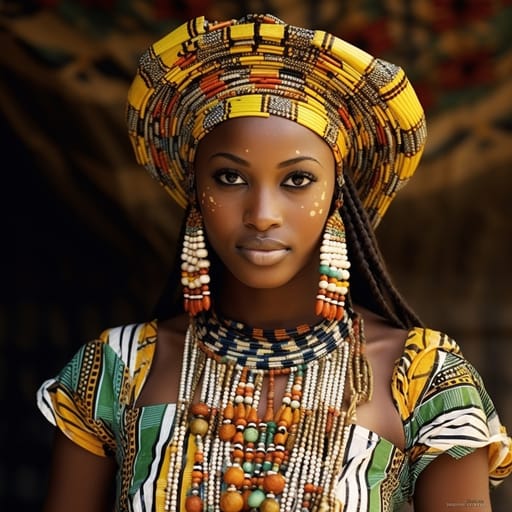
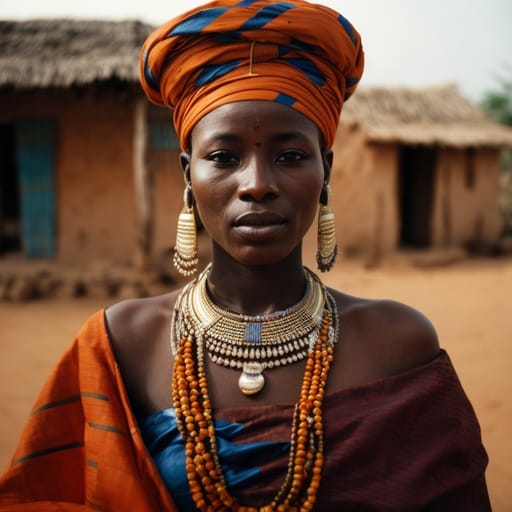
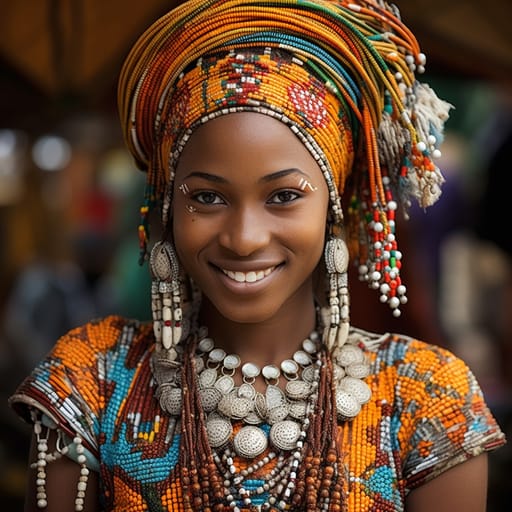
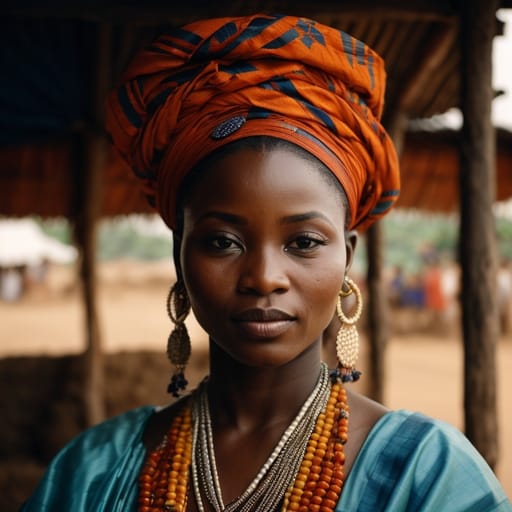
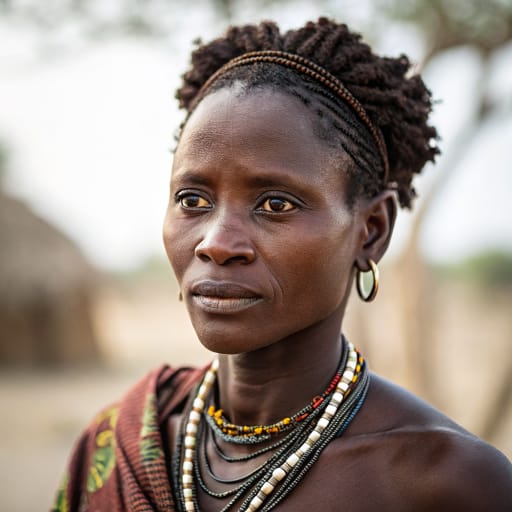
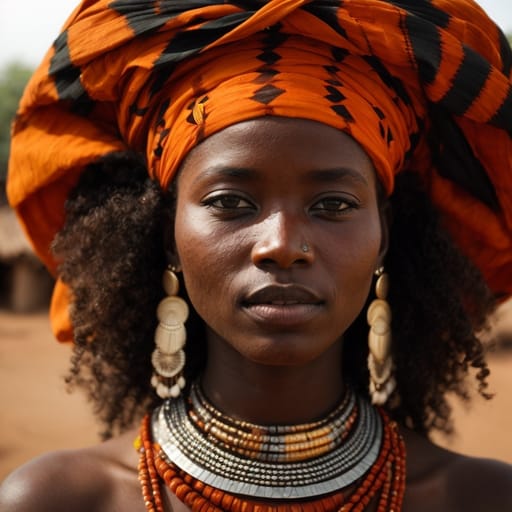
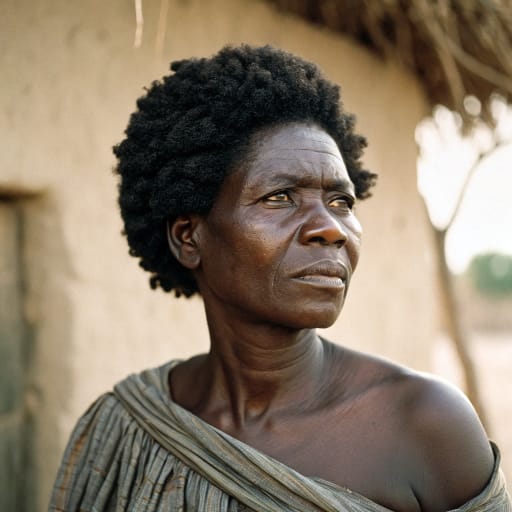
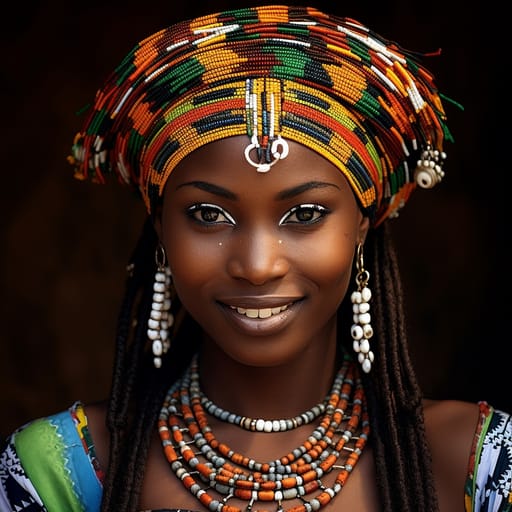
Geographic Distribution: Gola populations across 1 country
Each row is ranked by the group's share of that country's population, with the source citation drawn from published census and demographic surveys. Click through for the full per-country phenotype profile.
| Country | Share | Source |
|---|---|---|
| Liberia | 4.3% | Liberia 2008 Census; Gola (~4.3%); cross-border with Sierra Leonean Gola |
Typical Gola Phenotypes
Reference for AI generation: hair, eyes, skin, facial structure, build
The Gola sit in the Upper Guinean forest belt straddling the Liberia–Sierra Leone border, and their phenotype reflects that ecological niche: deeply pigmented skin selected under high equatorial UV, compact musculoskeletal builds adapted to humid forest environments, and the broader West African craniofacial pattern softened by centuries of admixture with neighboring Vai, Mende, and Kpelle populations.
Skin tone clusters in the Fitzpatrick V–VI range, with most adults falling at the darker end — deep brown to near-black with warm reddish or coppery undertones rather than the bluish undertones seen further east in Nilotic groups. Sun exposure produces little visible variation; the pigmentation is uniform across the body with minimal differential between covered and exposed skin. Hair is almost universally Type 4 (4B and 4C), tightly coiled with low porosity, jet black with rare brown variation; greying patterns are typical for Sub-Saharan populations, often beginning at the temples in the late thirties. Eyes are dark brown to nearly black, with no epicanthic fold and a relatively wide palpebral fissure. Eyebrow hair is dense and the lash line is full.
Facial structure runs to a moderately broad nose with a low-to-medium bridge and wider alar base, full and well-everted lips on both upper and lower (the upper lip carrying notable vermilion height), and prominent zygomatic arches that give the midface a sculpted look. Jawlines are typically square in men and rounded in women, with strong chin projection. Foreheads are moderately high.
Build tends toward medium stature — men commonly 168–175 cm, women 158–165 cm — with proportionally long limbs relative to torso, narrow hips, and naturally lean musculature that takes definition easily. Women carry a pronounced lumbar curve and gluteofemoral fat distribution typical of West African populations. Mixed-ancestry individuals, well represented in the notable-people list through the Americo-Liberian settler legacy, show lighter skin in the IV–V range, looser 3C–4A curl patterns, and narrower nasal structure while retaining the underlying West African facial proportions.
Gola Body & Anatomy Reference
Per-feature anatomical profile for AI nude generation: West African Niger-Congo phenotype
Gola Boobs & Breasts
Bust reference for Gola women: medium-to-large cup, full, projecting, which is typical of West African Niger-Congo ancestry. Areolas measure about 35-50mm across, with deep-brown to near-black pigmentation. Body type (mesomorph with strong gluteal-femoral fat distribution) shapes the bust as well, so Gola tits are usually fuller and more projecting than the East African norm. In AI imagery, keep the forward-set shape rather than drifting toward the smaller conical Cushitic East African profile.
Gola Ass & Hips
The Gola ass is typically wide-set, full, heavily projected glutes, which sets it apart from the slim narrow-hip Cushitic East African profile. Underneath, the pelvis shows wide iliac crests, broad gynoid pelvic pattern, high glute-to-waist ratio, part of the West African Niger-Congo skeletal pattern. For Gola butt pics and AI renders, match that silhouette and the overall build (mesomorph with strong gluteal-femoral fat distribution).
Gola Vagina & Pussy
Gola pussy and vulvar anatomy presents deep-brown to near-black labial pigmentation, fuller labia minora, consistent with the West African Niger-Congo phenotype's pigmentation pattern. Gola pubic hair is typically tightly-coiled coarse texture, densely distributed, in the inverted-triangle pattern. For anatomically accurate Gola pussy renders the labial coloration should match the surrounding medium-brown to deep-brown skin tone with a continuous gradient, and the hair should keep its tightly-coiled coarse texture.
Gola Dicks & Penis
Gola dicks follow the West African Niger-Congo reference data: regional mean ~14-15cm erect; above-average girth, ~13cm circumference; deep-brown-to-near-black shaft pigmentation. Shaft color should track the medium-brown to deep-brown skin tone with a smooth change toward the glans, and Gola pubic hair keeps its tightly-coiled coarse texture.
Gola Body, Curves & Build
Gola body type and overall build presents as mesomorph with strong gluteal-femoral fat distribution, with mean adult female BMI 24-27: the characteristic West African Niger-Congo habitus. Gola curves and proportions should keep the regional skeletal frame (height, shoulder-to-hip ratio, limb proportions) rather than a generic mesomorph default.
Gola Skin Tone & Hair Texture
Gola skin sits in the medium-brown to deep-brown (Fitzpatrick V-VI) band. Hair is typically tight 4A-4C coil, often worn natural, braided, or relaxed, in keeping with the West African Niger-Congo phenotype. In nude renders the skin should stay one even tone from face to body, and body, pubic and head hair should match.
Data depth
42/100Coverage of image-grounded phenotype observations · drives AI generation diversity
- Sample size
- 10/40· 3 images
- Image quality
- 17/30· 33% high
- Confidence
- 15/20· mean 0.81
- Source diversity
- 0/10· wikipedia
- ·Small sample (n<10)
- ·Wikipedia-only source, not population-representative
Observed Distribution: Image Sample
Empirical observations from analyzed photographs · supplementary signal, not population truth
Sample: 3 images analyzed (3 wikipedia). Quality: 1 high, 1 medium, 1 low, 0 very_low. Avg analyzer confidence: 0.81.
Skin tone (Fitzpatrick): V (33%), VI (67%)
Hair color: black (67%), unclear (33%)
Hair texture: coily (67%), covered (33%)
Eye color: dark brown (100%)
Epicanthic fold: 0% present, 100% absent, 0% unclear
Caveats: Sample size 3 is small, so the observed distribution should be treated as suggestive, not definitive. Sample is 100% Wikipedia notable people, which skews toward male, public-life, and modern figures, not population-representative.
Last aggregated: May 7, 2026
Explore phenotype categories
Structured taxonomy with peer-reviewed scales · 22 anatomical categories
Notable Gola People
5 reference figures, sourced from Wikipedia
- Morris Dorley, musician and guitarist who was born in 1942.
- Zolu Duma, aka King Peter) ruled the Gola and Vai areas in the early 19th century. He pa…
- Charles Taylor, who ruled Liberia between 1997 and 2003, is of mixed Gola and Americo-Liberia…
- Ellen Johnson Sirleaf, who was Liberia's president from 2006 to 2018, whose father was Gola, and mot…
- Yatta Zoe, singer and dancer whose career spanned four decades.
Erotic Poses & Sex Positions
From the pose catalog: 219 named positions with reference skeletons
Frequently asked questions about Gola people
Where is the Gola homeland?
The Gola homeland is Liberia, Sierra Leone in Western Africa.
What countries do Gola people live in?
Gola populations are documented across 1 country: Liberia.
What language do Gola people speak?
Gola people primarily speak Niger-Congo / Gola.
What religion do Gola people practice?
The predominant religion among Gola people is Islam.






Make your own Gola images
Five a day, free, no credits to buy. The studio starts from this group's phenotype data, so you can set body type, pose and style and keep the traits accurate.
Start with Gola