Help us get this right
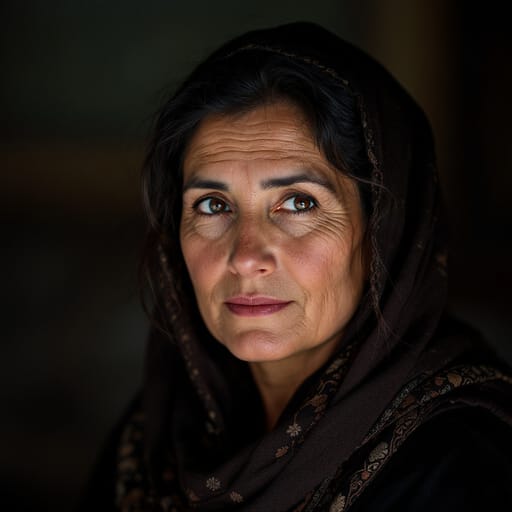
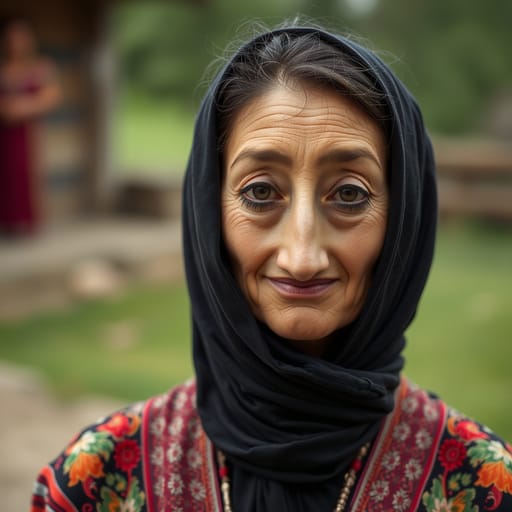
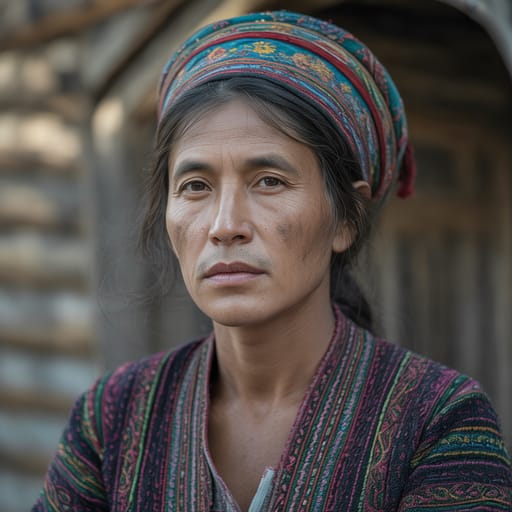
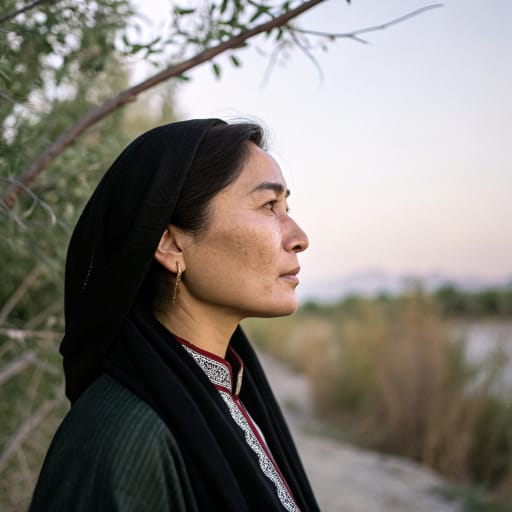
Does this portrait look right for Uzbeks?
One tap. It takes a second and it is recorded.
19 say it looks right, 7 say it looks off.
How 6 image generators render Uzbeks
The same documentary prompt sent to each generator; one render each, alphabetical by generator. The comparison page has every render, the match to documented photographs and the reader pairs.
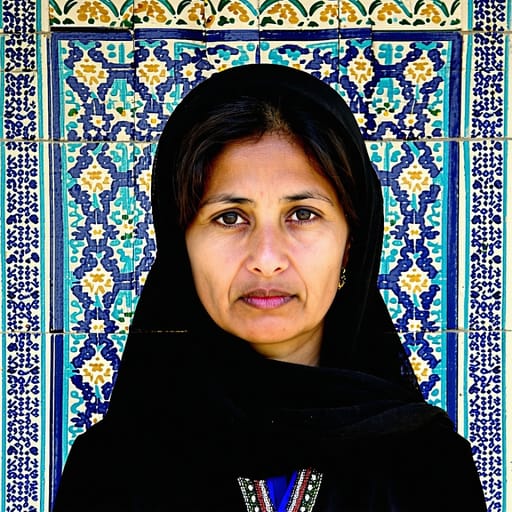
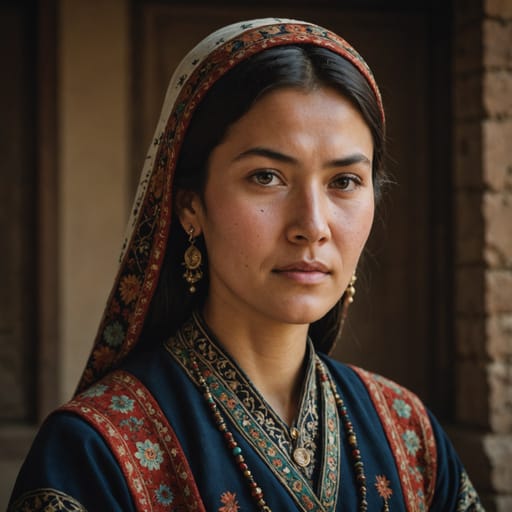
Uzbeks Erotic
Also known as: Uzbek
Islam / Sunni Islam
Uzbeks in Russia
About Uzbeks People
Uzbeks are the settled heart of Central Asia: the Turkic-speaking population most associated with the old caravan cities of the Silk Road: Samarkand, Bukhara, Khiva, Tashkent, the Fergana Valley. That sedentary, urban inheritance is what most distinguishes them from their Turkic neighbors. Where the Kazakhs and Kyrgyz built their identity around the steppe and the herd, the Uzbek world was built around the irrigated oasis, the walled madrasa, and the bazaar. The group as it exists today is, in part, a Soviet act of definition: the borders of the Uzbek SSR were drawn in the 1920s and consolidated peoples whose self-identification had previously run more along city, clan, or trade lines than along a single ethnonym.
The Uzbek language belongs to the Karluk branch of Turkic, the same branch as Uyghur, and it sits inside a deep Persianate cultural envelope. Centuries of coexistence with Tajik speakers in the same cities left Uzbek heavily marked by Persian vocabulary, and standard literary Uzbek lost its native vowel harmony, a feature most other Turkic languages still carry. The script has been pushed through three alphabets in a single century: Arabic, then Latin, then Cyrillic under the Soviets, and now back toward Latin since independence in 1991. Each switch was a political decision before it was a linguistic one.
Religion is Sunni Islam of the Hanafi school, layered over older Sufi traditions that never fully receded. Bukhara and Samarkand were among the great centers of the Islamic world, and the lineages of the Naqshbandi Sufi order trace back to this soil. Seventy years of Soviet atheism dampened public practice without erasing it; observance has become more visible since 1991, though the state remains wary of overt political religion and keeps a tight grip on mosques and clergy.
Daily life still runs on inherited social structures the official map doesn't show. The mahalla, the neighborhood council, mediates everything from weddings to small disputes and remains a real unit of authority. Hospitality is codified: guests are seated at a low table called a dastarkhan, and pilaf, here called plov, is a regional dish with city-by-city variants that locals will argue about seriously. A significant Uzbek diaspora lives in Russia, mostly as labor migrants, and remittances from that community are a quiet but heavy part of the home economy.
Related ethnic groups
Groups that share Uzbeks's homeland, region, language, or religious tradition. These are likely candidates for comparative phenotype reference.
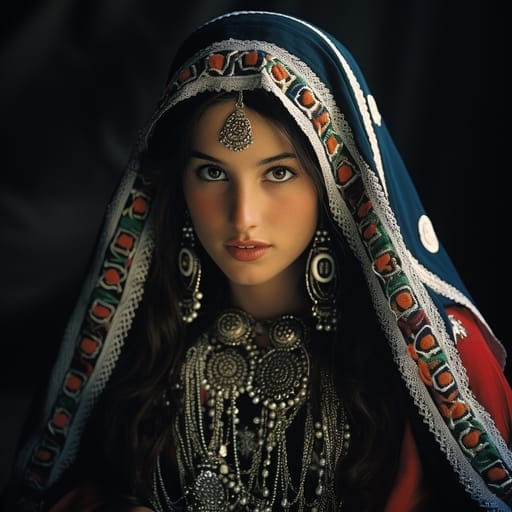
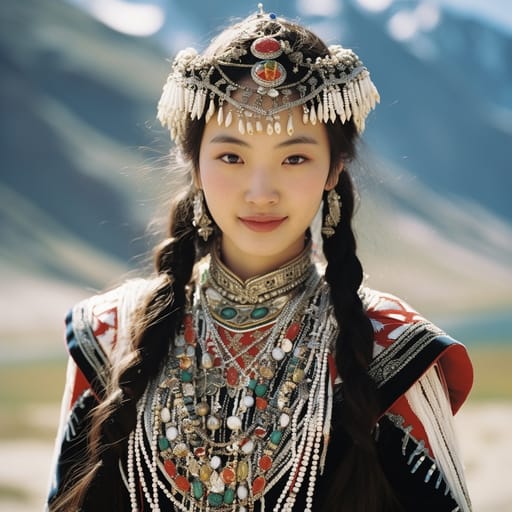
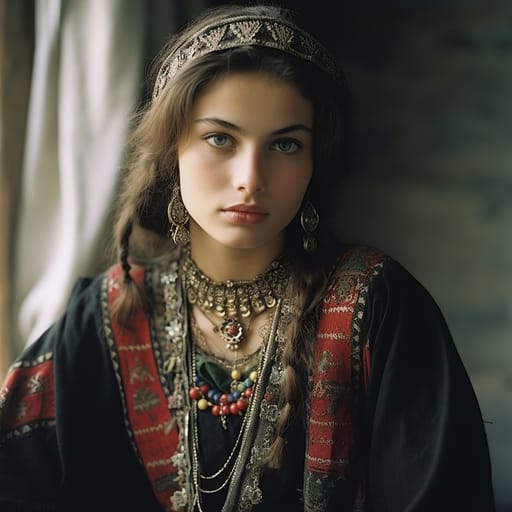
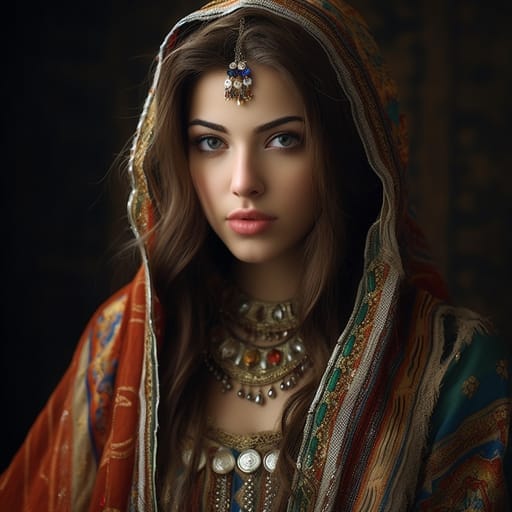
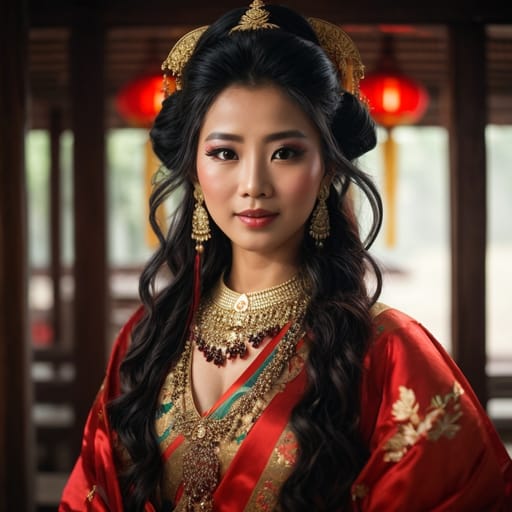
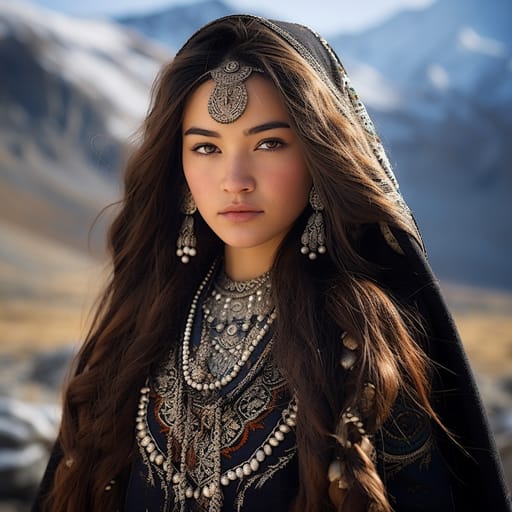
Typical Uzbeks Phenotypes
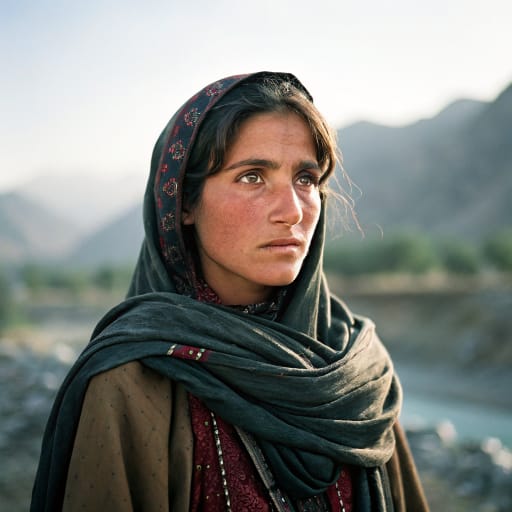
Reference for AI generation: hair, eyes, skin, facial structure, build
Uzbeks sit at a genuine crossroads phenotype: a Turkic-speaking population with substantial East Asian ancestry layered onto a deeper West Eurasian (Iranian-Sogdian) substrate. The result is a face that often reads as neither fully Central Asian steppe nor fully Persian, but somewhere along a continuous gradient between the two. Within a single family you can see one sibling lean visibly Mongolic and another pass for Tajik.
Hair is overwhelmingly dark, black to dark brown, coarse to medium in texture, and predominantly straight, with a minority showing loose wave. True curl is uncommon. Premature graying is documented at moderate rates. Eye color is dominantly brown across the full range from near-black to mid-hazel; green and grey occur at low but visible frequencies, more often in the Ferghana and Samarkand-Bukhara populations with stronger Iranian admixture. The epicanthic fold is present in a substantial minority (perhaps a third to half of the population shows it in some degree), and palpebral fissures often run slightly narrow and slightly upslanted, though rarely as pronounced as in Mongolian or Kazakh phenotypes.
Skin sits mostly in Fitzpatrick III-IV: light wheat to medium olive, with warm yellow or golden undertones rather than the pinker undertones of Slavic neighbors. Tans deeply and evenly. Faces tend toward broad and flat-planed, with prominent malar bones and moderate facial width; noses are typically straight or slightly convex with a medium bridge and moderate alar width, narrower than Mongolian, broader than Persian. Lips run medium in fullness. Jawlines are often softly squared rather than tapered.
Build is typically medium-statured and stocky-to-mesomorphic, with broad shoulders relative to height and a tendency toward thicker waists in middle age. Men average around 170-172 cm, women around 158-160 cm. The Surxondaryo and Ferghana subgroups skew more Iranian-looking; northern and Karakalpak-adjacent Uzbeks, and diaspora Uzbeks in Afghanistan, often show stronger East Asian features. Public figures like Lola Astanova and Shahzoda sit toward the more West Eurasian end of this spectrum.
Uzbeks Body & Anatomy Reference
Central Asian Turkic-Mongolic phenotype: anatomy reference for AI nude generation
Uzbeks Boobs & Breasts
Uzbeks boobs follow the Central Asian Turkic-Mongolic profile: medium cup, moderate projection. Areolar diameter is usually 30-42mm, and the coloring is medium-brown areolar pigmentation against the tan-to-light-brown skin tone. Breast shape tracks body composition (mesomorph, broader frame than the East Asian norm, mean adult female BMI 23-26), so Uzbeks breasts tend to be full and modestly projecting. Expect a forward-set shape, not the smaller East Asian bust.
Uzbeks Ass & Hips
Uzbeks ass and hip morphology presents as medium, moderate projection, broader hip profile than the East Asian norm, distinctly different from the slim East Asian narrow-hip profile. The Uzbeks pelvic profile shows medium iliac crests, moderate gluteal-femoral fat deposition, anchored in the Central Asian Turkic-Mongolic skeletal pattern. Uzbeks butt shots in adult AI imagery should render the medium, moderate projection, broader hip profile than the East Asian norm silhouette with the overall build (mesomorph, broader frame than the East Asian norm) and the fat distribution typical of the Central Asian Turkic-Mongolic phenotype.
Uzbeks Vagina & Pussy
Uzbeks pussy anatomy typically shows medium-brown labial pigmentation. Pubic hair is usually straight-to-wavy medium-coarse texture. In AI-generated Uzbeks nudes, labial color should blend into the tan to light-brown skin with a gradual transition, and the hair should keep its straight-to-wavy medium-coarse texture.
Uzbeks Dicks & Penis
Penis reference for Uzbeks men: regional mean ~13cm erect, moderate girth. Coloring: medium-brown shaft pigmentation. An accurate Uzbeks cock in AI imagery matches the surrounding tan to light-brown skin rather than a generic porn default. Circumcision depends on religion and custom, not ancestry.
Uzbeks Body, Curves & Build
The Uzbeks figure is generally mesomorph, broader frame than the East Asian norm, with mean adult female BMI 23-26, characteristic of Central Asian Turkic-Mongolic ancestry. AI image tools tend to flatten regional body types into a few stock shapes; here the Uzbeks build is kept as its own reference.
Uzbeks Skin Tone & Hair Texture
Skin: tan to light-brown (Fitzpatrick III-IV). Hair: straight 1A-1B, dark-brown to black. Both are typical of Central Asian Turkic-Mongolic ancestry. The most common mistake in AI nudes of Uzbeks women is a body rendered lighter than the face.
Data depth
85/100Coverage of image-grounded phenotype observations · drives AI generation diversity
- Sample size
- 40/40· 59 images
- Image quality
- 30/30· 64% high
- Confidence
- 15/20· mean 0.77
- Source diversity
- 0/10· wikipedia
- ·Wikipedia-only source, not population-representative
Observed Distribution: Image Sample
Empirical observations from analyzed photographs · supplementary signal, not population truth
Sample: 59 images analyzed (59 wikipedia). Quality: 38 high, 21 medium, 0 low, 0 very_low. Avg analyzer confidence: 0.77.
Skin tone (Fitzpatrick): II (19%), III (36%), IV (42%), unclear (3%)
Hair color: black (47%), gray/white (41%), dark brown (3%), light/medium brown (2%), unclear (7%)
Hair texture: straight (68%), wavy (12%), bald (2%), covered (15%), unclear (3%)
Eye color: dark brown (78%), hazel (2%), blue (2%), brown (2%), unclear (17%)
Epicanthic fold: 36% present, 59% absent, 5% unclear
Caveats: Sample is 100% Wikipedia notable people, which skews toward male, public-life, and modern figures, not population-representative.
Last aggregated: May 7, 2026
Explore phenotype categories
Structured taxonomy with peer-reviewed scales · 22 anatomical categories
- SkinFitzpatrick I to VI, undertone, pigmentation
- EyesColor, shape, eyelid, epicanthic fold
- Head hairColor, Andre Walker texture, hairline
- Body shapeHeath-Carter somatotype, WHR, frame
- NoseBridge, tip, nostril, alar width
- Lips & mouthVolume, Cupid’s bow, philtrum
Measured in Uzbeks portraits
Notable Uzbeks People
80 reference figures, sourced from Wikipedia
- Salizhan Sharipov, cosmonaut
- Toshmuhammad Qori-Niyoziy, academic
- Toshmuhammad Sarimsoqov, mathematician
- Habib Abdullayev, geologist
- Tesha Zohidov, zoologist
- Ubay Orifov, physicist
- Pulat Habibullayev, physicist
- Bekhzod Yuldoshev, physicist
- Raʼno Abdullayeva, historian
- Salim Abduvaliev, businessman
- Sherkhan Farnood, founder of Kabul Bank
- Zemarai Kamgar, founder and CEO of Kam Air
- Alisher Usmanov, businessman, oligarch, former president of the FIE
- Siyosatxon Abdullayeva, farmer and peasant (1940-2018)
- Iskander Makhmudov, businessman
- Lola Astanova, Uzbek-American pianist
- Malik Qayumov, filmmaker
- Shahzoda, singer and actress
- Mukarram Turgunbaeva, choreographer
- Yulduz Usmonova, singer and actress
- Farrukh Zokirov, singer, composer, and actor
- Lola Zunnunova, journalist and presenter
- Otabek Mahkamov, blogger, internet personality and Founder of "MrOtabekTV"
- Uyg‘un, poet, writer, and politician
- Sylvia Nasar, American writer, economist and journalist
- Hamza Hakimzade Niyazi, author, composer, playwright, poet, and political activist
- Gʻafur Gʻulom, poet, writer, and literary translator
- Jahangir Mamatov, journalist, author, politician, political analyst, and linguist
- Ismat Xushev, journalist, author, and political analyst
- Abdulla Oripov, poet, politician, literary translator, and former head of the Writers' Union …
- Komil Yashin, playwright, Hero of Socialist Labour
- Erkin Vohidov, poet, playwright, and literary translator
- Abdulla Qahhor, novelist, short story writer, poet, playwright, and literary translator
- Arfiya Eri, Japanese politician
- Alisher Qodirov, Member of the Legislative Chamber of Uzbekistan
- Islam Karimov, first President of Uzbekistan
- Shavkat Mirziyoyev, current President of Uzbekistan
- Muhammad Yunus Nawandish, was the Mayor of Kabul from after his appointment by Afghan President Hamid K…
- Abdul Rashid Dostum, former Afghan warlord of Uzbek ethnicity
- Abdulla Aripov, current Prime Minister
- Komil Allamjonov, Press secretary of the President of Uzbekistan
- Saida Mirziyoyeva, Uzbek politician and the eldest daughter of the President of Uzbekistan Shavk…
- Abdul Rauf Ibrahimi, Uzbek politician from Afghanistan
- Abdusamat Taymetov, first Uzbek pilot
- Alla Anarov, supreme soviet deputy and double Hero of Socialist Labour
- Azad Beg, Abdul Waris Karimi, was an Uzbek doctor serving in the Pakistan Army
- Muhammad Khudayar Khan, ruler of Kokand
- Nasruddin Khan, last ruler of Khanate of Kokand, who was settled in Peshawar after Khanate wa…
- Khan Jahan Ali, Khan-i-Azam of Khalifatabad
- Gul Mohammad Pahalwan, former Afghan warlord from an Uzbek ethnicity
- Sayed Anwar Sadat, ethnic Uzbek politician in Afghanistan
- Suraya Dalil, Afghan physician and politician
- Husn Banu Ghazanfar, is a politician in Afghanistan, formerly served as the Minister of Women's Af…
- Delbar Nazari, is an Afghanistan politician who serves as Minister for Women's Affairs
- Abdul Majid Rouzi, Uzbek commander of Arab Descent during the Afghan Civil war
- Mohammad Rozi, is an Uzbek fugitive wanted for shooting three Australian troops serving in s…
- Ahmad Khan Samangani, was an Afghan member of parliament and a commander of the Junbish-i Milli
- Mohammad Hashim Zare, is the current governor of Samangan, Afghanistan
- Muhammad Shaybani, Uzbek emperor and warrior
- Rasul Pahlawan, Uzbek military leader in Afghanistan and Brother of Abdul Malik Pahlawan
- Fatima Payman, Australian politician
- Rustam Khudzhamov, football goalkeeper
- Nursulton Ruziboev, mixed martial artist, currently competes in the UFC
- Bekzod Abdurakhmonov, wrestler
- Nodirbek Abdusattorov, born 2004), chess grandmaster and World Rapid Chess Champion (since 2021)
- Akgul Amanmuradova, tennis player
- Mirjalol Kasymov, footballer
- Ravshan Irmatov, football referee
- Donior Islamov, born 1989), wrestler
- Rustam Kasimdzhanov, chess player
- Sakina Mamedova, sports shooter
- Makhmud Muradov, mixed martial artist, first Uzbek UFC fighter
- Eldor Shomurodov, footballer, Member of the FC Roma
- Abdukodir Khusanov, footballer, Member of the Manchester City
- Abbosbek Fayzullaev, footballer, Member of the FC CSKA Moscow
- Jaloliddin Masharipov, footballer, Member of the FC Esteghlal
- Ravshan Khaydarov, football manager and former player.
- Utkir Yusupov, goalkeeper, footballer, Member of the Foolad F.C.
- Ilyos Zeytulayev, football manager and former player.
- Arthur Kaliyev, Ice Hockey Player
Erotic Poses & Sex Positions
From the pose catalog: 219 named positions with reference skeletons
Frequently asked questions about Uzbeks people
Where is the Uzbeks homeland?
The Uzbeks homeland is Uzbekistan in Central Asia.
What language do Uzbeks people speak?
Uzbeks people primarily speak Turkic / Karluk / Uzbek.
What religion do Uzbeks people practice?
The predominant religion among Uzbeks people is Islam / Sunni Islam.
What does a typical Uzbeks woman look like?
Uzbek women typically have black to dark brown hair, mostly straight, and brown eyes, with green and gray appearing less often, and an epicanthic fold appears in perhaps a third to half of the population. Skin is mostly Fitzpatrick III to IV, light wheat to medium olive with warm golden undertones. Faces tend to be broad, with prominent cheekbones, a straight or slightly convex nose and medium lips, and women average around 158 to 160 cm.
What are other names for Uzbeks people?
Uzbeks people are also known as Uzbek.






Make your own Uzbeks images
Five a day, free, no credits to buy. The studio starts from this group's phenotype data, so you can set body type, pose and style and keep the traits accurate.
Start with Uzbeks