Help us get this right
Does this portrait look right for Aimaq?
One tap. It takes a second and it is recorded.
1 says it looks right, 0 say it looks off.
Aimaq Erotic
Islam / Sunni Islam
Aimaq Hazara, Firozkohi, Jamshidi, Kipchak, Timuri, Taymani
About Aimaq People
The Aimaq are a cluster of semi-nomadic Sunni Muslim peoples scattered across the high country of western and central Afghanistan — the Paropamisus ranges, the upper Hari Rud and Murghab valleys, the rough plateaus that fall away toward Herat and Ghor. The name itself is the giveaway: aimaq derives from a Mongol-Turkic word for "tribe" or "encampment," and that's essentially what the label still describes — a confederation of pastoralist tribes who share a way of life and a regional identity more tightly than they share a single ancestry. Outsiders have called them the Chahar Aimaq, the "four tribes," for centuries, though by any honest count there are more: the Jamshidi, Firozkohi, Taymani and Aimaq Hazara are the usual four, with the Timuri and Kipchak adding to the picture, and smaller branches folded in around the edges.
They speak Aimaq, a cluster of Persian dialects close enough to Dari that a speaker from Herat will follow the conversation, distinct enough that the vocabulary carries an audible Turkic and Mongol residue — a linguistic fingerprint of the centuries when this stretch of Khorasan absorbed waves of steppe horsemen and never quite digested them. The Aimaq Hazara are a particularly interesting case, Sunni and Persian-speaking where their better-known Hazara neighbors to the east are Shia, and the difference shapes how they've moved through Afghan history.
The economy, where war hasn't shredded it, runs on sheep and goats, with summer pastures up in the mountains and winter camps in the lower valleys. Households still raise the kherga, a domed yurt-like felt tent that is structurally closer to a Central Asian yurt than to anything Pashtun or Tajik, and the women's weaving — flat-woven kilims and saddlebags in deep reds and browns — has been quietly absorbed into the global market under the looser label of "Afghan tribal." Marriage alliances bind tribes together, councils of elders settle disputes, and Sufi orders, especially the Naqshbandi, have a long reach into religious practice; piety here is less about clerics than about lineage and shrine.
Decades of war, drought, and forced displacement have pushed many Aimaq into towns or across the border into Iran, where they often work as laborers and rarely register as a distinct group in official statistics. They remain one of Afghanistan's larger populations and one of its least visible from outside.
Related ethnic groups
Groups that share Aimaq's homeland, region, language, or religious tradition. These are likely candidates for comparative phenotype reference.
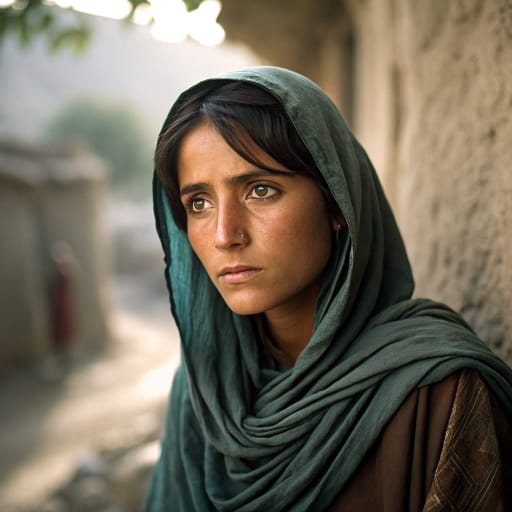
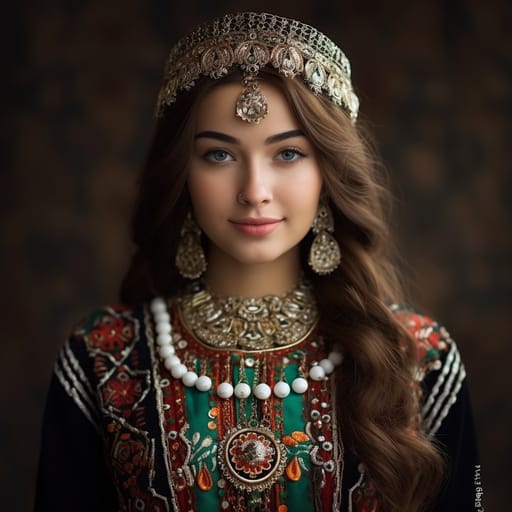
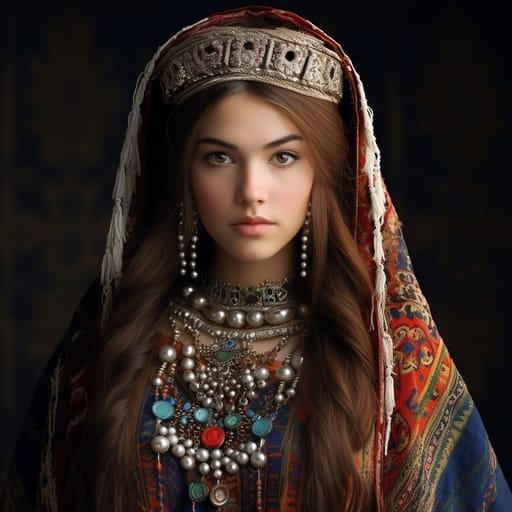
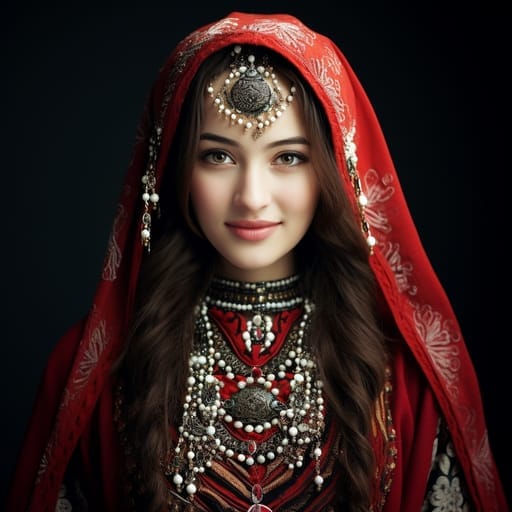
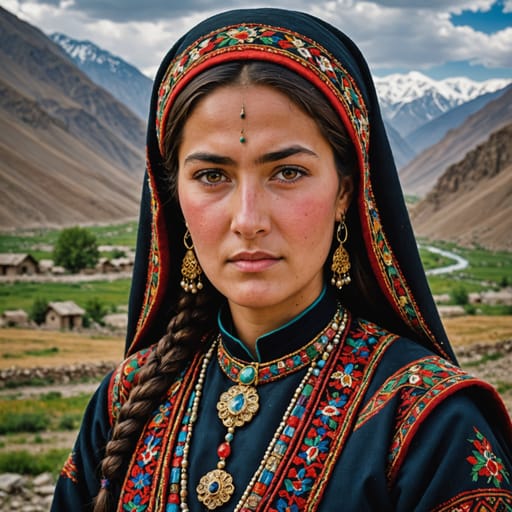
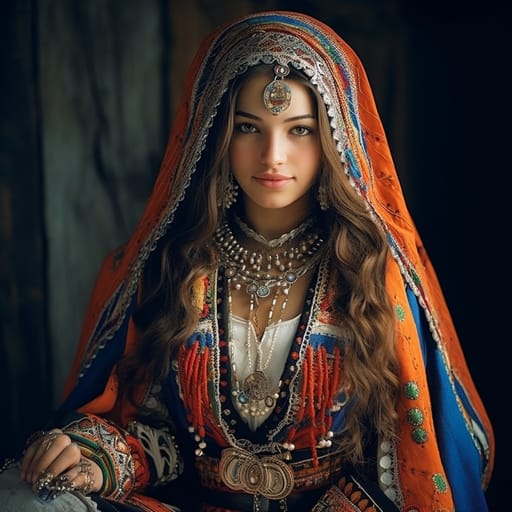
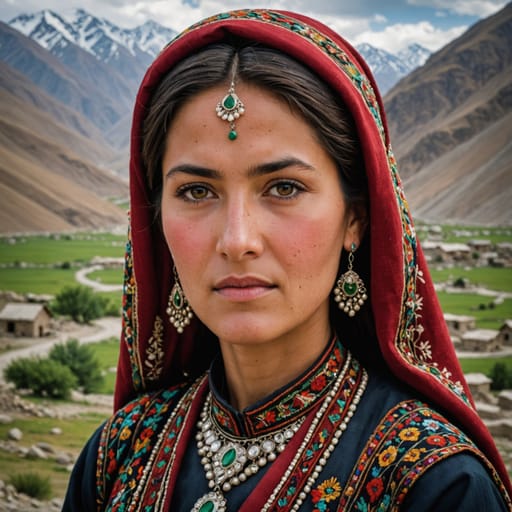
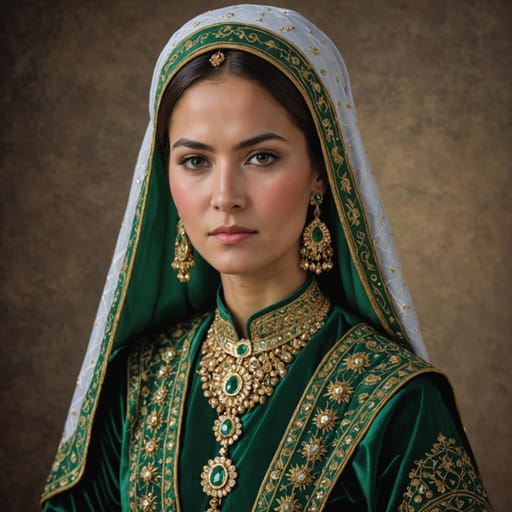
Typical Aimaq Phenotypes
Reference for AI generation: hair, eyes, skin, facial structure, build
The Aimaq sit at a phenotypic crossroads where Iranian and Turko-Mongol ancestry collide, and that mixed inheritance is the structural fact of their appearance. Most are visibly Central Asian rather than purely West Asian — flatter midfaces, broader cheekbones, and a meaningful minority with epicanthic folds — but the Iranian substrate keeps noses higher-bridged and beards heavier than you'd see among neighboring Hazara or Uzbek populations.
Hair is overwhelmingly dark brown to black, predominantly straight to gently wavy, with a coarse-to-medium texture; tight curl is rare. Beards grow in fully on most adult men, often denser than among Hazara cousins. Eye color runs dark brown to near-black in the great majority, with occasional lighter hazel or grey-green showing up in the western branches (Jamshidi, Firozkohi) where Tajik admixture is heaviest. The epicanthic fold is variable: common but not universal — present more often in Aimaq Hazara and Kipchak lineages, less so in Timuri and Taymani, who tend to read more Khorasani Persian.
Skin tone clusters in Fitzpatrick III–IV, a wheaten to light olive range with warm undertones, weathered hard by high-altitude sun and dry-cold winters in the Ghor and Badghis highlands. Noses are typically straight or slightly aquiline with medium bridges and narrow-to-medium alar bases — the high, thin Iranian nose softened by steppe ancestry. Lips are moderate, neither thin nor full. Jawlines are squared and cheekbones broad and high-set, giving the face a wide, planar quality.
Builds are compact and durable: men typically 165–172 cm, women 152–158 cm, with strong shoulders, short-to-medium limbs, and the dense musculature of a semi-nomadic pastoralist population. Body fat distribution skews lean. Across subgroups, the Aimaq Hazara and Kipchak read most East-Asian-influenced; the Firozkohi, Jamshidi, and Taymani read closer to Tajik, with the Timuri sitting between.
Data depth
0/100Coverage of image-grounded phenotype observations · drives AI generation diversity
- Sample size
- 0/40· 0 images
- Image quality
- 0/30· 0% high
- Confidence
- 0/20
- Source diversity
- 0/10
- ·No image observations yet
Explore phenotype categories
Structured taxonomy with peer-reviewed scales · 22 anatomical categories
Erotic Poses & Sex Positions
From the pose catalog: 219 named positions with reference skeletons
Frequently asked questions about Aimaq people
Where is the Aimaq homeland?
The Aimaq homeland is Afghanistan in Central Asia.
What language do Aimaq people speak?
Aimaq people primarily speak Indo-European / Iranian / Persian / Aimaq.
What religion do Aimaq people practice?
The predominant religion among Aimaq people is Islam / Sunni Islam.






Make your own Aimaq images
Five a day, free, no credits to buy. The studio starts from this group's phenotype data, so you can set body type, pose and style and keep the traits accurate.
Start with Aimaq