Help us get this right
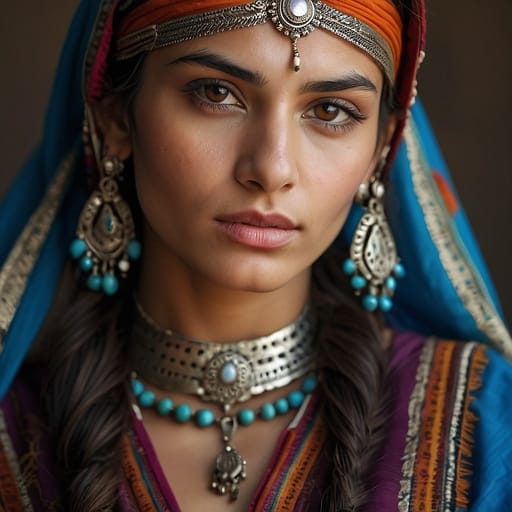
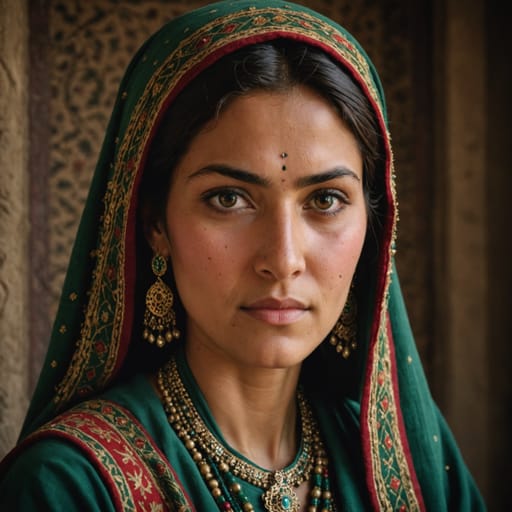
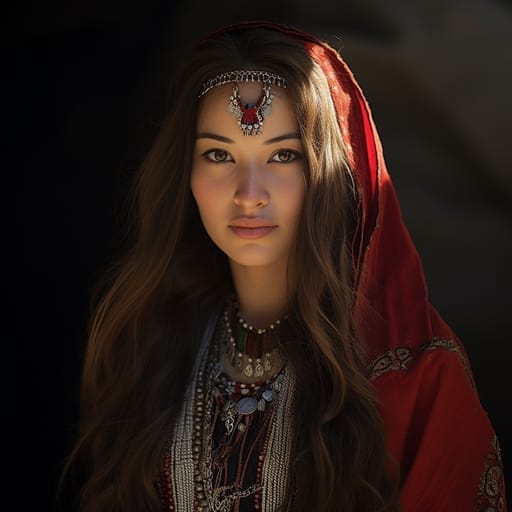
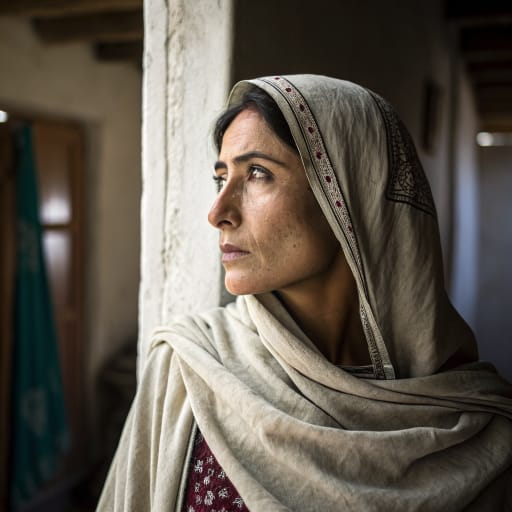
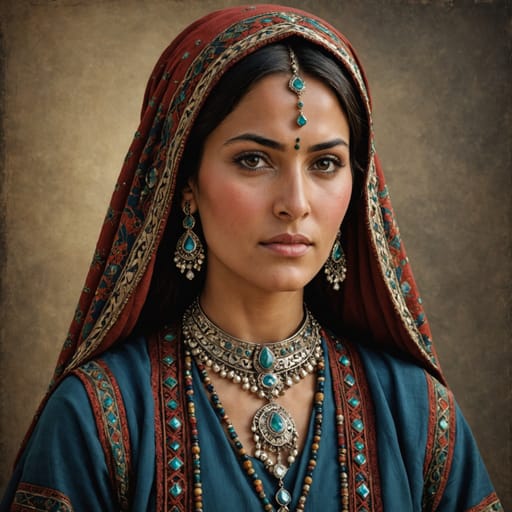
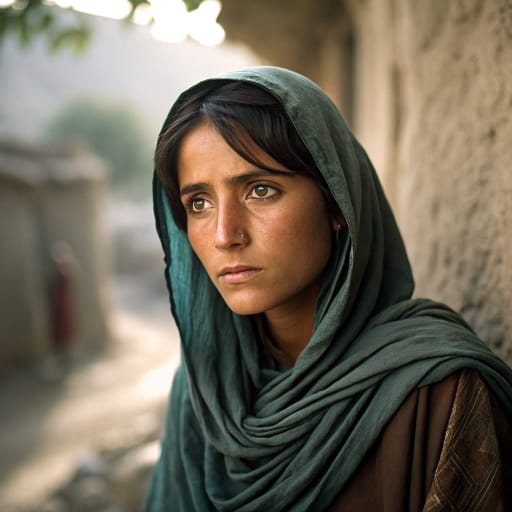
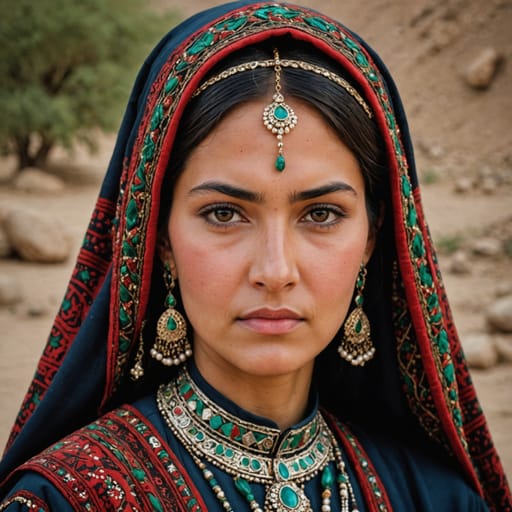
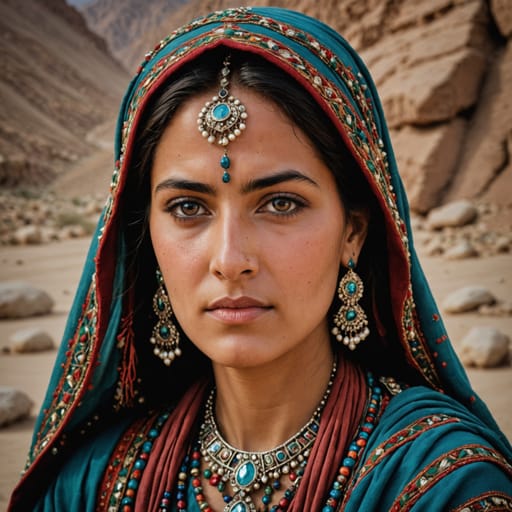
Does this portrait look right for Afghan Pashtun?
One tap. It takes a second and it is recorded.
8 say it looks right, 4 say it looks off.
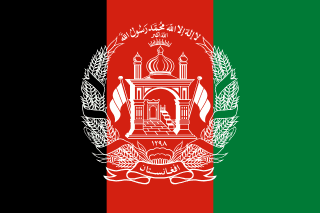

Afghanistan
AFSouth Asia
Afghanistan is home to 8 documented ethnic groups in South Asia, led by Afghan Pashtun (~42%), Afghan Tajik (~27%), Hazara (~9%), Uzbek Afghan (~9%). This page blends their phenotype and demographic data into one weighted reference: skin tone, facial features, hair texture and build, drawn from published census and ancestry sources.
Demographic Composition
Composition weights are derived from self-identification in published census and demographic surveys. Each row links to the source ethnic-group atlas page.
| Ethnic group | Weight | Source |
|---|---|---|
 Afghan Pashtun Afghan Pashtun | 42.0% | Estimated from CIA World Factbook, UNHCR demographic estimates, and Afghan Constitution (2004) ethnic-group enumeration; Afghanistan has not conducted a comprehensive census since 1979 — composition weights are derived from international demographic estimates plus Afghan-state-published share estimates that have varied over time. Pashtuns (~42%) are the largest ethnic group, concentrated in southern, southeastern, and eastern Afghanistan. Cross-border population shared with Pakistan (~37M+ Pakistani Pashtuns) |
 Afghan Tajik Afghan Tajik | 27.0% | International demographic estimates; Tajiks (~27%) are the second-largest ethnic group, concentrated in northern, northeastern, and western Afghanistan including Kabul (where Tajiks comprise approximately 45% of the city population). Cross-border population shared with the independent state of Tajikistan (~8.4M+, separately enumerated under TJ) |
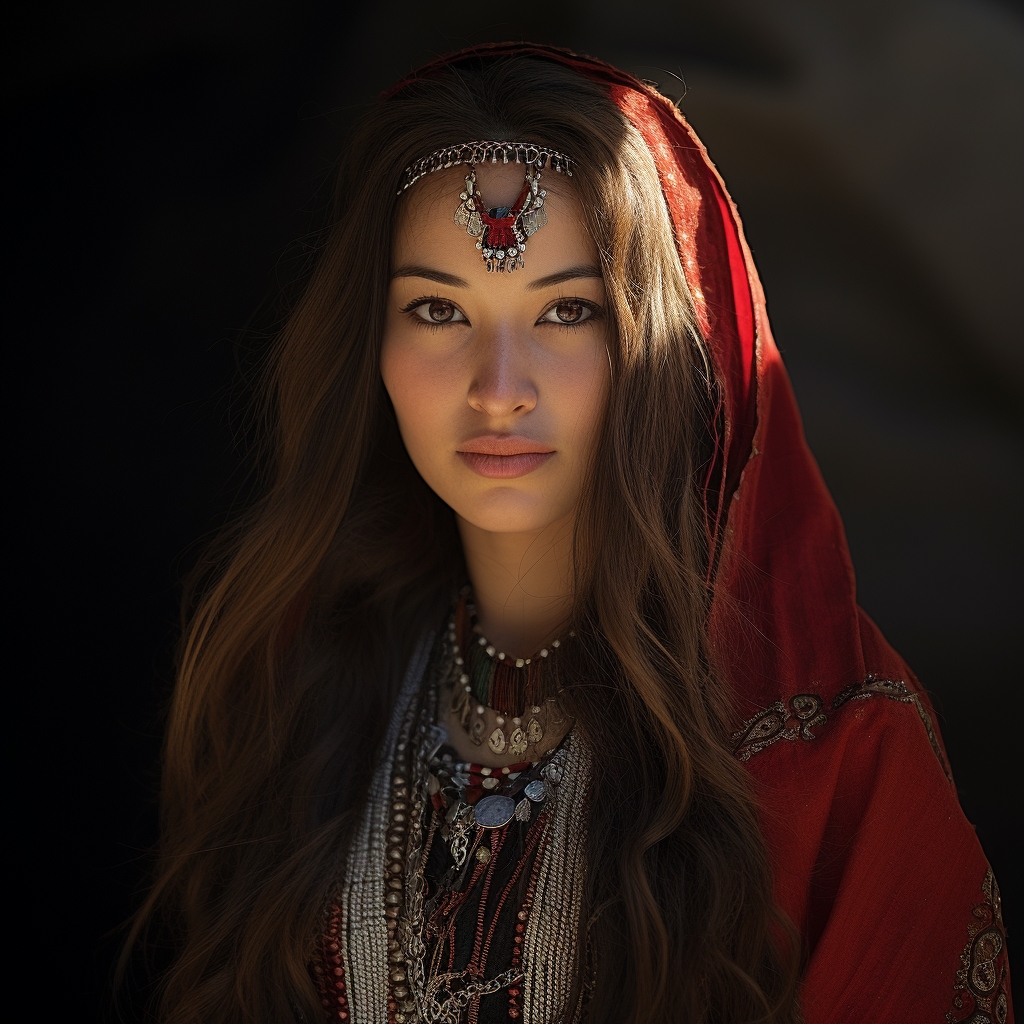 Hazara Hazara | 9.0% | International demographic estimates; Hazaras (~9%) are the third-largest ethnic group, concentrated in central Afghanistan (Hazarajat — Bamiyan, Daikundi, and parts of Wardak, Ghor, Ghazni, Uruzgan provinces) and the substantial Hazara community in Kabul. Predominantly Twelver Shia Muslim (distinct from the Sunni-majority Pashtun and Tajik populations). Hazaras have been subject to documented ethnic-religious persecution including the 1893 Abdur Rahman Khan campaigns, the 1990s Taliban-era genocide (the 1998 Mazar-i-Sharif massacre, the 2001 Yakaolang massacre), and the post-2021 Taliban-resurgence violence |
 Uzbek Afghan Uzbek Afghan | 9.0% | International demographic estimates; Uzbek Afghans (~9%) are concentrated in northern Afghanistan (Faryab, Jowzjan, Sar-e Pul, Balkh, Samangan, Takhar, Kunduz provinces). Cross-border population shared with the independent state of Uzbekistan |
 Afghan Aimaq Afghan Aimaq | 4.0% | International demographic estimates; Aimaqs (~4%) are concentrated in western Afghanistan (Ghor, Badghis, Herat provinces). Persian-speaking, predominantly Sunni Muslim, with substantial cultural distinctness from broader Tajik populations including pastoral-nomadic and semi-nomadic traditions |
 Afghan Other Afghan Other | 4.0% | International demographic estimates residual including the Pashai (Indo-Aryan, eastern Afghanistan), Nuristani (Indo-Aryan, eastern Afghanistan / Nuristan Province), Pamiri (East Iranian / Pamir-language Ismaili Shia, Wakhan Corridor in Badakhshan Province), Kyrgyz (Wakhan Corridor), Brahui (small population in southern Afghanistan), Sikh and Hindu Afghans (small communities historically present in Kabul and other major cities, substantially reduced through emigration since the 1990s), Afghan Jewish community (now extinct as a continuous community in Afghanistan, with the last Kabul Jew Zablon Simintov leaving Afghanistan in 2021 after the Taliban resurgence), plus other smaller groups |
 Turkmen Afghan Turkmen Afghan | 3.0% | International demographic estimates; Turkmen Afghans (~3%) are concentrated in northern Afghanistan along the Turkmen border (Faryab, Jowzjan, Balkh provinces). Cross-border population shared with the independent state of Turkmenistan |
 Afghan Baloch Afghan Baloch | 2.0% | International demographic estimates; Baloch Afghans (~2%) are concentrated in southwestern Afghanistan (Helmand, Nimruz provinces). Cross-border population shared with Pakistan and Iran |
Afghanistan Phenotype Profile
Afghanistan's population is structured around a complex multi-ethnic composition reflecting the country's geographic position as the central Eurasian crossroads. The major umbrellas: Afghan Pashtun (~42%), Afghan Tajik (~27%), Hazara (~9%), Uzbek Afghan (~9%), Afghan Aimaq (~4%), Turkmen Afghan (~3%), Afghan Baloch (~2%), plus smaller Indo-Aryan (Pashai, Nuristani), East Iranian (Pamiri), Kyrgyz, Brahui, and historic Sikh / Hindu / Jewish communities (~4% combined). Afghanistan has not conducted a comprehensive census since 1979 — composition weights are derived from international demographic estimates (CIA World Factbook, UNHCR, academic studies) plus Afghan-state-published share estimates.
Genome-wide patterns reflect the substantial diversity: Pashtun and Tajik populations show characteristic Northwestern South Asian / Iranian source ancestry; Hazara populations show distinctive Mongolic / Turkic-Mongol-admixed ancestry (~50-60% East Asian / Mongol-Turkic, the only major Afghan ethnic group with substantial East Asian source-population ancestry); Uzbek and Turkmen populations show characteristic Central Asian Turkic source ancestry; Pamiri populations show characteristic Eastern Iranian source ancestry distinct from Western Iranian Tajik / Persian populations.
Skin tone across the population spans Fitzpatrick II-V with III the modal value nationally — among the lighter-skinned South Asian / Central Asian populations on average. The Hazara population is the most phenotypically distinctive, with characteristic East Asian / Mongolic features (epicanthic-fold variants common, broader face shapes with prominent cheekbones) distinct from broader Pashtun and Tajik populations. The Pashtun and Tajik populations show characteristic Northwestern Iranian / South-Asian-adjacent features. Hair is predominantly straight to wavy (Andre Walker 1A-2B) and predominantly black to dark brown across most populations with some lighter variants. Eye color is predominantly brown with elevated frequencies of hazel, green, and rarely blue variants in Pashtun, Tajik, Pashai, and Nuristani populations. Build is robust across the major Afghan populations; adult male mean stature is approximately 168-173 cm depending on ethnic-group sub-population.
Afghanistan has experienced approximately 45+ years of continuous war and political-economic disruption since the 1978 Saur Revolution / 1979 Soviet invasion — the demographic consequences include massive refugee flows (the Afghan refugee population in Pakistan and Iran has been among the largest in the world since the 1980s, peaking at approximately 6 million in the late 1980s and continuing to fluctuate with ongoing conflict), substantial internal displacement, and post-2021 Taliban-era restrictions on female education, employment, and political participation that affect demographic and broader phenotype-relevant data collection.
Afghanistan Body & Anatomy Reference
Per-feature anatomical profile for AI nude generation: Indo-Aryan / Dravidian South Asian phenotype dominant in Afghanistan
Afghanistan Women: Boobs & Breasts
Afghanistan women's tits and boobs reflect the medium-to-large cup, moderate-to-full projection Indo-Aryan / Dravidian South Asian bust profile dominant in the Afghanistan demographic composition. Afghanistan nipples and areolas show medium-brown to dark-brown areolar pigmentation against the wheatish-to-brown skin tone, with areolar diameter typically in the 32-46mm range, distinct from the the smaller East Asian bust profile. Afghanistan breast morphology trends full and soft, generally fuller than the East Asian norm, a function of the endomorph-to-mesomorph with fuller hip deposition body habitus and mean adult female BMI 22-25. For anatomically-accurate AI-generated Afghanistan nude women the render should preserve: medium-to-large cup, moderate-to-full projection shape, 32-46mm areolas with regional pigmentation, and the torso proportions of the Indo-Aryan / Dravidian South Asian phenotype.
Afghanistan Women: Ass & Hips
Afghanistan women's ass and hip morphology presents as medium-to-full, moderate-to-high projection, classic curvy hip profile, distinctly different from the slim hip profile of East Asian women. Afghanistan pelvic profile shows medium-to-wide iliac crests, full gluteal-femoral fat distribution, anchored in the Indo-Aryan / Dravidian South Asian skeletal pattern that dominates the Afghanistan ethnic composition. Afghanistan butt shots in adult AI imagery should render the medium-to-full, moderate-to-high projection, classic curvy hip profile silhouette with the endomorph-to-mesomorph with fuller hip deposition build and the gluteal-femoral fat distribution typical of the Indo-Aryan / Dravidian South Asian phenotype rather than defaulting to a globally-averaged shape that generic AI generators produce.
Afghanistan Women: Vagina & Pussy
Afghanistan women's pussy and vulvar anatomy presents medium-brown to dark-brown labial pigmentation, fuller labia minora projection, consistent with the Indo-Aryan / Dravidian South Asian phenotype's pigmentation pattern dominant in Afghanistan. Afghanistan pubic hair is typically straight-to-wavy coarse texture, dense distribution, distributed in the inverted-triangle pattern with regional-typical density. AI-generated Afghanistan nude imagery should preserve the medium-brown to dark-brown labial pigmentation and the straight-to-wavy coarse texture hair texture rather than defaulting to a Western-European pink-and-sparse template. For anatomically-accurate Afghanistan pussy renders the labial pigmentation should match the surrounding wheatish to brown skin tone of the Indo-Aryan / Dravidian South Asian phenotype.
Afghanistan Men: Dicks & Penis
Afghanistan men's dick and penile anatomy in adult AI generation should anchor on the regional reference data: regional mean ~13cm erect, moderate girth, and medium-brown shaft pigmentation. Afghanistan cock profile reflects the Indo-Aryan / Dravidian South Asian ancestral population's anthropometric measurements rather than a globally-averaged Western-pornography default. For anatomically-accurate Afghanistan nude male imagery the shaft pigmentation should track the surrounding wheatish to brown skin tone, with continuous glans-to-shaft pigmentation transition and the straight-to-wavy coarse texture pubic-hair texture distributed in the typical inverted-V escutcheon. Circumcision status across Afghanistan men varies by religious and cultural tradition rather than ancestral phenotype.
Afghanistan People: Body, Curves & Build
Afghanistan body type and overall build presents as endomorph-to-mesomorph with fuller hip deposition, with mean adult female BMI 22-25: the characteristic Indo-Aryan / Dravidian South Asian habitus dominant in the Afghanistan demographic composition. Afghanistan curves and proportions in adult AI imagery should preserve the regional skeletal frame (height, shoulder-to-hip ratio, limb proportions) rather than scaling to a Western-European mesomorph default. The Afghanistan nude female form, when rendered with anatomical fidelity, shows the height range, frame width, and adipose distribution pattern typical of the Indo-Aryan / Dravidian South Asian phenotype. Generic AI image generators tend to collapse regional body types into a few default shapes; the Ethnic Erotic phenotype-anchored approach preserves the Afghanistan build as its own reference category.
Afghanistan People: Skin Tone & Hair Texture
Afghanistan skin tone falls in the wheatish to brown (Fitzpatrick III-V) band, the surface signal most often miscalibrated by generic AI nude generators trained on Western-photographic datasets. Afghanistan hair texture is typically straight-to-wavy 1A-2B, dense, dark-brown to black, characteristic of the Indo-Aryan / Dravidian South Asian phenotype. For anatomically-accurate Afghanistan nude renders the skin should hold the Fitzpatrick band consistently across body surface rather than showing the lighter-than-face body shading that AI generators default to. Afghanistan hair pigmentation and texture on body, pubic, and head should match across the figure rather than mixing textures (a common AI artefact).
A descriptive view, not a claim about individuals
This page shows a weighted aggregate of phenotype observations across the Afghanistan population, based on demographic composition from published census and ancestry sources. Phenotypes within any country are far more varied than the aggregate suggests; this is a descriptive reference, not a deterministic claim about any individual. For source-level detail on individual ethnic groups, see the constituent atlas pages linked below.
Methodology Notes
Composition weights are derived from international demographic estimates (CIA World Factbook, UNHCR, World Bank) cross-referenced with Afghan-state-published share estimates and academic ethnographic-historical studies. Afghanistan has not conducted a comprehensive census since 1979 — the Soviet-era 1979 census, the planned 1992 census disrupted by civil war, the planned 2005 and 2010 censuses delayed indefinitely, and the post-2021 Taliban regime has not announced census plans. Composition weights are therefore estimates with substantially lower confidence than census-based enumerations elsewhere. Caveats: (1) the 42% Pashtun share has been politically contested since the 1979 census reported it — Afghan Tajik and Hazara political organizations have argued for higher Tajik (~30%+) and Hazara (~15-20%) shares, while Pashtun political organizations have argued for higher Pashtun shares (~50%+); the contemporary international-consensus estimates (CIA Factbook, UNHCR) approximate the 1979 census shares with adjustments; (2) the Hazara phenotypic distinctness from broader Afghan populations is among the most striking ethnic-phenotype distinctions in any country; (3) Afghanistan's 45+ years of war have produced substantial refugee diaspora (Afghan-Pakistani, Afghan-Iranian, Afghan-American, Afghan-European, Afghan-Australian populations totaling 5+ million globally); (4) the post-2021 Taliban-era restrictions affect demographic data collection and broader female-population enumeration in ways that may bias composition data.
Primary Sources
- 1.Central Intelligence Agency. The World Factbook: Afghanistan. Washington, DC: CIA; 2024.
- 2.United Nations High Commissioner for Refugees (UNHCR). Afghanistan Population Movements. Geneva: UNHCR; 2024.
- 3.Mousavi SA. The Hazaras of Afghanistan: An Historical, Cultural, Economic and Political Study. Curzon Press; 1998.
- 4.Edwards DB. Heroes of the Age: Moral Fault Lines on the Afghan Frontier. University of California Press; 1996.
- 5.Barfield TJ. Afghanistan: A Cultural and Political History. Princeton University Press; 2010.
Other countries in South Asia
Aggregate phenotype references for neighbouring South Asia nations, weighted by demographic composition.