Help us get this right
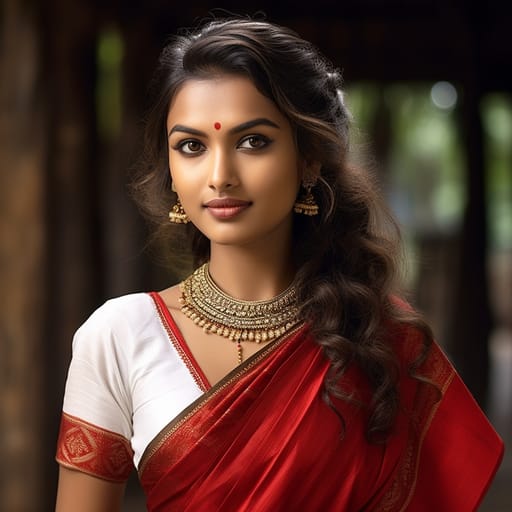
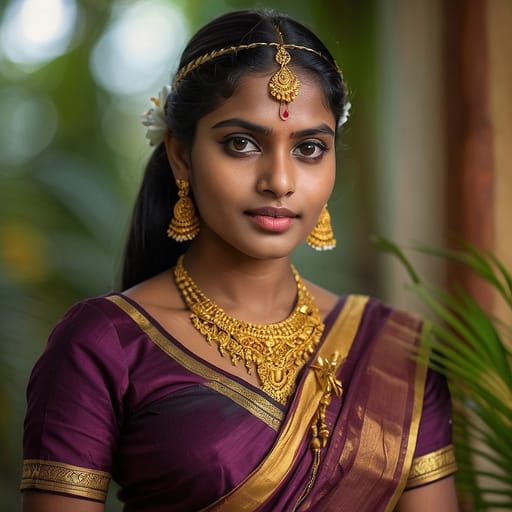
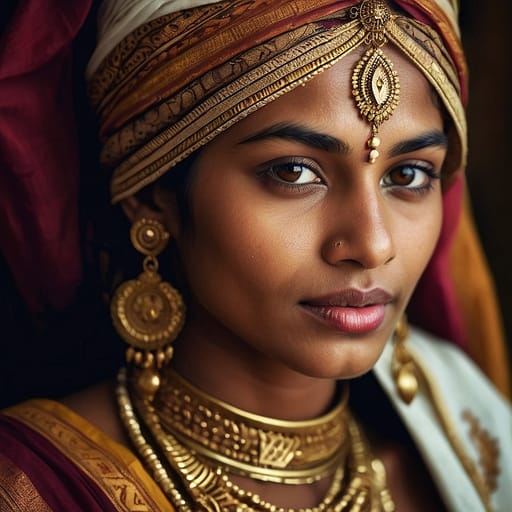
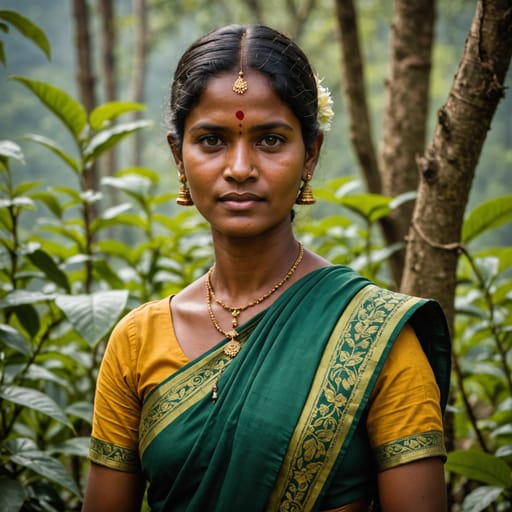
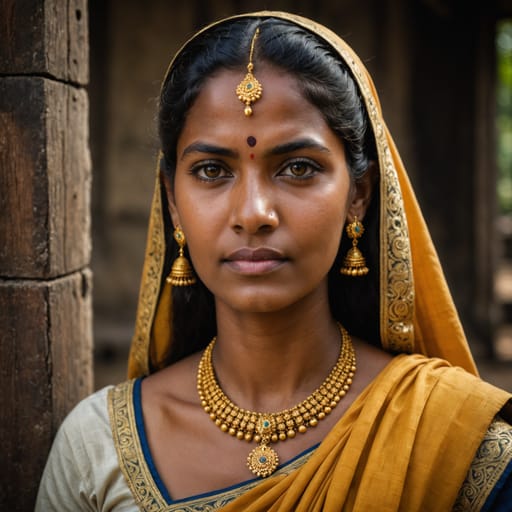
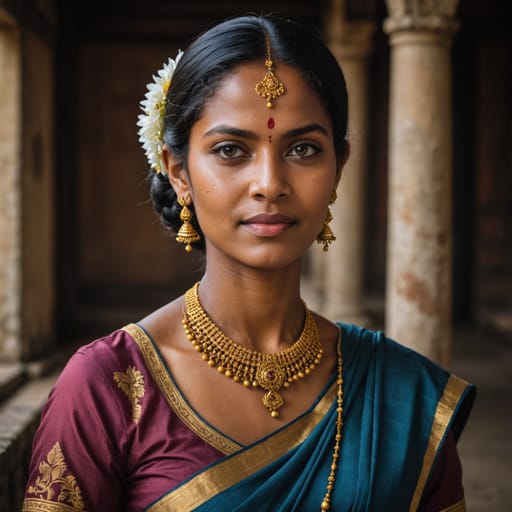
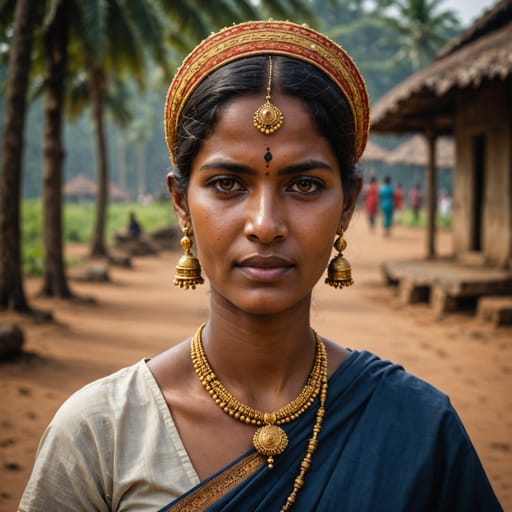
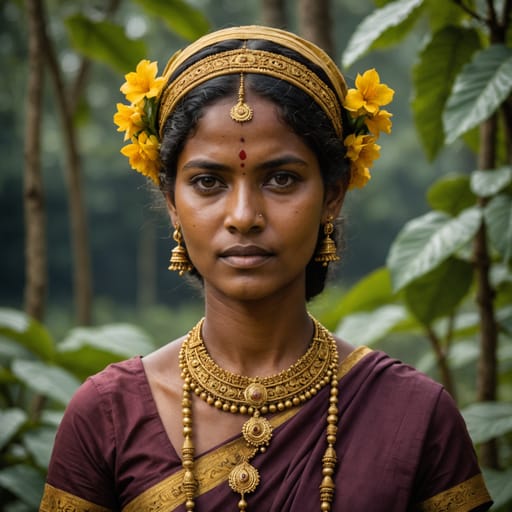
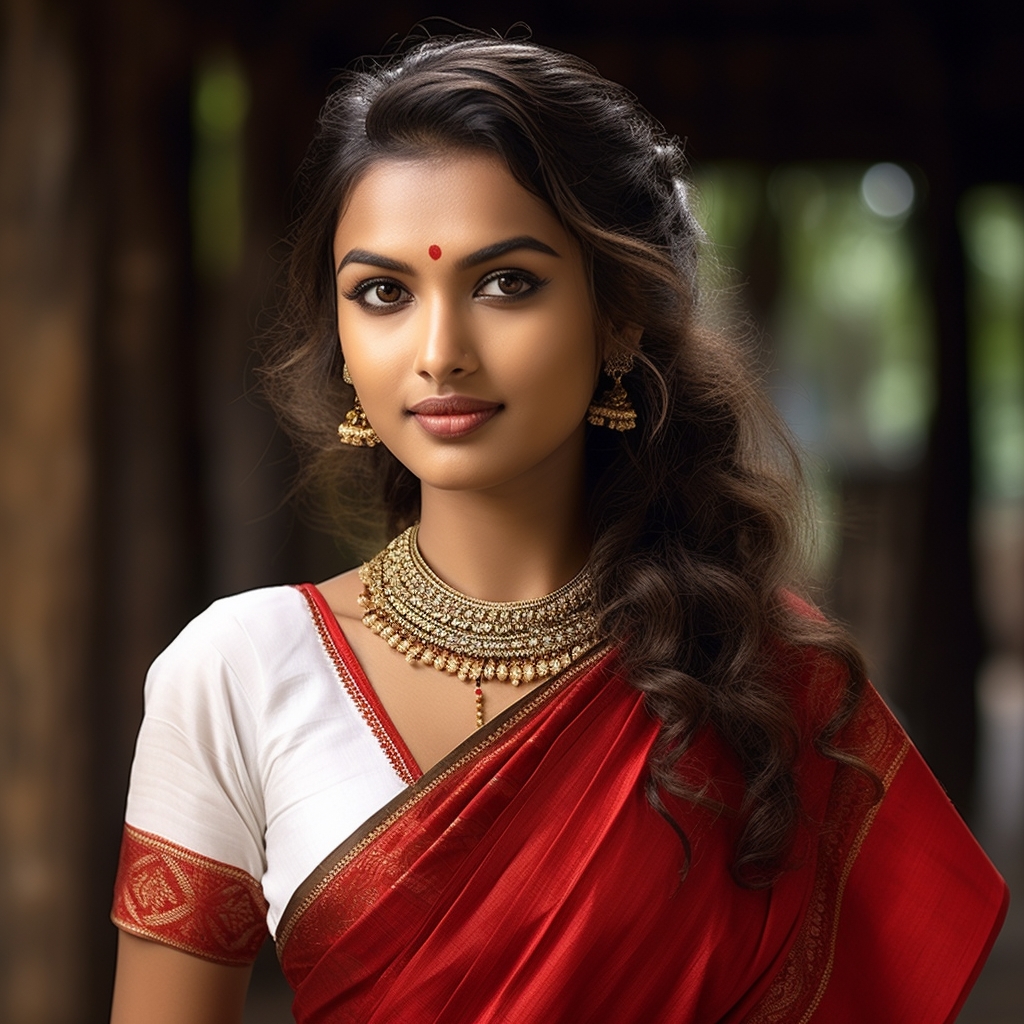
Does this portrait look right for Sinhalese?
One tap. It takes a second and it is recorded.
2 say it looks right, 2 say it looks off.
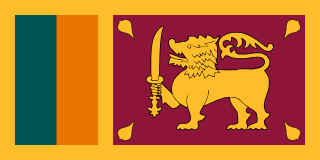

Sri Lanka
LKSouth Asia
Sri Lanka is home to 8 documented ethnic groups in South Asia, led by Sinhalese (~75%), Sri Lankan Tamil (~11%), Sri Lankan Moor (~9%), Indian Tamil Sri Lanka (~4%). This page blends their phenotype and demographic data into one weighted reference: skin tone, facial features, hair texture and build, drawn from published census and ancestry sources.
Demographic Composition
Composition weights are derived from self-identification in published census and demographic surveys. Each row links to the source ethnic-group atlas page.
| Ethnic group | Weight | Source |
|---|---|---|
 Sinhalese Sinhalese | 74.9% | Department of Census and Statistics Sri Lanka 2012 Population and Housing Census, self-identified Sinhalese (~74.9%, ~15.2M); the dominant ethnic group, predominantly Theravada Buddhist (~70%) with smaller Catholic Sinhalese (~3%) and Protestant Sinhalese sub-populations. The Sinhalese language is part of the Indo-Aryan family — extraordinary as the southernmost surviving Indo-Aryan language, suggesting an ancient migration from northern India to Sri Lanka approximately 5th c. BCE per the Mahavamsa chronicle |
 Sri Lankan Tamil Sri Lankan Tamil | 11.1% | Sri Lanka 2012 Census, self-identified Sri Lankan Tamil (~11.1%, ~2.3M); concentrated in Northern Province (Jaffna), Eastern Province, and Colombo. Predominantly Hindu (Saiva Siddhanta) with smaller Catholic and Protestant communities. Distinct from the smaller Indian Tamil community in Sri Lanka (separately enumerated) |
 Sri Lankan Moor Sri Lankan Moor | 9.2% | Sri Lanka 2012 Census, self-identified Sri Lankan Moor (~9.2%, ~1.9M); the Tamil-speaking Sunni Muslim community of Sri Lanka, descended from medieval Arab and Persian Muslim merchants who settled the southern Sri Lankan coast plus subsequent admixture with the broader Tamil and Sinhalese populations. Concentrated in Eastern Province (Ampara, Trincomalee, Batticaloa) and the major commercial centers |
 Indian Tamil Sri Lanka Indian Tamil Sri Lanka | 4.1% | Sri Lanka 2012 Census, self-identified Indian Tamil / 'Hill Country Tamils' (~4.1%, ~840,000); descendants of Tamil indentured laborers brought from southern India to Sri Lanka by the British in the 19th c. for tea plantation labor in the Central Highland region. Concentrated in the tea-producing districts of Nuwara Eliya, Badulla, and Kandy. Distinct from the longer-resident Sri Lankan Tamil community by historical-political identity, the British-colonial-era arrival, and the post-1948 statelessness imposed by the Sri Lankan government (the 1948 Ceylon Citizenship Act stripped citizenship from approximately 1 million Hill Country Tamils — the issue was partially resolved through subsequent India-Sri Lanka agreements) |
 Sri Lankan Other Sri Lankan Other | 0.5% | Sri Lanka 2012 Census residual; includes smaller communities — Indian Moor (distinct from Sri Lankan Moor by post-British-period origin), Bharatha (Tamil-speaking Catholic community of the western coast, descended from Portuguese-era converts), Chetty (the Indian-merchant community), Sri Lanka Kaffir (the small Afro-Sri-Lankan community descended from African slaves brought by Portuguese and Dutch colonial administrations, ~1,000-2,000 in the Puttalam region), plus other smaller groups |
 Sri Lankan Malay Sri Lankan Malay | 0.2% | Sri Lanka 2012 Census, self-identified Sri Lankan Malay (~0.2%, ~40,000); descendants of Indonesian / Malay populations brought to Sri Lanka by Dutch colonial administration (the Dutch ruled Sri Lanka 1656-1796) plus later British-era arrivals. Speaks Sri Lanka Malay (a Malay-based creole with Sinhalese and Tamil influence) plus Sinhalese / Tamil. Concentrated in Slave Island (Colombo), Hambantota, and other historically Malay communities |
 Burgher Burgher | 0.0% | Sri Lanka 2012 Census, self-identified Burgher (~0.04%, ~38,000); the historically distinctive Eurasian community descended from European (predominantly Dutch and Portuguese) colonial-era settlers and their Sri Lankan descendants. Distinct from broader Sri Lankan populations through European-source ancestry, predominantly Christian religion (Catholic and Dutch Reformed), and historically privileged colonial-era position. Population has declined substantially through 20th c. emigration to Australia, Canada, the United Kingdom |
 Sri Lankan Vedda Sri Lankan Vedda | 0.0% | Sri Lanka 2012 Census, self-identified Vedda / Wanniyala-Aetto (~2,500); the Indigenous Sri Lankan ethnic group, descendants of the pre-Sinhalese hunter-gatherer populations of the island. Genome-wide studies (Ranasinghe et al. 2015) document the Vedda as carrying distinct genetic ancestry from broader Sri Lankan populations, consistent with descent from a deeply-rooted South Asian Pleistocene foundation. Concentrated in eastern Sri Lanka (Mahiyangana area). Vedda population has declined dramatically through 20th c. cultural assimilation |
Sri Lanka Phenotype Profile
Sri Lanka's population is dominated by Sinhalese (~75%) with the substantial Sri Lankan Tamil minority (~11.1%), Sri Lankan Moor minority (~9.2%), Indian Tamil minority (~4.1%), plus smaller Sri Lankan Malay (~0.2%), Burgher (~0.04%), and Vedda Indigenous (~0.01%) communities. The country's demographic structure reflects approximately 2,500+ years of population processes from the 5th-c.-BCE Indo-Aryan Sinhalese migration to the broader medieval Indian Ocean trade networks (Tamil, Moor migrations) to the European colonial presence (Portuguese 1505-1656, Dutch 1656-1796, British 1796-1948) to the post-independence demographic dynamics including the 1983-2009 civil war.
Skin tone across the population spans Fitzpatrick III-VI with IV-V the modal value nationally — among the darker-skinned South Asian populations on average. Hair is predominantly straight to wavy (Andre Walker 1A-2C) and uniformly black or very dark brown across most populations. Eye color is uniformly brown to dark brown across most populations with elevated lighter-eye frequencies in Burgher Eurasian families. Facial features track South Asian source populations with subtle Sinhalese-Tamil-Moor distinguishing features detectable in genetic studies. The Vedda show distinctive features attributed to the deeply-rooted Pleistocene South Asian foundation including curly hair textures uncommon in broader Sri Lankan populations. The Burgher community shows admixed Eurasian phenotype distribution. The Sri Lankan Malay and Sri Lanka Kaffir communities show characteristic Indonesian/Malay and African source-population features respectively. Build is intermediate; adult Sri Lankan male mean stature is approximately 165-168 cm in 2010s-2020s urban cohorts.
Sri Lanka Body & Anatomy Reference
Per-feature anatomical profile for AI nude generation: Indo-Aryan / Dravidian South Asian phenotype dominant in Sri Lanka
Sri Lanka Women: Boobs & Breasts
Sri Lanka women's tits and boobs reflect the medium-to-large cup, moderate-to-full projection Indo-Aryan / Dravidian South Asian bust profile dominant in the Sri Lanka demographic composition. Sri Lanka nipples and areolas show medium-brown to dark-brown areolar pigmentation against the wheatish-to-brown skin tone, with areolar diameter typically in the 32-46mm range, distinct from the the smaller East Asian bust profile. Sri Lanka breast morphology trends full and soft, generally fuller than the East Asian norm, a function of the endomorph-to-mesomorph with fuller hip deposition body habitus and mean adult female BMI 22-25. For anatomically-accurate AI-generated Sri Lanka nude women the render should preserve: medium-to-large cup, moderate-to-full projection shape, 32-46mm areolas with regional pigmentation, and the torso proportions of the Indo-Aryan / Dravidian South Asian phenotype.
Sri Lanka Women: Ass & Hips
Sri Lanka women's ass and hip morphology presents as medium-to-full, moderate-to-high projection, classic curvy hip profile, distinctly different from the slim hip profile of East Asian women. Sri Lanka pelvic profile shows medium-to-wide iliac crests, full gluteal-femoral fat distribution, anchored in the Indo-Aryan / Dravidian South Asian skeletal pattern that dominates the Sri Lanka ethnic composition. Sri Lanka butt shots in adult AI imagery should render the medium-to-full, moderate-to-high projection, classic curvy hip profile silhouette with the endomorph-to-mesomorph with fuller hip deposition build and the gluteal-femoral fat distribution typical of the Indo-Aryan / Dravidian South Asian phenotype rather than defaulting to a globally-averaged shape that generic AI generators produce.
Sri Lanka Women: Vagina & Pussy
Sri Lanka women's pussy and vulvar anatomy presents medium-brown to dark-brown labial pigmentation, fuller labia minora projection, consistent with the Indo-Aryan / Dravidian South Asian phenotype's pigmentation pattern dominant in Sri Lanka. Sri Lanka pubic hair is typically straight-to-wavy coarse texture, dense distribution, distributed in the inverted-triangle pattern with regional-typical density. AI-generated Sri Lanka nude imagery should preserve the medium-brown to dark-brown labial pigmentation and the straight-to-wavy coarse texture hair texture rather than defaulting to a Western-European pink-and-sparse template. For anatomically-accurate Sri Lanka pussy renders the labial pigmentation should match the surrounding wheatish to brown skin tone of the Indo-Aryan / Dravidian South Asian phenotype.
Sri Lanka Men: Dicks & Penis
Sri Lanka men's dick and penile anatomy in adult AI generation should anchor on the regional reference data: regional mean ~13cm erect, moderate girth, and medium-brown shaft pigmentation. Sri Lanka cock profile reflects the Indo-Aryan / Dravidian South Asian ancestral population's anthropometric measurements rather than a globally-averaged Western-pornography default. For anatomically-accurate Sri Lanka nude male imagery the shaft pigmentation should track the surrounding wheatish to brown skin tone, with continuous glans-to-shaft pigmentation transition and the straight-to-wavy coarse texture pubic-hair texture distributed in the typical inverted-V escutcheon. Circumcision status across Sri Lanka men varies by religious and cultural tradition rather than ancestral phenotype.
Sri Lanka People: Body, Curves & Build
Sri Lanka body type and overall build presents as endomorph-to-mesomorph with fuller hip deposition, with mean adult female BMI 22-25: the characteristic Indo-Aryan / Dravidian South Asian habitus dominant in the Sri Lanka demographic composition. Sri Lanka curves and proportions in adult AI imagery should preserve the regional skeletal frame (height, shoulder-to-hip ratio, limb proportions) rather than scaling to a Western-European mesomorph default. The Sri Lanka nude female form, when rendered with anatomical fidelity, shows the height range, frame width, and adipose distribution pattern typical of the Indo-Aryan / Dravidian South Asian phenotype. Generic AI image generators tend to collapse regional body types into a few default shapes; the Ethnic Erotic phenotype-anchored approach preserves the Sri Lanka build as its own reference category.
Sri Lanka People: Skin Tone & Hair Texture
Sri Lanka skin tone falls in the wheatish to brown (Fitzpatrick III-V) band, the surface signal most often miscalibrated by generic AI nude generators trained on Western-photographic datasets. Sri Lanka hair texture is typically straight-to-wavy 1A-2B, dense, dark-brown to black, characteristic of the Indo-Aryan / Dravidian South Asian phenotype. For anatomically-accurate Sri Lanka nude renders the skin should hold the Fitzpatrick band consistently across body surface rather than showing the lighter-than-face body shading that AI generators default to. Sri Lanka hair pigmentation and texture on body, pubic, and head should match across the figure rather than mixing textures (a common AI artefact).
A descriptive view, not a claim about individuals
This page shows a weighted aggregate of phenotype observations across the Sri Lanka population, based on demographic composition from published census and ancestry sources. Phenotypes within any country are far more varied than the aggregate suggests; this is a descriptive reference, not a deterministic claim about any individual. For source-level detail on individual ethnic groups, see the constituent atlas pages linked below.
Methodology Notes
Composition weights are derived from the Department of Census and Statistics Sri Lanka 2012 Population and Housing Census (the most recent comprehensive Sri Lankan census; the planned 2024 census is in process). Sri Lanka enumerates ethnicity as a distinct census variable separate from religion and Mother Tongue. Caveats: (1) the Sri Lankan Tamil / Indian Tamil distinction is politically and historically meaningful but the boundaries are socially fluid, particularly in Colombo metropolitan area where the two communities have substantially intermixed; (2) the Vedda population has been substantially undercounted due to historical pressures toward Sinhalese / Tamil self-identification — broader Vedda-descended populations including admixed Sinhalese-Vedda and Tamil-Vedda are estimated at 10,000+; (3) the Burgher community has shrunk dramatically from earlier 20th c. peaks (~50,000+ in 1950) through emigration; (4) the post-2009 civil-war reconstruction has produced demographic shifts in the Northern and Eastern Provinces with documented Tamil displacement and Sinhalese resettlement; (5) the post-2022 economic crisis (the Sri Lankan economic collapse) has produced substantial out-migration that may shift demographic distributions in subsequent census enumerations.
Primary Sources
- 1.Department of Census and Statistics Sri Lanka. Census of Population and Housing 2012: Final Report. Colombo: DCS; 2015.
- 2.Ranasinghe R, Tennekoon KH, Karunanayake EH, et al. Y-chromosomal STR diversity and Sinhala-Tamil-Vedda relationships in Sri Lanka. PLoS ONE. 2015;10(2):e0117921.
- 3.De Silva KM. A History of Sri Lanka. Berkeley: University of California Press; 1981.
- 4.Roberts M (ed). Collective Identities Revisited (vols 1-2). Marga Institute; 1998.
- 5.Brohier RL. Discovering Ceylon. Colombo: Lake House; 1973 (with Burgher community context).
Other countries in South Asia
Aggregate phenotype references for neighbouring South Asia nations, weighted by demographic composition.