Help us get this right
Does this portrait look right for Dutch?
Nobody has judged this one yet. You would be the first.
Dutch Erotic
Christianity
Gronings, Arubans, Bonairians, Curaçaoans, Sabans, St. Maarteners, St. Eustatians, Surinamese, Mennonites (including Russian Mennonites), Indos, Dutch Burghers, along with significant populations in the United States, Canada, Australia, and New Zealand
About Dutch People
The Dutch are the people of the Netherlands — a country wrestled out of the sea and held there by engineering. That detail is not decorative. The relationship to water shapes how the Dutch organize themselves: the medieval water boards that managed dikes and drainage are among the oldest functioning democratic bodies in Europe, and the habit of consensus-by-necessity (you cannot fight your neighbor when you share a dike) became a national reflex. The political term for it, poldermodel, is named after the reclaimed land itself.
Linguistically, Dutch sits in the West Germanic family between English and German, close enough to both that speakers often catch the gist of either. Frisian, spoken in the north, is its closest relative and is treated as a separate language; Afrikaans, carried to southern Africa by 17th-century settlers, evolved into a daughter language. Within the Netherlands, regional speech varies more than outsiders expect — Gronings in the northeast, Limburgs in the south, and the Hollandic dialects of the western cities each carry their own cadence.
The branches listed alongside the homeland trace the long arc of Dutch movement abroad. The Caribbean populations — Aruban, Curaçaoan, Bonairian, and the smaller communities on Saba, Sint Maarten, and Sint Eustatius — emerged from Dutch colonial settlement and remain constitutionally tied to the Kingdom. Surinamese Dutch identity is layered over a former plantation colony on the South American mainland. The Indos are descendants of Dutch and Indonesian families from the colonial East Indies, many of whom resettled in the Netherlands after Indonesian independence. Mennonites, including the Russian Mennonite communities now spread across the Americas, descend from Anabaptist groups that left the Low Countries centuries ago. Dutch Burghers in Sri Lanka are the remnant of the VOC presence on the island. Together these branches trace a small country that, for a stretch of the 17th century, ran one of the largest commercial empires in the world.
Religiously, the Netherlands is historically Christian — split between a Calvinist Protestant north and a Catholic south, a divide that still maps onto regional culture even as practicing belief has thinned dramatically. The country is now among the most secular in Europe, but the Calvinist inheritance lingers in the cultural temperament: a preference for plain speech, suspicion of display, and a moralizing streak that surfaces in Dutch politics in ways outsiders sometimes mistake for bluntness for its own sake.
Related ethnic groups
Groups that share Dutch's homeland, region, language, or religious tradition. These are likely candidates for comparative phenotype reference.
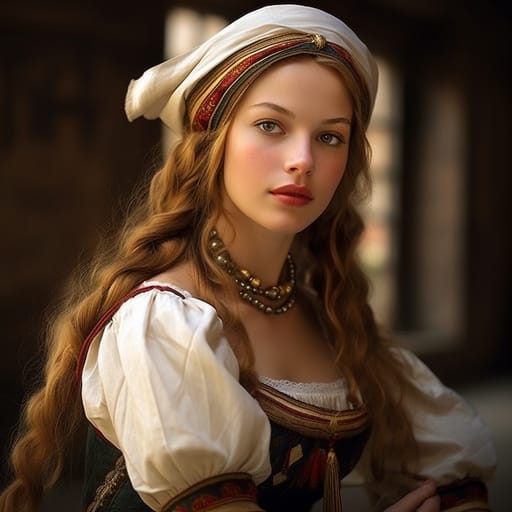
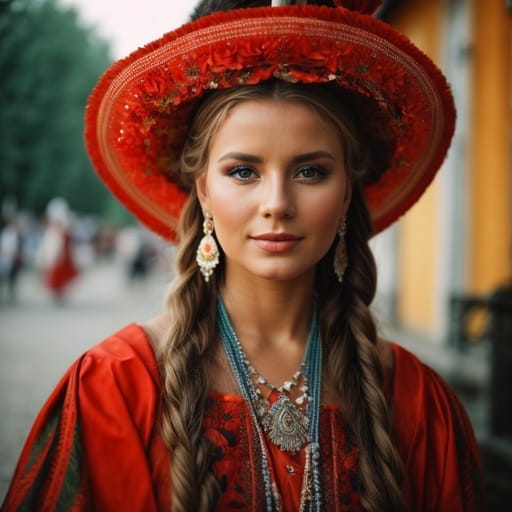
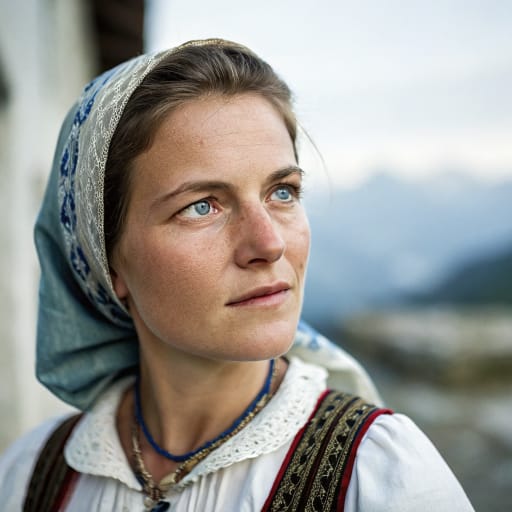
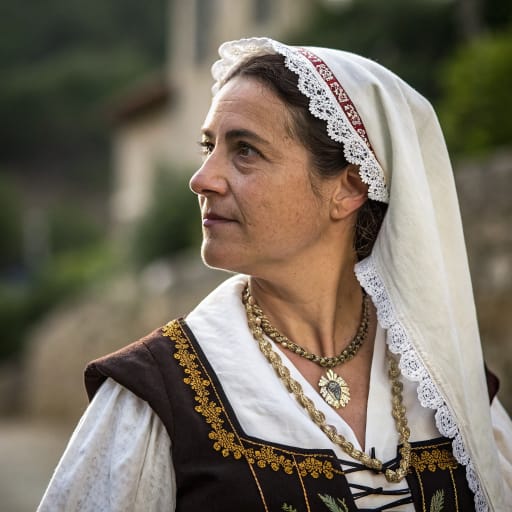
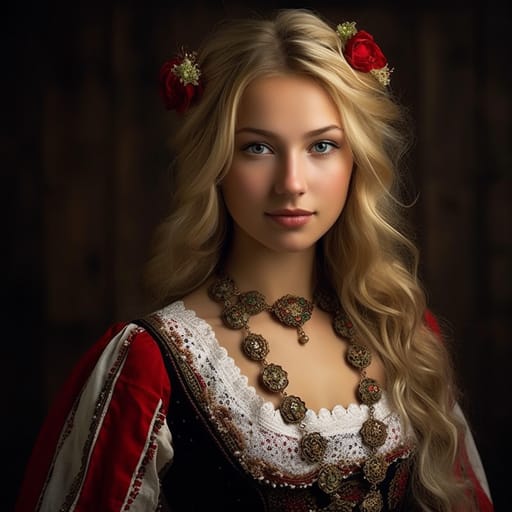
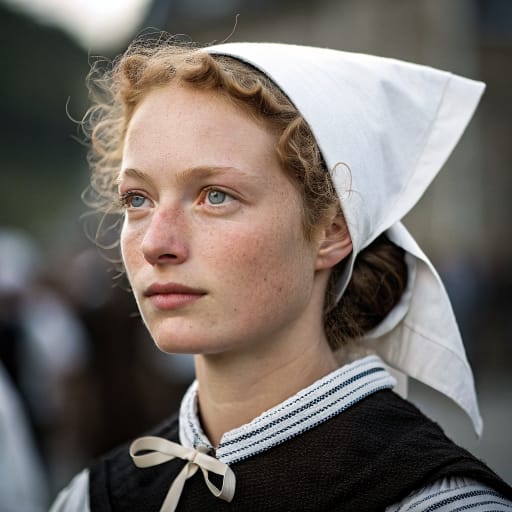
Geographic Distribution: Dutch populations across 1 country
Each row is ranked by the group's share of that country's population, with the source citation drawn from published census and demographic surveys. Click through for the full per-country phenotype profile.
| Country | Share | Source |
|---|---|---|
| Netherlands | 75.2% | CBS Statistics Netherlands 2024; Dutch (Nederlanders) (~75.2%, ~13.4M+ of ~17.8M total). West Germanic ethnic group, predominantly secular / Roman Catholic / Protestant Reformed Christian |
Typical Dutch Phenotypes
Reference for AI generation: hair, eyes, skin, facial structure, build
The Dutch are among the tallest populations ever measured — adult men average roughly 183–184 cm (6'0") and women around 170 cm (5'7"), the highest national mean stature on record. Build tends toward long-limbed and rangy rather than stocky, with broad shoulders, narrow hips, and a straight torso line; visible muscularity is moderate, and body fat distribution skews even rather than concentrated. The face is typically long and vertical, with a high forehead, a strong narrow jaw, and a chin that reads as squared rather than tapered.
Hair runs dark blond to mid-brown across the bulk of the population, with a meaningful minority — roughly a third — in true light blond, especially in the northern provinces (Friesland, Groningen, Drenthe). Texture is overwhelmingly straight to loosely wavy and fine. Natural red is uncommon but present at a few percent. Hair often darkens noticeably after childhood, so adult ash-brown over a blond child's photograph is the normal trajectory. Eyes are predominantly light: blue is the single most common color, followed by grey, green, and hazel, with brown a clear minority concentrated in the south and among more recent ancestries. The eyelid is open and high, with no epicanthic fold and a visible upper crease; brows are usually thin and straight.
Skin sits at Fitzpatrick II for most — pale with a pink or neutral undertone, freckling readily under sun and burning before tanning. Olive undertones appear in the southern Catholic provinces (Limburg, Noord-Brabant). The nose is typically narrow with a high, straight bridge and a fine tip — Rutger Hauer and Famke Janssen show the canonical version. Lips are thin to medium, with a defined cupid's bow.
The Caribbean and Surinamese sub-groups, along with Indos (Indo-Dutch of partial Indonesian descent), depart sharply from this template — darker skin across Fitzpatrick III–VI, brown eyes, and curlier hair textures predominate, reflecting Afro-Caribbean, South Asian, and Southeast Asian ancestry rather than the northern European base phenotype described above.
Dutch Body & Anatomy Reference
Anatomy by feature, Western European / Celtic-Germanic phenotype
Dutch Boobs & Breasts
Dutch boobs follow the Western European / Celtic-Germanic profile: medium-to-large cup, full, moderate-to-high projection. Areolar diameter is usually 30-46mm, and the coloring is light-pink to medium-pink areolar pigmentation against the fair-to-light skin tone. Breast shape tracks body composition (ectomorph-to-mesomorph, mean adult female BMI 24-27), so Dutch breasts tend to be full and projecting. Expect a forward-set shape, not the smaller East Asian bust.
Dutch Ass & Hips
Dutch ass and hip morphology presents as medium, moderate projection, distinctly different from the broader hip profile of Mediterranean phenotypes. The Dutch pelvic profile shows medium iliac crests, anchored in the Western European / Celtic-Germanic skeletal pattern. Dutch butt shots in adult AI imagery should render the medium, moderate projection silhouette with the overall build (ectomorph-to-mesomorph) and the fat distribution typical of the Western European / Celtic-Germanic phenotype.
Dutch Vagina & Pussy
Dutch pussy anatomy typically shows light-pink labial pigmentation, varied labia minora. Pubic hair is usually wavy fine-to-medium texture, blond to dark-brown. In AI-generated Dutch nudes, labial color should blend into the fair to light skin with a gradual transition, and the hair should keep its wavy fine-to-medium texture.
Dutch Dicks & Penis
Penis reference for Dutch men: regional mean ~13-14cm erect, moderate girth. Coloring: light-pink to light-brown shaft pigmentation. An accurate Dutch cock in AI imagery matches the surrounding fair to light skin rather than a generic porn default. Circumcision depends on religion and custom, not ancestry.
Dutch Body, Curves & Build
The Dutch figure is generally ectomorph-to-mesomorph, with mean adult female BMI 24-27, characteristic of Western European / Celtic-Germanic ancestry. AI image tools tend to flatten regional body types into a few stock shapes; here the Dutch build is kept as its own reference.
Dutch Skin Tone & Hair Texture
Skin: fair to light (Fitzpatrick I-III). Hair: straight-to-wavy 1A-2B, blond to dark-brown. Both are typical of Western European / Celtic-Germanic ancestry. The most common mistake in AI nudes of Dutch women is a body rendered lighter than the face.
Data depth
50/100Coverage of image-grounded phenotype observations · drives AI generation diversity
- Sample size
- 20/40· 10 images
- Image quality
- 20/30· 40% high
- Confidence
- 10/20· mean 0.63
- Source diversity
- 0/10· wikipedia
- ·Modest sample (n<25)
- ·Wikipedia-only source, not population-representative
Observed Distribution: Image Sample
Empirical observations from analyzed photographs · supplementary signal, not population truth
Sample: 10 images analyzed (10 wikipedia). Quality: 4 high, 5 medium, 0 low, 1 very_low. Avg analyzer confidence: 0.63.
Skin tone (Fitzpatrick): II (90%), unclear (10%)
Hair color: black (30%), light/medium brown (30%), gray/white (30%), blonde (10%)
Hair texture: straight (20%), wavy (60%), bald (10%), unclear (10%)
Eye color: blue (30%), brown (10%), other (10%), unclear (50%)
Epicanthic fold: 0% present, 90% absent, 10% unclear
Caveats: Sample size 10 is modest, so secondary patterns may not be reliable. Sample is 100% Wikipedia notable people, which skews toward male, public-life, and modern figures, not population-representative.
Last aggregated: May 7, 2026
Explore phenotype categories
Structured taxonomy with peer-reviewed scales · 22 anatomical categories
Notable Dutch People
100 reference figures, sourced from Wikipedia
- Jaap Bakema, 1914-1981)
- Hendrik Petrus Berlage, 1856-1934)
- Jo van den Broek, 1898-1978)
- Jacob van Campen, 1596-1657), Dutch Golden Age architect
- Pierre Cuypers, 1827-1921)
- Willem Marinus Dudok, 1884-1974)
- Aldo van Eyck, 1918-1999)
- Lieven de Key, 1560-1627), renaissance architect
- Hendrick de Keyser, 1565-1621), sculptor and architect
- Rem Koolhaas, born 1944)
- Jacobus Oud, 1890-1963)
- Satyendra Pakhale, born 1967)
- Pieter Post, 1608-1669), Dutch Golden Age architect
- Gerrit Rietveld, 1888-1964)
- Willeke van Ammelrooy, born 1944), actress
- Antoinette Beumer, born 1962), film director
- Marjolein Beumer, born 1966), actress, screenwriter
- Jan de Bont, born 1943), cinematographer
- Erik-Jan de Boer, born 1967), animation director
- Rene Daalder, 1944-2019), director
- Mike van Diem, born 1959), screenwriter and director
- Bracha van Doesburgh, born 1981), actress
- Philip Dorn, 1901-1975), actor
- Paul Driessen, born 1940), animator, director
- Bobbi Eden, born 1980), porn actress
- Cyrus Frisch, born 1969), director
- Laura Gemser, born 1950), actress
- Rijk de Gooyer, 1925-2011), actor
- Rutger Hauer, 1944-2019), actor
- Johannes Heesters, 1903-2011), actor
- Tom Holkenborg, Junkie XL) (born 1967), composer
- Carice van Houten, born 1976), actress
- Michiel Huisman, born 1981), actor
- Famke Janssen, born 1964), actress
- Martin Koolhoven, born 1969), screenwriter and director
- John Kraaijkamp, Sr., 1925-2011), actor
- Jeroen Krabbé, born 1944), actor
- Sylvia Kristel, 1952-2012), actress
- Rik Launspach, born 1958), actor and writer
- Dick Maas, born 1951), screenwriter and director
- Anneliese van der Pol, born 1984), actress
- Renée Soutendijk, born 1957), actress
- Johanna ter Steege, born 1961), actress
- Monique van de Ven, born 1952), actress
- Paul Verhoeven, born 1938), director
- Wiebe van der Vliet, born 1970), film editor
- Yorick van Wageningen, born 1964), actor
- Alex van Warmerdam, born 1952), actor, screenwriter and director
- Zara Whites, born 1968), former pornographic film actress
- Michaël Dudok de Wit, born 1953), animator, director
- Emmanuel Ohene Boafo, born 1993), actor
- Michael Sanderson, born 1983), Filmmaker and director
- Mimi Mariani, 1928-1971), actress
- Thomas Acda, born 1967), singer, actor
- Sharon Den Adel, born 1974), singer of Within Temptation
- Jan Akkerman, born 1946), guitar player
- Amber, born 1969), singer
- Elly Ameling, born 1933), classical music singer
- Louis Andriessen, 1939-2021), composer
- Dick Annegarn, born 1952), singer, musician
- Bart Berman, born 1938), pianist, composer
- Marco Borsato, born 1966), singer
- Willem Breuker, 1944-2010), jazz musician
- Herman Brood, 1946-2001), rock musician and artist
- Frans Brüggen, 1934-2014), conductor, recorder player and baroque flautist
- Theo Bruins, 1929-1993), pianist, composer
- Armin van Buuren, born 1976), trance DJ
- Ferry Corsten, born 1973), trance DJ
- Esmée Denters, born 1988), singer, made famous through YouTube
- Cristina Deutekom, 1931-2014), singer, classical music
- Alphons Diepenbrock, 1862-1921), composer
- Anita Doth, born 1971), singer
- Candy Dulfer, born 1969), saxophone player
- Margriet Ehlen, born 1943), composer
- Caro Emerald, born 1981), singer
- Tess Gaerthé, born 1991), actress and singer
- Martin Garrix, born 1996), House DJ
- Afrojack, born 1987), House DJ
- Jan van Gilse, 1881-1944), composer
- Boudewijn de Groot, born 1944), singer, actor
- Jack Jersey, 1941-1997), producer, composer, singer
- Guus Meeuwis, born 1972), composer, singer
- Stephen van Haestregt, born 1972), drummer of Within Temptation
- Bernard Haitink, 1929-2021), conductor Concertgebouworkest
- Alex Van Halen, born 1953), drummer of Van Halen
- Eddie Van Halen, 1955-2020), guitarist of Van Halen
- Hardwell, born 1988), house DJ
- Barry Hay, born 1948), singer of Golden Earring
- André Hazes, 1951-2004), singer
- Oliver Heldens, born 1995), DJ
- Koen Heldens, born 1986) mixing engineer
- Ilse Huizinga, born 1966), jazz singer
- Dominique van Hulst, born 1981), singer, popularly known as Do
- Janine Jansen, born 1978), violinist
- Ruud Jolie, born 1976), guitarist of Within Temptation
- Gerard Joling, born 1960), singer
- Isabelle van Keulen, born 1966), classical violinist and violist, educator
- Tim Kliphuis, born 1974), jazz violinist
- Peter Koelewijn, born 1940), founder of Dutch rock & roll
- Astrid Kruisselbrink, born 1972), composer
Erotic Poses & Sex Positions
From the pose catalog: 219 named positions with reference skeletons
Frequently asked questions about Dutch people
Where is the Dutch homeland?
The Dutch homeland is Netherlands in Western Europe.
What countries do Dutch people live in?
Dutch populations are documented across 1 country: Netherlands.
What language do Dutch people speak?
Dutch people primarily speak Indo-European / Germanic / Dutch.
What religion do Dutch people practice?
The predominant religion among Dutch people is Christianity.






Make your own Dutch images
Five a day, free, no credits to buy. The studio starts from this group's phenotype data, so you can set body type, pose and style and keep the traits accurate.
Start with Dutch