Help us get this right
Does this portrait look right for Frisians?
One tap. It takes a second and it is recorded.
1 says it looks right, 0 say it looks off.
Frisians Erotic
Frisia (Netherlands, Germany)
Christianity / Protestantism
West Frisians, East Frisians, North Frisians
About Frisians People
The Frisians are the people of the North Sea coast — a stretch of low country, salt marsh, and barrier islands running from the IJsselmeer in the Netherlands across the German Bight up to the Danish border. They are the oldest continuous coastal population in this part of Europe, and the landscape has shaped them more than any ruling power ever did. Frisia was never a unified state. It was a confederation of free farmers and seafarers who, for most of the medieval period, paid no feudal lord and answered to no count — a peculiarity they called Friese vrijheid, Frisian freedom, and which they defended for roughly five hundred years before it was finally dismantled by surrounding principalities in the late Middle Ages.
Three branches survive today, divided more by which modern state absorbed them than by any ancient split. The West Frisians live in the Dutch province of Friesland, where their language is co-official and visible on road signs and in schools. The East Frisians, in Lower Saxony, mostly lost their original tongue centuries ago and now speak a Low German dialect — though the cultural identity, including a fiercely defended tea ritual, remained intact. The North Frisians, scattered across the islands and mainland strip of Schleswig-Holstein, speak the most fragmented variant of the language, with several mutually difficult dialects holding on across small island populations.
Frisian itself is the closest living relative of English, a fact linguists like to point out and Frisians never tire of hearing. The two languages diverged from a common North Sea Germanic ancestor and still share patterns of vocabulary and grammar that German does not. The famous demonstration sentence — bread, butter, and green cheese — is intelligible in both languages with only slight adjustment.
Religiously, the Reformation took deep root here, and most Frisians belong to one of the Protestant traditions, with a strong Mennonite minority in the west reflecting the region's old tolerance for dissenters. Daily life carries traces of the maritime past: a cuisine built around dairy, fish, and dark rye; a domestic architecture of long, low farmhouses joined under one roof to the barn; and, especially in winter, the survival of skating culture on frozen canals — the Elfstedentocht, when conditions allow it, remains a national event in the Netherlands rather than a local one.
Related ethnic groups
Groups that share Frisians's homeland, region, language, or religious tradition. These are likely candidates for comparative phenotype reference.
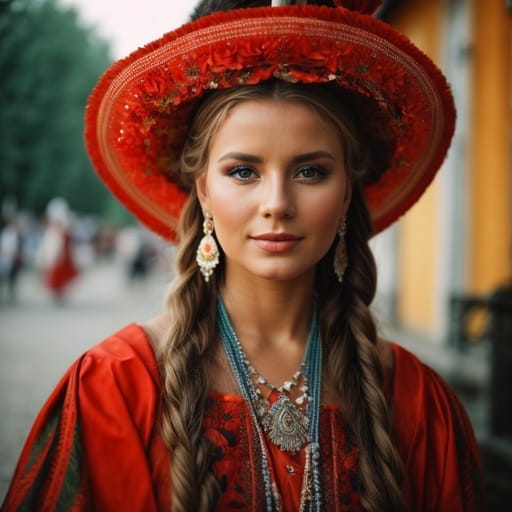
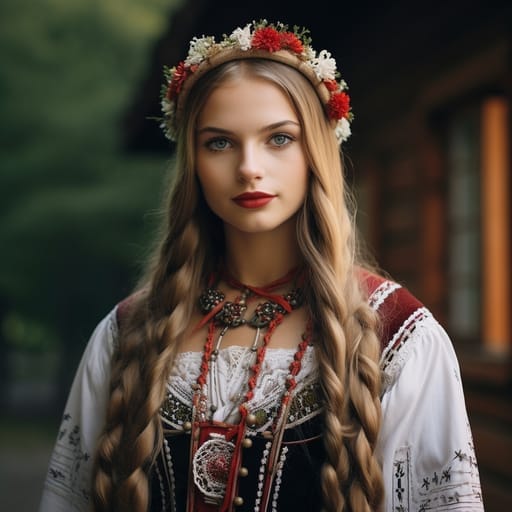
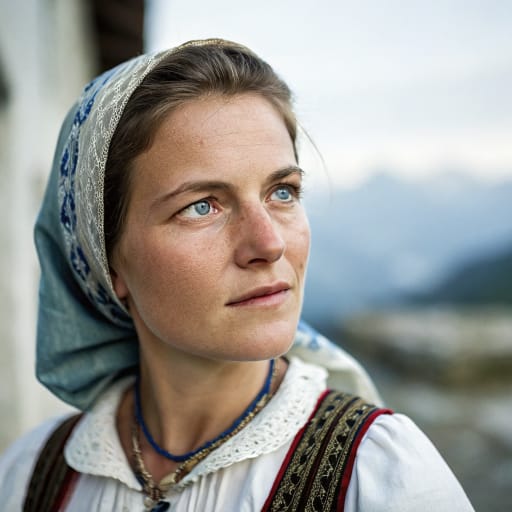
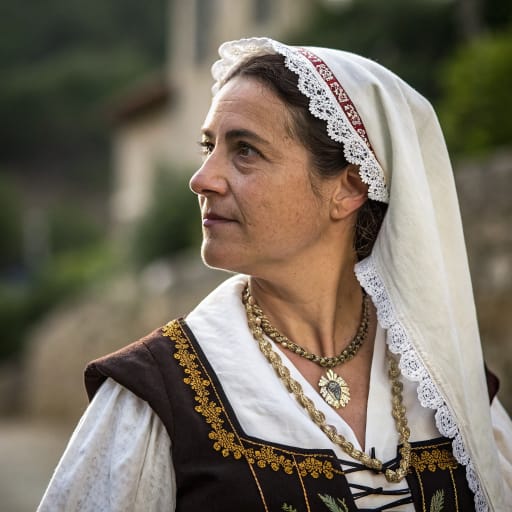
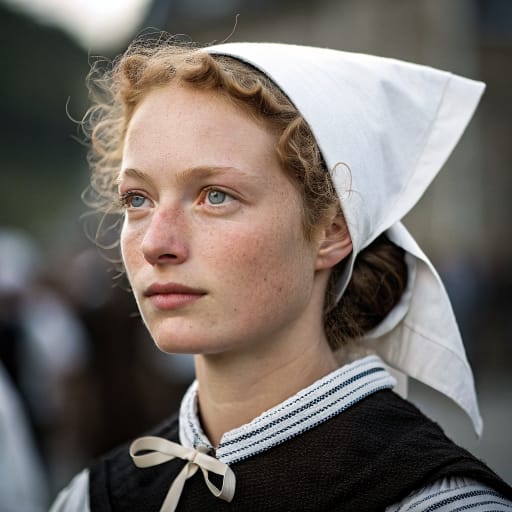
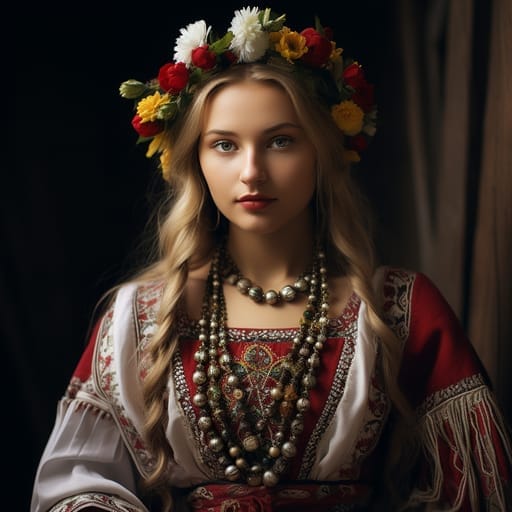
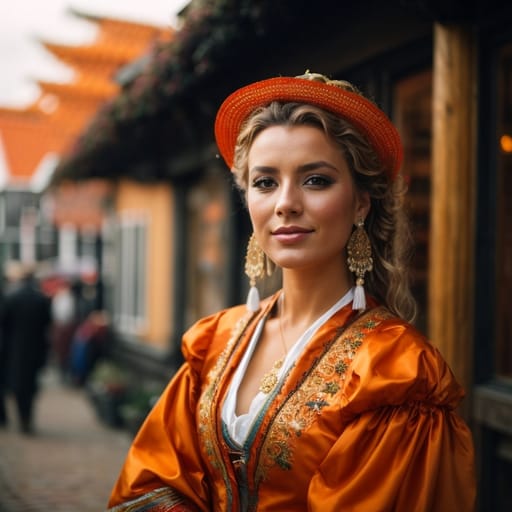
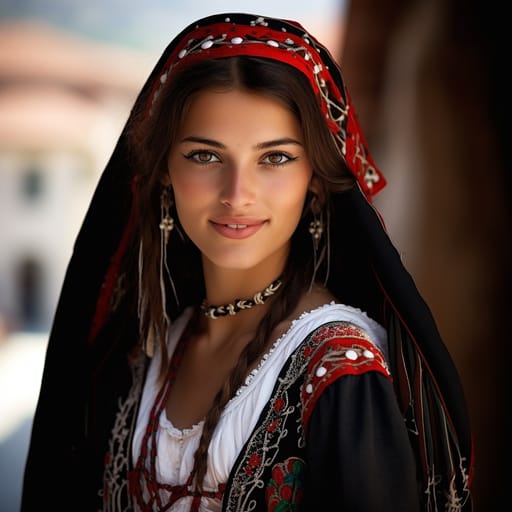
Typical Frisians Phenotypes
Reference for AI generation: hair, eyes, skin, facial structure, build
Frisians sit at the pale, tall end of the Northwest European cline, with phenotypes that overlap considerably with Dutch and northern Germans but trend even fairer in the coastal heartlands. Hair runs heavily blond — ash, flaxen, and dark blond predominate among children, with a substantial share darkening to mid-brown by adulthood. Red and strawberry-blond appear at meaningful rates, well above the European average though below Celtic-fringe levels. Texture is overwhelmingly straight to loosely wavy; tight curl is uncommon. Beards on men often come in noticeably redder than scalp hair.
Eyes are predominantly light: blue is the modal color, followed by grey, blue-green, and hazel. Pure brown eyes are a clear minority. Lids are open and high-set, with no epicanthic fold and only a faint, often absent supratarsal crease in some individuals. Brows tend to be thin and lightly pigmented, sometimes nearly invisible against fair skin.
Skin is Fitzpatrick I–II — pink-toned, freckle-prone on the face and shoulders, burning before tanning. Rosacea-like flush across cheeks and nose is common. Undertones lean cool and neutral rather than olive.
The face is typically long and narrow, with a high forehead, a straight or very slightly convex nasal bridge, narrow alar base, and a tapered chin. Lips run thin to medium; the upper lip is often noticeably narrower than the lower. Cheekbones are moderate rather than sharp, and the jawline reads as fine in women and rectangular in men. Stature is the standout trait: Frisian-heartland populations contribute to the Dutch and northern German averages that rank among the tallest documented anywhere, with adult men frequently above 185 cm and women above 172 cm. Builds are characteristically long-limbed and narrow-hipped, ectomorphic in youth and broadening modestly with age.
Across sub-groups, West Frisians (Netherlands) trend tallest and palest; East Frisians (Lower Saxony) average slightly stockier with a marginally higher rate of mid-brown hair; North Frisians of the Wadden islands like Föhr show the highest blond and red frequencies, reinforced by long isolation.
Frisians Body & Anatomy Reference
Anatomy by feature, Western European / Celtic-Germanic phenotype
Frisians Boobs & Breasts
Bust reference for Frisians women: medium-to-large cup, full, moderate-to-high projection, which is typical of Western European / Celtic-Germanic ancestry. Areolas measure about 30-46mm across, with light-pink to medium-pink pigmentation. Body type (ectomorph-to-mesomorph) shapes the bust as well, so Frisians tits are usually full and projecting. In AI imagery, keep the forward-set shape rather than drifting toward the smaller East Asian bust.
Frisians Ass & Hips
The Frisians ass is typically medium, moderate projection, which sets it apart from the broader hip profile of Mediterranean phenotypes. Underneath, the pelvis shows medium iliac crests, part of the Western European / Celtic-Germanic skeletal pattern. For Frisians butt pics and AI renders, match that silhouette and the overall build (ectomorph-to-mesomorph).
Frisians Vagina & Pussy
Frisians pussy and vulvar anatomy presents light-pink labial pigmentation, varied labia minora, consistent with the Western European / Celtic-Germanic phenotype's pigmentation pattern. Frisians pubic hair is typically wavy fine-to-medium texture, blond to dark-brown, in the inverted-triangle pattern. For anatomically accurate Frisians pussy renders the labial coloration should match the surrounding fair to light skin tone with a continuous gradient, and the hair should keep its wavy fine-to-medium texture.
Frisians Dicks & Penis
Frisians dicks follow the Western European / Celtic-Germanic reference data: regional mean ~13-14cm erect; moderate girth; light-pink to light-brown shaft pigmentation. Shaft color should track the fair to light skin tone with a smooth change toward the glans, and Frisians pubic hair keeps its wavy fine-to-medium texture.
Frisians Body, Curves & Build
Frisians body type and overall build presents as ectomorph-to-mesomorph, with mean adult female BMI 24-27: the characteristic Western European / Celtic-Germanic habitus. Frisians curves and proportions should keep the regional skeletal frame (height, shoulder-to-hip ratio, limb proportions) rather than a generic mesomorph default.
Frisians Skin Tone & Hair Texture
Frisians skin sits in the fair to light (Fitzpatrick I-III) band. Hair is typically straight-to-wavy 1A-2B, blond to dark-brown, in keeping with the Western European / Celtic-Germanic phenotype. In nude renders the skin should stay one even tone from face to body, and body, pubic and head hair should match.
Data depth
66/100Coverage of image-grounded phenotype observations · drives AI generation diversity
- Sample size
- 40/40· 52 images
- Image quality
- 16/30· 33% high
- Confidence
- 10/20· mean 0.59
- Source diversity
- 0/10· wikipedia
- ·Wikipedia-only source, not population-representative
Observed Distribution: Image Sample
Empirical observations from analyzed photographs · supplementary signal, not population truth
Sample: 52 images analyzed (52 wikipedia). Quality: 17 high, 26 medium, 8 low, 1 very_low. Avg analyzer confidence: 0.59.
Skin tone (Fitzpatrick): II (87%), unclear (13%)
Hair color: gray/white (40%), black (13%), light/medium brown (10%), brown (8%), dark brown (8%), blonde (8%), unclear (13%)
Hair texture: straight (35%), wavy (37%), curly (6%), bald (2%), covered (13%), unclear (8%)
Eye color: blue (27%), hazel (12%), dark brown (8%), brown (6%), unclear (48%)
Epicanthic fold: 2% present, 75% absent, 23% unclear
Caveats: Sample is 100% Wikipedia notable people, which skews toward male, public-life, and modern figures, not population-representative.
Last aggregated: May 7, 2026
Explore phenotype categories
Structured taxonomy with peer-reviewed scales · 22 anatomical categories
Notable Frisians People
97 reference figures, sourced from Wikipedia
- Bernard Accama, 1697-1756), 18th-century painter from Friesland
- Lawrence Alma-Tadema, 1836-1912), Dutch painter from Dronrijp
- Stine Andresen, 1849-1927), poet from Föhr who also wrote in Fering; befriended poet Friedric…
- Nicolaas Baur, 1736-1817), portrait painter from Harlingen
- Eggerik Beninga, 1490-1562), East Frisian chronicler
- William Bergsma, 1921-1994), American composer of Frisian descent
- Bernlef, died 809), Frisian bard and convert to Christianity
- Titus Brandsma, 1881-1942), Carmelite priest of the Roman Catholic Church, anti-Nazi Dutch re…
- Hinrich Braren, 1751-1826), nautical examiner from Föhr; wrote the first textbook on navigati…
- Oluf Braren, 1787-1839), painter from Föhr
- Dan Bylsma, NHL head coach for the Pittsburgh Penguins (born 1970), of Frisian descent
- Franciscus Carree, c. 1630), was made the first painter of William Frederick, Prince of Nassau-D…
- Peter Harry Carstensen, born 1947), Minister-President of Schleswig-Holstein from 2005 to 2012
- Edsger Dijkstra, 1930-2002), computer scientist
- Everett Dirksen, 1896-1969), American politician of the Republican Party; parents were born in…
- Pier Gerlofs Donia, 1480-1520), Frisian freedom fighter and folk hero; founder of the Arumer Blac…
- Ennik Somi Douma, stage name Jeon Somi, born 2001), South Korean-Canadian singer
- Lenny Dykstra, Major League baseball player for the New York Mets (1985-1989) and Philadelph…
- Fred Eaglesmith, Canadian folk singer; original last name was Elgersma
- Gerard Edema, 1652-1700?), Dutch landscape-painter who settled in England
- Edzard the Great, 1461-1528), count of East Frisia from 1491 until his death in 1528
- Dieter Eilts, football (soccer) player; nicknamed the Alemão of East Frisia; won the UEFA E…
- Eise Eisinga, 1744-1828), Frisian amateur astronomer and builder of the oldest working plan…
- Ubbo Emmius, 1547-1625), professor of history and Greek
- Heiko Engelkes, 1933-2008), German journalist born in Norden, East Frisia
- Jens Jacob Eschels, 1757-1842), seafarer and entrepreneur; became known by his autobiography
- Maurits Cornelis Escher, 1898-1972), graphic artist born in Leeuwarden
- Balthasar Oomkens von Esens, died 1540), East Frisian nobleman who opposed House Cirksena
- Rudolf Eucken, 1846-1926), German philosopher; winner of the 1908 Nobel Prize for Literature
- David Fabricius, 1564-1617), astronomer and theologian
- Johannes Fabricius, 1587-1616), astronomer and a discoverer of sunspots, independently of Galileo…
- Pieter Feddes van Harlingen, 1586-1623), Dutch Golden Age painter
- Bernard Fokke, 1600-1641), on whom the Flying Dutchman is said to be based
- Jane Fonda, actress with Frisian ancestry
- Magnus Forteman, ~809), legendary commander and magistrate governor of Friesland
- William Frankena, 1908-1994), American philosopher of Ethics; scholar in history of ethics; pla…
- Josh Freese, American musician of Frisian descent
- Gemma Frisius, 1508-1555), mathematician and cartographer
- Ygo Gales Galama, 1443-1493), infamous medieval warlord; Galama-family patriarch
- Wybrand de Geest, 1592 to c. 1661), Dutch Golden Age portrait painter
- Pieter Sjoerds Gerbrandy, 1885-1961), prime minister of the Dutch government in exile during World War II
- Tamme Hanken, 1960-2016), German horse whisperer and bonesetter from Filsum
- Mata Hari, born Margaretha Geertruida Zelle, August 7, 1876, in Leeuwarden, Friesland), …
- Wiebbe Hayes, born c. 1608), Colonial soldier hero from Winschoten
- Grant Hayunga, born 1970), painter and musician
- Simon Heere Heeresma, 1932-2011), Dutch author and poet
- Meindert Hobbema, 1638-1709), Dutch Golden Age painter
- Dodo zu Innhausen und Knyphausen, 1583-1636), professional soldier from Lütetsburg, East Frisia; field marshal …
- Ub Iwerks, 1901-1971), American animator, cartoonist, character designer, inventor, and …
- Gysbert Japiks, 1603-1666), Frisian writer, poet, schoolteacher and cantor
- Wijard Jelckama, 1490-1523), Frisian freedom fighter, nephew of Pier Gerlofs Donia and who lat…
- Tako Hajo Jelgersma, 1702-1795), 18th-century Dutch painter
- William Harry Jellema, 1893-1982), American philosopher
- Carl Ludwig Jessen, 1833-1917), North Frisian Naturalist painter
- Joost Klein, born November 10, 1997, in Leeuwarden, Friesland), Dutch musician, rapper, si…
- Wilhelm von Knyphausen, 1716-1800), general from Hesse-Cassel; fought in the American Revolutionary W…
- Tjalling Koopmans, 1910-1985), Dutch American mathematician and economist; Nobel Prize Laureate …
- Sven Kramer, Dutch long track speed skater
- Doutzen Kroes, born January 23, 1985, in Eastermar, Friesland), Dutch supermodel
- Anna-Marie Lampe, Playboy magazine (US edition) 40th anniversary Playmate/Playmate of the Month…
- Cynthia Lenige, 1755-1780), poet
- Abe Lenstra, 1920-1985), Dutch football player and national football icon in the 1950s
- Boy Lornsen, 1922-1995), author and sculptor from Sylt, Germany
- Jack R. Lousma, astronaut with Frisian ancestry
- Theodor Mommsen, 1817-1903), received the Nobel Prize in Literature in 1902; German politician…
- Hans Momsen, 1735-1811), North Frisian farmer, layman mathematician and astronomer
- F. W. Matthiessen, 1835-1918) Born in Altona, Denmark, Descendant of Matthias Petersen (Matthias…
- Jens Mungard, 1885-1940), poet
- Hark Olufs, 1708-1754), sailor from Amrum; was enslaved by Algerian pirates; eventually b…
- Christian von Ompteda, 1765-1815), commander in the Napoleonic Wars
- Jürgen Ovens, 1623-1678), portrait painter from North Frisia; said to have been a pupil of …
- Frederik Paulsen Sr, 1909-1997), physician; founder of Ferring Pharmaceuticals
- Tjede Peckes, 1500-1517), female Wurster Frisian military flag bearer who was slain in the …
- Sam Peckinpah, American film director and screenwriter
- Matthias Petersen, 1632-1706), whaling captain from Föhr; in his lifetime he caught 373 whales
- Wolfgang Petersen, German movie director (Das Boot)
- David Petraeus, former four-star general in the United States Army, former Director of the Ce…
- Alvin Plantinga, American philosopher of Frisian descent
- Gerriet Postma, 1932-2009), Dutch painter
- Hendrik van Rijgersma, 1835-1877), physician and amateur botanist, malacologist and ichthyologist
- Rintje Ritsma, former Dutch long track speed skater
- Fedde Schurer, 1898 to 1968), Dutch poet, politician.
- Menno Simons, 1496 to January 31, 1561), Anabaptist religious leader from Friesland whose f…
- Kyrsten Sinema, born 1976), American politician and former social worker; U.S. Senator from A…
- Friede Springer, born 1942), widow of publisher Axel Springer; major shareholder of Axel Sprin…
- Theodor Storm, 1817-1888), wrote Der Schimmelreiter
- Peter Stuyvesant, 1612-1672), last Dutch Director-General of the colony of New Netherland (New …
- Simon Vestdijk, 1899-1971), novelist, musician, psychological analyst
- Wigerus Vitringa, 1657-1725), Dutch painter
- Jouke de Vries, Dutch PVDA politician
- Otto Waalkes, German comedian, actor and musician, born in Emden
- Hayley Westenra, singer from New Zealand; of some Frisian descent
- Harm Wiersma, born 1953 in Leeuwarden), six time world champion in draughts and politician
- Piter Wilkens, born 1959), Frisian folk and pop singer
- Jelle Zijlstra, 1918-2001), Prime Minister of the Netherlands 1966-67
- Wout Zijlstra, strongest man of the Netherlands in 2001; third of the world in 1998
- Epke Zonderland, gymnast, Olympic champion (2012)
Erotic Poses & Sex Positions
From the pose catalog: 219 named positions with reference skeletons
Frequently asked questions about Frisians people
Where is the Frisians homeland?
The Frisians homeland is Frisia (Netherlands, Germany) in Western Europe.
What language do Frisians people speak?
Frisians people primarily speak Indo-European / Germanic / Frisian.
What religion do Frisians people practice?
The predominant religion among Frisians people is Christianity / Protestantism.






Make your own Frisians images
Five a day, free, no credits to buy. The studio starts from this group's phenotype data, so you can set body type, pose and style and keep the traits accurate.
Start with Frisians