No portrait yet
Batavi Erotic
The Rhine delta island between the Waal and the Rhine, now the Betuwe and Nijmegen area of Gelderland, Netherlands
Germanic (Indo-European, West Germanic), known only from names and inscriptions; Latin in Roman service
Germanic polytheism in Roman dress, centered on Hercules Magusanus
Offshoot of the Chatti; kin to the neighboring Cananefates; absorbed by the Salian Franks
About Batavi People
The Batavi were a small Germanic people of the Roman frontier who lived in the Rhine delta of the present-day Netherlands from the late first century BC until the third century AD, when they slipped out of the record and into the Franks who took over the same ground. What set them apart was a bargain. Rome asked them for no taxes and no tribute, only soldiers, and the Batavi supplied eight infantry cohorts, a cavalry regiment and, for a time, the emperors' own bodyguard, out of a population estimated at a few tens of thousands. Tacitus compared them to weapons and armor, kept for war alone. Their signature feat was to cross a river in full kit, horses and all, in formation, and come up the far bank ready to fight. They did it against the Britons at the Medway in AD 43, and Batavian cohorts held the front line at Mons Graupius forty years later.
Their homeland was the island between the Waal and the old Rhine that Dutch speakers still call the Betuwe. Tacitus says they came as dissident Chatti from the German interior, but the archaeology shows them settling among a Celtic-influenced population already there, and Batavian names turn up in both Germanic and Celtic forms. The economy ran on cattle and horses, stalled in long byre-houses. Their chief god was Hercules Magusanus, a Roman hero fused with a native deity, and at his sanctuary at Empel returning veterans left brooches, belt fittings and weapons as offerings. The inflection point came in AD 69, when Gaius Julius Civilis, a one-eyed Batavian noble and Roman officer with a grievance, turned his cohorts on Rome during the civil war after Nero's death. The revolt drew in Gauls and Germans from both banks and destroyed the legionary fortress at Vetera before Rome crushed it the next year. The relationship was rebuilt on harder terms, with Batavian units posted far from home. One of them, the Ninth Cohort, garrisoned Vindolanda on the northern British frontier, and the letters of its commander's household survive on the Vindolanda writing tablets.
The Batavi left the Netherlands its most durable origin myth. Renaissance scholars made them the ancestors of the free Dutch, Rembrandt painted Civilis swearing his conspirators to the rising, the revolutionary state of 1795 called itself the Batavian Republic, and the Dutch named their capital on Java Batavia. The name outlived the people in the army as well: Roman units still styled Batavi were fighting in the fourth century, long after anyone in the delta used it of themselves.
Related ethnic groups
Groups that share Batavi's homeland, region, language, or religious tradition. These are likely candidates for comparative phenotype reference.
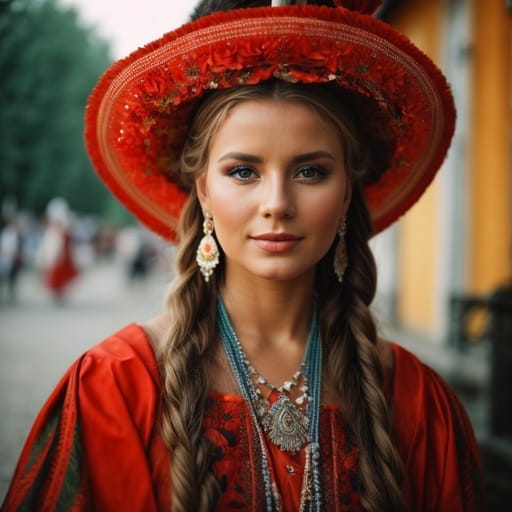
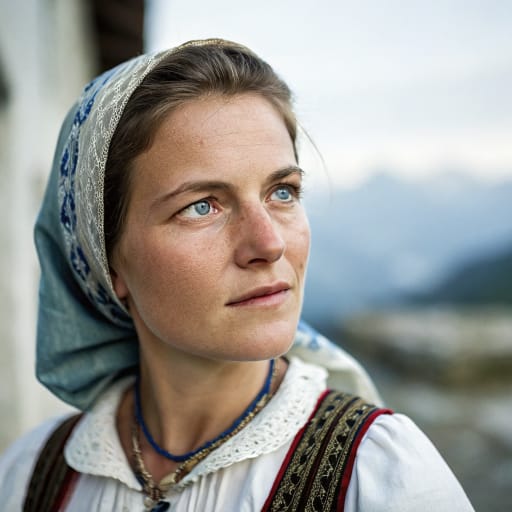
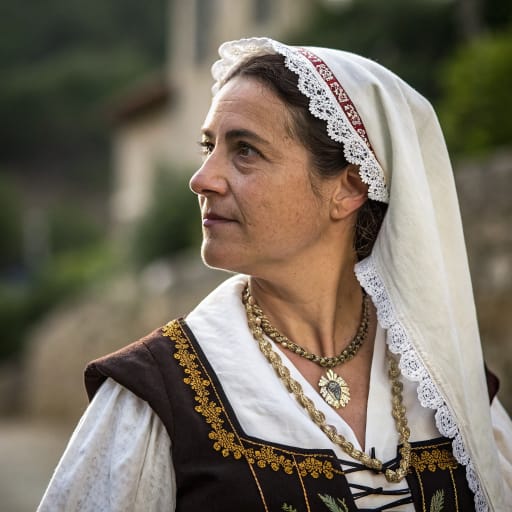
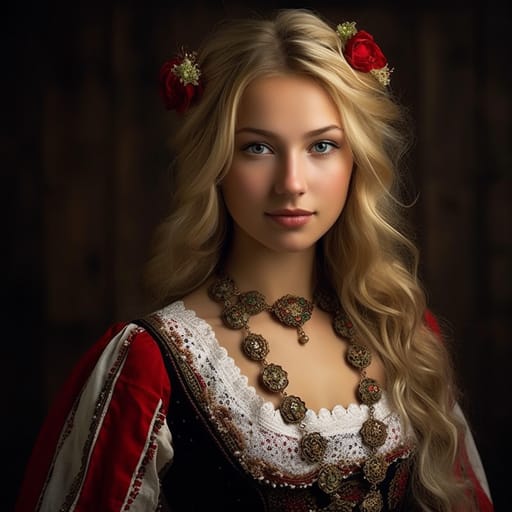
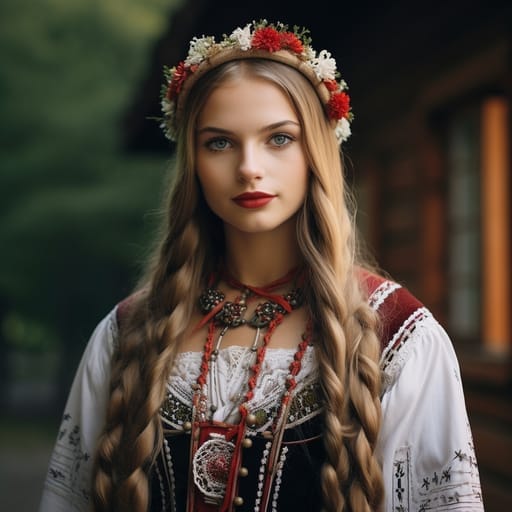
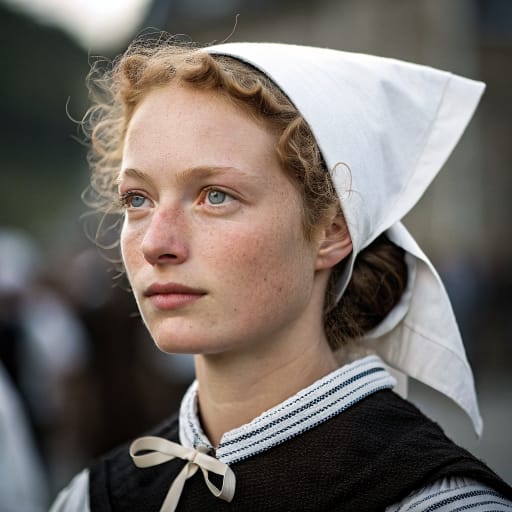
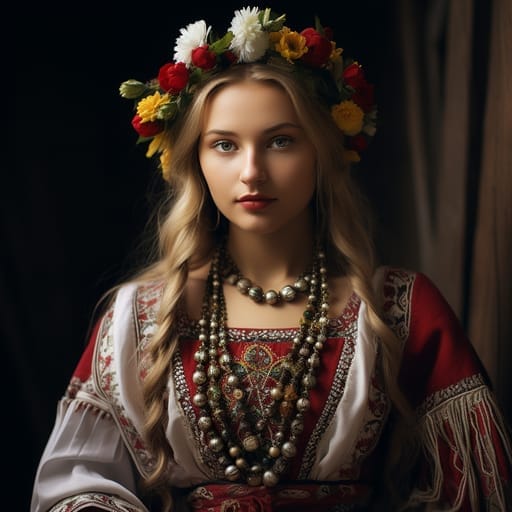
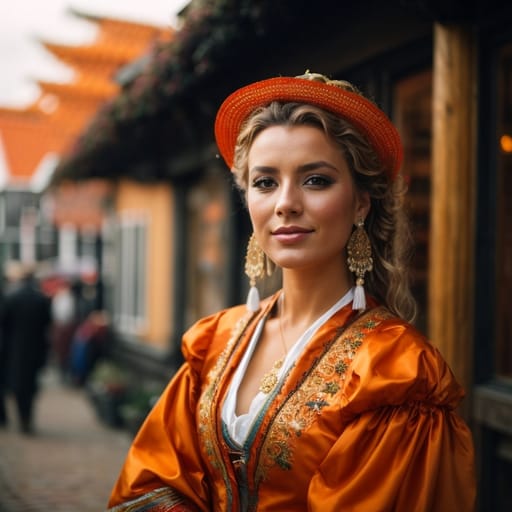
Typical Batavi Phenotypes
Reference for AI generation: hair, eyes, skin, facial structure, build
Batavi Body & Anatomy Reference
Western European / Celtic-Germanic phenotype: anatomy reference for AI nude generation
Batavi Boobs & Breasts
The typical Batavi bust is medium-to-large cup, full, moderate-to-high projection, in line with the wider Western European / Celtic-Germanic pattern. Areolas usually fall in the 30-46mm range, with light-pink to medium-pink areolar pigmentation against the fair-to-light skin tone. Compared with the smaller East Asian bust, Batavi breasts sit forward and are generally full and projecting. A faithful AI render of Batavi tits keeps that shape and areola size.
Batavi Ass & Hips
Butt shape among Batavi women: medium, moderate projection, over medium iliac crests. This follows Western European / Celtic-Germanic ancestry and looks quite unlike the broader hip profile of Mediterranean phenotypes. An accurate Batavi ass in adult AI imagery keeps both the silhouette and the overall build (ectomorph-to-mesomorph) instead of a generic average.
Batavi Vagina & Pussy
Vulvar anatomy among Batavi women: light-pink labial pigmentation, varied labia minora. Pubic hair tends to be wavy fine-to-medium texture, blond to dark-brown, in the usual inverted-triangle pattern. Both follow Western European / Celtic-Germanic pigmentation, which is why Batavi pussy renders should not fall back on a pale, sparse Western template.
Batavi Dicks & Penis
The Batavi cock profile, from Western European / Celtic-Germanic anthropometric data: regional mean ~13-14cm erect; moderate girth; light-pink to light-brown shaft pigmentation. Pubic hair has a wavy fine-to-medium texture and forms the usual inverted-V pattern. Whether Batavi men are circumcised follows religious and cultural practice rather than phenotype.
Batavi Body, Curves & Build
Build and curves among Batavi women follow the Western European / Celtic-Germanic pattern: ectomorph-to-mesomorph, mean adult female BMI 24-27. Proportions matter as much as skin tone, so Batavi figures should keep their regional height and limb ratios.
Batavi Skin Tone & Hair Texture
The Batavi skin range is fair to light (Fitzpatrick I-III), and hair tends to be straight-to-wavy 1A-2B, blond to dark-brown. That combination marks the Western European / Celtic-Germanic phenotype, and skin tone is the trait AI generators most often get wrong for Batavi women.
Explore phenotype categories
Structured taxonomy with peer-reviewed scales · 22 anatomical categories
Erotic Poses & Sex Positions
From the pose catalog: 219 named positions with reference skeletons
Frequently asked questions about Batavi people
Where is the Batavi homeland?
The Batavi homeland is The Rhine delta island between the Waal and the Rhine, now the Betuwe and Nijmegen area of Gelderland, Netherlands in Western Europe.
What language do Batavi people speak?
Batavi people primarily speak Germanic (Indo-European, West Germanic), known only from names and inscriptions; Latin in Roman service.
What religion do Batavi people practice?
The predominant religion among Batavi people is Germanic polytheism in Roman dress, centered on Hercules Magusanus.






Make your own Batavi images
Five a day, free, no credits to buy. The studio starts from this group's phenotype data, so you can set body type, pose and style and keep the traits accurate.
Start with Batavi