Help us get this right
Does this portrait look right for Ambisontes?
Nobody has judged this one yet. You would be the first.
Ambisontes Erotic
The upper Salzach valley in the eastern Alps, roughly the modern Pinzgau district of Salzburg state, Austria
Norican Celtic, known only from names (Indo-European, Celtic); Latin under Roman rule (Indo-European, Italic)
Celtic polytheism, later Roman provincial cults; regional deities such as Noreia and Belenus are attested elsewhere in Noricum
One of the Celtic peoples of Noricum, listed by Ptolemy alongside the Alauni, Sevaces, Norici, Ambidravi and Ambilici
About Ambisontes People
The Ambisontes were a Celtic people who lived in the upper Salzach valley of the eastern Alps, in what is now the Pinzgau district of Salzburg, Austria. They lived there from the late Iron Age into Roman times, and over time they merged into the Latin-speaking people of the Roman province of Noricum and later into the Bavarian settlers whose descendants still live in the valley. As far as the record shows, a river is what defined them. Their name puts the Celtic prefix ambi-, meaning "on both sides of," in front of a river name that is usually linked to the Salzach. That makes them the people of both banks. The Ambidravi, who lived along the Drava river, got their name the same way. The valley is a long east-west trench below the Hohe Tauern, the highest mountains in Austria, and high passes lead south from it over the main ridge. The Ambisontes spoke a Celtic language, probably close to what other peoples of Noricum spoke, but nothing of it survives except names. Nothing is known about their own gods. Elsewhere in Noricum, inscriptions from the Roman era honor the local goddess Noreia and the Celtic god Belenus. A small bronze Hercules turned up at the Hochtor pass when the Grossglockner road was built, which suggests that travelers left offerings at the crossings above the valley.
Before the Romans came, the Ambisontes fell within the reach of the kingdom of Noricum, a Celtic state whose iron Roman buyers prized. Rome took control of Noricum around 16 to 15 BC. The Ambisontes are named among the Alpine peoples on the Tropaeum Alpium, the victory monument built in honor of Augustus at La Turbie, above Monaco, around 7 to 6 BC. Pliny the Elder copied that list. In the second century AD, the geographer Ptolemy still listed them among the peoples of Noricum, next to the Alauni, the Sevaces and the Ambidravi. After that, the tribal name disappears from the record. The Salzach valley looked downstream to the Roman town of Iuvavum, now Salzburg, and Latin took hold. After Roman rule ended, Bavarian settlement in the early Middle Ages made the region German-speaking. The Ambisontes most likely live on in that mixed ancestry, not as any separate later people. Their clearest legacy is a place name. Early medieval Salzburg records call the valley Bisontio, a name widely read as an echo of the tribe, and it survives today as Pinzgau.
Related ethnic groups
Groups that share Ambisontes's homeland, region, language, or religious tradition. These are likely candidates for comparative phenotype reference.
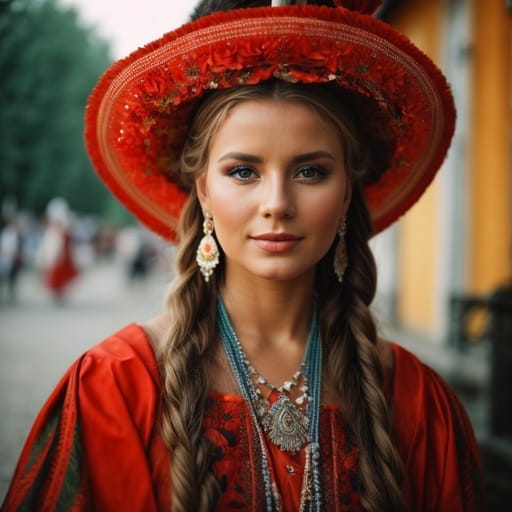
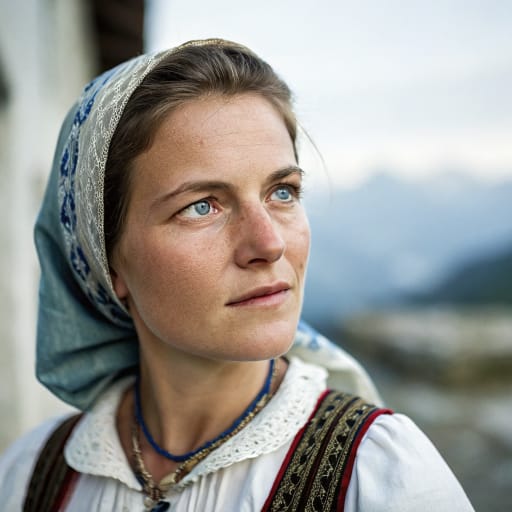
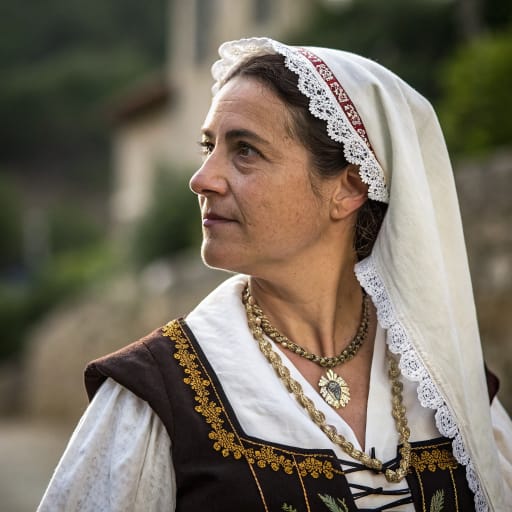
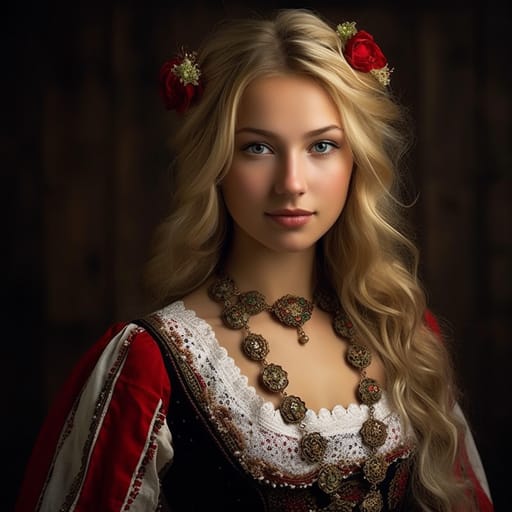
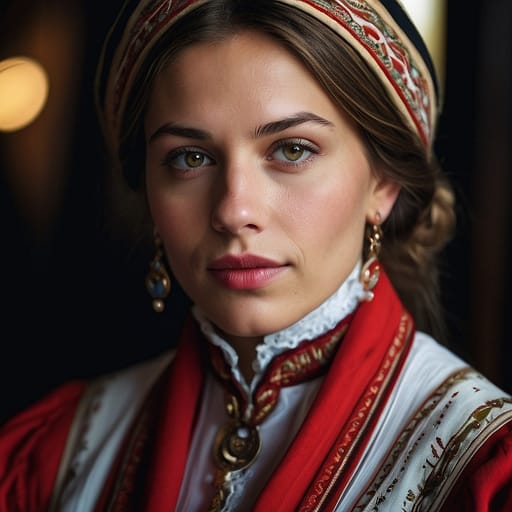
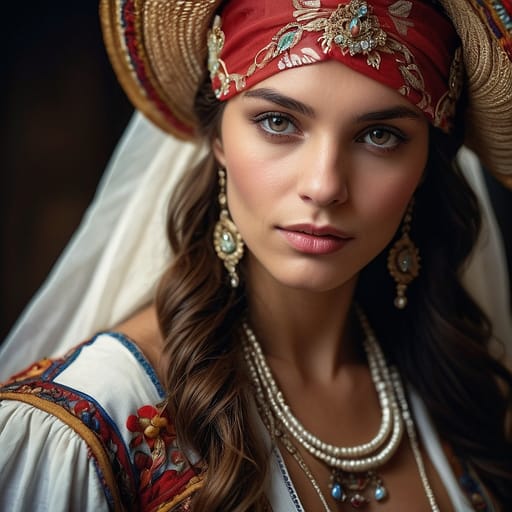
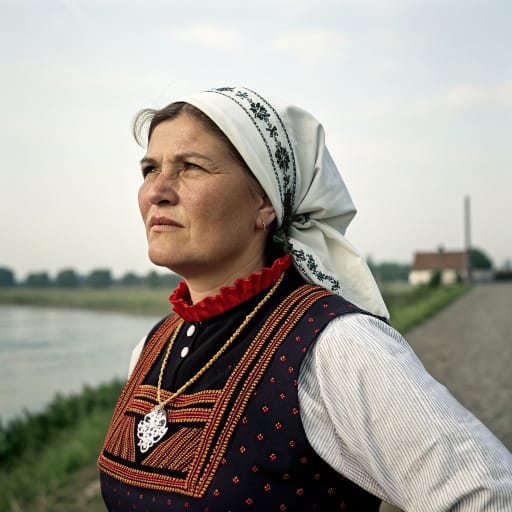
Typical Ambisontes Phenotypes
Reference for AI generation: hair, eyes, skin, facial structure, build
Ambisontes Body & Anatomy Reference
Western European / Celtic-Germanic phenotype: anatomy reference for AI nude generation
Ambisontes Boobs & Breasts
The typical Ambisontes bust is medium-to-large cup, full, moderate-to-high projection, in line with the wider Western European / Celtic-Germanic pattern. Areolas usually fall in the 30-46mm range, with light-pink to medium-pink areolar pigmentation against the fair-to-light skin tone. Compared with the smaller East Asian bust, Ambisontes breasts sit forward and are generally full and projecting. A faithful AI render of Ambisontes tits keeps that shape and areola size.
Ambisontes Ass & Hips
Butt shape among Ambisontes women: medium, moderate projection, over medium iliac crests. This follows Western European / Celtic-Germanic ancestry and looks quite unlike the broader hip profile of Mediterranean phenotypes. An accurate Ambisontes ass in adult AI imagery keeps both the silhouette and the overall build (ectomorph-to-mesomorph) instead of a generic average.
Ambisontes Vagina & Pussy
Vulvar anatomy among Ambisontes women: light-pink labial pigmentation, varied labia minora. Pubic hair tends to be wavy fine-to-medium texture, blond to dark-brown, in the usual inverted-triangle pattern. Both follow Western European / Celtic-Germanic pigmentation, which is why Ambisontes pussy renders should not fall back on a pale, sparse Western template.
Ambisontes Dicks & Penis
The Ambisontes cock profile, from Western European / Celtic-Germanic anthropometric data: regional mean ~13-14cm erect; moderate girth; light-pink to light-brown shaft pigmentation. Pubic hair has a wavy fine-to-medium texture and forms the usual inverted-V pattern. Whether Ambisontes men are circumcised follows religious and cultural practice rather than phenotype.
Ambisontes Body, Curves & Build
Build and curves among Ambisontes women follow the Western European / Celtic-Germanic pattern: ectomorph-to-mesomorph, mean adult female BMI 24-27. Proportions matter as much as skin tone, so Ambisontes figures should keep their regional height and limb ratios.
Ambisontes Skin Tone & Hair Texture
The Ambisontes skin range is fair to light (Fitzpatrick I-III), and hair tends to be straight-to-wavy 1A-2B, blond to dark-brown. That combination marks the Western European / Celtic-Germanic phenotype, and skin tone is the trait AI generators most often get wrong for Ambisontes women.
Explore phenotype categories
Structured taxonomy with peer-reviewed scales · 22 anatomical categories
Erotic Poses & Sex Positions
From the pose catalog: 219 named positions with reference skeletons
Frequently asked questions about Ambisontes people
Where is the Ambisontes homeland?
The Ambisontes homeland is The upper Salzach valley in the eastern Alps, roughly the modern Pinzgau district of Salzburg state, Austria in Western Europe.
What language do Ambisontes people speak?
Ambisontes people primarily speak Norican Celtic, known only from names (Indo-European, Celtic); Latin under Roman rule (Indo-European, Italic).
What religion do Ambisontes people practice?
The predominant religion among Ambisontes people is Celtic polytheism, later Roman provincial cults; regional deities such as Noreia and Belenus are attested elsewhere in Noricum.






Make your own Ambisontes images
Five a day, free, no credits to buy. The studio starts from this group's phenotype data, so you can set body type, pose and style and keep the traits accurate.
Start with Ambisontes