Help us get this right
Does this portrait look right for Bavarians?
Nobody has judged this one yet. You would be the first.
Bavarians Erotic
Old Bavaria (Upper Bavaria, Lower Bavaria and the Upper Palatinate) in the Free State of Bavaria, southeastern Germany; related Bavarian speakers live across most of Austria and in South Tyrol, Italy.
Bavarian, or Austro-Bavarian (Upper German, West Germanic, Indo-European); Standard German for writing and official use
Predominantly Roman Catholic by tradition, with Protestant minorities and a growing secular, unaffiliated share
One of the German stems; Old Bavarians of Upper Bavaria, Lower Bavaria and the Upper Palatinate. Linguistically kin to most Austrians and South Tyroleans; distinct from the Franconians and Swabians of the same state.
About Bavarians People
Ask someone from Passau or Rosenheim where they are from and the first answer is often Bavaria, not Germany. Bavarians are one of the old German stems. They had a name more than a thousand years before there was a German state, and they still greet you with Grüß Gott or Servus. Their heartland is Old Bavaria: Upper Bavaria, Lower Bavaria and the Upper Palatinate, stretching from the forested Czech border to the Alps. The modern Free State also holds Franconians and Swabians, who will tell you they are something else. Across the border, most Austrians and the German speakers of South Tyrol use dialects of the same language. That traces back to the medieval duchy, whose eastern march became Austria.
The name first appears in the sixth century, attached to settlers in former Roman country south of the Danube. It is often read as "men from Bohemia," though that is debated. Charlemagne removed the last Agilolfing duke, Tassilo III, in 788. From 1180 the Wittelsbachs held Bavaria for more than seven centuries. In that time they led the Catholic League in the Thirty Years' War, took a royal crown from Napoleon in 1806, and produced Ludwig II and his fantasy castles. The monarchy ended in 1918, but the independent streak survived: in 1949 the Bavarian parliament voted against West Germany's new constitution while agreeing to be bound by it. Mia san mia, "we are who we are," still sums up the attitude.
Bavarian, Boarisch to its speakers, is an Upper German language that sits between dialect and separate tongue. A broad speaker from the Bavarian Forest can leave a visitor from Hamburg lost. It keeps old survivals, such as the plural "you" forms es and enk, which come from an ancient dual. Standard German handles school, print and government. For centuries Catholicism set the rhythm of the year, and it still marks the countryside with onion-domed churches and wayside shrines. Pilgrims walk to the Black Madonna at Altötting, and Corpus Christi processions fill village streets, even as church membership falls and Munich grows more secular.
Much of the culture lives in village clubs rather than on postcards. Villages raise a painted maypole, and their neighbors try to steal it, handing it back only after a ransom of beer and food. Around Saint Leonard's day in November, decorated horses and wagons process for the patron saint of livestock. Costume societies founded in the late nineteenth century keep Tracht and the Schuhplattler dance alive. The 1516 beer purity decree issued at Ingolstadt remains a point of regional pride. Oktoberfest, which began with a royal wedding in 1810, is the version the world sees.
Related ethnic groups
Groups that share Bavarians's homeland, region, language, or religious tradition. These are likely candidates for comparative phenotype reference.
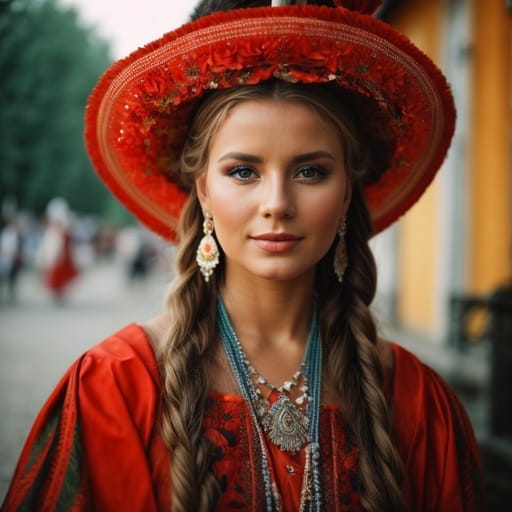
Estonians
same region (Western Europe)
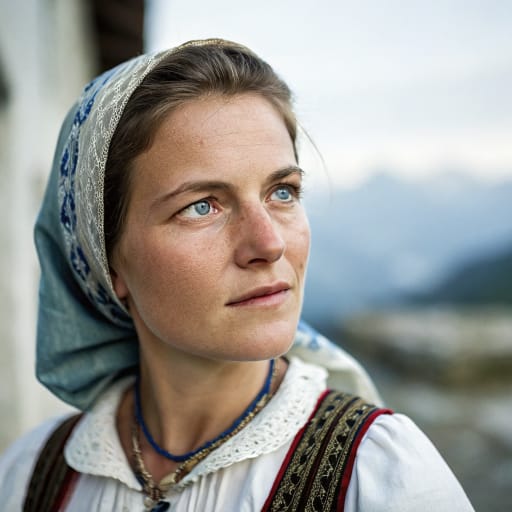
Austrians
same region (Western Europe)
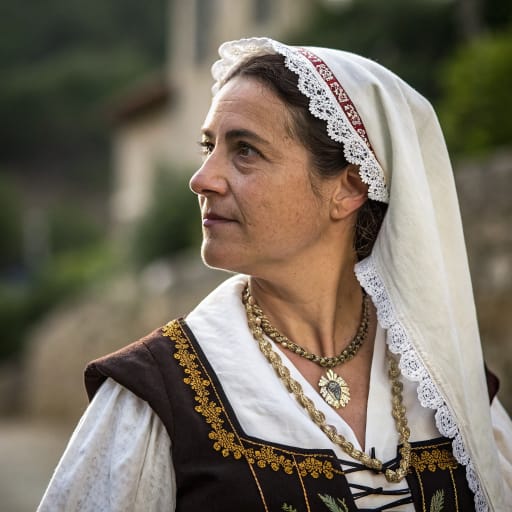
Corsicans
same region (Western Europe)
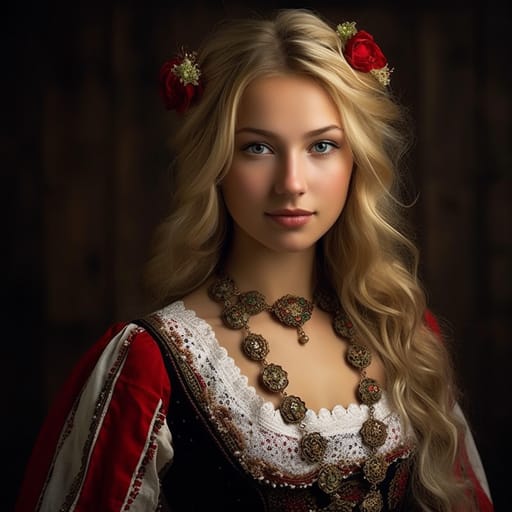
Frisians
same region (Western Europe)
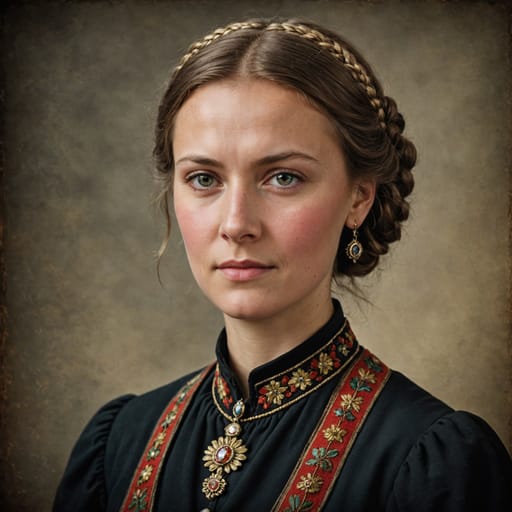
Russian German Aussiedler
same region (Western Europe)
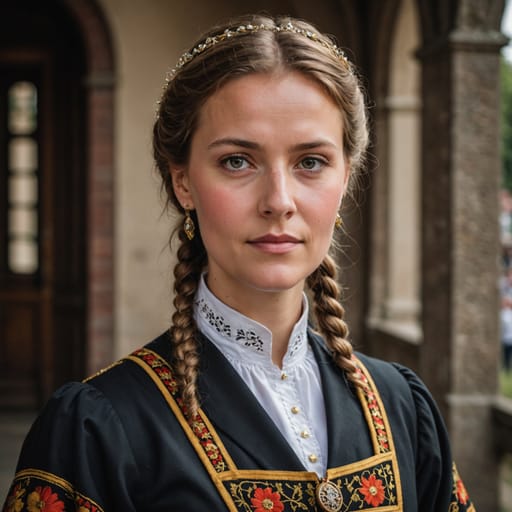
German Belgian
same region (Western Europe)
Switzerland Immigrant
same region (Western Europe)
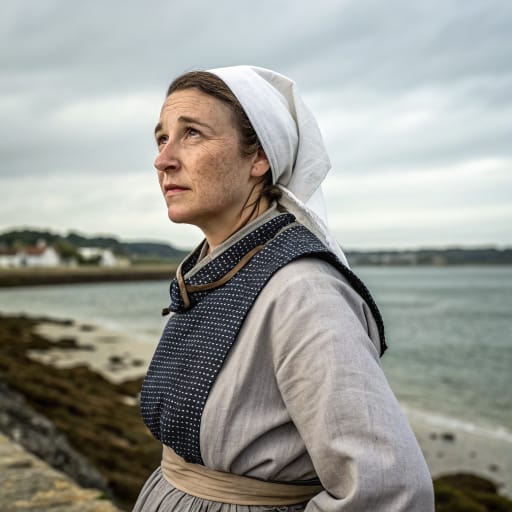
Anagnutes
same region (Western Europe)
Typical Bavarians Phenotypes
Reference for AI generation: hair, eyes, skin, facial structure, build
Bavarians Body & Anatomy Reference
Western European / Celtic-Germanic phenotype: anatomy reference for AI nude generation
Bavarians Boobs & Breasts
Bust reference for Bavarians women: medium-to-large cup, full, moderate-to-high projection, which is typical of Western European / Celtic-Germanic ancestry. Areolas measure about 30-46mm across, with light-pink to medium-pink pigmentation. Body type (ectomorph-to-mesomorph) shapes the bust as well, so Bavarians tits are usually full and projecting. In AI imagery, keep the forward-set shape rather than drifting toward the smaller East Asian bust.
Bavarians Ass & Hips
The Bavarians ass is typically medium, moderate projection, which sets it apart from the broader hip profile of Mediterranean phenotypes. Underneath, the pelvis shows medium iliac crests, part of the Western European / Celtic-Germanic skeletal pattern. For Bavarians butt pics and AI renders, match that silhouette and the overall build (ectomorph-to-mesomorph).
Bavarians Vagina & Pussy
Bavarians pussy and vulvar anatomy presents light-pink labial pigmentation, varied labia minora, consistent with the Western European / Celtic-Germanic phenotype's pigmentation pattern. Bavarians pubic hair is typically wavy fine-to-medium texture, blond to dark-brown, in the inverted-triangle pattern. For anatomically accurate Bavarians pussy renders the labial coloration should match the surrounding fair to light skin tone with a continuous gradient, and the hair should keep its wavy fine-to-medium texture.
Bavarians Dicks & Penis
Bavarians dicks follow the Western European / Celtic-Germanic reference data: regional mean ~13-14cm erect; moderate girth; light-pink to light-brown shaft pigmentation. Shaft color should track the fair to light skin tone with a smooth change toward the glans, and Bavarians pubic hair keeps its wavy fine-to-medium texture.
Bavarians Body, Curves & Build
Bavarians body type and overall build presents as ectomorph-to-mesomorph, with mean adult female BMI 24-27: the characteristic Western European / Celtic-Germanic habitus. Bavarians curves and proportions should keep the regional skeletal frame (height, shoulder-to-hip ratio, limb proportions) rather than a generic mesomorph default.
Bavarians Skin Tone & Hair Texture
Bavarians skin sits in the fair to light (Fitzpatrick I-III) band. Hair is typically straight-to-wavy 1A-2B, blond to dark-brown, in keeping with the Western European / Celtic-Germanic phenotype. In nude renders the skin should stay one even tone from face to body, and body, pubic and head hair should match.
Explore phenotype categories
Structured taxonomy with peer-reviewed scales · 22 anatomical categories
Erotic Poses & Sex Positions
From the pose catalog: 219 named positions with reference skeletons
Frequently asked questions about Bavarians people
Where is the Bavarians homeland?
The Bavarians homeland is Old Bavaria (Upper Bavaria, Lower Bavaria and the Upper Palatinate) in the Free State of Bavaria, southeastern Germany; related Bavarian speakers live across most of Austria and in South Tyrol, Italy. in Western Europe.
What language do Bavarians people speak?
Bavarians people primarily speak Bavarian, or Austro-Bavarian (Upper German, West Germanic, Indo-European); Standard German for writing and official use.
What religion do Bavarians people practice?
The predominant religion among Bavarians people is Predominantly Roman Catholic by tradition, with Protestant minorities and a growing secular, unaffiliated share.






Make your own Bavarians images
Five a day, free, no credits to buy. The studio starts from this group's phenotype data, so you can set body type, pose and style and keep the traits accurate.
Start with Bavarians