Help us get this right
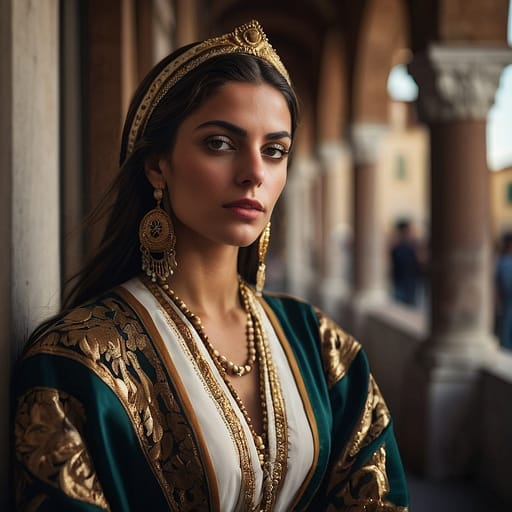
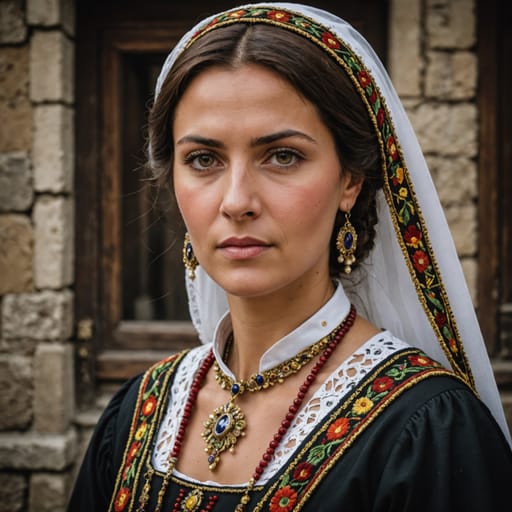
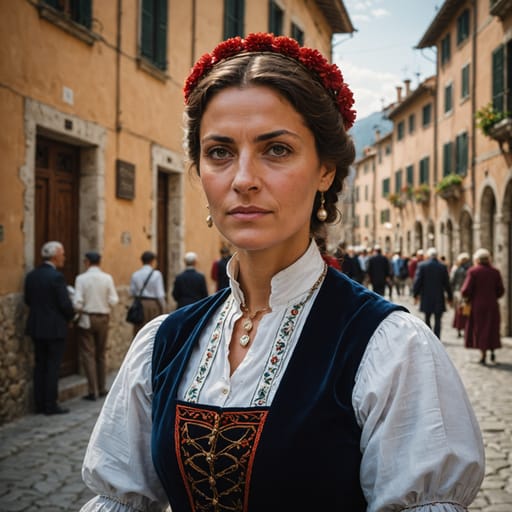
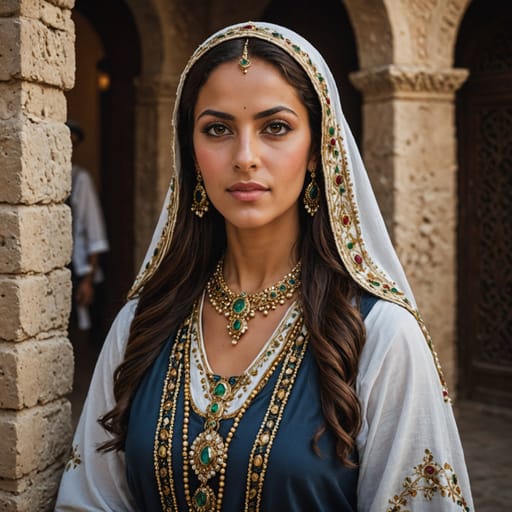
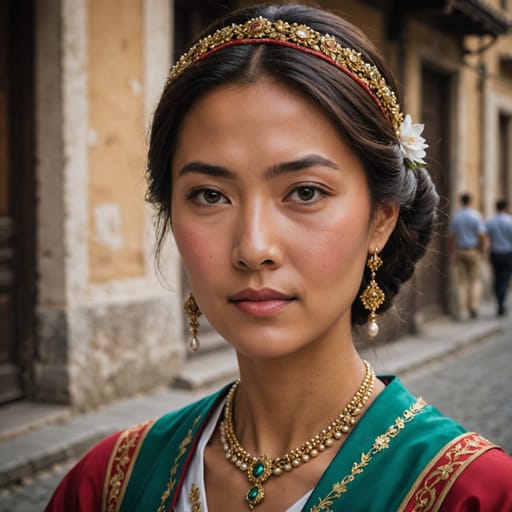
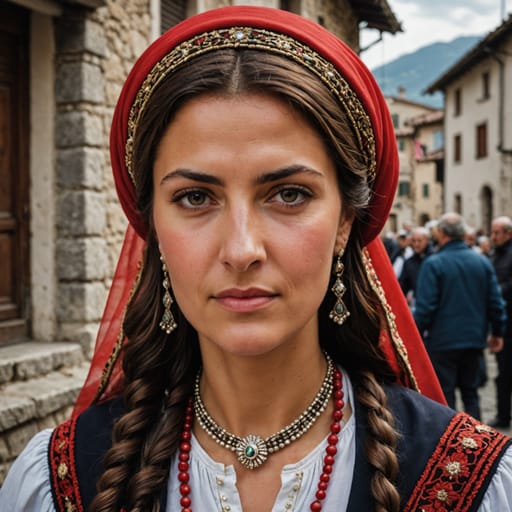
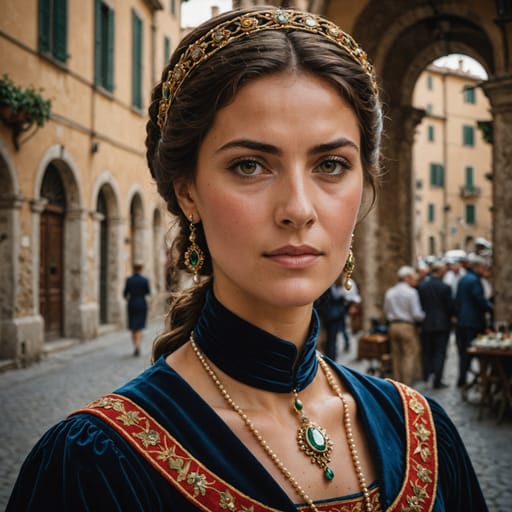
Does this portrait look right for Italian?
One tap. It takes a second and it is recorded.
1 says it looks right, 1 says it looks off.


Italy
ITSouthern Europe
Italy is home to 8 documented ethnic groups in Southern Europe, led by Italian (~91%), Italian Romanian (~2%), Italian Other European (~2%), Italian Maghrebi (~2%). This page blends their phenotype and demographic data into one weighted reference: skin tone, facial features, hair texture and build, drawn from published census and ancestry sources.
Demographic Composition
Composition weights are derived from self-identification in published census and demographic surveys. Each row links to the source ethnic-group atlas page.
| Ethnic group | Weight | Source |
|---|---|---|
 Italian Italian | 91.0% | Istat 2024 estimates; Italians of native Italian descent (~91%, ~53M+ of ~58.9M total). Predominantly Roman Catholic (~74% of population) plus substantial post-2000s religious decline |
 Italian Romanian Italian Romanian | 2.0% | Istat 2024; Italian-Romanians (~2%, ~1.1M+); the largest single immigrant community in Italy |
 Italian Other European Italian Other European | 2.0% | Istat 2024; Italian-Other-European (~2%, ~1.2M+); predominantly Ukrainian (substantial post-2000s migration plus post-2022 refugees), Polish, Moldovan, Bulgarian, plus other European source populations |
 Italian Maghrebi Italian Maghrebi | 1.5% | Istat 2024; Italian-Maghrebi (~1.5%, ~880,000+); predominantly Moroccan, Tunisian, Algerian source populations |
 Italian Asian Italian Asian | 1.3% | Istat 2024; Italian-Asian (~1.3%, ~770,000+); predominantly Chinese (~330,000+), Filipino, Indian, Bangladeshi, Pakistani, Sri Lankan source populations |
 Italian Sub Saharan African Italian Sub Saharan African | 1.0% | Istat 2024; Italian-Sub-Saharan-African (~1%, ~600,000+); predominantly Nigerian, Senegalese, Ghanaian, Ivorian, Eritrean, Somali, plus other source populations |
 Italian Albanian Italian Albanian | 0.7% | Istat 2024; Italian-Albanians (~0.7%, ~440,000+); the substantial post-1990 Albanian-Italian labor-migration community |
 Italy Other Italy Other | 0.5% | Istat 2024 residual; includes Latin American, Middle Eastern, North American, plus other smaller communities. Plus the Indigenous Italian minorities (Sardinian regional identity, South Tyrol German, Friulian, Aosta Valley French/Provençal, Slovene-Italian, Greek-speaking and Albanian-speaking Italian communities of Calabria-Sicily) |
Measured in portraits
Per-group trait distributions from documented photographs
Italy Phenotype Profile
Italy has a strongly Italian-majority demographic profile (~91%) with substantial post-2000s immigration (~9% combined: Romanian, Albanian, Maghrebi, Asian, Sub-Saharan African, other European, and other). Italian populations show substantial regional variation — Northern Italians skew lighter than Southern Italians. Adult Italian male mean stature approximately 175-178 cm. Italians have the longest continuously-documented written cultural-political-religious history of any major European national population.
Italy Body & Anatomy Reference
Per-feature anatomical profile for AI nude generation: Southern European / Mediterranean phenotype dominant in Italy
Italy Women: Boobs & Breasts
Italy women's tits and boobs reflect the medium-to-large cup, full, moderate-to-high projection Southern European / Mediterranean bust profile dominant in the Italy demographic composition. Italy nipples and areolas show medium-brown to dark-brown areolar pigmentation against the olive-to-light-brown skin tone, with areolar diameter typically in the 32-46mm range, distinct from the the lighter pigmentation of the Northern European bust. Italy breast morphology trends full and projecting, generally the classic Mediterranean curvy bust profile, a function of the mesomorph with full hip-and-bust deposition body habitus and mean adult female BMI 24-28. For anatomically-accurate AI-generated Italy nude women the render should preserve: medium-to-large cup, full, moderate-to-high projection shape, 32-46mm areolas with regional pigmentation, and the torso proportions of the Southern European / Mediterranean phenotype.
Italy Women: Ass & Hips
Italy women's ass and hip morphology presents as medium-to-full, moderate-to-high projection, broader hip profile, distinctly different from the slim Northern European narrow-hip pattern. Italy pelvic profile shows medium-to-wide iliac crests, full gluteal-femoral fat distribution, anchored in the Southern European / Mediterranean skeletal pattern that dominates the Italy ethnic composition. Italy butt shots in adult AI imagery should render the medium-to-full, moderate-to-high projection, broader hip profile silhouette with the mesomorph with full hip-and-bust deposition build and the gluteal-femoral fat distribution typical of the Southern European / Mediterranean phenotype rather than defaulting to a globally-averaged shape that generic AI generators produce.
Italy Women: Vagina & Pussy
Italy women's pussy and vulvar anatomy presents medium-brown to dark-brown labial pigmentation, fuller labia minora, consistent with the Southern European / Mediterranean phenotype's pigmentation pattern dominant in Italy. Italy pubic hair is typically wavy-to-curly medium-coarse dark texture, dense distribution, distributed in the inverted-triangle pattern with regional-typical density. AI-generated Italy nude imagery should preserve the medium-brown to dark-brown labial pigmentation and the wavy-to-curly medium-coarse dark texture hair texture rather than defaulting to a Western-European pink-and-sparse template. For anatomically-accurate Italy pussy renders the labial pigmentation should match the surrounding olive to medium skin tone of the Southern European / Mediterranean phenotype.
Italy Men: Dicks & Penis
Italy men's dick and penile anatomy in adult AI generation should anchor on the regional reference data: regional mean ~13-14cm erect, moderate girth, and medium-brown shaft pigmentation. Italy cock profile reflects the Southern European / Mediterranean ancestral population's anthropometric measurements rather than a globally-averaged Western-pornography default. For anatomically-accurate Italy nude male imagery the shaft pigmentation should track the surrounding olive to medium skin tone, with continuous glans-to-shaft pigmentation transition and the wavy-to-curly medium-coarse dark texture pubic-hair texture distributed in the typical inverted-V escutcheon. Circumcision status across Italy men varies by religious and cultural tradition rather than ancestral phenotype.
Italy People: Body, Curves & Build
Italy body type and overall build presents as mesomorph with full hip-and-bust deposition, with mean adult female BMI 24-28: the characteristic Southern European / Mediterranean habitus dominant in the Italy demographic composition. Italy curves and proportions in adult AI imagery should preserve the regional skeletal frame (height, shoulder-to-hip ratio, limb proportions) rather than scaling to a Western-European mesomorph default. The Italy nude female form, when rendered with anatomical fidelity, shows the height range, frame width, and adipose distribution pattern typical of the Southern European / Mediterranean phenotype. Generic AI image generators tend to collapse regional body types into a few default shapes; the Ethnic Erotic phenotype-anchored approach preserves the Italy build as its own reference category.
Italy People: Skin Tone & Hair Texture
Italy skin tone falls in the olive to medium (Fitzpatrick III-IV) band, the surface signal most often miscalibrated by generic AI nude generators trained on Western-photographic datasets. Italy hair texture is typically wavy-to-curly 2B-3B, dark-brown to black, characteristic of the Southern European / Mediterranean phenotype. For anatomically-accurate Italy nude renders the skin should hold the Fitzpatrick band consistently across body surface rather than showing the lighter-than-face body shading that AI generators default to. Italy hair pigmentation and texture on body, pubic, and head should match across the figure rather than mixing textures (a common AI artefact).
A descriptive view, not a claim about individuals
This page shows a weighted aggregate of phenotype observations across the Italy population, based on demographic composition from published census and ancestry sources. Phenotypes within any country are far more varied than the aggregate suggests; this is a descriptive reference, not a deterministic claim about any individual. For source-level detail on individual ethnic groups, see the constituent atlas pages linked below.
Italy in the History of Erotic Depiction
Manuals, literature & art traditions of this country · full timeline →
Ars Amatoria
manualRoman · 2 CE
Ovid's Book III advises positions by figure, most famously the woman-astride 'horse of Hector' (Andromache's mount) — classical Rome's contribution to the named-position record.
Pompeian erotic frescoes
artRoman · 1st century CE
The lupanar, the Suburban Baths, and private houses of Pompeii preserve Rome's visual position vocabulary. The dominant motif is the woman riding astride — mulier equitans — in both facing and turned (Venus pendula) forms.
- The Warren Cup, British Museum (GR 1999,0426.1)
- Erotic fresco cycle, Suburban Baths apodyterium, Pompeii, in situcowgirldoggy style
- Lupanar wall paintings, Pompeii, in situ brothelcowgirlmissionarydoggy stylesixty nine
- Erotic fresco, House of the Centenary, Room 43, Pompeii, likely still in situcowgirlreverse cowgirl
- + 3 more on the timeline
I Modi (The Sixteen Postures)
artItalian (Renaissance) · 1524–1527 CE
Renaissance Europe's notorious position set: sixteen engraved postures suppressed by the Papacy, surviving in fragments and copies with Aretino's sonnets — the West's first printed position catalogue.
- I Modi ("The Ways"/"The Positions"), original engravings, Fragments at the British Museum, Albertina Vienna, Biblioteca Nacional de Españacowgirl
- I Modi, later woodcut booklet copy ("Sedici Modi"), Current holding institution unconfirmed
- The Lovers (Due Amanti), Giulio Romano, State Hermitage Museum, St. Petersburg
- Loves of the Gods, Jacopo Caraglio after Perino del Vaga and Rosso Fiorentino, Impressions across major print collections
- + 2 more on the timeline
Etruscan tomb painting, Tarquinia
artEtruscan · c. 540-470 BCE
Of roughly 200 painted chamber tombs at Monterozzi, only two carry erotic scenes — the Tomb of the Bulls and the Tomb of the Whipping — deployed in an apotropaic, life-affirming funerary register rather than a narrative one.
- Tomba dei Tori — male-couple scene, In situ, Tarquiniadoggy style
- Tomba dei Tori — heterosexual-triad scene, In situ, Tarquinia
- Tomba della Fustigazione — woman between two men, In situ, Tarquinia
- Tomba della Fustigazione — flagellation scene, In situ, Tarquinia
Methodology Notes
Composition weights derived from Istat 2024 estimates. Italy enumerates resident foreign nationals plus naturalized populations. Caveats: (1) the historic post-1880 Italian emigration produced one of the largest single ethnic-migration flows in modern European history with the global Italian diaspora exceeding source-country population; (2) the Indigenous Italian minorities (South Tyrol German, Friulian, Sardinian, Aosta Valley French/Provençal, Slovene, Arbëreshë, Grekanika) are constitutionally protected; (3) the substantial post-2000s irregular migration via the Mediterranean has shaped political-demographic dynamics.
Primary Sources
- 1.Istituto Nazionale di Statistica (Istat). Italia in cifre 2024. Roma: Istat; 2024.
- 2.Duggan C. The Force of Destiny: A History of Italy Since 1796. Houghton Mifflin Harcourt; 2008.
- 3.Choate MI. Emigrant Nation: The Making of Italy Abroad. Harvard University Press; 2008.
- 4.Antonsich M. The 'New' Italians: Migration and Identity in 21st Century Italy. Modern Italy. 2018;23(3):319-334.
- 5.Sabbatucci G, Vidotto V. Storia contemporanea: Il Novecento (rev ed). Laterza; 2019.
Other countries in Southern Europe
Aggregate phenotype references for neighbouring Southern Europe nations, weighted by demographic composition.