Help us get this right
Does this portrait look right for Aghori?
One tap. It takes a second and it is recorded.
9 say it looks right, 6 say it looks off.
Aghori Erotic
Varanasi (Manikarnika and Harishchandra ghats), Uttar Pradesh, India
Indo-Aryan / Hindi, Bhojpuri
Hinduism / Shaivism (Aghori sect)
Kapalika lineage, Kinarami Aghori (Baba Kinaram Sthal), independent renunciate aghoris
About Aghori People
The Aghoris are an ascetic Hindu sect concentrated around the cremation ghats of Varanasi and a small set of associated centres in the Indo-Gangetic Plain. They are not an ethnic group in the descent-based sense (most Aghoris are born into other castes and adopt the lineage through initiation), but as a religious and cultural identity they constitute a recognizable, geographically rooted community with its own dress, ritual grammar, and theology. The 2011 figure of about 70 active Aghori sadhus widely cited in popular sources understates the affiliated lay community, which is several thousand strong across the Kinaram Sthal network and unaffiliated renunciate camps in Uttar Pradesh, Bihar, and Madhya Pradesh.
The lineage traces itself to Baba Kinaram (c. 1601-1771), an ascetic from Ramgarh in the Chandauli district whose samadhi at Krim Kund in Varanasi remains the sect's organisational anchor. Kinaram's institutional reform, codifying the practices of an older Kapalika and Nath antinomian stream into a stable monastery network, is what allowed the Aghori identity to survive into the colonial and post-colonial periods when most Kapalika-descended groups dissolved. Modern scholarship (Parry 1982; Barrett 2008) treats Kinaram as the historical pivot between the diffuse medieval Kapalika movement and the contemporary, demarcated Aghori sect.
Practice and theology
Aghori ritual practice is built on the doctrine that the divine is non-dual: Shiva, in his terrifying Bhairava aspect, is present in everything, and the categories that ordinary Hindu life treats as polluting (the corpse, the cremation ground, alcohol, sexual fluids, the flesh of dead animals) are therefore not polluting at all once the practitioner has internalised the non-dual view. The provocations that draw popular attention (meditation on a corpse, drinking from a human kapala (skull-cup), the use of cremation ash as a body covering) are framed in Aghori soteriology as ritual demonstrations of this realisation, not ends in themselves.
Day-to-day Aghori practice is far less sensational. Most affiliated sadhus run small ashrams, treat patients at kushth ashrams (the sect's traditional leprosy-care houses), beg for food in the morning rounds at the ghats, and conduct the household rituals that lay devotees commission. The five rituals most often associated with the sect, shava sadhana, shmashana sadhana, kapala kriya, pancha makara, and the offering of madya (alcohol) and mamsa (meat) at the cremation ground, are performed by a small minority of fully initiated renunciates, on a calendar tied to specific lunar phases, and not as continuous lifestyle.
Geography and visible markers
The Aghori physical presence in Varanasi is concentrated at two cremation ghats: Manikarnika, the larger and more publicly visible site, and Harishchandra, which carries the older mythic association with the king of the same name and is the preferred venue for the more demanding rituals. Krim Kund, the Kinaram Sthal headquarters in the Ravindrapuri neighbourhood, functions as the institutional centre, holds an annual mela on Baba Kinaram's death anniversary, and is the site at which most lineage-bearing initiations are formally registered.
Visible markers include matted hair (jata) often coated in ash, a single dark cloth or a complete absence of clothing depending on the renunciate stage, a kapala begging bowl or damaru (small two-headed drum) carried at the waist, and a forehead marked horizontally with three lines of vibhuti rather than the vertical Vaishnava tilak. Aghoris of the Kinarami lineage will typically also wear a rudraksha mala with a small image of Baba Kinaram at the central bead.
Misperceptions and the cannibalism trope
The single most persistent Western depiction of the Aghoris, that they routinely eat human flesh, was popularised by Reza Aslan's 2017 CNN segment and a handful of earlier ethnographic-sensational books, and is heavily overstated. The textual basis for the practice exists: Aghori manuals describe the consumption of cremation-ground remains as one of the prescribed sadhanas. But Jonathan Parry's long fieldwork at the Banaras ghats (published as Death in Banaras, 1994) and Ron Barrett's Aghor Medicine (2008) both document that the practice, where it occurs at all, is rare, ritually bounded, and not characteristic of the visible Aghori community that runs the sect's ashrams and medical-care work.
The conflation of Aghoris with Naga sadhus, the militant ash-smeared ascetics of the Dashanami Sannyasin order who appear at Kumbh Mela, is also common in popular writing. The two groups overlap in visual aesthetic (ash, matted hair, minimal clothing) but differ sharply in lineage, doctrine, and institutional structure: Nagas are a martial monastic order founded under Adi Shankara's eighth-century reorganisation; Aghoris are a Tantric Shaiva sect with no military history and a much smaller, more localised footprint.
The sect today
The contemporary Aghori community sustains itself through three streams: the institutional Kinarami lineage centred at Krim Kund and its affiliated kushth ashrams; the loose network of independent renunciates living at the cremation grounds across north India; and a substantial lay-devotee community that does not adopt the sadhu vows but participates in Aghori ritual life, makes offerings, and seeks the sect's well-known therapeutic services for chronic skin disease, snake bite, and psychiatric illness. The kushth ashram tradition, treating leprosy patients turned away by mainstream society, is the most enduring of the sect's outward-facing contributions, and survives at several sites including the original Krim Kund hospital.
For ethnographic purposes the Aghori category is best read as a religious lineage with a stable Indo-Gangetic geography rather than as an ethnic identity in the descent sense. The visible community in Varanasi is South Asian (predominantly Hindi- and Bhojpuri-speaking; physical phenotype consistent with the broader Indo-Aryan-speaking population of the eastern Gangetic plain), and the sect has not recruited internationally in any sustained way despite occasional Western affiliates documented in the post-2000 ethnographic literature.
Related ethnic groups
Groups that share Aghori's homeland, region, language, or religious tradition. These are likely candidates for comparative phenotype reference.
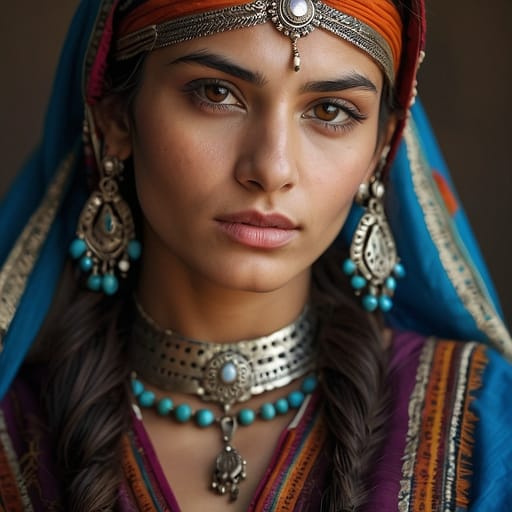
Afghan Pashtun
same region (South Asia)
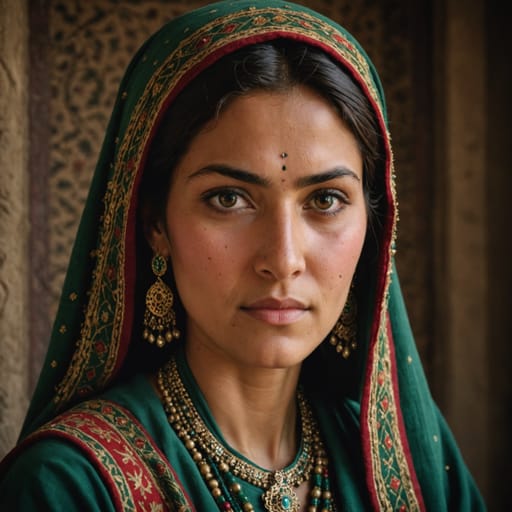
Afghan Tajik
same region (South Asia)
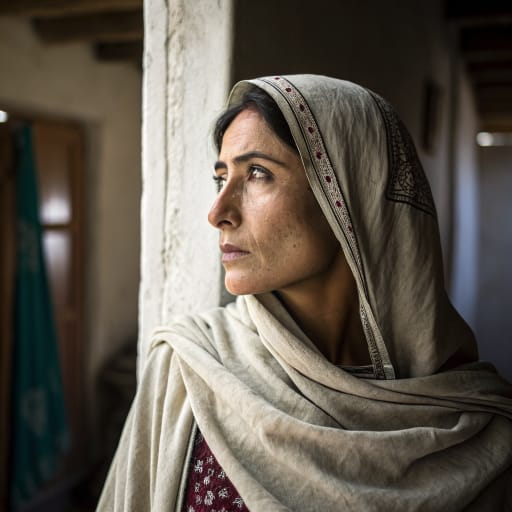
Uzbek Afghan
same region (South Asia)
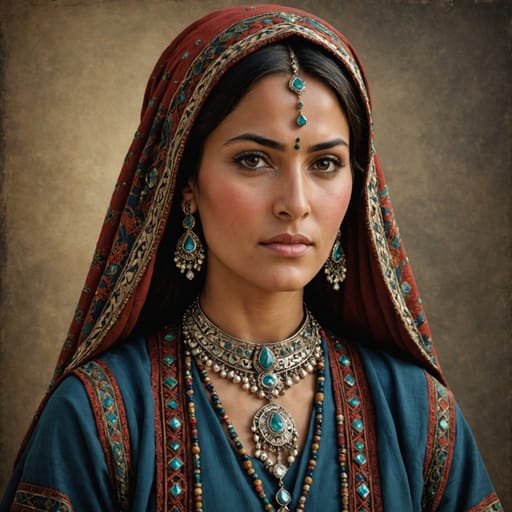
Afghan Aimaq
same region (South Asia)
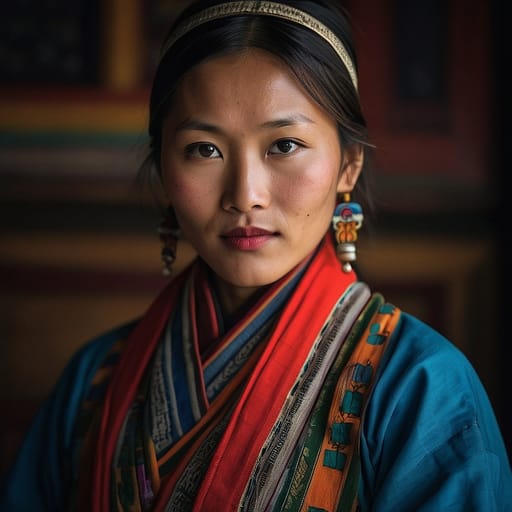
Lhotshampa
same region (South Asia)
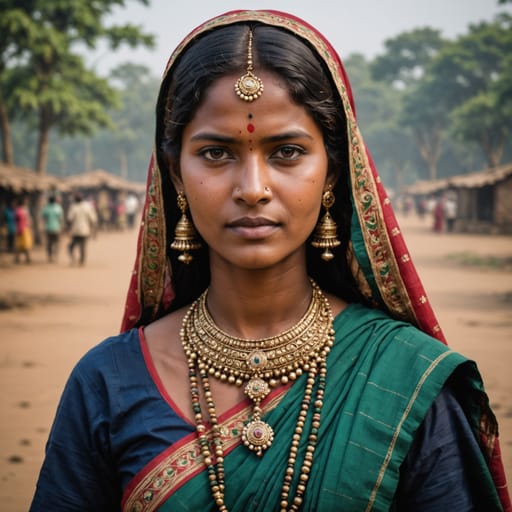
Santhal Bangladeshi
same region (South Asia)
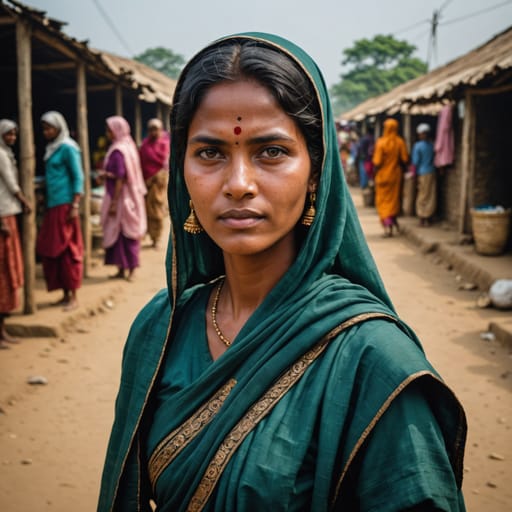
Rohingya Bangladesh
same region (South Asia)
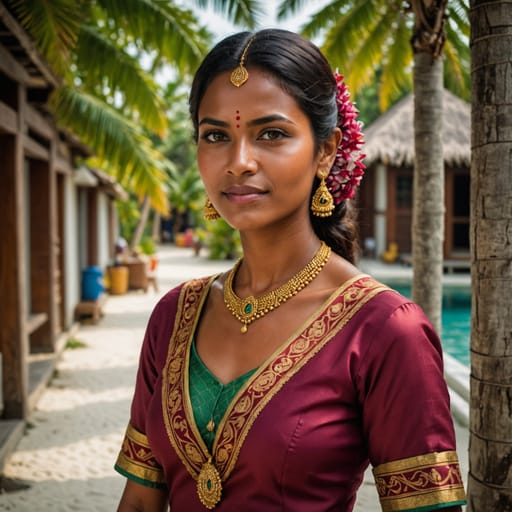
Other Maldives
same region (South Asia)
Aghori Body & Anatomy Reference
Per-feature anatomical profile for AI nude generation: Indo-Aryan / Dravidian South Asian phenotype
Aghori Boobs & Breasts
Aghori boobs follow the Indo-Aryan / Dravidian South Asian profile: medium-to-large cup, moderate-to-full projection. Areolar diameter is usually 32-46mm, and the coloring is medium-brown to dark-brown areolar pigmentation against the wheatish-to-brown skin tone. Breast shape tracks body composition (endomorph-to-mesomorph with fuller hip deposition, mean adult female BMI 22-25), so Aghori breasts tend to be full and soft, generally fuller than the East Asian norm. Expect a forward-set shape, not the smaller East Asian bust profile.
Aghori Ass & Hips
Aghori ass and hip morphology presents as medium-to-full, moderate-to-high projection, classic curvy hip profile, distinctly different from the slim hip profile of East Asian women. The Aghori pelvic profile shows medium-to-wide iliac crests, full gluteal-femoral fat distribution, anchored in the Indo-Aryan / Dravidian South Asian skeletal pattern. Aghori butt shots in adult AI imagery should render the medium-to-full, moderate-to-high projection, classic curvy hip profile silhouette with the overall build (endomorph-to-mesomorph with fuller hip deposition) and the fat distribution typical of the Indo-Aryan / Dravidian South Asian phenotype.
Aghori Vagina & Pussy
Aghori pussy anatomy typically shows medium-brown to dark-brown labial pigmentation, fuller labia minora projection. Pubic hair is usually straight-to-wavy coarse texture, dense distribution. In AI-generated Aghori nudes, labial color should blend into the wheatish to brown skin with a gradual transition, and the hair should keep its straight-to-wavy coarse texture.
Aghori Dicks & Penis
Penis reference for Aghori men: regional mean ~13cm erect, moderate girth. Coloring: medium-brown shaft pigmentation. An accurate Aghori cock in AI imagery matches the surrounding wheatish to brown skin rather than a generic porn default. Circumcision depends on religion and custom, not ancestry.
Aghori Body, Curves & Build
The Aghori figure is generally endomorph-to-mesomorph with fuller hip deposition, with mean adult female BMI 22-25, characteristic of Indo-Aryan / Dravidian South Asian ancestry. AI image tools tend to flatten regional body types into a few stock shapes; here the Aghori build is kept as its own reference.
Aghori Skin Tone & Hair Texture
Skin: wheatish to brown (Fitzpatrick III-V). Hair: straight-to-wavy 1A-2B, dense, dark-brown to black. Both are typical of Indo-Aryan / Dravidian South Asian ancestry. The most common mistake in AI nudes of Aghori women is a body rendered lighter than the face.
Explore phenotype categories
Structured taxonomy with peer-reviewed scales · 22 anatomical categories
Erotic Poses & Sex Positions
From the pose catalog: 219 named positions with reference skeletons
Frequently asked questions about Aghori people
Where is the Aghori homeland?
The Aghori homeland is Varanasi (Manikarnika and Harishchandra ghats), Uttar Pradesh, India in South Asia.
What language do Aghori people speak?
Aghori people primarily speak Indo-Aryan / Hindi, Bhojpuri.
What religion do Aghori people practice?
The predominant religion among Aghori people is Hinduism / Shaivism (Aghori sect).






Make your own Aghori images
Five a day, free, no credits to buy. The studio starts from this group's phenotype data, so you can set body type, pose and style and keep the traits accurate.
Start with Aghori