Help us get this right
Does this portrait look right for Hazaras?
One tap. It takes a second and it is recorded.
17 say it looks right, 8 say it looks off.
Hazaras Erotic
Also known as: Hazara
Hazarajat (Afghanistan)
Islam / Shia Islam
Aimaq Hazara, Hazara Australians
About Hazaras People
The Hazaras are a Persian-speaking people of central Afghanistan, concentrated in the highland region called Hazarajat, a rugged plateau of valleys and mountain passes that sits, geographically and politically, at the country's interior. Their faces tend to read as East Asian to outsiders, a feature that has shaped Hazara history more than almost anything else: it has marked them as visibly different from Pashtun, Tajik, and Uzbek neighbors, and it has fed centuries of speculation about Mongol or Turkic ancestry. The genetic picture is mixed and the historical record is thin, but the perception of difference has done its own work regardless.
They speak Hazaragi, a dialect of Persian that is mutually intelligible with Dari and Iranian Persian but carries a distinct vocabulary, including loanwords from Turkic and Mongolic languages. Most Hazaras are Twelver Shia Muslims in a country whose dominant tradition is Sunni, a sectarian fault line that has cut through their modern history. A smaller number are Ismaili, and the Aimaq Hazara of western Afghanistan are largely Sunni, a reminder that the boundary of who counts as Hazara is not as clean as ethnic maps suggest.
The defining inflection point of the modern era was the late nineteenth century, when Abdur Rahman Khan's central government waged a campaign of conquest and forced displacement against Hazarajat that killed or exiled an enormous share of the population and entrenched a pattern of marginalization that persisted for generations. The twentieth century brought partial reintegration but also recurring violence, including targeted massacres under the Taliban in the late 1990s and bombings of Hazara schools, mosques, and maternity wards in the years since. A substantial diaspora (in Iran, Pakistan, and more recently Australia, where Hazara Australians form one of the larger refugee communities) has grown out of this.
Day-to-day Hazara culture is shaped by the highland economy: subsistence agriculture, livestock, and the long, hard winters of the central mountains. Norouz, the Persian new year, is the major seasonal celebration. Oral poetry and a sung verse form called dambura music, accompanied by a two-stringed long-necked lute of the same name, remain culturally central, and have become, alongside political organizing and a striking emphasis on girls' education within the diaspora, one of the markers of a self-conscious Hazara identity that has hardened in response to the pressure put on it.
Related ethnic groups
Groups that share Hazaras's homeland, region, language, or religious tradition. These are likely candidates for comparative phenotype reference.
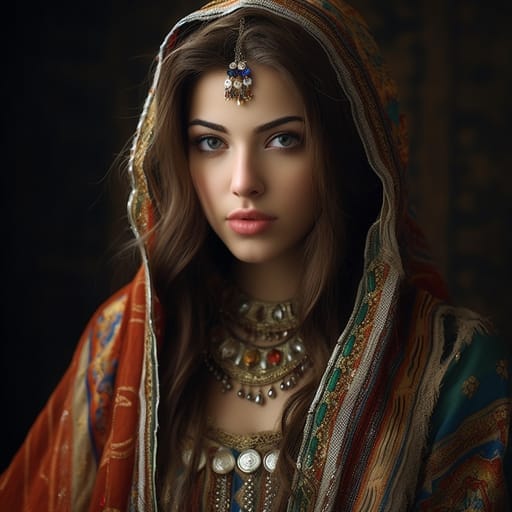
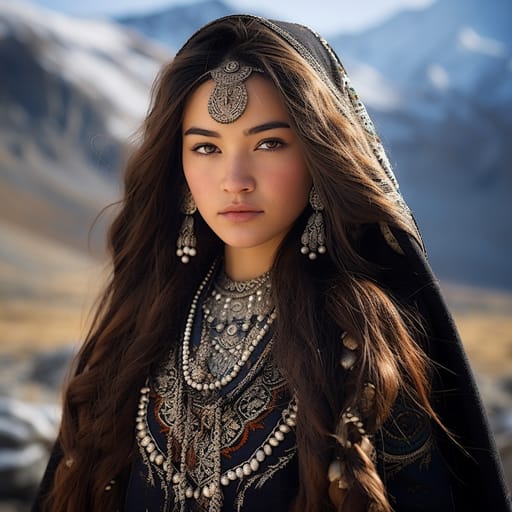
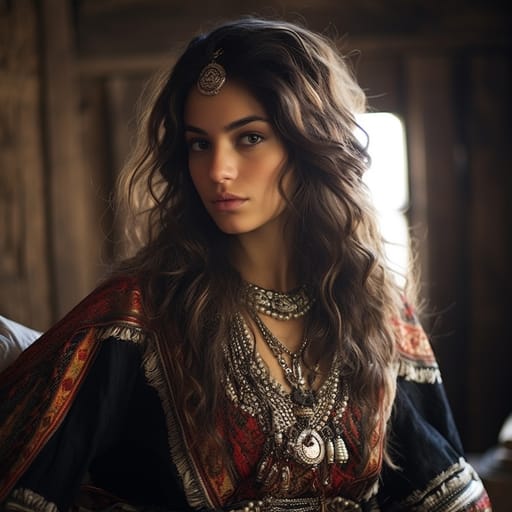
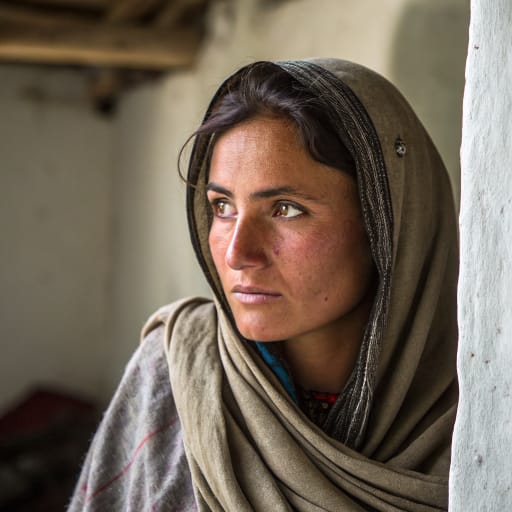
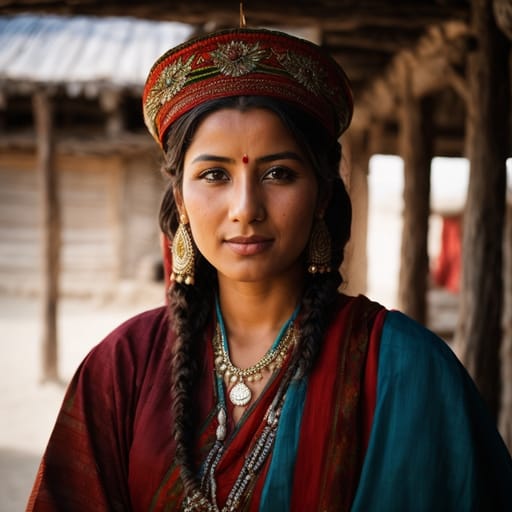
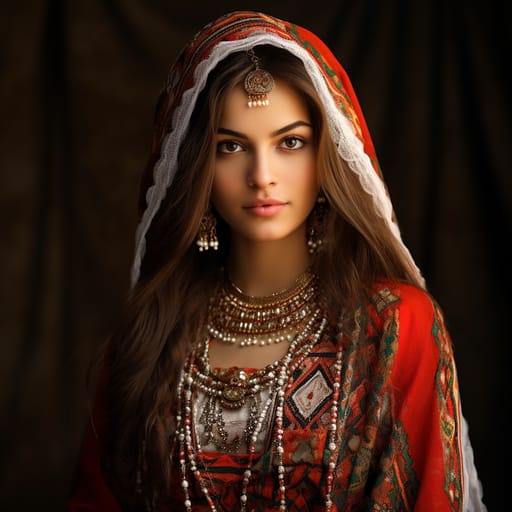
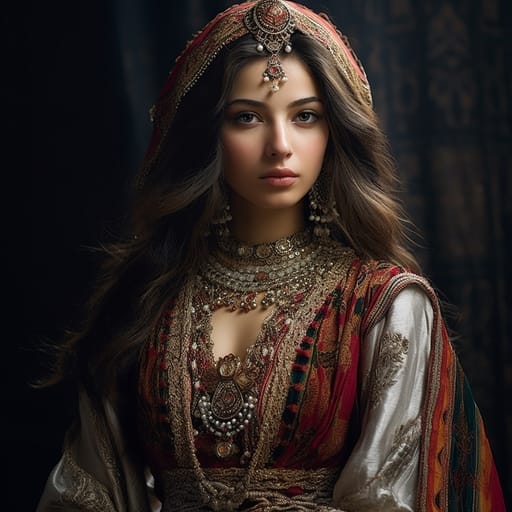
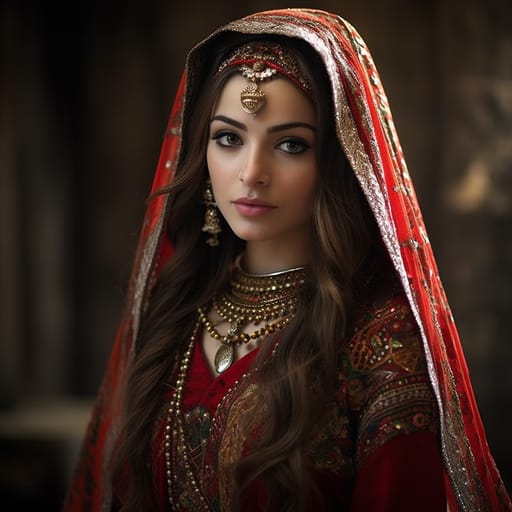
Typical Hazaras Phenotypes
Reference for AI generation: hair, eyes, skin, facial structure, build
Hazaras are the most visibly East-Asian-admixed population in the broader West/Central Asian belt, and that ancestry (genetic studies place a substantial Mongolic and Turkic component alongside Iranian substrate) drives almost every distinctive feature of the phenotype. The face reads as a genuine intermediate between Inner Asian and Iranian-plateau populations rather than as either one.
Hair is overwhelmingly straight to gently wavy, coarse to medium in texture, and near-uniformly black or very dark brown. True curl is rare. Facial hair growth in men ranges from sparse to moderate; fuller beards occur but the dense, early-onset beard typical of Pashtun or Tajik neighbors is less common. Eyes are dark brown to near-black; lighter eyes are uncommon. The eyelid is the single most identifying feature: a partial or full epicanthic fold is present in a clear majority, often paired with a slightly upward-slanting palpebral fissure. The brow ridge sits low and the orbital opening tends to be relatively narrow.
Skin tone runs Fitzpatrick III-IV, typically a wheatish to light olive base with warm yellow or neutral undertones; the high-altitude Hazarajat sun produces visible weathering and tanning gradients on exposed populations. The nose is usually straight to slightly low-bridged with moderate alar width, narrower than South Asian averages, broader than the high thin Iranian nose. Cheekbones are broad, high, and laterally projecting, giving the characteristic flatter midface and rounder overall face shape. Lips are medium in fullness; jaws are relatively gracile, tapering to a moderate chin.
Build is typically short to medium: adult male stature commonly 165-172 cm, with compact, sturdy proportions, shorter limbs relative to torso, and a tendency toward stockiness rather than leanness. Aimaq Hazara of the western Ghor region show somewhat more Iranian-leaning features, including more frequent lighter brown hair and weaker epicanthic folds, while diaspora Hazara Australians display the same core phenotype unchanged from the Afghan baseline, varying mainly through generational admixture.
Hazaras Body & Anatomy Reference
Per-feature anatomical profile for AI nude generation: Central Asian Turkic-Mongolic phenotype
Hazaras Boobs & Breasts
Hazaras tits and boobs run medium cup, moderate projection, the classic Central Asian Turkic-Mongolic bust profile. Hazaras nipples and areolas show medium-brown areolar pigmentation against the tan-to-light-brown skin tone, with areolar diameter typically in the 30-42mm range and forward-set positioning rather than the smaller East Asian bust. Hazaras breasts trend full and modestly projecting, a function of the mesomorph, broader frame than the East Asian norm body habitus and the mean adult female BMI 23-26. For anatomically accurate AI-generated Hazaras nudes the render preserves the medium cup, moderate projection shape, 30-42mm areolas with medium-brown pigmentation, and the torso proportions of the Central Asian Turkic-Mongolic phenotype.
Hazaras Ass & Hips
Hazaras hips and butt usually read as medium, moderate projection, broader hip profile than the East Asian norm. The skeletal base is medium iliac crests, moderate gluteal-femoral fat deposition, the Central Asian Turkic-Mongolic pattern. Set against the slim East Asian narrow-hip profile, the difference is easy to see, and the hip-to-waist ratio is often what identifies Hazaras women in photos.
Hazaras Vagina & Pussy
Expect medium-brown labial pigmentation on Hazaras women, in keeping with Central Asian Turkic-Mongolic ancestry. The pubic hair is straight-to-wavy medium-coarse texture. Coloring should run evenly from the tan to light-brown skin of the thighs to the labia, and Hazaras nude imagery should keep the hair's straight-to-wavy medium-coarse texture.
Hazaras Dicks & Penis
Hazaras dick and penile anatomy in adult AI generation should anchor on the regional reference data: regional mean ~13cm erect, moderate girth, and medium-brown shaft pigmentation. The Hazaras cock profile reflects the Central Asian Turkic-Mongolic population's anthropometric measurements. The shaft pigmentation should track the surrounding tan to light-brown skin tone, and the pubic hair should keep its straight-to-wavy medium-coarse texture in the typical inverted-V escutcheon.
Hazaras Body, Curves & Build
Hazaras body type: mesomorph, broader frame than the East Asian norm, with mean adult female BMI 23-26. This is the typical Central Asian Turkic-Mongolic build. Height range, shoulder-to-hip ratio and fat distribution all follow from it, which is what an accurate Hazaras nude body should show.
Hazaras Skin Tone & Hair Texture
Hazaras skin tone falls in the tan to light-brown (Fitzpatrick III-IV) band, the surface signal most often miscalibrated by generic AI nude generators. Hazaras hair texture is typically straight 1A-1B, dark-brown to black, characteristic of the Central Asian Turkic-Mongolic phenotype. In Hazaras nude renders the skin should hold that band consistently across the body.
Data depth
18/100Coverage of image-grounded phenotype observations · drives AI generation diversity
- Sample size
- 3/40· 1 image
- Image quality
- 0/30· 0% high
- Confidence
- 15/20· mean 0.82
- Source diversity
- 0/10· wikipedia
- ·No image observations yet
- ·Wikipedia-only source, not population-representative
Explore phenotype categories
Structured taxonomy with peer-reviewed scales · 22 anatomical categories
Notable Hazaras People
2 reference figures, sourced from Wikipedia
- Air Marshal, Sharbat Ali Changezi
- Nusrat Fateh Ali Khan, Allegedly)
Erotic Poses & Sex Positions
From the pose catalog: 219 named positions with reference skeletons
Frequently asked questions about Hazaras people
Where is the Hazaras homeland?
The Hazaras homeland is Hazarajat (Afghanistan) in Central Asia.
What language do Hazaras people speak?
Hazaras people primarily speak Indo-European / Iranian / Persian / Hazaragi.
What religion do Hazaras people practice?
The predominant religion among Hazaras people is Islam / Shia Islam.
What does a typical Hazaras woman look like?
Hazara women typically have straight to gently wavy black or very dark brown hair and dark brown eyes, often with a partial or full epicanthic fold. Skin is usually Fitzpatrick III to IV, wheatish to light olive with warm or neutral undertones. Faces tend to be rounder, with broad, high cheekbones, a flatter midface, a straight to slightly low-bridged nose and medium lips, on a compact, sturdy frame.
What are other names for Hazaras people?
Hazaras people are also known as Hazara.






Make your own Hazaras images
Five a day, free, no credits to buy. The studio starts from this group's phenotype data, so you can set body type, pose and style and keep the traits accurate.
Start with Hazaras