Help us get this right
Does this portrait look right for Talysh?
One tap. It takes a second and it is recorded.
1 says it looks right, 0 say it looks off.
Talysh Erotic
Islam / Shia Islam
About Talysh People
The Talysh occupy a strip of land where the Caspian shore meets the Talysh Mountains, straddling the southeastern corner of Azerbaijan and the northwestern provinces of Iran. It is a damp, green country by the standards of the region — subtropical lowlands giving way to forested slopes — and Talysh life has long been shaped by that geography: rice terraces, citrus and tea on the Iranian side, cattle on the uplands, fishing villages along the coast. The political border that runs through their homeland is a nineteenth-century artifact of the Russo-Persian wars, and it cut a single people into two administrative halves whose experiences have diverged ever since.
Their language, Talyshi, belongs to the northwestern branch of Iranian and is a cousin rather than a dialect of Persian — closer in structure to Tati, Gilaki, and the other Caspian languages than to the Farsi spoken in Tehran or the Azerbaijani Turkic spoken by their immediate neighbors. It carries three distinct regional varieties (northern, central, southern) that shade into one another along the coast. In Azerbaijan the language survives largely in the home; schooling and public life run in Azerbaijani, and a Talysh literary tradition that briefly flowered in the 1930s was suppressed and has only partly recovered. In Iran the situation is similar — Persian dominates formal life, and Talyshi persists mainly through oral use in the villages.
Most Talysh are Shia Muslims, which puts them religiously in step with both surrounding Azerbaijanis and Iranians, and the community has not historically defined itself in confessional opposition to its neighbors. Identity here runs on language, landscape, and lineage rather than creed. Older customary practices — wedding cycles, seasonal labor songs, the lore attached to particular springs and groves in the mountains — sit alongside ordinary observance of the religious calendar without much friction.
The Talysh have no state of their own and have rarely sought one; a short-lived Talysh-Mughan autonomous republic declared in 1993 collapsed within months. What persists instead is a quieter assertion of distinctness: cultural associations, a small body of publishing, scattered radio and online media in the language, and a generational argument — familiar to many small peoples wedged between larger ones — about whether to press for recognition or to keep the head down and the language alive at the kitchen table.
Related ethnic groups
Groups that share Talysh's homeland, region, language, or religious tradition. These are likely candidates for comparative phenotype reference.
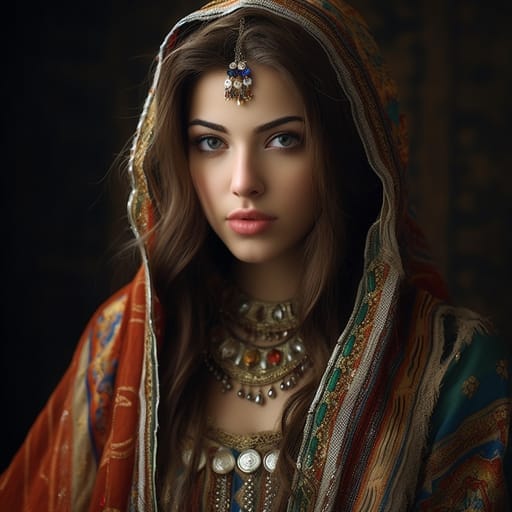
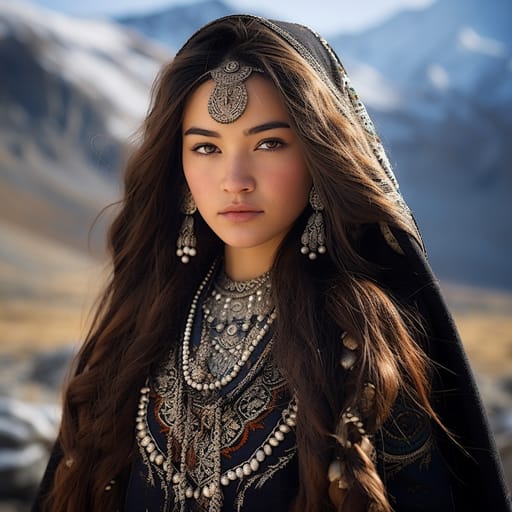
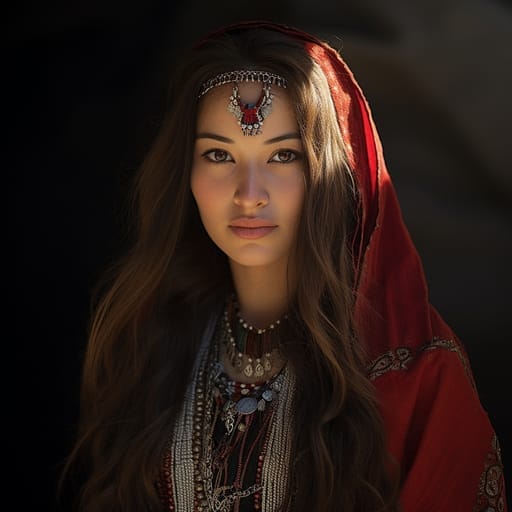
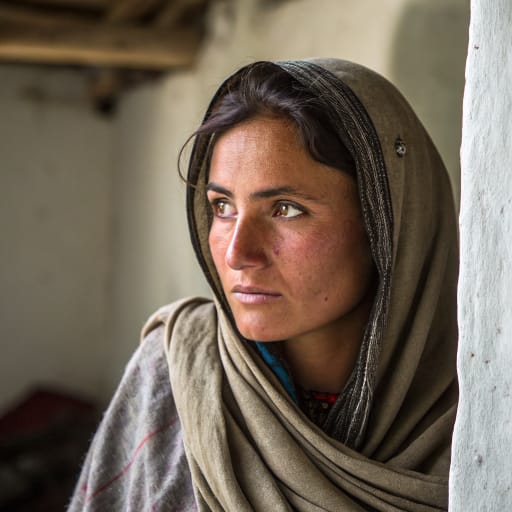
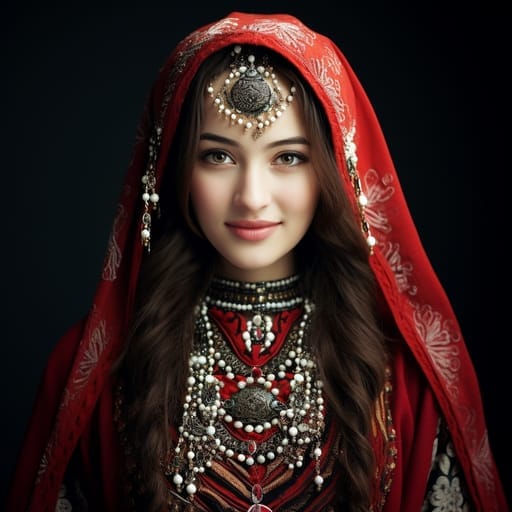
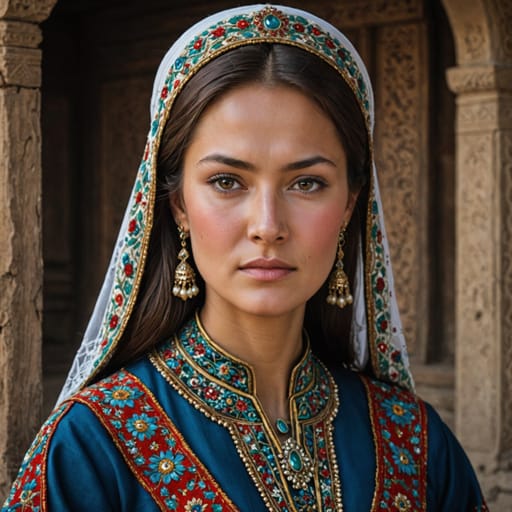
Geographic Distribution: Talysh populations across 1 country
Each row is ranked by the group's share of that country's population, with the source citation drawn from published census and demographic surveys. Click through for the full per-country phenotype profile.
| Country | Share | Source |
|---|---|---|
| Azerbaijan | 1.1% | Azerbaijan 2019 Census, Talysh (~1.1%, ~110,000+); concentrated in southern Azerbaijan along the Iranian border. Iranian-language community |
Typical Talysh Phenotypes
Reference for AI generation: hair, eyes, skin, facial structure, build
The Talysh sit at a phenotypic crossroads between the Caspian Iranian belt and the South Caucasus, and the result is a population that reads as Iranian-Caucasian rather than Turkic, despite living surrounded by Azeri Turkic neighbors. The dominant impression is of a wiry, dark-featured Iranian-plateau type softened by the humidity and forest cover of the Talysh Mountains and Lankaran lowlands.
Hair runs almost uniformly dark — black to dark chestnut brown, with mid-brown shades appearing in the higher mountain villages. Texture is straight to gently wavy; tight curl is rare. Body and facial hair is dense in men, with full beard growth and prominent eyebrows that often nearly meet, a trait shared with neighboring Iranian and Caucasian populations. Greying tends toward salt-and-pepper rather than uniform white.
Eyes are predominantly dark brown to near-black, but a meaningful minority — perhaps one in six — carry hazel, green, or grey-blue, a residue of the broader Caspian gene pool. The epicanthic fold is absent. Eye shape is almond, set deep beneath a strong supraorbital ridge, which gives the characteristic intense, shadowed gaze seen in figures like Hazi Aslanov.
Skin tone clusters in Fitzpatrick III–IV: light olive in winter, tanning quickly to a warm wheat-brown. Undertones lean golden-olive rather than pink. Lowland Lankaran Talysh tend to be a shade darker than the mountain Talysh of the Astara highlands, who often appear notably paler year-round.
The face is typically long and narrow with a high, often convex nose — a strong bridge and a slightly downturned tip are common, more so than in surrounding Azeris. Lips are medium, jawline defined, cheekbones moderately high but not flat or broad in the Turkic manner. Builds are lean and medium-statured: men average roughly 170–174 cm, women 158–162 cm, with low body-fat tendency, narrow shoulders relative to the Caucasian average, and a sinewy rather than bulky musculature shaped by generations of mountain agriculture and Caspian fishing.
Talysh Body & Anatomy Reference
Central Asian Turkic-Mongolic phenotype: anatomy reference for AI nude generation
Talysh Boobs & Breasts
The typical Talysh bust is medium cup, moderate projection, in line with the wider Central Asian Turkic-Mongolic pattern. Areolas usually fall in the 30-42mm range, with medium-brown areolar pigmentation against the tan-to-light-brown skin tone. Compared with the smaller East Asian bust, Talysh breasts sit forward and are generally full and modestly projecting. A faithful AI render of Talysh tits keeps that shape and areola size.
Talysh Ass & Hips
Butt shape among Talysh women: medium, moderate projection, broader hip profile than the East Asian norm, over medium iliac crests, moderate gluteal-femoral fat deposition. This follows Central Asian Turkic-Mongolic ancestry and looks quite unlike the slim East Asian narrow-hip profile. An accurate Talysh ass in adult AI imagery keeps both the silhouette and the overall build (mesomorph, broader frame than the East Asian norm) instead of a generic average.
Talysh Vagina & Pussy
Vulvar anatomy among Talysh women: medium-brown labial pigmentation. Pubic hair tends to be straight-to-wavy medium-coarse texture, in the usual inverted-triangle pattern. Both follow Central Asian Turkic-Mongolic pigmentation, which is why Talysh pussy renders should not fall back on a pale, sparse Western template.
Talysh Dicks & Penis
The Talysh cock profile, from Central Asian Turkic-Mongolic anthropometric data: regional mean ~13cm erect; moderate girth; medium-brown shaft pigmentation. Pubic hair has a straight-to-wavy medium-coarse texture and forms the usual inverted-V pattern. Whether Talysh men are circumcised follows religious and cultural practice rather than phenotype.
Talysh Body, Curves & Build
Build and curves among Talysh women follow the Central Asian Turkic-Mongolic pattern: mesomorph, broader frame than the East Asian norm, mean adult female BMI 23-26. Proportions matter as much as skin tone, so Talysh figures should keep their regional height and limb ratios.
Talysh Skin Tone & Hair Texture
The Talysh skin range is tan to light-brown (Fitzpatrick III-IV), and hair tends to be straight 1A-1B, dark-brown to black. That combination marks the Central Asian Turkic-Mongolic phenotype, and skin tone is the trait AI generators most often get wrong for Talysh women.
Data depth
32/100Coverage of image-grounded phenotype observations · drives AI generation diversity
- Sample size
- 12/40· 5 images
- Image quality
- 10/30· 20% high
- Confidence
- 10/20· mean 0.59
- Source diversity
- 0/10· wikipedia
- ·Small sample (n<10)
- ·Mostly low-quality source images
- ·Wikipedia-only source, not population-representative
Observed Distribution: Image Sample
Empirical observations from analyzed photographs · supplementary signal, not population truth
Sample: 5 images analyzed (5 wikipedia). Quality: 1 high, 3 medium, 1 low, 0 very_low. Avg analyzer confidence: 0.59.
Skin tone (Fitzpatrick): II (20%), III (60%), unclear (20%)
Hair color: black (60%), gray/white (40%)
Hair texture: straight (40%), wavy (40%), covered (20%)
Eye color: dark brown (60%), unclear (40%)
Epicanthic fold: 0% present, 80% absent, 20% unclear
Caveats: Sample size 5 is small, so the observed distribution should be treated as suggestive, not definitive. Quality skews toward older or low-resolution photos; phenotype detail may be lossy. Sample is 100% Wikipedia notable people, which skews toward male, public-life, and modern figures, not population-representative.
Last aggregated: May 7, 2026
Explore phenotype categories
Structured taxonomy with peer-reviewed scales · 22 anatomical categories
Notable Talysh People
5 reference figures, sourced from Wikipedia
- Zahed Gilani, probably)
- Zulfugar Ahmedzade, 1898-1942)
- Nasirli Muzaffar, 1902-1944)
- Hazi Aslanov, 1910-1945)
- Fakhraddin Aboszoda, 1956-2020)
Erotic Poses & Sex Positions
From the pose catalog: 219 named positions with reference skeletons
Frequently asked questions about Talysh people
Where is the Talysh homeland?
The Talysh homeland is Azerbaijan, Iran in Central Asia.
What countries do Talysh people live in?
Talysh populations are documented across 1 country: Azerbaijan.
What language do Talysh people speak?
Talysh people primarily speak Indo-European / Iranian / Talysh.
What religion do Talysh people practice?
The predominant religion among Talysh people is Islam / Shia Islam.






Make your own Talysh images
Five a day, free, no credits to buy. The studio starts from this group's phenotype data, so you can set body type, pose and style and keep the traits accurate.
Start with Talysh