Help us get this right
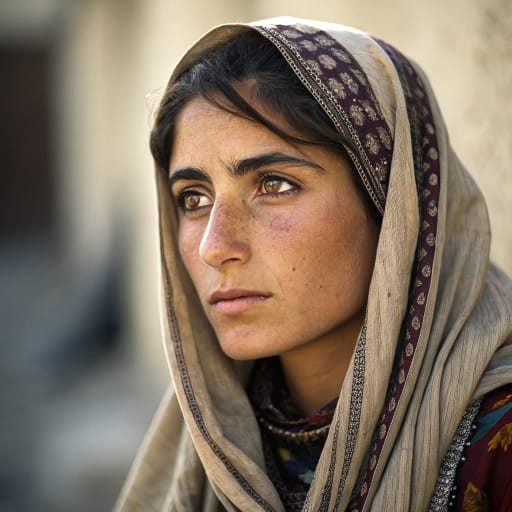
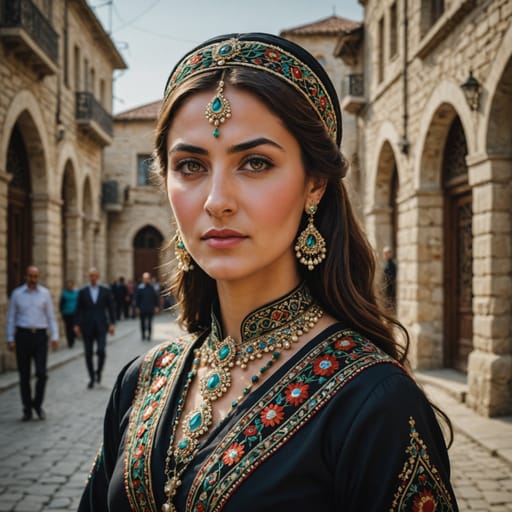
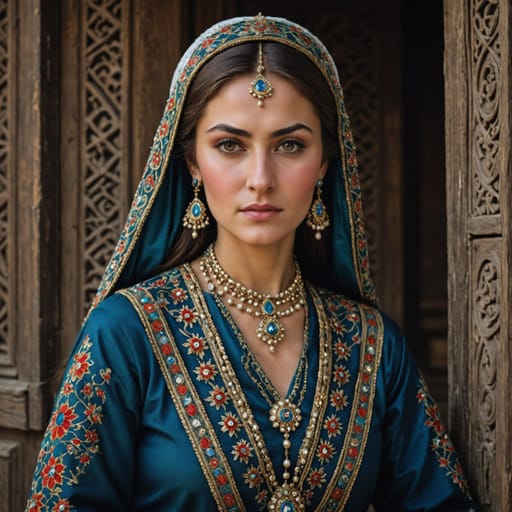
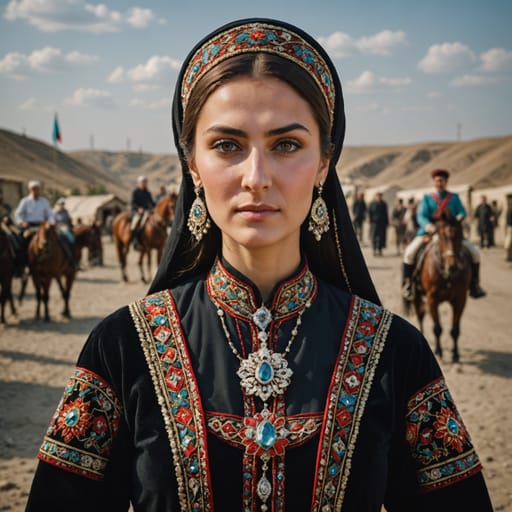
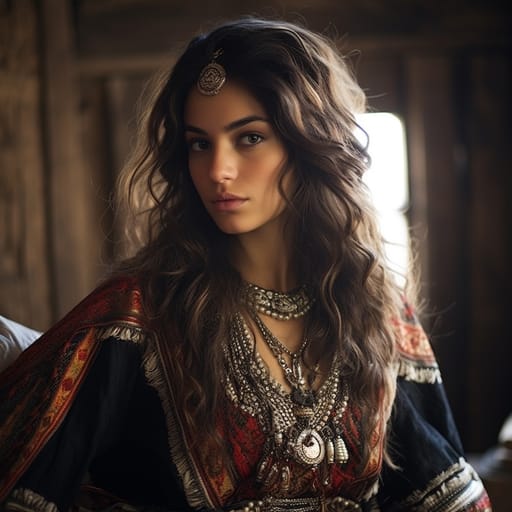
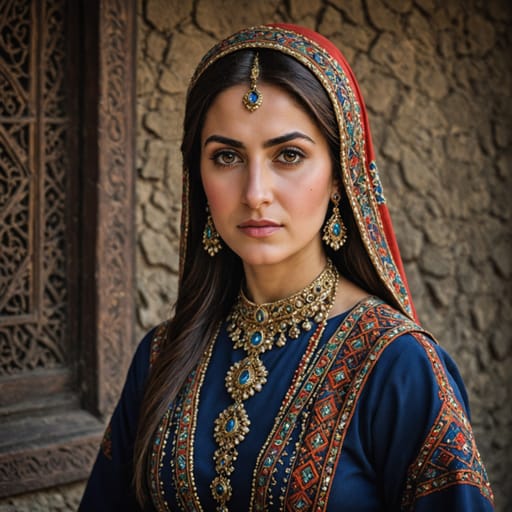
Does this portrait look right for Azerbaijani?
Nobody has judged this one yet. You would be the first.

Azerbaijan
AZWestern Asia
Azerbaijan is home to 6 documented ethnic groups in Western Asia, led by Azerbaijani (~92%), Azerbaijan Other (~4%), Lezgian (~2%), Russian Azerbaijan (~1%). This page blends their phenotype and demographic data into one weighted reference: skin tone, facial features, hair texture and build, drawn from published census and ancestry sources.
Demographic Composition
Composition weights are derived from self-identification in published census and demographic surveys. Each row links to the source ethnic-group atlas page.
| Ethnic group | Weight | Source |
|---|---|---|
 Azerbaijani Azerbaijani | 91.6% | State Statistical Committee of Azerbaijan 2019 Census; ethnic Azerbaijanis (~91.6%, ~9.2M+ of ~10M total). The dominant ethnic group, predominantly Shia Muslim (~65% of the broader Azerbaijani population) plus substantial Sunni Muslim sub-population. Azerbaijani is part of the Oghuz Turkic family, closely related to Turkish and Turkmen |
 Azerbaijan Other Azerbaijan Other | 3.9% | Azerbaijan 2019 Census residual; includes Avar, Tatar, Tat, Ukrainian, Tsakhur, Georgian, Kurd, plus other smaller groups |
 Lezgian Lezgian | 2.0% | Azerbaijan 2019 Census, Lezgian (~2.0%, ~200,000+); concentrated in northern Azerbaijan along the Russian Dagestan border. Northeast Caucasian / Lezgic language family. Cross-border population shared with Russia |
 Russian Azerbaijan Russian Azerbaijan | 1.3% | Azerbaijan 2019 Census, Russian (~1.3%, ~120,000+); declined substantially from ~6% in 1989 through post-1991 emigration |
 Talysh Talysh | 1.1% | Azerbaijan 2019 Census, Talysh (~1.1%, ~110,000+); concentrated in southern Azerbaijan along the Iranian border. Iranian-language community |
 Armenian Azerbaijan Armenian Azerbaijan | 0.1% | Azerbaijan 2019 Census, Armenian (~0.1%, ~120,000 historic Armenian-Azerbaijani population was largely expelled or fled during the 1988-1994 First Nagorno-Karabakh War; current Azerbaijani-Armenian population is approximately 12,000 predominantly in the Nagorno-Karabakh region prior to the 2020-2023 displacement) |
Azerbaijan Phenotype Profile
Azerbaijan's population is dominated by Azerbaijanis (~92%) with smaller Lezgian (~2%), Russian (~1.3%), Talysh (~1.1%), and other (~4%) communities. The country's demographic structure reflects the Oghuz Turkic migration into the Caucasus and Iranian Azerbaijan during the 11th-13th c. CE plus substantial Caucasus / Iranian Indigenous source-population substrate. The post-1988 First Nagorno-Karabakh War produced the demographic restructuring that expelled most ethnic Armenians from Azerbaijan plus most ethnic Azerbaijanis from Armenia; the 2020 and 2023 conflicts have completed the demographic separation of the two countries.
Genome-wide studies place Azerbaijani populations as showing predominantly West Eurasian / Iranian-Caucasus source-population ancestry with smaller East Asian / Mongol-Turkic admixture. Skin tone across the population spans Fitzpatrick II-IV with III the modal value. Hair predominantly straight to wavy black to dark brown. Eye color is predominantly brown with elevated frequencies of hazel, green, and rarely lighter variants. Facial features track West Asian / Iranian-Caucasus source populations.
The substantial cross-border Iranian Azerbaijani population (~16-18M+ in Iran) is approximately twice the size of the source-country Azerbaijani population, reflecting the historical Iranian-Azerbaijani heartland (East Azerbaijan, West Azerbaijan, Ardabil provinces of Iran) being south of the Aras River that became the Russian-Iranian border under the 1828 Treaty of Turkmenchay.
Azerbaijan Body & Anatomy Reference
Per-feature anatomical profile for AI nude generation: Levantine / Mediterranean Middle Eastern phenotype dominant in Azerbaijan
Azerbaijan Women: Boobs & Breasts
Azerbaijan women's tits and boobs reflect the medium-to-large cup, full, moderate-to-high projection Levantine / Mediterranean Middle Eastern bust profile dominant in the Azerbaijan demographic composition. Azerbaijan nipples and areolas show medium-brown to dark-brown areolar pigmentation against the olive-to-light-brown skin tone, with areolar diameter typically in the 32-46mm range, distinct from the the smaller East Asian bust profile. Azerbaijan breast morphology trends full and soft, fuller projection than the North-African Berber norm, a function of the mesomorph with fuller hip-and-bust deposition body habitus and mean adult female BMI 25-28. For anatomically-accurate AI-generated Azerbaijan nude women the render should preserve: medium-to-large cup, full, moderate-to-high projection shape, 32-46mm areolas with regional pigmentation, and the torso proportions of the Levantine / Mediterranean Middle Eastern phenotype.
Azerbaijan Women: Ass & Hips
Azerbaijan women's ass and hip morphology presents as medium-to-full, moderate projection, broader hip profile, distinctly different from the slim East Asian narrow-hip profile. Azerbaijan pelvic profile shows medium-to-wide iliac crests, fuller gluteal-femoral deposition, anchored in the Levantine / Mediterranean Middle Eastern skeletal pattern that dominates the Azerbaijan ethnic composition. Azerbaijan butt shots in adult AI imagery should render the medium-to-full, moderate projection, broader hip profile silhouette with the mesomorph with fuller hip-and-bust deposition build and the gluteal-femoral fat distribution typical of the Levantine / Mediterranean Middle Eastern phenotype rather than defaulting to a globally-averaged shape that generic AI generators produce.
Azerbaijan Women: Vagina & Pussy
Azerbaijan women's pussy and vulvar anatomy presents medium-brown to dark-brown labial pigmentation, fuller labia minora, consistent with the Levantine / Mediterranean Middle Eastern phenotype's pigmentation pattern dominant in Azerbaijan. Azerbaijan pubic hair is typically wavy-to-coiled medium-coarse dark texture, dense distribution, distributed in the inverted-triangle pattern with regional-typical density. AI-generated Azerbaijan nude imagery should preserve the medium-brown to dark-brown labial pigmentation and the wavy-to-coiled medium-coarse dark texture hair texture rather than defaulting to a Western-European pink-and-sparse template. For anatomically-accurate Azerbaijan pussy renders the labial pigmentation should match the surrounding olive to medium-brown skin tone of the Levantine / Mediterranean Middle Eastern phenotype.
Azerbaijan Men: Dicks & Penis
Azerbaijan men's dick and penile anatomy in adult AI generation should anchor on the regional reference data: regional mean ~14cm erect, moderate-to-above-average girth, and medium-brown shaft pigmentation. Azerbaijan cock profile reflects the Levantine / Mediterranean Middle Eastern ancestral population's anthropometric measurements rather than a globally-averaged Western-pornography default. For anatomically-accurate Azerbaijan nude male imagery the shaft pigmentation should track the surrounding olive to medium-brown skin tone, with continuous glans-to-shaft pigmentation transition and the wavy-to-coiled medium-coarse dark texture pubic-hair texture distributed in the typical inverted-V escutcheon. Circumcision status across Azerbaijan men varies by religious and cultural tradition rather than ancestral phenotype.
Azerbaijan People: Body, Curves & Build
Azerbaijan body type and overall build presents as mesomorph with fuller hip-and-bust deposition, with mean adult female BMI 25-28: the characteristic Levantine / Mediterranean Middle Eastern habitus dominant in the Azerbaijan demographic composition. Azerbaijan curves and proportions in adult AI imagery should preserve the regional skeletal frame (height, shoulder-to-hip ratio, limb proportions) rather than scaling to a Western-European mesomorph default. The Azerbaijan nude female form, when rendered with anatomical fidelity, shows the height range, frame width, and adipose distribution pattern typical of the Levantine / Mediterranean Middle Eastern phenotype. Generic AI image generators tend to collapse regional body types into a few default shapes; the Ethnic Erotic phenotype-anchored approach preserves the Azerbaijan build as its own reference category.
Azerbaijan People: Skin Tone & Hair Texture
Azerbaijan skin tone falls in the olive to medium-brown (Fitzpatrick III-V) band, the surface signal most often miscalibrated by generic AI nude generators trained on Western-photographic datasets. Azerbaijan hair texture is typically wavy-to-curly 2B-3B, predominantly dark-brown to black, characteristic of the Levantine / Mediterranean Middle Eastern phenotype. For anatomically-accurate Azerbaijan nude renders the skin should hold the Fitzpatrick band consistently across body surface rather than showing the lighter-than-face body shading that AI generators default to. Azerbaijan hair pigmentation and texture on body, pubic, and head should match across the figure rather than mixing textures (a common AI artefact).
A descriptive view, not a claim about individuals
This page shows a weighted aggregate of phenotype observations across the Azerbaijan population, based on demographic composition from published census and ancestry sources. Phenotypes within any country are far more varied than the aggregate suggests; this is a descriptive reference, not a deterministic claim about any individual. For source-level detail on individual ethnic groups, see the constituent atlas pages linked below.
Methodology Notes
Composition weights are derived from the State Statistical Committee of Azerbaijan 2019 Census, the most recent comprehensive Azerbaijani census. Caveats: (1) the post-1988 First Nagorno-Karabakh War, the 2020 Second Nagorno-Karabakh War, and the September 2023 Azerbaijani offensive in Nagorno-Karabakh have produced substantial demographic restructuring with the displacement of approximately 100,000+ Armenians from Nagorno-Karabakh; (2) the cross-border Iranian Azerbaijani population (~16-18M+) substantially exceeds the source-country Azerbaijani population; (3) the historic Armenian-Azerbaijani community (~390,000 in 1989) is now nearly extinct in Azerbaijan; (4) the Russian-Azerbaijani population has declined substantially from 1989 peak through emigration; (5) the small Mountain Jewish community has been substantially reduced through post-1991 emigration to Israel.
Primary Sources
- 1.State Statistical Committee of the Republic of Azerbaijan. 2019 Population Census of Azerbaijan. Baku: ArDSK; 2020.
- 2.Swietochowski T. Russia and Azerbaijan: A Borderland in Transition. Columbia University Press; 1995.
- 3.Yunusbayev B, Metspalu M, Järve M, et al. The Caucasus as an asymmetric semipermeable barrier to ancient human migrations. Mol Biol Evol. 2012;29(1):359-365.
- 4.de Waal T. Black Garden: Armenia and Azerbaijan Through Peace and War (rev ed). NYU Press; 2013.
- 5.Souleimanov E. Understanding Ethnopolitical Conflict: Karabakh, South Ossetia, and Abkhazia Wars Reconsidered. Palgrave Macmillan; 2013.
Other countries in Western Asia
Aggregate phenotype references for neighbouring Western Asia nations, weighted by demographic composition.