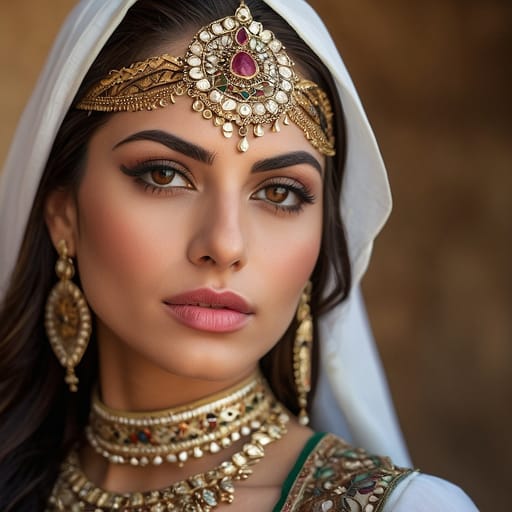
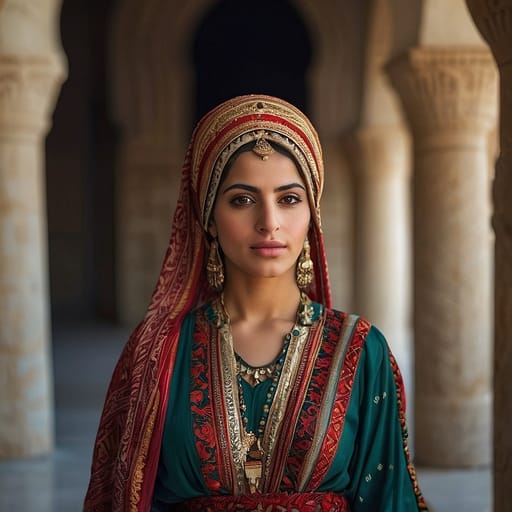
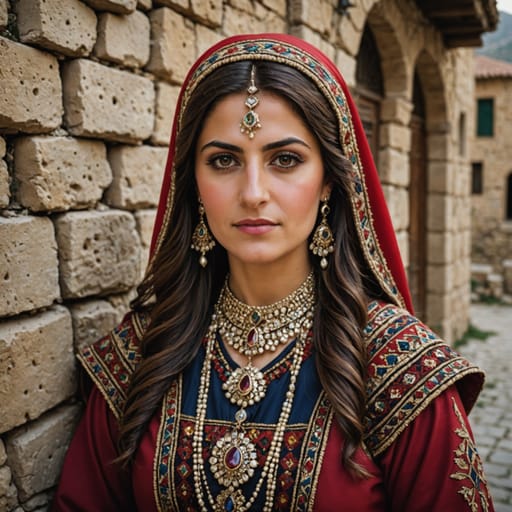
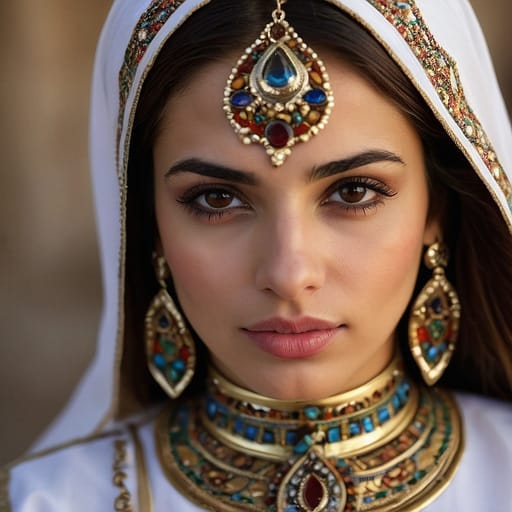
Help us get this right
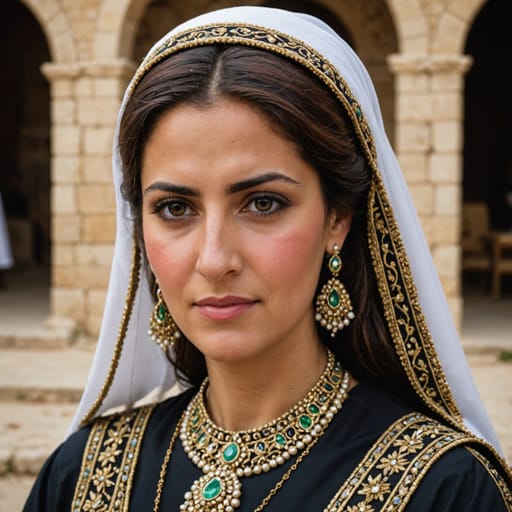
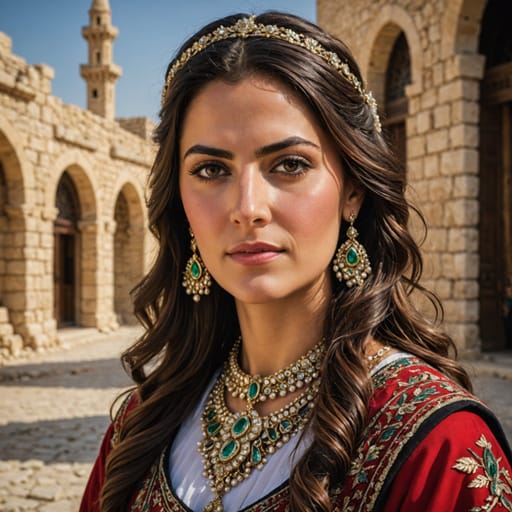
Does this portrait look right for Lebanese Arab?
One tap. It takes a second and it is recorded.
0 say it looks right, 1 says it looks off.
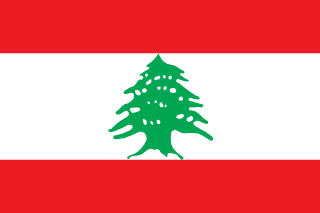

Lebanon
LBWestern Asia
Lebanon is home to 6 documented ethnic groups in Western Asia, led by Lebanese Arab (~87%), Palestinian (~5%), Armenian Lebanon (~4%), Druze (~3%). This page blends their phenotype and demographic data into one weighted reference: skin tone, facial features, hair texture and build, drawn from published census and ancestry sources.
Demographic Composition
Composition weights are derived from self-identification in published census and demographic surveys. Each row links to the source ethnic-group atlas page.
| Ethnic group | Weight | Source |
|---|---|---|
 Lebanese Arab Lebanese Arab | 87.0% | Estimated; Lebanon has not conducted a comprehensive census since 1932 — composition derived from international demographic estimates plus academic sources. Lebanese Arab (~87%) is the dominant ethno-linguistic identification, divided across multiple religious-sectarian sub-populations (Sunni Muslim ~31%, Shia Muslim ~31%, Maronite Catholic ~21%, Greek Orthodox ~8%, Druze separately enumerated, plus Greek Catholic, Protestant, Armenian, plus other Christian sub-populations) |
 Palestinian Palestinian | 5.0% | UNRWA Lebanon plus academic estimates; Palestinian refugees in Lebanon (~5%, ~470,000+ registered with UNRWA, with substantially smaller actually-resident population estimated at ~175,000-250,000 due to undocumented departures). Concentrated in 12 official refugee camps with substantial restrictions on civil rights, employment, and property ownership |
 Armenian Lebanon Armenian Lebanon | 4.0% | Estimates; Lebanese Armenians (~4%, ~150,000+); descendants of post-1915 Armenian Genocide survivors who settled in Lebanon plus subsequent immigration. Concentrated in Bourj Hammoud (the historic Armenian-Lebanese neighborhood east of Beirut) plus other communities. Predominantly Armenian Apostolic Christian |
 Druze Druze | 3.0% | Estimates; Lebanese Druze (~3%, ~280,000+); concentrated in the Mount Lebanon governorate plus the Chouf, Aley, plus Hasbaya regions. The largest national Druze population (vs Syria, Israel) |
 Syrian Lebanon Syrian Lebanon | 2.0% | UNHCR Lebanon plus academic estimates; Syrian refugees in Lebanon (~2%, ~785,000+ registered with UNHCR as of 2024 plus substantial unregistered). The post-2011 Syrian refugee population has produced substantial demographic disruption — Lebanon hosts the highest per-capita refugee population globally |
 Lebanon Other Lebanon Other | 2.0% | Residual; includes Lebanese-Kurd (small community), Iraqi refugees, Egyptian and Syrian and South-Asian migrant workers, Filipino domestic workers, Ethiopian and Sri Lankan domestic workers (substantial population), plus other smaller groups |
Lebanon Phenotype Profile
Lebanon has a distinctive demographic structure with substantial religious-sectarian diversity — the Lebanese-Arab majority (~87%) is itself divided across multiple religious-sectarian sub-populations (Sunni, Shia, Maronite, Greek Orthodox, Greek Catholic, Protestant) plus the substantial Armenian (~4%), Palestinian (~5%, refugees), Druze (~3%), Syrian (~2%, refugees), and other (~2%) communities. The country's demographic structure reflects approximately 5,000+ years of population processes anchored on the broader Levantine demographic substrate (Phoenician, Aramean, Greek, Roman, Byzantine source populations) plus the post-7th-c. Arabization plus the substantial 19th-c. and 20th-c. emigration history (the Lebanese global diaspora of ~10-14M+ substantially exceeds the source-country population). The 1975-1990 Lebanese Civil War produced substantial demographic disruption; the post-2011 Syrian refugee inflow has produced further disruption.
Genome-wide studies (Haber et al. 2017) place Lebanese populations as showing substantial continuity with Bronze-Age Phoenician / Levantine source populations — Lebanese Christians, Muslims, and Druze populations show subtle but detectable population-genetic distinctness reflecting the historical religious-endogamous marriage patterns. Skin tone Fitzpatrick II-IV modal III, hair predominantly wavy to curly black to dark brown, characteristic Levantine features with substantial light-eye frequencies in some sub-populations. Adult Lebanese male mean stature approximately 173-176 cm.
Lebanon Body & Anatomy Reference
Per-feature anatomical profile for AI nude generation: Levantine / Mediterranean Middle Eastern phenotype dominant in Lebanon
Lebanon Women: Boobs & Breasts
Lebanon women's tits and boobs reflect the medium-to-large cup, full, moderate-to-high projection Levantine / Mediterranean Middle Eastern bust profile dominant in the Lebanon demographic composition. Lebanon nipples and areolas show medium-brown to dark-brown areolar pigmentation against the olive-to-light-brown skin tone, with areolar diameter typically in the 32-46mm range, distinct from the the smaller East Asian bust profile. Lebanon breast morphology trends full and soft, fuller projection than the North-African Berber norm, a function of the mesomorph with fuller hip-and-bust deposition body habitus and mean adult female BMI 25-28. For anatomically-accurate AI-generated Lebanon nude women the render should preserve: medium-to-large cup, full, moderate-to-high projection shape, 32-46mm areolas with regional pigmentation, and the torso proportions of the Levantine / Mediterranean Middle Eastern phenotype.
Lebanon Women: Ass & Hips
Lebanon women's ass and hip morphology presents as medium-to-full, moderate projection, broader hip profile, distinctly different from the slim East Asian narrow-hip profile. Lebanon pelvic profile shows medium-to-wide iliac crests, fuller gluteal-femoral deposition, anchored in the Levantine / Mediterranean Middle Eastern skeletal pattern that dominates the Lebanon ethnic composition. Lebanon butt shots in adult AI imagery should render the medium-to-full, moderate projection, broader hip profile silhouette with the mesomorph with fuller hip-and-bust deposition build and the gluteal-femoral fat distribution typical of the Levantine / Mediterranean Middle Eastern phenotype rather than defaulting to a globally-averaged shape that generic AI generators produce.
Lebanon Women: Vagina & Pussy
Lebanon women's pussy and vulvar anatomy presents medium-brown to dark-brown labial pigmentation, fuller labia minora, consistent with the Levantine / Mediterranean Middle Eastern phenotype's pigmentation pattern dominant in Lebanon. Lebanon pubic hair is typically wavy-to-coiled medium-coarse dark texture, dense distribution, distributed in the inverted-triangle pattern with regional-typical density. AI-generated Lebanon nude imagery should preserve the medium-brown to dark-brown labial pigmentation and the wavy-to-coiled medium-coarse dark texture hair texture rather than defaulting to a Western-European pink-and-sparse template. For anatomically-accurate Lebanon pussy renders the labial pigmentation should match the surrounding olive to medium-brown skin tone of the Levantine / Mediterranean Middle Eastern phenotype.
Lebanon Men: Dicks & Penis
Lebanon men's dick and penile anatomy in adult AI generation should anchor on the regional reference data: regional mean ~14cm erect, moderate-to-above-average girth, and medium-brown shaft pigmentation. Lebanon cock profile reflects the Levantine / Mediterranean Middle Eastern ancestral population's anthropometric measurements rather than a globally-averaged Western-pornography default. For anatomically-accurate Lebanon nude male imagery the shaft pigmentation should track the surrounding olive to medium-brown skin tone, with continuous glans-to-shaft pigmentation transition and the wavy-to-coiled medium-coarse dark texture pubic-hair texture distributed in the typical inverted-V escutcheon. Circumcision status across Lebanon men varies by religious and cultural tradition rather than ancestral phenotype.
Lebanon People: Body, Curves & Build
Lebanon body type and overall build presents as mesomorph with fuller hip-and-bust deposition, with mean adult female BMI 25-28: the characteristic Levantine / Mediterranean Middle Eastern habitus dominant in the Lebanon demographic composition. Lebanon curves and proportions in adult AI imagery should preserve the regional skeletal frame (height, shoulder-to-hip ratio, limb proportions) rather than scaling to a Western-European mesomorph default. The Lebanon nude female form, when rendered with anatomical fidelity, shows the height range, frame width, and adipose distribution pattern typical of the Levantine / Mediterranean Middle Eastern phenotype. Generic AI image generators tend to collapse regional body types into a few default shapes; the Ethnic Erotic phenotype-anchored approach preserves the Lebanon build as its own reference category.
Lebanon People: Skin Tone & Hair Texture
Lebanon skin tone falls in the olive to medium-brown (Fitzpatrick III-V) band, the surface signal most often miscalibrated by generic AI nude generators trained on Western-photographic datasets. Lebanon hair texture is typically wavy-to-curly 2B-3B, predominantly dark-brown to black, characteristic of the Levantine / Mediterranean Middle Eastern phenotype. For anatomically-accurate Lebanon nude renders the skin should hold the Fitzpatrick band consistently across body surface rather than showing the lighter-than-face body shading that AI generators default to. Lebanon hair pigmentation and texture on body, pubic, and head should match across the figure rather than mixing textures (a common AI artefact).
A descriptive view, not a claim about individuals
This page shows a weighted aggregate of phenotype observations across the Lebanon population, based on demographic composition from published census and ancestry sources. Phenotypes within any country are far more varied than the aggregate suggests; this is a descriptive reference, not a deterministic claim about any individual. For source-level detail on individual ethnic groups, see the constituent atlas pages linked below.
Methodology Notes
Composition weights are estimated based on international demographic sources. Lebanon has not conducted a comprehensive census since 1932 — the political-sectarian sensitivity of religious demographic distribution has prevented census enumeration that would update the (substantially-outdated) 1932 census distribution that continues to inform the Lebanese sectarian-confessional political system. Caveats: (1) the lack of recent census means demographic estimates are approximate; (2) the substantial post-1975 emigration has substantially reduced source-country Lebanese population from earlier peaks; (3) the post-2011 Syrian refugee inflow has produced substantial demographic disruption; (4) the substantial Lebanese global diaspora exceeds the source-country population.
Primary Sources
- 1.Central Administration of Statistics Lebanon. Lebanon Demographic Statistics 2024. Beirut: CAS; 2024.
- 2.Haber M, Doumet-Serhal C, Scheib C, et al. Continuity and admixture in the last five millennia of Levantine history from ancient Canaanite and present-day Lebanese genome sequences. Am J Hum Genet. 2017;101(2):274-282.
- 3.Salibi K. A House of Many Mansions: The History of Lebanon Reconsidered. University of California Press; 1988.
- 4.Traboulsi F. A History of Modern Lebanon (2nd ed). Pluto Press; 2012.
- 5.United Nations High Commissioner for Refugees (UNHCR). Syria Regional Refugee Response: Lebanon. Geneva: UNHCR; 2024.
Other countries in Western Asia
Aggregate phenotype references for neighbouring Western Asia nations, weighted by demographic composition.