Help us get this right
Does this portrait look right for Armenian?
One tap. It takes a second and it is recorded.
2 say it looks right, 0 say it looks off.
Armenian Erotic
Armenia and global diaspora
About Armenian People
Related ethnic groups
Groups that share Armenian's homeland, region, language, or religious tradition. These are likely candidates for comparative phenotype reference.
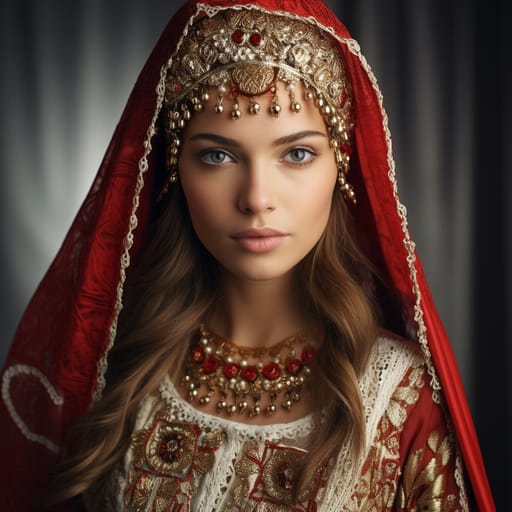
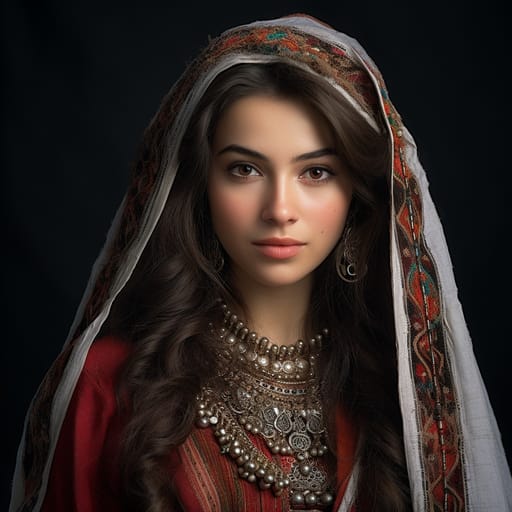
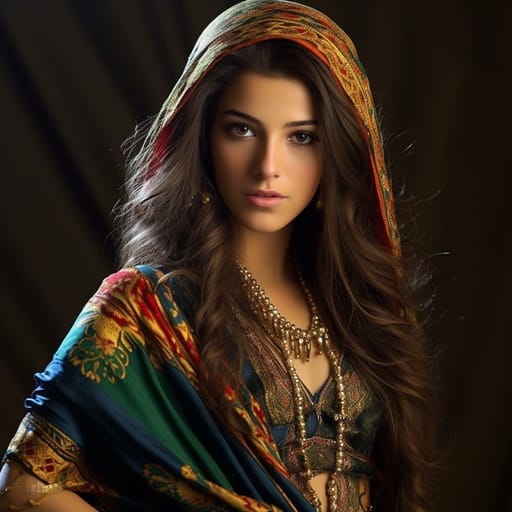
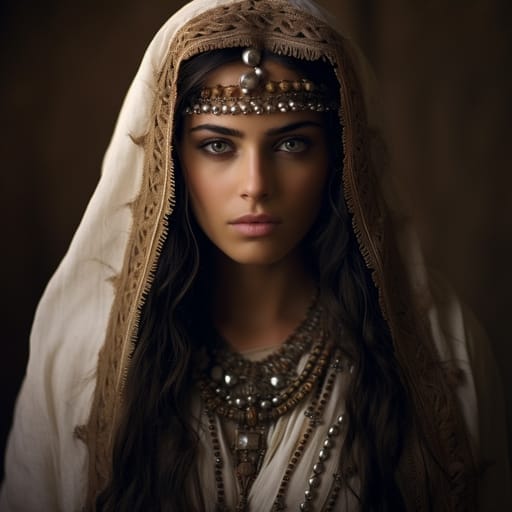
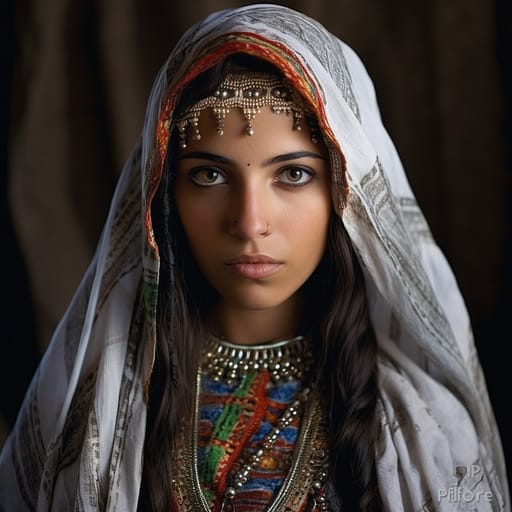
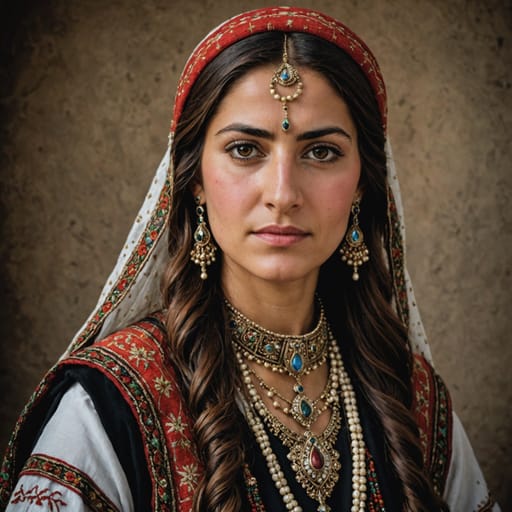
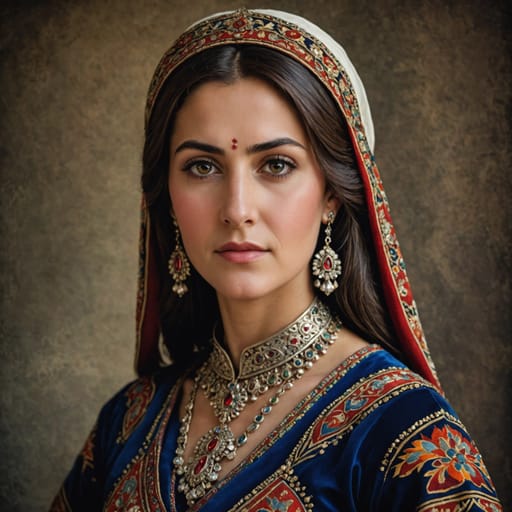
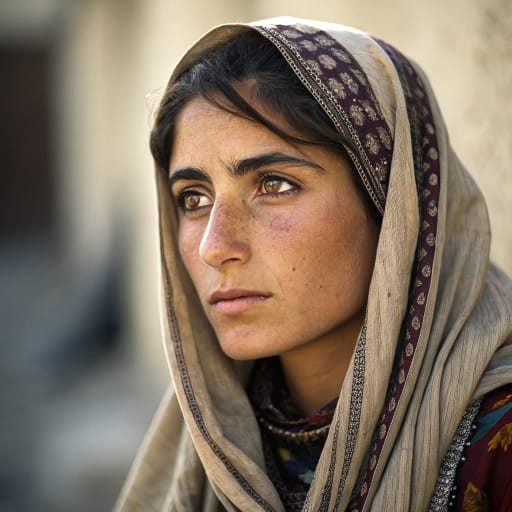
Geographic Distribution: Armenian populations across 1 country
Each row is ranked by the group's share of that country's population, with the source citation drawn from published census and demographic surveys. Click through for the full per-country phenotype profile.
| Country | Share | Source |
|---|---|---|
| Armenia | 98.4% | Statistical Committee of Armenia 2011 Census; ethnic Armenians (~98.4%, ~2.96M+ of ~3.0M total); among the most demographically homogeneous national populations globally |
Typical Armenian Phenotypes
Reference for AI generation: hair, eyes, skin, facial structure, build
Armenian Body & Anatomy Reference
Levantine / Mediterranean Middle Eastern phenotype: anatomy reference for AI nude generation
Armenian Boobs & Breasts
The typical Armenian bust is medium-to-large cup, full, moderate-to-high projection, in line with the wider Levantine / Mediterranean Middle Eastern pattern. Areolas usually fall in the 32-46mm range, with medium-brown to dark-brown areolar pigmentation against the olive-to-light-brown skin tone. Compared with the smaller East Asian bust profile, Armenian breasts sit forward and are generally full and soft, fuller projection than the North-African Berber norm. A faithful AI render of Armenian tits keeps that shape and areola size.
Armenian Ass & Hips
Butt shape among Armenian women: medium-to-full, moderate projection, broader hip profile, over medium-to-wide iliac crests, fuller gluteal-femoral deposition. This follows Levantine / Mediterranean Middle Eastern ancestry and looks quite unlike the slim East Asian narrow-hip profile. An accurate Armenian ass in adult AI imagery keeps both the silhouette and the overall build (mesomorph with fuller hip-and-bust deposition) instead of a generic average.
Armenian Vagina & Pussy
Vulvar anatomy among Armenian women: medium-brown to dark-brown labial pigmentation, fuller labia minora. Pubic hair tends to be wavy-to-coiled medium-coarse dark texture, dense distribution, in the usual inverted-triangle pattern. Both follow Levantine / Mediterranean Middle Eastern pigmentation, which is why Armenian pussy renders should not fall back on a pale, sparse Western template.
Armenian Dicks & Penis
The Armenian cock profile, from Levantine / Mediterranean Middle Eastern anthropometric data: regional mean ~14cm erect; moderate-to-above-average girth; medium-brown shaft pigmentation. Pubic hair has a wavy-to-coiled medium-coarse dark texture and forms the usual inverted-V pattern. Whether Armenian men are circumcised follows religious and cultural practice rather than phenotype.
Armenian Body, Curves & Build
Build and curves among Armenian women follow the Levantine / Mediterranean Middle Eastern pattern: mesomorph with fuller hip-and-bust deposition, mean adult female BMI 25-28. Proportions matter as much as skin tone, so Armenian figures should keep their regional height and limb ratios.
Armenian Skin Tone & Hair Texture
The Armenian skin range is olive to medium-brown (Fitzpatrick III-V), and hair tends to be wavy-to-curly 2B-3B, predominantly dark-brown to black. That combination marks the Levantine / Mediterranean Middle Eastern phenotype, and skin tone is the trait AI generators most often get wrong for Armenian women.
Explore phenotype categories
Structured taxonomy with peer-reviewed scales · 22 anatomical categories
Notable Armenian People
100 reference figures, sourced from Wikipedia
- Azerbaijan, Nagorno-Karabakh/Artsakh)
- Georgia, Samtskhe-Javakheti) Abkhazia
- Israel and Palestine, Armenian Quarter
- Islam, Hemshin)
- Zarmayr Haykazuni, legendary King of Armenia from 1192 BC to 1180 BC
- Orontes I Sakavakyats, legendary King of Armenia from 570 to 560 BC
- Tigranes Orontid, legendary King of Armenia from 560 to 535 BC
- Orontes III, King of Armenia from 321 to 260 BC
- Artaxias I, King of Armenia from 190 to 159 BC, founder of Artaxiad dynasty
- Tigranes the Great, King of Armenia from 95 to 55 BC
- Artavasdes II, King of Armenia from 55 to 34 BC
- Erato, Queen of Armenia from 10 to 2 BC, last queen of Artaxiad dynasty
- Tiridates I, King of Armenia from 52 to 58, from 62 to 66, officially from 66 to 88, found…
- Tiridates III, King of Armenia from 287 to 330, Under his rule Armenia became the first stat…
- Pap of Armenia, King of Armenia from 370 to 374
- Artaxias IV, King of Armenia from 422 to 428, last king of Arsacid dynasty
- Ashot I, King of Bagratid Armenia from 885 to 890
- Smbat I, King of Bagratid Armenia from 890 to 914
- Gagik I Artsruni, King of Vaspurakan from 904-937/943
- Ashot III, King of Bagratid Armenia from 953 to 977
- Gagik I of Armenia, King of Armenia from 989 to 1020
- Gagik II of Armenia, King of Armenia from 1042 to 1045, last king of Bagratid Armenia
- Roupen I, Lord of Armenian Kingdom of Cilicia from 1080 or 1081 or 1082 to 1095, founde…
- Leo II, King of Armenian Kingdom of Cilicia from 1198 or 1199 to 1219
- Isabella, Queen of Armenian Kingdom of Cilicia from 1219 to 1252
- Leo II, King of Armenia, King of the Armenian Kingdom of Cilicia from 1269 or 1270 to 1289
- Hethum II, King of Cilician Armenia from 1289 to 1293
- Hovhannes Kajaznuni, 1868-1938), 1st Prime Minister of First Republic of Armenia
- Alexander Khatisian, 1874-1945), 2nd Prime Minister of Armenia
- Hamo Ohanjanyan, 1873-1947), 3rd Prime Minister of Armenia
- Simon Vratsian, 1882-1969), 4th Prime Minister of First Republic of Armenia
- Gevorg Alikhanyan, 1897-1938), First Secretary of the Communist Party of Armenia from 1920 to 1921
- Alexander Miasnikian, 1886-1925), Chairman of the Council of People's Commissars of Soviet Armenia …
- Askanaz Mravyan, 1885-1929), First Secretary of the Communist Party of Armenia from 1921 to 1922
- Sargis Lukashin, 1883-1937), Chairman of the Council of People's Commissars of Soviet Armenia …
- Sahak Ter-Gabrielyan, 1886-1937), Chairman of the Council of People's Commissars of Soviet Armenia …
- Aghasi Khanjian, 1901-1936), First Secretary of the Communist Party of Armenia from 1930 to 1936
- Grigory Arutinov, 1900-1957), First Secretary of the Communist Party of Armenia from 1937 to 1953
- Suren Tovmasyan, 1910-1980), First Secretary of the Communist Party of Armenia from 1953 to 1960
- Yakov Zarobyan, 1908-1980), First Secretary of the Communist Party of Armenia from 1960 to 1966
- Anton Kochinyan, 1913-1990), First Secretary of the Communist Party of Armenia from 1966 to 1974
- Jemma Ananyan, 1931-2018) politician of the Communist Party of Armenia
- Karen Demirchyan, 1932-1999), the First Secretary of the Communist Party of Armenia from 1974 t…
- Levon Ter-Petrosyan, b. 1945), First president of Armenia
- Robert Kocharyan, b. 1954), 2nd President of Armenia
- Serzh Sargsyan, b. 1954), 3rd President of Armenia
- Nikol Pashinyan, b. 1975), 16th Prime Minister of Armenia
- Zariadres, King of Sophene
- Mithrobouzanes of Sophene, King of Sophene
- Arkathias, King of Sophene
- Ptolemaeus of Commagene, King of Commagene (163 BC-130 BC)
- Sames II Theosebes Dikaios, King of Commagene (130 BC-109 BC)
- Mithridates I Callinicus, King of Commagene (109 BC-70 BC)
- Antiochus I of Commagene, King of Commagene (70 BC-31 BC)
- Antiochus II of Commagene, Prince of Commagene
- Mithridates II of Commagene, King of Commagene (31 BC-20 BC)
- Mithridates III of Commagene, King of Commagene (20 BC-12 BC)
- Antiochus III of Commagene, King of Commagene (12 BC-17 AD)
- Abgar V, first Christian King (according to Khorenatsi)
- Antiochus IV of Commagene, King of Commagene (38 AD-72 AD)
- Princess Sandukht, regretted first Christian Armenian woman
- Salome of Ujarma, 297-361), princess who married into the Chosroid Dynasty of Iberia
- Parandzem, was the consort of King Arshak II of Armenia
- Heraclius, 575-641), emperor of Byzantine, led a revolt against the unpopular emperor Ph…
- Varaz Grigor, 585-654), King of Caucasian Albania
- Mizizios, 622-669), usurping the Byzantine throne in Sicily
- Constantine IV, by mother) (650-665), Byzantine emperor
- Philippicus, 711-713), Byzantine emperor
- Artabasdos, 741-743), Byzantine general and Byzantine emperor
- Basil I, the Macedonian (Βασίλειος Α') (811-886), (ruled 867-886), married the Varangi…
- Leo V the Armenian, 775-820, ruled 813-820), married to Theodosia
- Constantine, Byzantine co-emperor (813-820)
- Theodosia, Θεοδοσία) (775-826), empress consort of Leo V the Armenian
- Sahl Smbatean, d. 855), prince of Arran and Shaki
- Theodora, Θεοδώρα) (ruled 842-856), wife of Theophilos
- Grigor Hamam, d. 897), King of Hereti from 893 to 897
- Zoe Zaoutzaina, d. 899), Byzantine empress consort
- Sahak Sevada, d. 940), Prince of Gardman
- Adarnase of Hereti, King of Hereti (897-943)
- Romanos I, Lekapenos (Ρωμανός Β') (870-948, ruled 919-944), co-emperor, attempted to fou…
- John I Tzimiskes, Ιωάννης Α') (925-976, ruled 969-976), general, brother-in-law of Romanos II, …
- Moses of Bulgaria, Bulgarian noble, brother of Emperor Samuel of Bulgaria
- Samuel of Bulgaria, d. 1014), Tsar of Bulgaria from 997 to 1014
- Gagik of Kakheti, d. 1058), King of Kakheti and Hereti
- Thoros of Edessa, d. 1098), ruler of Edessa at the time of the First Crusade
- Mariam of Vaspurakan, first consort of the king George I of Georgia
- Arda of Armenia, Queen of Jerusalem
- Morphia of Melitene, Queen consort of Jerusalem
- Melisende, Queen of Jerusalem (1131-1153)
- Shajar al-Durr, 1250) (Mamluk Sultan)
- Rita of Armenia, 1278-1333), Princess, was a Byzantine Empress consort by marriage to Michael …
- Şivekar Sultan, Haseki Sultan of the Ottoman Empire (1646-1648)
- Princess Rym Ali, wife of Prince Ali bin Hussein of Jordan
- Isaac the Armenian, 625-644), an exarch of Ravenna
- Aziz al-Dawla, d. 1022), Fatimid Governor of Aleppo
- Mirza Zulqarnain, diwan and faujdar of the Mughal Empire
- Damat Halil Pasha, Grand Vizier of the Ottoman Empire (1626-1628)
- Melik Shahnazar II, d. 1792), melik of Varanda, one of the five Melikdoms of Karabakh
- Daniel-Bek of Sassun, bek in Sassun
- Manuc Bei, a boyar, merchant, diplomat, and inn-keeper
Erotic Poses & Sex Positions
From the pose catalog: 219 named positions with reference skeletons
Frequently asked questions about Armenian people
Where is the Armenian homeland?
The Armenian homeland is Armenia and global diaspora in Western Asia.
What countries do Armenian people live in?
Armenian populations are documented across 1 country: Armenia.






Make your own Armenian images
Five a day, free, no credits to buy. The studio starts from this group's phenotype data, so you can set body type, pose and style and keep the traits accurate.
Start with Armenian