Help us get this right
Does this portrait look right for Akkadians?
Nobody has judged this one yet. You would be the first.
Akkadians Erotic
Akkad, the northern part of ancient Babylonia where the Tigris and Euphrates run closest together, in present-day central Iraq
Akkadian (East Semitic, Afroasiatic), written in cuneiform; widely spoken alongside Sumerian (language isolate)
Ancient Mesopotamian polytheism, sharing the Sumerian gods under Akkadian names such as Ishtar, Shamash, Sin and Ea
Semitic peoples of ancient Mesopotamia; their descendants became the Babylonians and Assyrians, whose Akkadian dialects split apart in the second millennium BCE
About Akkadians People
The Akkadians were the Semitic-speaking people of central Mesopotamia in the third millennium BCE. They lived in the land of Akkad, in what is now central Iraq, and their descendants became the Babylonians and Assyrians. They did not stand out from their neighbors by territory or custom. They shared cities, canals, gods and the cuneiform script with the Sumerians to the south. What set them apart was language. Akkadian was East Semitic, a distant relative of Hebrew, Aramaic and Arabic, while Sumerian has no known relatives at all. After generations of people speaking both, each language carried deep marks of the other. Akkadian personal names turn up in Sumerian records centuries before an Akkadian ever ruled an empire.
Around 2300 BCE, that changed with Sargon of Akkad. A later legend said he had been set adrift as a baby in a reed basket. From his capital of Agade, a city that has still never been found, he and his heirs brought the quarreling city-states of Mesopotamia under one crown and sent armies into Syria and western Iran. His daughter Enheduanna served as high priestess of the moon god at Ur. The hymns credited to her make her one of the earliest authors known by name. His grandson Naram-Sin went further. He called himself king of the four quarters and claimed to be a god in his own lifetime, and his victory stele shows him in a horned helmet, a mark of divinity. The dynasty collapsed around 2150 BCE. Later scribes wrote The Curse of Agade, which blamed the fall on Naram-Sin for wrecking the temple of Enlil at Nippur.
Religion shaped ordinary life as well as royal propaganda. The Akkadians worshipped the Sumerian gods under their own names: Inanna became Ishtar, Utu became Shamash, Enki became Ea. Temples held land and fed large workforces. Personal names often invoked a god, so a name could work as a short prayer.
The people outlasted their state. Their language split into Babylonian and Assyrian dialects and was used to write the laws of Hammurabi. By the fourteenth century BCE it was the diplomatic language of the Near East, and Egyptian pharaohs wrote in it to the kings of Babylon, Mitanni and Hatti. Aramaic replaced it as the everyday spoken language during the first millennium BCE, but scribes kept writing Akkadian in cuneiform until around the first century CE. Today the Assyrian Christians of Iraq, Syria and Turkey trace their heritage to ancient Mesopotamia, and Akkadian loanwords live on in Aramaic and Hebrew.
Related ethnic groups
Groups that share Akkadians's homeland, region, language, or religious tradition. These are likely candidates for comparative phenotype reference.
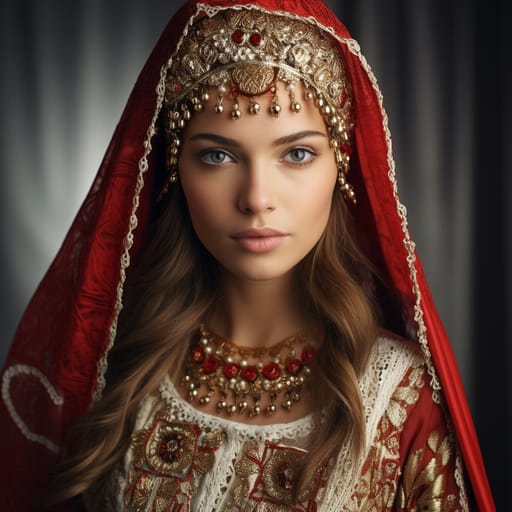
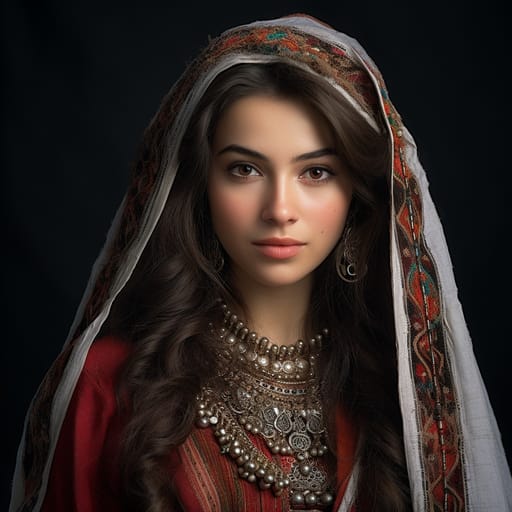
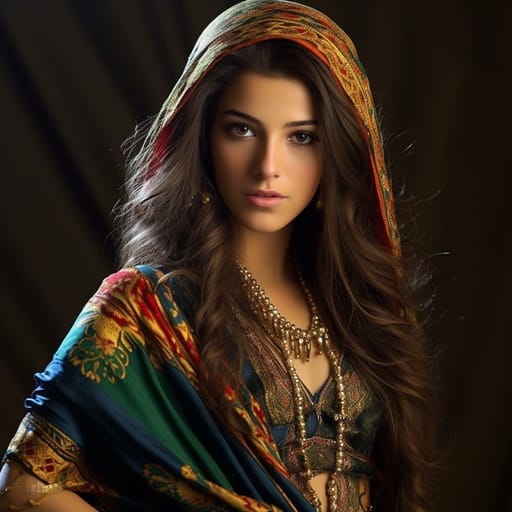
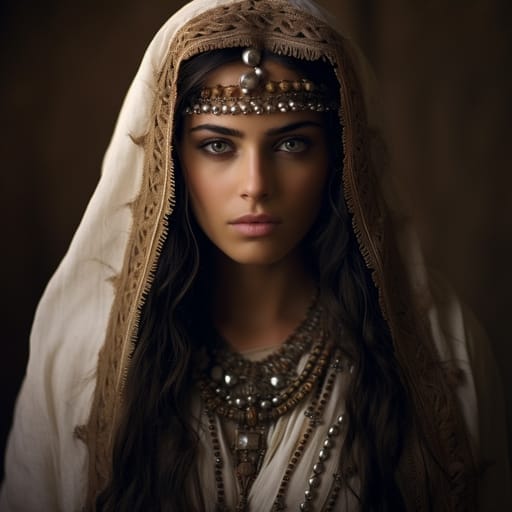
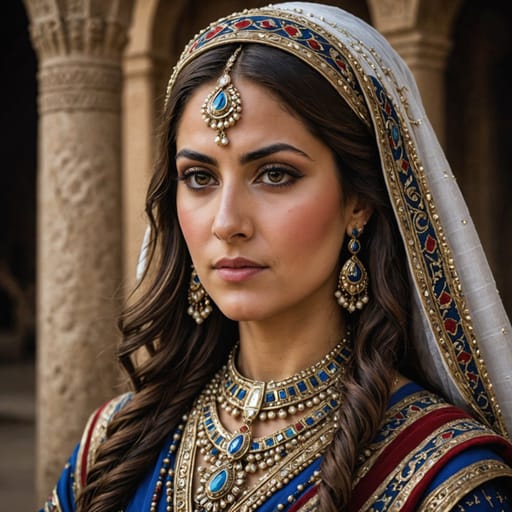
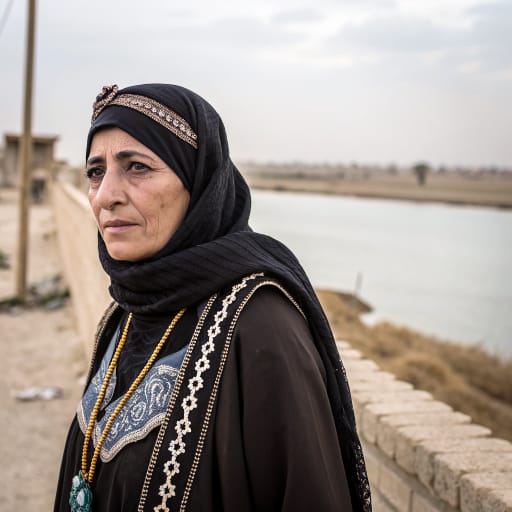
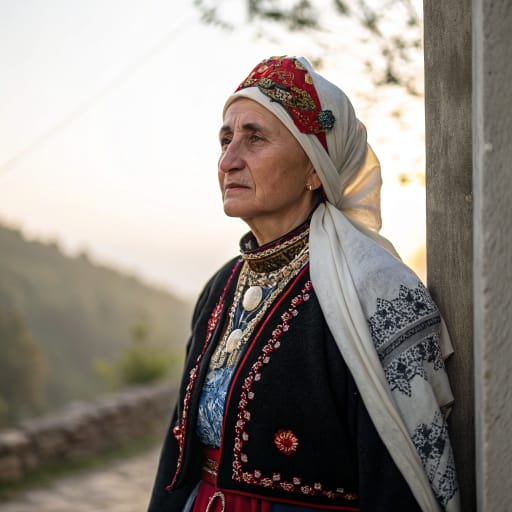
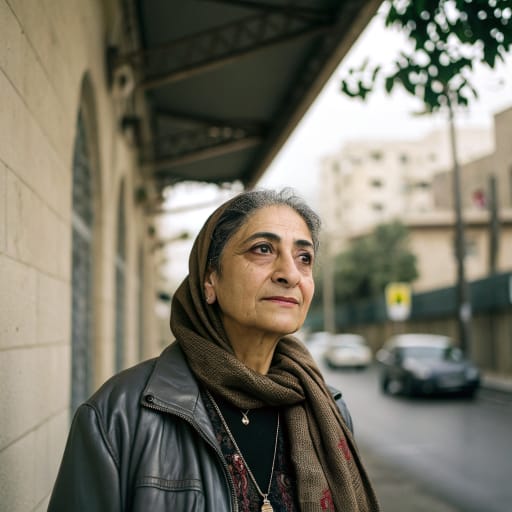
Typical Akkadians Phenotypes
Reference for AI generation: hair, eyes, skin, facial structure, build
Akkadians Body & Anatomy Reference
Anatomy by feature, Levantine / Mediterranean Middle Eastern phenotype
Akkadians Boobs & Breasts
The typical Akkadians bust is medium-to-large cup, full, moderate-to-high projection, in line with the wider Levantine / Mediterranean Middle Eastern pattern. Areolas usually fall in the 32-46mm range, with medium-brown to dark-brown areolar pigmentation against the olive-to-light-brown skin tone. Compared with the smaller East Asian bust profile, Akkadians breasts sit forward and are generally full and soft, fuller projection than the North-African Berber norm. A faithful AI render of Akkadians tits keeps that shape and areola size.
Akkadians Ass & Hips
Butt shape among Akkadians women: medium-to-full, moderate projection, broader hip profile, over medium-to-wide iliac crests, fuller gluteal-femoral deposition. This follows Levantine / Mediterranean Middle Eastern ancestry and looks quite unlike the slim East Asian narrow-hip profile. An accurate Akkadians ass in adult AI imagery keeps both the silhouette and the overall build (mesomorph with fuller hip-and-bust deposition) instead of a generic average.
Akkadians Vagina & Pussy
Vulvar anatomy among Akkadians women: medium-brown to dark-brown labial pigmentation, fuller labia minora. Pubic hair tends to be wavy-to-coiled medium-coarse dark texture, dense distribution, in the usual inverted-triangle pattern. Both follow Levantine / Mediterranean Middle Eastern pigmentation, which is why Akkadians pussy renders should not fall back on a pale, sparse Western template.
Akkadians Dicks & Penis
The Akkadians cock profile, from Levantine / Mediterranean Middle Eastern anthropometric data: regional mean ~14cm erect; moderate-to-above-average girth; medium-brown shaft pigmentation. Pubic hair has a wavy-to-coiled medium-coarse dark texture and forms the usual inverted-V pattern. Whether Akkadians men are circumcised follows religious and cultural practice rather than phenotype.
Akkadians Body, Curves & Build
Build and curves among Akkadians women follow the Levantine / Mediterranean Middle Eastern pattern: mesomorph with fuller hip-and-bust deposition, mean adult female BMI 25-28. Proportions matter as much as skin tone, so Akkadians figures should keep their regional height and limb ratios.
Akkadians Skin Tone & Hair Texture
The Akkadians skin range is olive to medium-brown (Fitzpatrick III-V), and hair tends to be wavy-to-curly 2B-3B, predominantly dark-brown to black. That combination marks the Levantine / Mediterranean Middle Eastern phenotype, and skin tone is the trait AI generators most often get wrong for Akkadians women.
Explore phenotype categories
Structured taxonomy with peer-reviewed scales · 22 anatomical categories
Erotic Poses & Sex Positions
From the pose catalog: 219 named positions with reference skeletons
Frequently asked questions about Akkadians people
Where is the Akkadians homeland?
The Akkadians homeland is Akkad, the northern part of ancient Babylonia where the Tigris and Euphrates run closest together, in present-day central Iraq in Western Asia.
What language do Akkadians people speak?
Akkadians people primarily speak Akkadian (East Semitic, Afroasiatic), written in cuneiform; widely spoken alongside Sumerian (language isolate).
What religion do Akkadians people practice?
The predominant religion among Akkadians people is Ancient Mesopotamian polytheism, sharing the Sumerian gods under Akkadian names such as Ishtar, Shamash, Sin and Ea.






Make your own Akkadians images
Five a day, free, no credits to buy. The studio starts from this group's phenotype data, so you can set body type, pose and style and keep the traits accurate.
Start with Akkadians