Help us get this right
Does this portrait look right for Amorites?
One tap. It takes a second and it is recorded.
1 says it looks right, 0 say it looks off.
Amorites Erotic
Syrian steppe west of the Euphrates around Jebel Bishri, later the cities of Mesopotamia and the Levant; modern Syria, Iraq, Lebanon, Jordan, Israel and Palestine.
Amorite (Northwest Semitic, Afroasiatic), known mainly from personal names; Akkadian used for writing.
Ancient Near Eastern polytheism: Dagan, Addu/Hadad, El, Yarih and the god Amurru, merged with the Mesopotamian pantheon; monthly kispum offerings to ancestors.
Tribal confederations of the Binu Yamina (Yaminites) and Binu Sim'al (Sim'alites); also Tidnum, Haneans, Suteans, Yamutbal, Amnanu; ruling dynasties of Babylon, Mari, Yamhad, Larsa and Isin.
About Amorites People
The Amorites were a Bronze Age people of the Syrian steppe who pushed into the cities of Mesopotamia and the Levant around 2000 BC, ruled them for four centuries, and then dissolved into the Babylonian, Assyrian and Canaanite populations they had governed; no community today claims them, but their names, their gods and one famous law code survive. Sumerians called them Martu and Akkadians Amurru, both meaning roughly "westerners"; the first mentions around 2500 BC treat them as outsiders, and later texts put their home in the dry country west of the Euphrates, around Jebel Bishri. One Sumerian poem sneers that the Martu eat raw meat, know no grain, and have no house in life nor grave in death. That is polemic, not ethnography, but it records what city people saw: tent-dwelling herders for whom kinship outranked any wall. The kings of Ur built a barrier against them called the Wall That Keeps Away the Tidnum. It did not work. When Ur fell around 2004 BC, Amorite chiefs took over one city after another: Isin, Larsa, Mari, Aleppo, and finally Babylon, whose First Dynasty produced Hammurabi. His name is Amorite, something like "the kinsman heals."
The language is the strange part. Amorite belonged to Northwest Semitic, the branch that later produced Ugaritic, Hebrew, Phoenician and Aramaic, yet the Amorites wrote in Akkadian and left almost nothing in their own tongue. Scholars reconstructed it from thousands of personal names until two Old Babylonian tablets published in 2023 turned out to be Amorite-Akkadian phrasebooks. The names and the Mari palace archive show a tribal society that kept its shape even on a throne. The great division ran between the Binu Yamina, "sons of the right hand," and the Binu Sim'al, "sons of the left": south and north as seen facing the rising sun. Zimri-Lim of Mari was a Sim'alite king who still had to negotiate grazing rights with his own tribesmen. Alliances were sealed by killing a donkey foal, and "to kill a donkey" meant to make a treaty. Kings fed their dead in the monthly kispum rite, and Hammurabi's heirs recited a genealogy that ran back past any city to the tribes of the steppe. Their gods, Dagan, the storm god Addu, El and the moon god Yarih, slotted into the Mesopotamian pantheon without much friction. The Hittite sack of Babylon in 1595 BC ended Amorite kingship in the south. In Syria the name lingered as Amurru, a small Late Bronze Age kingdom, then as an Assyrian word for the west. The Hebrew Bible remembers Amorites as the tall pre-Israelite people of the hill country, a memory of a nation that had long since become everyone else.
Related ethnic groups
Groups that share Amorites's homeland, region, language, or religious tradition. These are likely candidates for comparative phenotype reference.
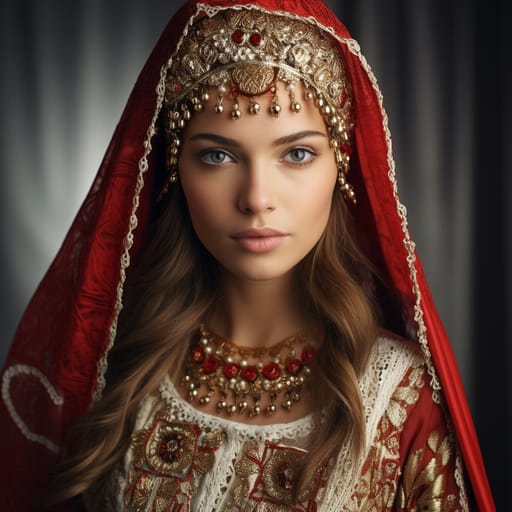
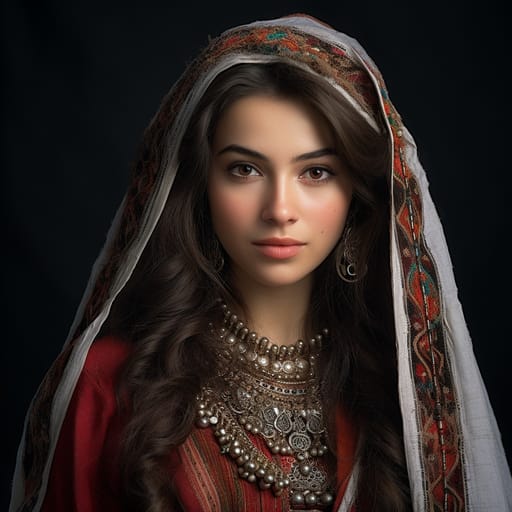
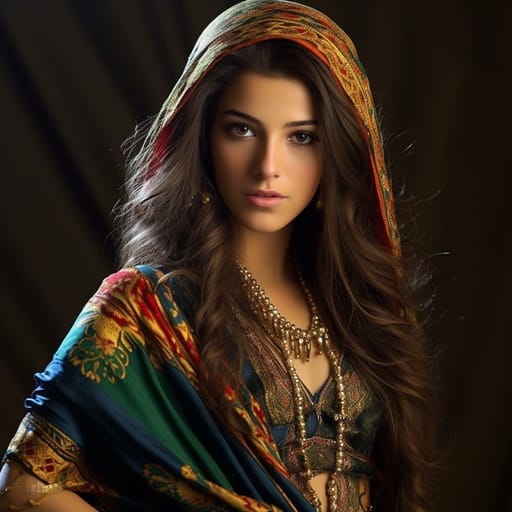
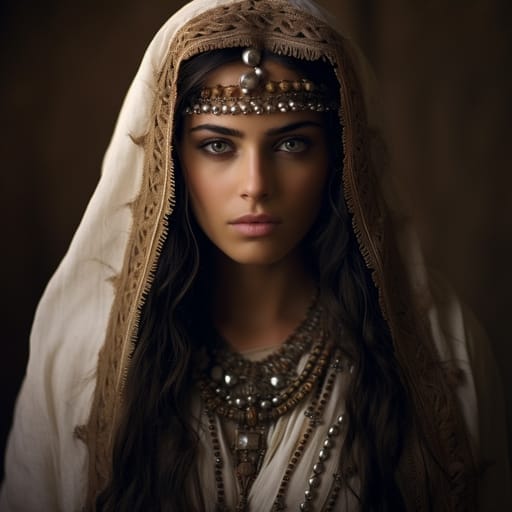
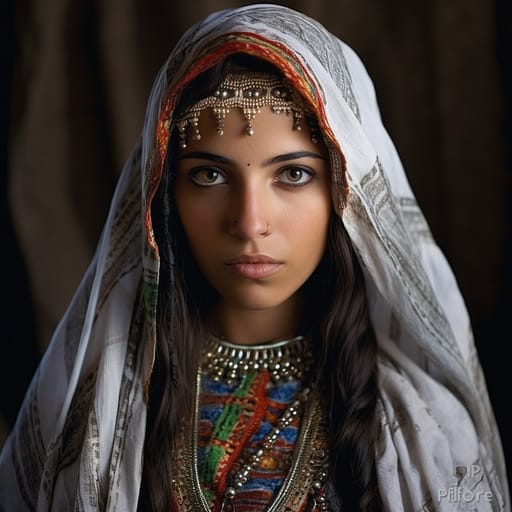
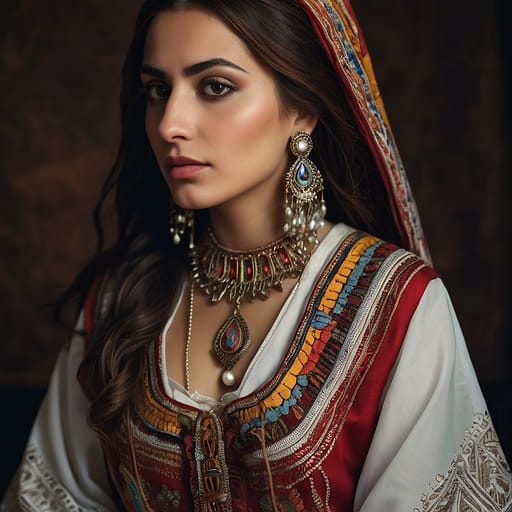
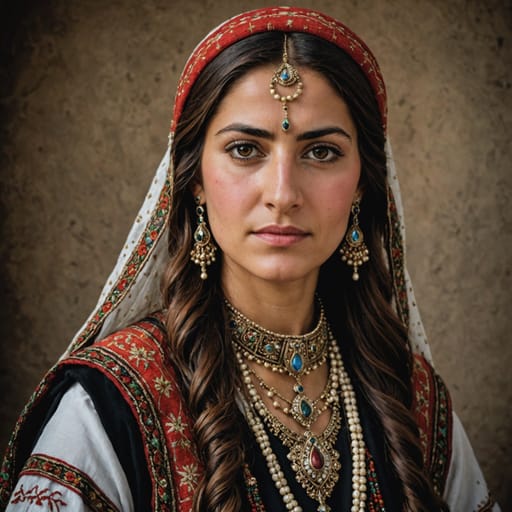
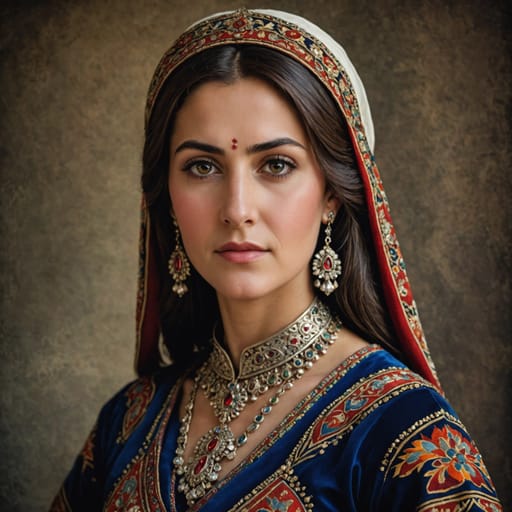
Typical Amorites Phenotypes
Reference for AI generation: hair, eyes, skin, facial structure, build
Amorites Body & Anatomy Reference
Levantine / Mediterranean Middle Eastern phenotype: anatomy reference for AI nude generation
Amorites Boobs & Breasts
Amorites tits and boobs run medium-to-large cup, full, moderate-to-high projection, the classic Levantine / Mediterranean Middle Eastern bust profile. Amorites nipples and areolas show medium-brown to dark-brown areolar pigmentation against the olive-to-light-brown skin tone, with areolar diameter typically in the 32-46mm range and forward-set positioning rather than the smaller East Asian bust profile. Amorites breasts trend full and soft, fuller projection than the North-African Berber norm, a function of the mesomorph with fuller hip-and-bust deposition body habitus and the mean adult female BMI 25-28. For anatomically accurate AI-generated Amorites nudes the render preserves the medium-to-large cup, full, moderate-to-high projection shape, 32-46mm areolas with medium-brown to dark-brown pigmentation, and the torso proportions of the Levantine / Mediterranean Middle Eastern phenotype.
Amorites Ass & Hips
Amorites hips and butt usually read as medium-to-full, moderate projection, broader hip profile. The skeletal base is medium-to-wide iliac crests, fuller gluteal-femoral deposition, the Levantine / Mediterranean Middle Eastern pattern. Set against the slim East Asian narrow-hip profile, the difference is easy to see, and the hip-to-waist ratio is often what identifies Amorites women in photos.
Amorites Vagina & Pussy
Expect medium-brown to dark-brown labial pigmentation, fuller labia minora on Amorites women, in keeping with Levantine / Mediterranean Middle Eastern ancestry. The pubic hair is wavy-to-coiled medium-coarse dark texture, dense distribution. Coloring should run evenly from the olive to medium-brown skin of the thighs to the labia, and Amorites nude imagery should keep the hair's wavy-to-coiled medium-coarse dark texture.
Amorites Dicks & Penis
Amorites dick and penile anatomy in adult AI generation should anchor on the regional reference data: regional mean ~14cm erect, moderate-to-above-average girth, and medium-brown shaft pigmentation. The Amorites cock profile reflects the Levantine / Mediterranean Middle Eastern population's anthropometric measurements. The shaft pigmentation should track the surrounding olive to medium-brown skin tone, and the pubic hair should keep its wavy-to-coiled medium-coarse dark texture in the typical inverted-V escutcheon.
Amorites Body, Curves & Build
Amorites body type: mesomorph with fuller hip-and-bust deposition, with mean adult female BMI 25-28. This is the typical Levantine / Mediterranean Middle Eastern build. Height range, shoulder-to-hip ratio and fat distribution all follow from it, which is what an accurate Amorites nude body should show.
Amorites Skin Tone & Hair Texture
Amorites skin tone falls in the olive to medium-brown (Fitzpatrick III-V) band, the surface signal most often miscalibrated by generic AI nude generators. Amorites hair texture is typically wavy-to-curly 2B-3B, predominantly dark-brown to black, characteristic of the Levantine / Mediterranean Middle Eastern phenotype. In Amorites nude renders the skin should hold that band consistently across the body.
Explore phenotype categories
Structured taxonomy with peer-reviewed scales · 22 anatomical categories
Erotic Poses & Sex Positions
From the pose catalog: 219 named positions with reference skeletons
Frequently asked questions about Amorites people
Where is the Amorites homeland?
The Amorites homeland is Syrian steppe west of the Euphrates around Jebel Bishri, later the cities of Mesopotamia and the Levant; modern Syria, Iraq, Lebanon, Jordan, Israel and Palestine. in Western Asia.
What language do Amorites people speak?
Amorites people primarily speak Amorite (Northwest Semitic, Afroasiatic), known mainly from personal names; Akkadian used for writing..
What religion do Amorites people practice?
The predominant religion among Amorites people is Ancient Near Eastern polytheism: Dagan, Addu/Hadad, El, Yarih and the god Amurru, merged with the Mesopotamian pantheon; monthly kispum offerings to ancestors..






Make your own Amorites images
Five a day, free, no credits to buy. The studio starts from this group's phenotype data, so you can set body type, pose and style and keep the traits accurate.
Start with Amorites