No portrait yet
Baharna Erotic
Bahrain, plus the Qatif and al-Ahsa oases of Saudi Arabia's Eastern Province, with long-established communities in Kuwait and southern Iraq.
Bahrani Arabic, alongside Gulf Arabic and Modern Standard Arabic (Semitic, Afro-Asiatic)
Twelver Shia Islam
Arabs of the historical Bahrain region, connected to the Shia of Qatif and al-Ahsa; distinct from Bahrain's Persian-descended Ajam and from its Sunni Utub and Huwala communities.
About Baharna People
The Baharna are the settled Shia Arabs of Bahrain and the mainland coast facing it, the people who were farming date palms and diving for pearls on those islands long before the ruling family arrived. That distinction is the whole point of the name: a Bahraini is anyone holding the passport, while a Bahrani belongs to the older population. Bahrani communities extend past the causeway into Qatif and al-Ahsa in Saudi Arabia's Eastern Province, and into Kuwait and southern Iraq, where families settled generations ago.
Their Arabic gives them away before anything else does. Bahrani Arabic is a sedentary dialect, distinct in sound and vocabulary from the Bedouin-descended Gulf Arabic of Bahrain's Sunni tribes, and it carries a substrate of older Aramaic and Persian words picked up over centuries of the islands sitting at a crossroads. Linguists treat the two as separate enough that a speaker's community is often audible in a sentence. The religion is Twelver Shia Islam, and it organizes itself around the ma'tam, the neighborhood mourning house, an institution Bahrain has kept longer than anywhere else in the Gulf. Ashura in the villages and in Manama's older quarters is the fixed point of the year: processions staffed and funded by the ma'tam, recitations running ten nights.
Two centuries of politics sit under all of this. Bahrain was governed from Safavid Persia through much of the seventeenth century, a stretch that produced Shia jurists whose books are still cited, Yusuf al-Bahrani among them. Then in 1783 the Al Khalifa crossed from Zubarah and took the islands, and the Baharna went from settled majority to subject population, working estates under a new elite and bound to a forced labor system that survived until the administrative reforms of the 1920s. The friction built into that arrangement has never fully closed. It surfaced in 1938, again in the 1950s, again in the 1990s, and again in 2011.
What holds at village level is more particular: handloom weaving still worked in Bani Jamra, the artesian springs that made cultivation possible on a desert island and that pearl divers once surfaced into for drinking water, and a lineage many Baharna claim back to the pre-Islamic inhabitants of the archipelago, Aramaic-speaking and partly Christian, before the Arabian coast turned to Islam.
Related ethnic groups
Groups that share Baharna's homeland, region, language, or religious tradition. These are likely candidates for comparative phenotype reference.
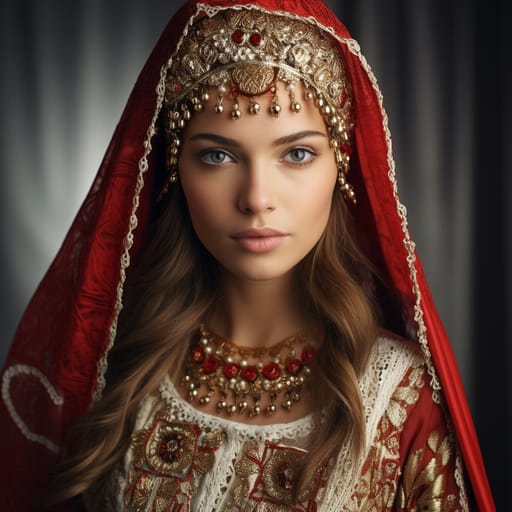
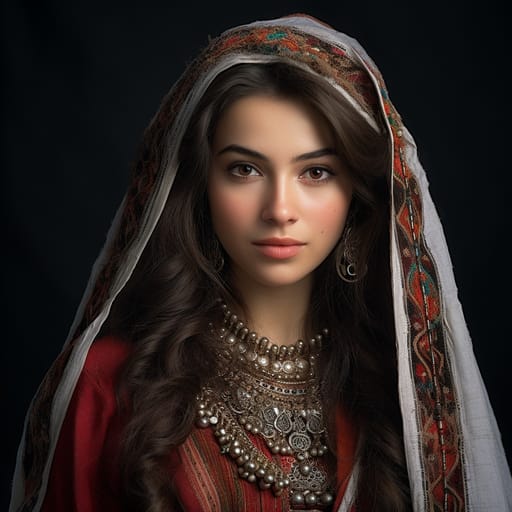
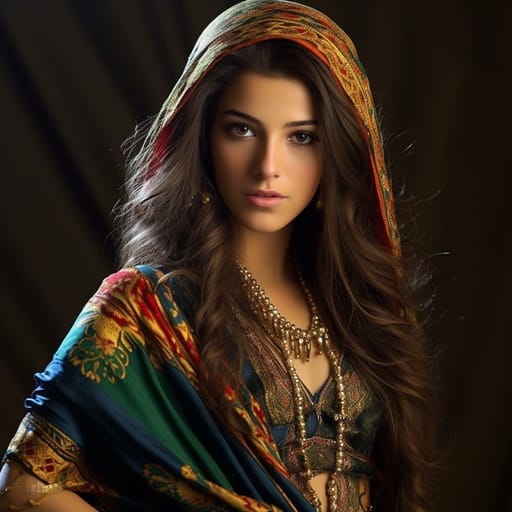
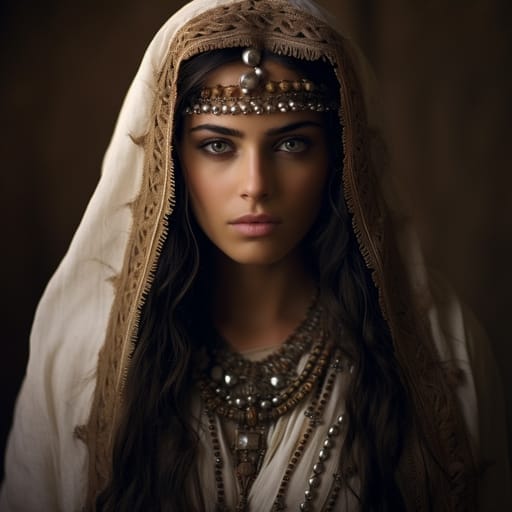
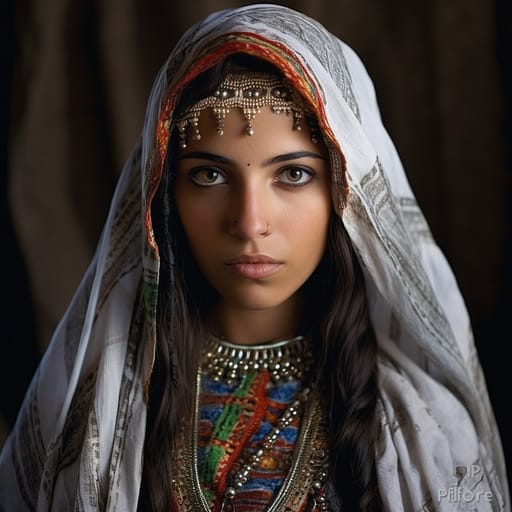
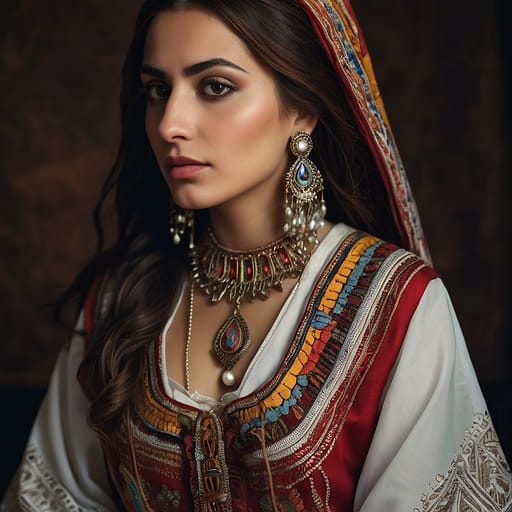
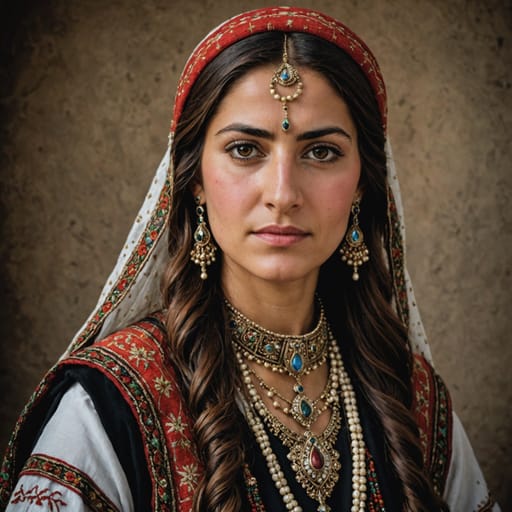
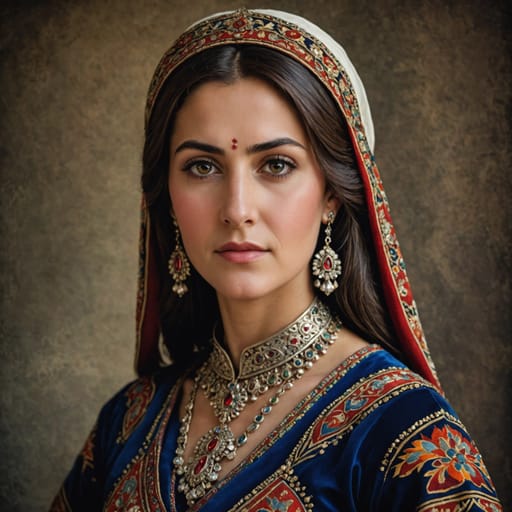
Typical Baharna Phenotypes
Reference for AI generation: hair, eyes, skin, facial structure, build
Baharna Body & Anatomy Reference
Levantine / Mediterranean Middle Eastern phenotype: anatomy reference for AI nude generation
Baharna Boobs & Breasts
The typical Baharna bust is medium-to-large cup, full, moderate-to-high projection, in line with the wider Levantine / Mediterranean Middle Eastern pattern. Areolas usually fall in the 32-46mm range, with medium-brown to dark-brown areolar pigmentation against the olive-to-light-brown skin tone. Compared with the smaller East Asian bust profile, Baharna breasts sit forward and are generally full and soft, fuller projection than the North-African Berber norm. A faithful AI render of Baharna tits keeps that shape and areola size.
Baharna Ass & Hips
Butt shape among Baharna women: medium-to-full, moderate projection, broader hip profile, over medium-to-wide iliac crests, fuller gluteal-femoral deposition. This follows Levantine / Mediterranean Middle Eastern ancestry and looks quite unlike the slim East Asian narrow-hip profile. An accurate Baharna ass in adult AI imagery keeps both the silhouette and the overall build (mesomorph with fuller hip-and-bust deposition) instead of a generic average.
Baharna Vagina & Pussy
Vulvar anatomy among Baharna women: medium-brown to dark-brown labial pigmentation, fuller labia minora. Pubic hair tends to be wavy-to-coiled medium-coarse dark texture, dense distribution, in the usual inverted-triangle pattern. Both follow Levantine / Mediterranean Middle Eastern pigmentation, which is why Baharna pussy renders should not fall back on a pale, sparse Western template.
Baharna Dicks & Penis
The Baharna cock profile, from Levantine / Mediterranean Middle Eastern anthropometric data: regional mean ~14cm erect; moderate-to-above-average girth; medium-brown shaft pigmentation. Pubic hair has a wavy-to-coiled medium-coarse dark texture and forms the usual inverted-V pattern. Whether Baharna men are circumcised follows religious and cultural practice rather than phenotype.
Baharna Body, Curves & Build
Build and curves among Baharna women follow the Levantine / Mediterranean Middle Eastern pattern: mesomorph with fuller hip-and-bust deposition, mean adult female BMI 25-28. Proportions matter as much as skin tone, so Baharna figures should keep their regional height and limb ratios.
Baharna Skin Tone & Hair Texture
The Baharna skin range is olive to medium-brown (Fitzpatrick III-V), and hair tends to be wavy-to-curly 2B-3B, predominantly dark-brown to black. That combination marks the Levantine / Mediterranean Middle Eastern phenotype, and skin tone is the trait AI generators most often get wrong for Baharna women.
Explore phenotype categories
Structured taxonomy with peer-reviewed scales · 22 anatomical categories
Erotic Poses & Sex Positions
From the pose catalog: 219 named positions with reference skeletons
Frequently asked questions about Baharna people
Where is the Baharna homeland?
The Baharna homeland is Bahrain, plus the Qatif and al-Ahsa oases of Saudi Arabia's Eastern Province, with long-established communities in Kuwait and southern Iraq. in Western Asia.
What language do Baharna people speak?
Baharna people primarily speak Bahrani Arabic, alongside Gulf Arabic and Modern Standard Arabic (Semitic, Afro-Asiatic).
What religion do Baharna people practice?
The predominant religion among Baharna people is Twelver Shia Islam.






Make your own Baharna images
Five a day, free, no credits to buy. The studio starts from this group's phenotype data, so you can set body type, pose and style and keep the traits accurate.
Start with Baharna