No portrait yet
Qajars Erotic
Astarabad (Gorgan) and Mazandaran in northern Iran, with branches around Ganja and Karabakh (Azerbaijan) and Merv (Turkmenistan); later centered on Tehran
Qajar Turkic, close to Azerbaijani (Turkic, Oghuz); Persian (Indo-European, Iranian) for court, administration and literature
Twelver Shia Islam
One of the Qizilbash tribes; Astarabad branches Qovanlu (upper) and Davalu (lower); Ganja (Ziyadoghlu) and Merv branches; the Qajar royal dynasty of Iran
About Qajars People
The Qajars were a Turkic tribe that lived in northern Iran and the South Caucasus from the Safavid era into the early twentieth century, whose chiefs ruled Iran as a royal dynasty until 1925, and whose descendants survive today as families in Iran, Azerbaijan and the diaspora rather than as a tribe. They first appear in the record as one of the Qizilbash, the red-capped Turkic cavalry that carried the Safavids to power in the early 1500s and took up their Twelver Shia faith. What made them a people was lineage and loyalty to their chiefs, not territory. By the reign of Shah Abbas I they had been split into frontier garrisons: one around Ganja and Karabakh, one at Merv, and one at Astarabad on the Caspian edge of the Turkmen steppe. The Ganja branch ruled its own khanate until Russian troops stormed the city in 1804. The Astarabad Qajars mattered most, and they spent generations feuding between an upper branch, the Qovanlu, and a lower one, the Davalu.
The man who turned a quarrelsome frontier tribe into a dynasty was Agha Mohammad Khan, a Qovanlu chief who had been castrated as a boy on the orders of Nader Shah's nephew and held for years as a hostage at the Zand court in Shiraz. He escaped in 1779, fought his way across the country, made the small town of Tehran his capital in 1786, was crowned in 1796 and was murdered by his own servants a year later. His nephew Fath-Ali Shah fathered more than a hundred children, and within a few generations the royal house had grown into an entire class of princes. The Qajar century brought the loss of the Caucasus provinces to Russia in wars settled in 1813 and 1828, a string of foreign concessions, the Tobacco Protest of 1891, and a revolution that forced a constitution and parliament on the crown in 1906. Parliament voted the dynasty out in 1925, clearing the way for Reza Khan and the Pahlavis.
Among themselves the Qajars spoke a Turkic dialect close to Azerbaijani, while the state ran in Persian, and Fath-Ali Shah wrote Persian verse under the pen name Khaqan. Shia devotion was public policy: Naser al-Din Shah built the Takyeh Dowlat in Tehran as a royal theater for ta'zieh, the Muharram mourning plays. He was also an obsessive photographer. Between his albums and the court's painted portraits, the Qajars left the images most people still have in mind when they picture nineteenth-century Iran. Golestan Palace in Tehran, their royal seat, is now a UNESCO World Heritage site.
Related ethnic groups
Groups that share Qajars's homeland, region, language, or religious tradition. These are likely candidates for comparative phenotype reference.
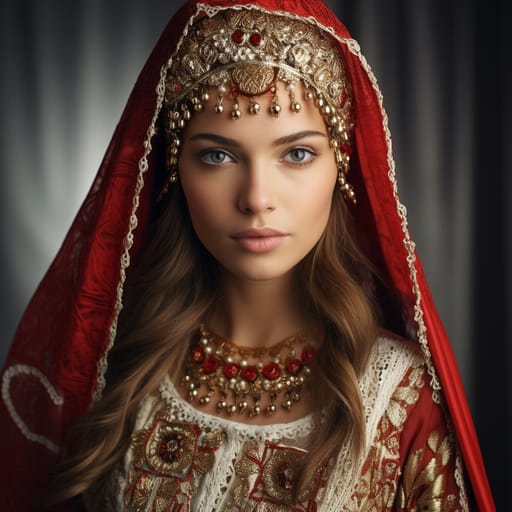
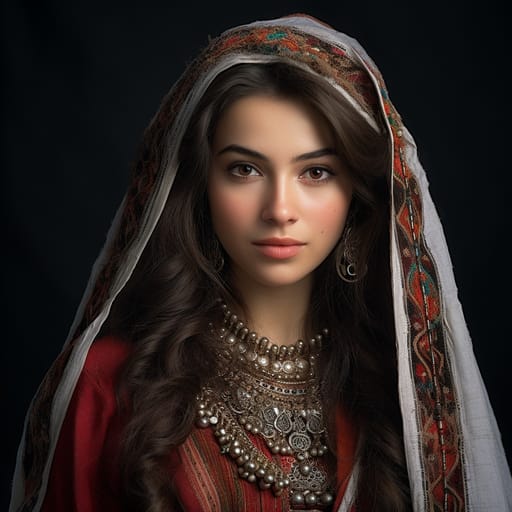
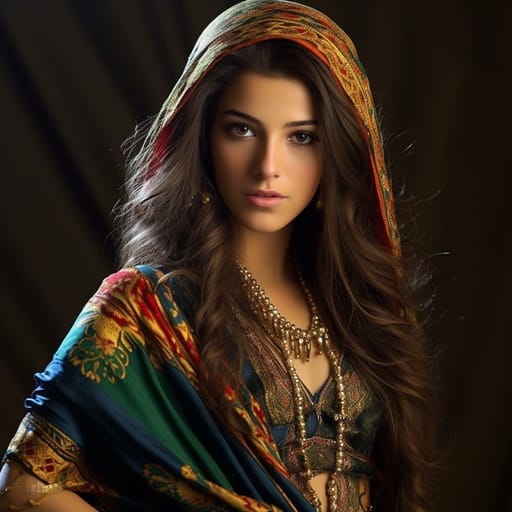
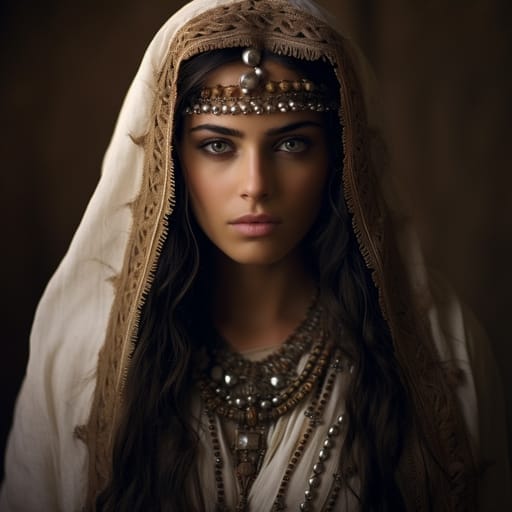
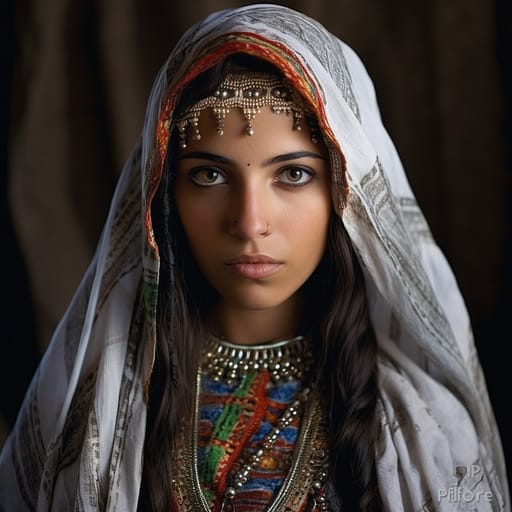
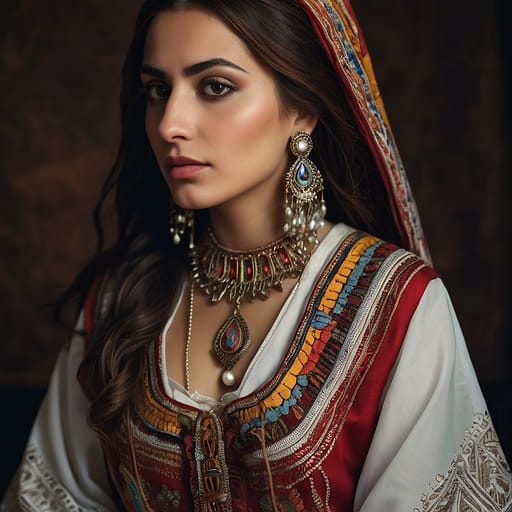
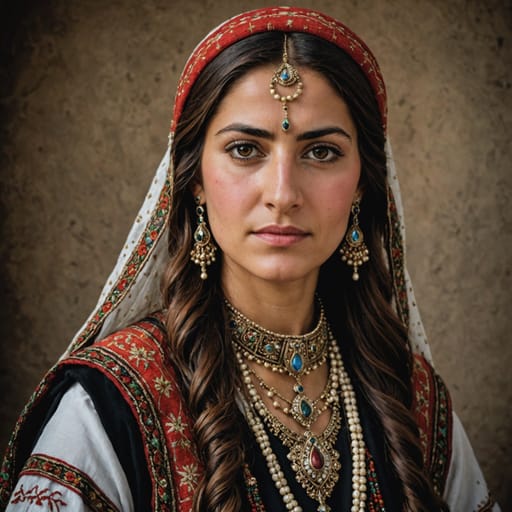
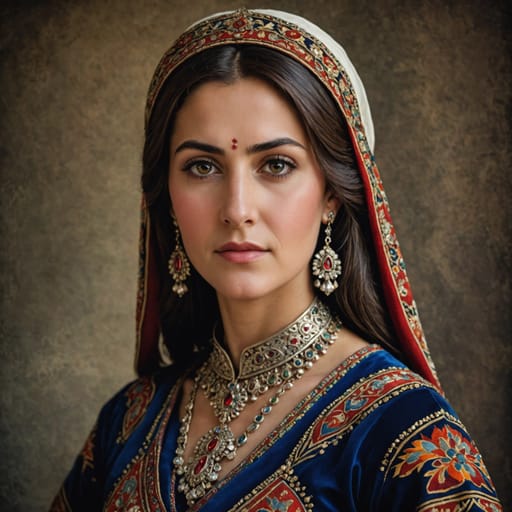
Typical Qajars Phenotypes
Reference for AI generation: hair, eyes, skin, facial structure, build
Explore phenotype categories
Structured taxonomy with peer-reviewed scales · 22 anatomical categories
Erotic Poses & Sex Positions
From the pose catalog: 219 named positions with reference skeletons
Frequently asked questions about Qajars people
Where is the Qajars homeland?
The Qajars homeland is Astarabad (Gorgan) and Mazandaran in northern Iran, with branches around Ganja and Karabakh (Azerbaijan) and Merv (Turkmenistan); later centered on Tehran in Western Asia.
What language do Qajars people speak?
Qajars people primarily speak Qajar Turkic, close to Azerbaijani (Turkic, Oghuz); Persian (Indo-European, Iranian) for court, administration and literature.
What religion do Qajars people practice?
The predominant religion among Qajars people is Twelver Shia Islam.






Make your own Qajars images
Five a day, free, no credits to buy. The studio starts from this group's phenotype data, so you can set body type, pose and style and keep the traits accurate.
Start with Qajars