Help us get this right
Does this portrait look right for Banu Abs?
One tap. It takes a second and it is recorded.
1 says it looks right, 0 say it looks off.
Banu Abs Erotic
Najd in north-central Arabia, northeast of Medina, in present-day Saudi Arabia; after the Islamic conquests, also settled in Iraq and Syria
Arabic, in its pre-Islamic and later Classical forms (Afroasiatic, Semitic)
Pre-Islamic Arabian polytheism, then Islam from the seventh century
Branch of Ghatafan within the Qays Aylan (Mudar) grouping of northern Arabs; kin and longtime rivals of the Banu Dhubyan
About Banu Abs People
The Banu Abs were a Bedouin Arab tribe of Najd, in north-central Arabia. They flourished in the century or two before Islam, and from the seventh century on they were absorbed into the wider Muslim Arab world, where the family name al-Absi still marks people who claim descent from them. They saw themselves as a branch of Ghatafan, which belonged to the large Qays Aylan grouping of northern Arabs. They traced their line to an ancestor named Abs, whose brother Dhubyan founded the tribe that became their bitterest enemy. The Abs herded camels, prized their horses and spoke the Arabic of the desert poets. They worshipped the gods of pre-Islamic Arabia until they came into Islam, some of them reluctantly.
A quarrel made the Abs famous across the Arab world. A horse race between chiefs of Abs and Dhubyan, run with the horses Dahis and al-Ghabra, ended in accusations of foul play. The dispute hardened into the War of Dahis and al-Ghabra, which tradition says went on for some forty years of raids and revenge killings. The war left a literature behind it. Antarah ibn Shaddad, the tribe's most celebrated son, fought in it, and his poetry won a place among the Mu'allaqat, the most famous odes of pre-Islamic Arabia. His mother was an enslaved Ethiopian woman. His struggle to win recognition from his father and his tribe through courage in battle made him a folk hero, and for centuries his legend was retold in the long popular romance Sirat Antar. Two men of Dhubyan finally ended the feud by paying the blood money out of their own herds, and the poet Zuhayr ibn Abi Sulma praised that peace in his own Mu'allaqa.
Islam cut across these old loyalties. Hudhayfa ibn al-Yaman, a Companion of the Prophet, was the son of an Absi man who had settled in Medina. Back in Najd, many of the Abs joined the revolts that followed Muhammad's death in 632, and Abu Bakr's forces put them down. Once inside the new order, Absi men went north with the conquest armies into Iraq and Syria. There the tribe belonged to the Qaysi faction, whose rivalry with the Yemeni tribes shaped Umayyad politics. Wallada bint al-Abbas, an Absi woman, married the caliph Abd al-Malik and was the mother of two caliphs, al-Walid I and Sulayman. Over the following centuries the Abs faded as a political unit, scattered into cities, armies and newer tribal groupings. Their war, their horses and above all Antarah still hold a firm place in Arabic literary memory.
Related ethnic groups
Groups that share Banu Abs's homeland, region, language, or religious tradition. These are likely candidates for comparative phenotype reference.

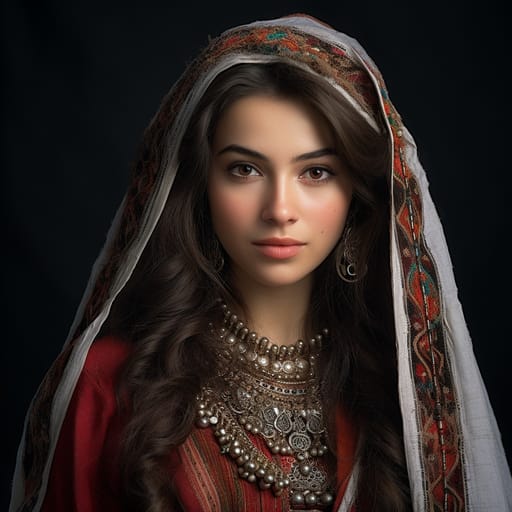


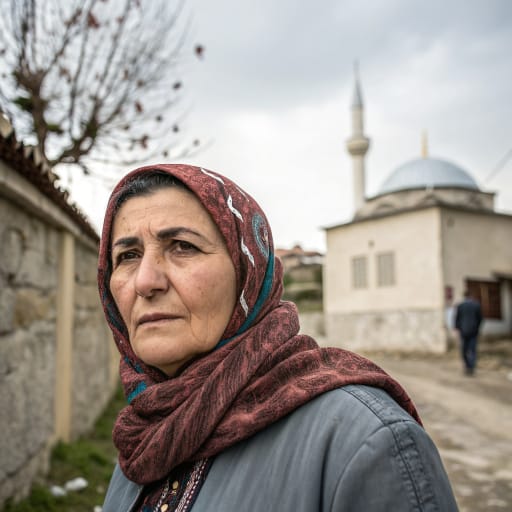
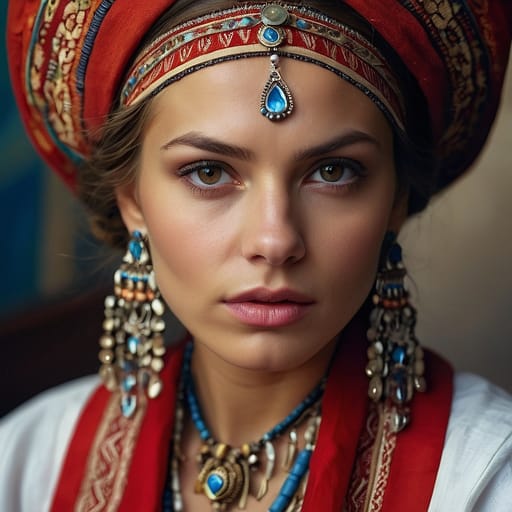
Typical Banu Abs Phenotypes
Reference for AI generation: hair, eyes, skin, facial structure, build
Banu Abs Body & Anatomy Reference
Anatomy by feature, Levantine / Mediterranean Middle Eastern phenotype
Banu Abs Boobs & Breasts
Banu Abs boobs follow the Levantine / Mediterranean Middle Eastern profile: medium-to-large cup, full, moderate-to-high projection. Areolar diameter is usually 32-46mm, and the coloring is medium-brown to dark-brown areolar pigmentation against the olive-to-light-brown skin tone. Breast shape tracks body composition (mesomorph with fuller hip-and-bust deposition, mean adult female BMI 25-28), so Banu Abs breasts tend to be full and soft, fuller projection than the North-African Berber norm. Expect a forward-set shape, not the smaller East Asian bust profile.
Banu Abs Ass & Hips
Banu Abs ass and hip morphology presents as medium-to-full, moderate projection, broader hip profile, distinctly different from the slim East Asian narrow-hip profile. The Banu Abs pelvic profile shows medium-to-wide iliac crests, fuller gluteal-femoral deposition, anchored in the Levantine / Mediterranean Middle Eastern skeletal pattern. Banu Abs butt shots in adult AI imagery should render the medium-to-full, moderate projection, broader hip profile silhouette with the overall build (mesomorph with fuller hip-and-bust deposition) and the fat distribution typical of the Levantine / Mediterranean Middle Eastern phenotype.
Banu Abs Vagina & Pussy
Banu Abs pussy anatomy typically shows medium-brown to dark-brown labial pigmentation, fuller labia minora. Pubic hair is usually wavy-to-coiled medium-coarse dark texture, dense distribution. In AI-generated Banu Abs nudes, labial color should blend into the olive to medium-brown skin with a gradual transition, and the hair should keep its wavy-to-coiled medium-coarse dark texture.
Banu Abs Dicks & Penis
Penis reference for Banu Abs men: regional mean ~14cm erect, moderate-to-above-average girth. Coloring: medium-brown shaft pigmentation. An accurate Banu Abs cock in AI imagery matches the surrounding olive to medium-brown skin rather than a generic porn default. Circumcision depends on religion and custom, not ancestry.
Banu Abs Body, Curves & Build
The Banu Abs figure is generally mesomorph with fuller hip-and-bust deposition, with mean adult female BMI 25-28, characteristic of Levantine / Mediterranean Middle Eastern ancestry. AI image tools tend to flatten regional body types into a few stock shapes; here the Banu Abs build is kept as its own reference.
Banu Abs Skin Tone & Hair Texture
Skin: olive to medium-brown (Fitzpatrick III-V). Hair: wavy-to-curly 2B-3B, predominantly dark-brown to black. Both are typical of Levantine / Mediterranean Middle Eastern ancestry. The most common mistake in AI nudes of Banu Abs women is a body rendered lighter than the face.
Explore phenotype categories
Structured taxonomy with peer-reviewed scales · 22 anatomical categories
Erotic Poses & Sex Positions
From the pose catalog: 219 named positions with reference skeletons
Frequently asked questions about Banu Abs people
Where is the Banu Abs homeland?
The Banu Abs homeland is Najd in north-central Arabia, northeast of Medina, in present-day Saudi Arabia; after the Islamic conquests, also settled in Iraq and Syria in Western Asia.
What language do Banu Abs people speak?
Banu Abs people primarily speak Arabic, in its pre-Islamic and later Classical forms (Afroasiatic, Semitic).
What religion do Banu Abs people practice?
The predominant religion among Banu Abs people is Pre-Islamic Arabian polytheism, then Islam from the seventh century.






Make your own Banu Abs images
Five a day, free, no credits to buy. The studio starts from this group's phenotype data, so you can set body type, pose and style and keep the traits accurate.
Start with Banu Abs