No portrait yet
Tyari Erotic
The Tyari district on the Great Zab, Hakkari mountains, southeastern Turkey; since the First World War mainly northern Iraq, the Khabur valley of northeastern Syria, and the diaspora
Tyari dialect of Assyrian Neo-Aramaic (Afroasiatic, Semitic, Northeastern Neo-Aramaic); Arabic, Kurdish and host-country languages in exile and diaspora
Christian, mainly the Assyrian Church of the East and the Ancient Church of the East (East Syriac rite), historically the Church of the East
Upper Tyari and Lower Tyari; one of the autonomous Assyrian highland tribes of Hakkari, alongside Tkhuma, Jilu, Baz and Diz
About Tyari People
Tyari is both a people and a place. The name belongs to a district of steep gorges along the Great Zab in the Hakkari mountains of southeastern Turkey, and to the Assyrian tribe that held it for centuries. Being Tyari meant staying armed, answering to hereditary chiefs called maliks, and dealing with the surrounding Kurdish emirs more as rivals than as overlords. Tyari was one of the largest of the autonomous highland tribes, alongside Tkhuma, Jilu, Baz and Diz. It divided into Upper Tyari and Lower Tyari, each a cluster of villages built into terraced slopes above the river.
Their speech is the Tyari dialect of Assyrian Neo-Aramaic, a modern descendant of Aramaic hemmed in by Kurdish, Turkish and Arabic. Their church is the Church of the East, whose patriarchs of the Shimun line kept their seat at Qudshanis in the same mountains. Religion ran through the whole year and was not confined to a weekly service. There were long fasts, the three-day Rogation of the Ninevites, and the shara, a village festival on the patron saint's day with a shared meal, dancing and guests from neighboring valleys.
Mountain independence carried a price. In 1843 the Kurdish emir Bedr Khan Beg of Bohtan attacked the Tyari villages, killing thousands and carrying off captives. Austen Henry Layard, passing through a few years later, found villages still in ruins. The First World War ended the old life for good. In 1915 the Hakkari tribes followed Patriarch Mar Shimun XIX Benyamin into war against the Ottomans, were forced out of their valleys and made the crossing to Urmia in Persia. More flight brought survivors to the British refugee camp at Baqubah in Iraq, and the return they hoped for never came. Mountain Assyrians, Tyari prominent among them, filled the ranks of the British-officered Assyrian Levies. After the Simele massacre of 1933, many families resettled along the Khabur River in northeastern Syria, in villages settled tribe by tribe.
Almost no Tyari remain in Hakkari. Their descendants live in northern Iraq, in the Khabur villages that largely emptied again after Islamic State attacks in 2015, and across the Assyrian diaspora in the United States, Australia and Europe. The tribal name has outlasted the land it came from. It is still claimed in family histories, at weddings and in the dialect itself, generations after the last harvest on those terraces.
Related ethnic groups
Groups that share Tyari's homeland, region, language, or religious tradition. These are likely candidates for comparative phenotype reference.
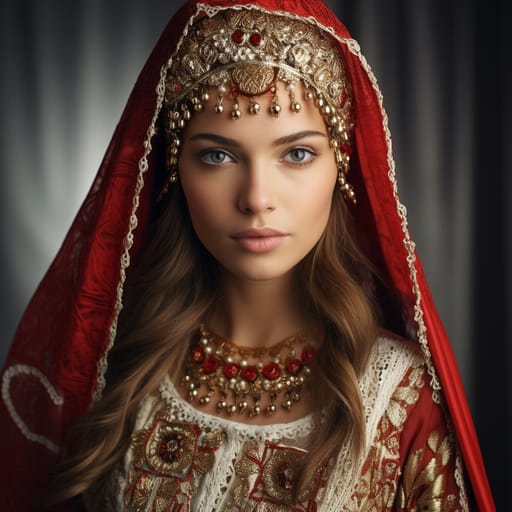
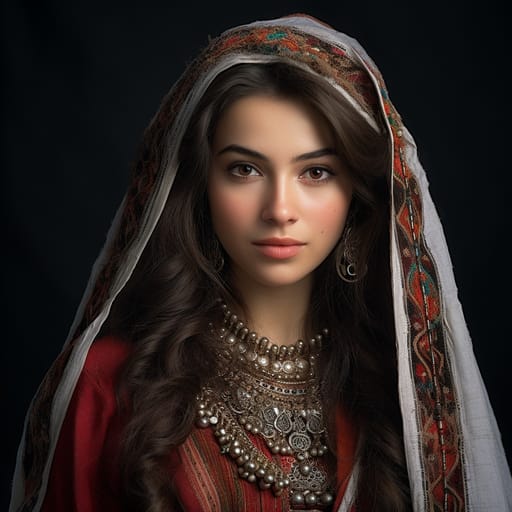
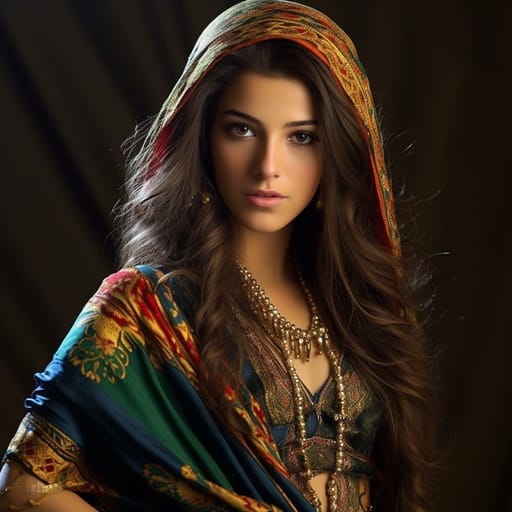
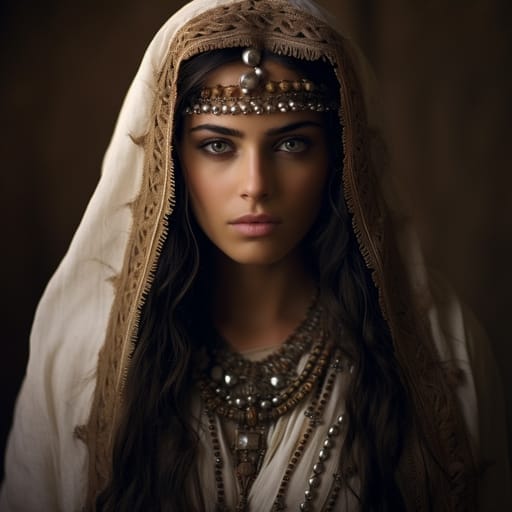
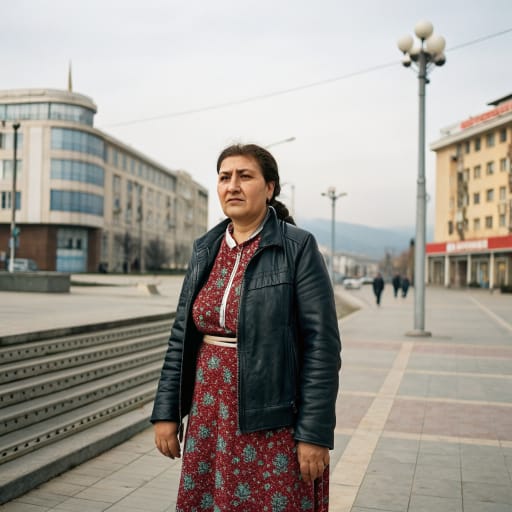
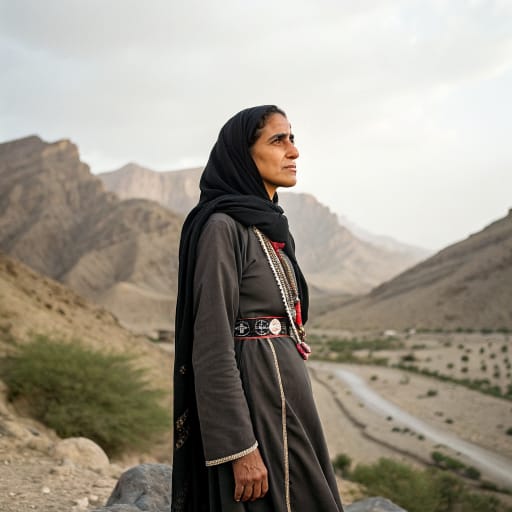
Typical Tyari Phenotypes
Reference for AI generation: hair, eyes, skin, facial structure, build
Tyari Body & Anatomy Reference
Per-feature anatomical profile for AI nude generation: Levantine / Mediterranean Middle Eastern phenotype
Tyari Boobs & Breasts
Bust reference for Tyari women: medium-to-large cup, full, moderate-to-high projection, which is typical of Levantine / Mediterranean Middle Eastern ancestry. Areolas measure about 32-46mm across, with medium-brown to dark-brown pigmentation. Body type (mesomorph with fuller hip-and-bust deposition) shapes the bust as well, so Tyari tits are usually full and soft, fuller projection than the North-African Berber norm. In AI imagery, keep the forward-set shape rather than drifting toward the smaller East Asian bust profile.
Tyari Ass & Hips
The Tyari ass is typically medium-to-full, moderate projection, broader hip profile, which sets it apart from the slim East Asian narrow-hip profile. Underneath, the pelvis shows medium-to-wide iliac crests, fuller gluteal-femoral deposition, part of the Levantine / Mediterranean Middle Eastern skeletal pattern. For Tyari butt pics and AI renders, match that silhouette and the overall build (mesomorph with fuller hip-and-bust deposition).
Tyari Vagina & Pussy
Tyari pussy and vulvar anatomy presents medium-brown to dark-brown labial pigmentation, fuller labia minora, consistent with the Levantine / Mediterranean Middle Eastern phenotype's pigmentation pattern. Tyari pubic hair is typically wavy-to-coiled medium-coarse dark texture, dense distribution, in the inverted-triangle pattern. For anatomically accurate Tyari pussy renders the labial coloration should match the surrounding olive to medium-brown skin tone with a continuous gradient, and the hair should keep its wavy-to-coiled medium-coarse dark texture.
Tyari Dicks & Penis
Tyari dicks follow the Levantine / Mediterranean Middle Eastern reference data: regional mean ~14cm erect; moderate-to-above-average girth; medium-brown shaft pigmentation. Shaft color should track the olive to medium-brown skin tone with a smooth change toward the glans, and Tyari pubic hair keeps its wavy-to-coiled medium-coarse dark texture.
Tyari Body, Curves & Build
Tyari body type and overall build presents as mesomorph with fuller hip-and-bust deposition, with mean adult female BMI 25-28: the characteristic Levantine / Mediterranean Middle Eastern habitus. Tyari curves and proportions should keep the regional skeletal frame (height, shoulder-to-hip ratio, limb proportions) rather than a generic mesomorph default.
Tyari Skin Tone & Hair Texture
Tyari skin sits in the olive to medium-brown (Fitzpatrick III-V) band. Hair is typically wavy-to-curly 2B-3B, predominantly dark-brown to black, in keeping with the Levantine / Mediterranean Middle Eastern phenotype. In nude renders the skin should stay one even tone from face to body, and body, pubic and head hair should match.
Explore phenotype categories
Structured taxonomy with peer-reviewed scales · 22 anatomical categories
Erotic Poses & Sex Positions
From the pose catalog: 219 named positions with reference skeletons
Frequently asked questions about Tyari people
Where is the Tyari homeland?
The Tyari homeland is The Tyari district on the Great Zab, Hakkari mountains, southeastern Turkey; since the First World War mainly northern Iraq, the Khabur valley of northeastern Syria, and the diaspora in Western Asia.
What language do Tyari people speak?
Tyari people primarily speak Tyari dialect of Assyrian Neo-Aramaic (Afroasiatic, Semitic, Northeastern Neo-Aramaic); Arabic, Kurdish and host-country languages in exile and diaspora.
What religion do Tyari people practice?
The predominant religion among Tyari people is Christian, mainly the Assyrian Church of the East and the Ancient Church of the East (East Syriac rite), historically the Church of the East.






Make your own Tyari images
Five a day, free, no credits to buy. The studio starts from this group's phenotype data, so you can set body type, pose and style and keep the traits accurate.
Start with Tyari