Help us get this right
Does this portrait look right for Imeretians?
Nobody has judged this one yet. You would be the first.
Imeretians Erotic
Imereti, the middle Rioni and Kvirila river basins of western Georgia, centered on Kutaisi
Georgian, Imeretian dialect with Upper and Lower varieties (Kartvelian)
Georgian Orthodox Christianity
Regional subgroup of Georgians; divided into Upper Imeretians (Zemo Imereti) and Lower Imeretians (Kvemo Imereti), with Okriba around Tkibuli sometimes treated apart; close to neighboring Rachans, Lechkhumians and Gurians
About Imeretians People
Imeretians are Georgians, full stop. What sets them apart is place and memory. They are the people of Imereti, the humid middle of western Georgia, running from the edge of the Colchian lowland up into the wooded hills along the Rioni and Kvirila rivers. For more than three centuries this land was a kingdom of its own, with a royal court at Kutaisi and western Georgia's own catholicos at the head of its church. That long separation left a regional identity strong enough to outlast two centuries of Russian and Soviet rule. It also made Imeretians a favorite subject of Georgia's regional humor.
They speak Georgian, the largest of the Kartvelian languages. The family is small and has no proven relatives anywhere else. The Imeretian dialect has upper and lower varieties, and its neighbors are close kin: Mingrelian is spoken just to the west and Svan farther north. Both are Kartvelian, but a Georgian speaker can't understand either one. The faith is Georgian Orthodox, and you can see it in the landscape. Bagrati Cathedral stands over Kutaisi. At Gelati Monastery, which King David the Builder founded in 1106, the king lies under the entrance gate, so everyone who walks in steps over his grave.
The roots go deep. Tradition identifies Kutaisi with Aia, the Colchian city of the Golden Fleece story, and the gold dug up at nearby Vani shows that the old wealth was more than myth. Kutaisi was the capital of a united Georgia until 1122. After the country broke apart in the fifteenth century, it became the royal seat of Imereti. The kingdom spent its last centuries under Ottoman pressure and ended in 1810, when the Russian Empire annexed it. King Solomon II fled and died in exile in Trabzon five years later. In Soviet times Upper Imereti turned industrial, and the manganese mines around Chiatura were served by a network of cable cars that still defines the town.
Daily culture is easiest to find at the table. The round, cheese-filled bread that all of Georgia calls imeruli khachapuri is named for the region and made with its soft local cheese. Imeretian wine ferments in clay jars buried in the ground, called churi here instead of qvevri. It is made from white grapes such as Tsolikouri and Tsitska, with much less skin contact than the amber wines of Kakheti, so it comes out lighter and fresher. Near Chiatura, the Katskhi Pillar is a limestone column with a chapel on top, and hermit monks have lived there off and on for more than a thousand years.
Related ethnic groups
Groups that share Imeretians's homeland, region, language, or religious tradition. These are likely candidates for comparative phenotype reference.
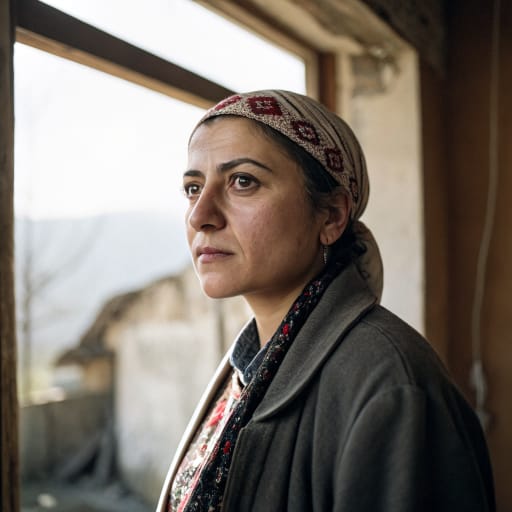
Bats people (Tsova-Tush)
same region (Western Asia)
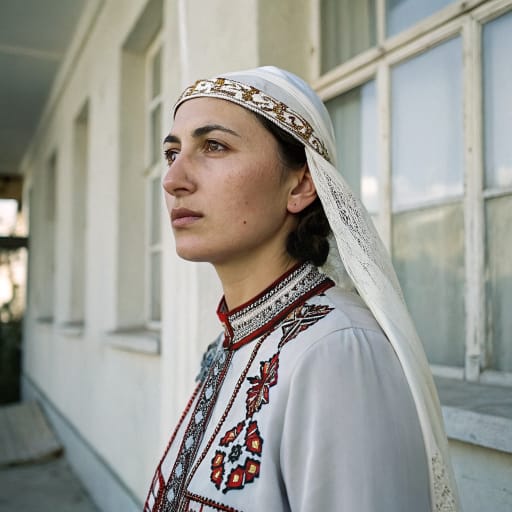
Mingrelians
same region (Western Asia)
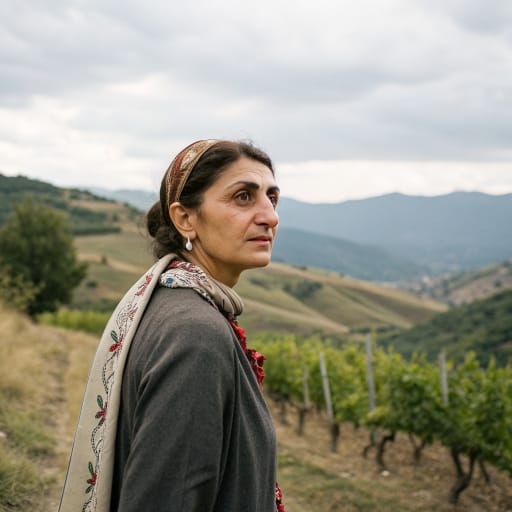
Kakhetians
same region (Western Asia)
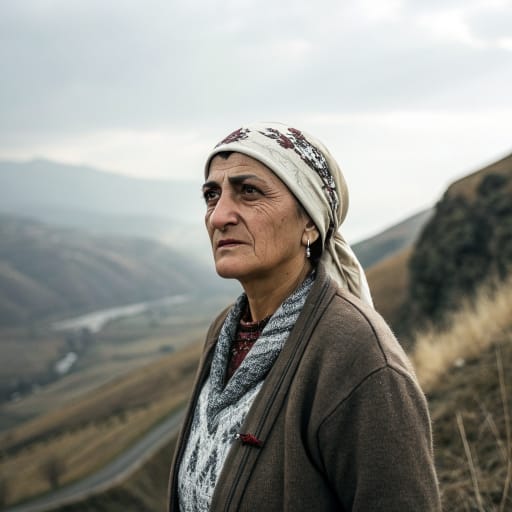
Javakhians
same region (Western Asia)
Cyprus Other
same region (Western Asia)
Afro-Iraqis
same region (Western Asia)
Yemeni Arab
same region (Western Asia)
Al-Abna'
same region (Western Asia)
Typical Imeretians Phenotypes
Reference for AI generation: hair, eyes, skin, facial structure, build
Explore phenotype categories
Structured taxonomy with peer-reviewed scales · 22 anatomical categories
Erotic Poses & Sex Positions
From the pose catalog: 219 named positions with reference skeletons
Frequently asked questions about Imeretians people
Where is the Imeretians homeland?
The Imeretians homeland is Imereti, the middle Rioni and Kvirila river basins of western Georgia, centered on Kutaisi in Western Asia.
What language do Imeretians people speak?
Imeretians people primarily speak Georgian, Imeretian dialect with Upper and Lower varieties (Kartvelian).
What religion do Imeretians people practice?
The predominant religion among Imeretians people is Georgian Orthodox Christianity.






Make your own Imeretians images
Five a day, free, no credits to buy. The studio starts from this group's phenotype data, so you can set body type, pose and style and keep the traits accurate.
Start with Imeretians