Help us get this right
Does this portrait look right for Serbian?
One tap. It takes a second and it is recorded.
1 says it looks right, 0 say it looks off.
Serbian Erotic
Serbia, Bosnia (Republika Srpska), Montenegro, Croatia, Kosovo, plus diaspora
About Serbian People
History
The named Serbian polity enters the historical record in the early-medieval period with the formation of a Slavic principality around the Ras region in the mid-twelfth century. The Nemanjić dynasty — founded by Stefan Nemanja in 1166, consolidated under his son Saint Sava (the founder of the autocephalous Serbian Orthodox Church in 1219), and brought to its territorial peak under Stefan Dušan (r. 1331–1355) — produced a kingdom that at its height controlled Serbia proper, Kosovo, Macedonia, and parts of Albania and northern Greece, and which Dušan formally elevated to an empire in 1346. The 1389 Battle of Kosovo, fought against the advancing Ottomans on the Field of Blackbirds outside Priština, became the foundational national memory of the Serbian Orthodox tradition — the loss it commemorates is the event around which the church-and-folk identity of the next five centuries of Ottoman rule was organised.
Modern Serbian statehood begins with the First Serbian Uprising of 1804–1813 under Karađorđe Petrović, recovered in the Second Serbian Uprising of 1815 under Miloš Obrenović, and formalised in the autonomous principality recognised by the Sublime Porte in 1830. Full independence followed the 1878 Treaty of Berlin. The Kingdom of Serbia was the south-Slavic core around which the Kingdom of Yugoslavia was constructed in 1918, and Serbian political and military leadership remained the dominant power in successive Yugoslav formations — the 1929–1941 royal dictatorship, the 1945–1992 federal Yugoslav state, and the rump Federal Republic of Yugoslavia / Serbia and Montenegro through 2006.
Religious institutions and the church
The Serbian Orthodox Church is autocephalous, with its patriarchal seat in Belgrade and its monastic core at the medieval monasteries of Studenica, Mileševa, Sopoćani, and the Athonite monastery of Hilandar (founded by Stefan Nemanja and Saint Sava in 1198 and held by Serbian monks continuously since). The church's autocephaly — granted by the Patriarchate of Constantinople in 1219 and re-confirmed in 1879 and 1920 — is the institutional spine of the Serbian national identity, and the patron-saint slava festival (the household celebration of a family's patron saint, inherited patrilineally) is the most enduring of the church's domestic-ritual contributions to Serbian everyday life.
The Cyrillic script — in the Serbian variant codified by Vuk Stefanović Karadžić (1787–1864) on the principle "write as you speak, read as it is written" — remains the primary script of the Serbian language alongside an officially co-equal Latin alphabet. The Cyrillic preference is one of the visible markers distinguishing Serbian from the otherwise mutually intelligible Croatian, Bosnian, and Montenegrin standards of the four-way Serbo-Croatian continuum.
Cultural markers
The kolo — the round, hand-linked folk dance performed at weddings, religious festivals, and Slava celebrations — is the most widely recognised cultural marker, with regional variants from the Sumadijan Užičko Kolo to the Vojvodinian Bačko Kolo to the Kosovo-region Kosovsko Kolo. Traditional male dress includes the šajkača cap (the V-creased peaked cap of the Royal Serbian Army that became civilian) and the opanci leather slippers; female traditional dress is regionally varied but anchored on the embroidered linen shirt and the dark-wool pleated skirt. Naming convention is heavily Orthodox-saintly (Stefan, Dušan, Milan, Nikola, Jovan, Aleksandar, Petar, Marko; Milica, Jelena, Mirjana, Ana, Marija, Sofija, Tijana), with the patronymic -ović / -ević ending shared with the broader South Slavic surname system.
Diaspora
The global Serbian diaspora is concentrated in three principal streams. The historic late-nineteenth- and early-twentieth-century labour migration produced large Serbian communities in the United States (Chicago, Cleveland, Pittsburgh, the South Side mining towns of Pennsylvania, and the central California Serbian communities); in Canada (Hamilton, Toronto, Vancouver); and in Australia (Melbourne, Sydney, Perth). The post-1945 Yugoslav-political wave produced émigré communities across Western Europe — West Germany absorbed several hundred thousand Yugoslav guest-workers in the 1960s and 1970s, of whom Serbs were the largest single national group — and the post-1991 wave from the Yugoslav succession wars produced the most recent and most demographically heterogeneous expansion, with major Serbian receiving cities now including Vienna, Zurich, Stockholm, and Frankfurt.
Internal to the former Yugoslav region, the Serbian populations of Republika Srpska in Bosnia, of northern Kosovo (the Mitrovica region and the four Serb-majority municipalities), of the Croatian Krajina region (much-reduced post-1995), and of Vojvodina (the multi-ethnic northern Serbian province with substantial Hungarian, Slovak, and Romanian minorities alongside the Serbian majority) constitute the bulk of the regional non-Serbia-proper Serbian community, with the Republika Srpska and northern-Kosovo populations remaining the politically contested ones at the time of writing.
Related ethnic groups
Groups that share Serbian's homeland, region, language, or religious tradition. These are likely candidates for comparative phenotype reference.
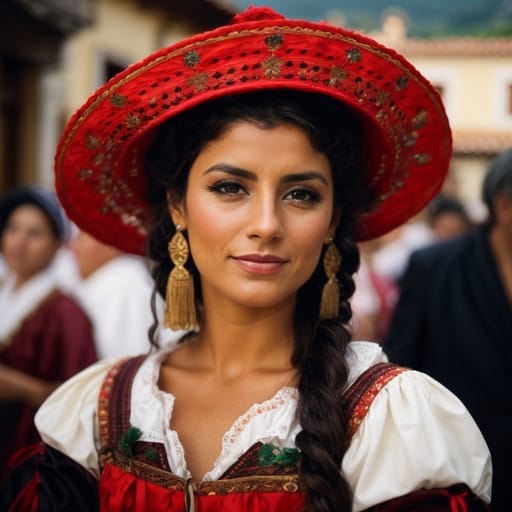
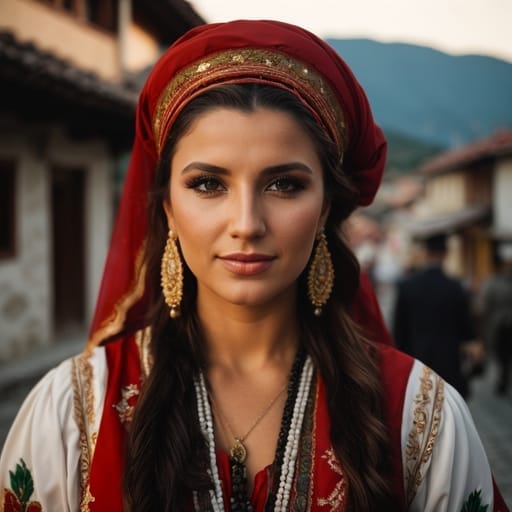
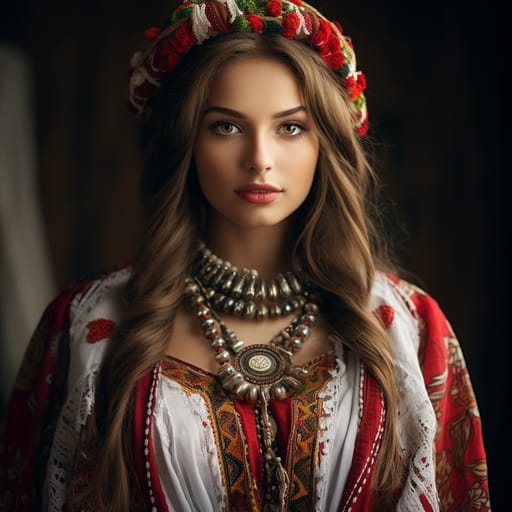
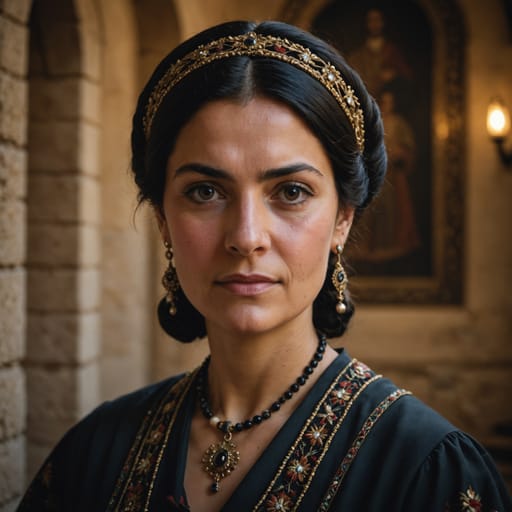
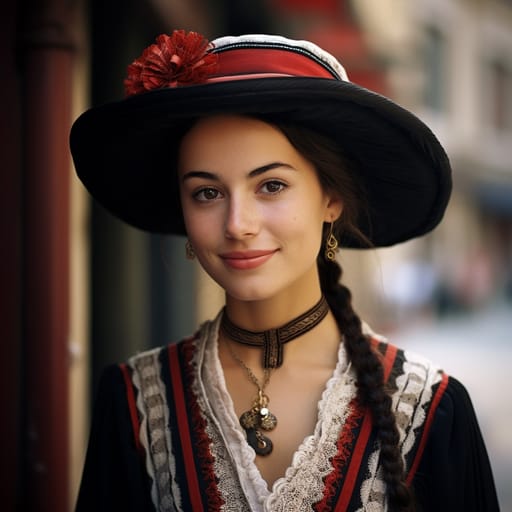
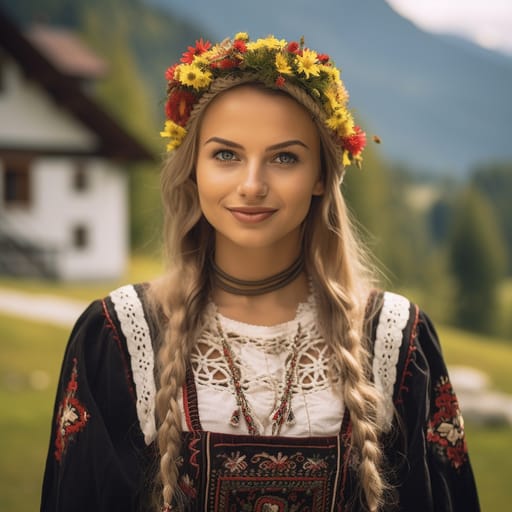
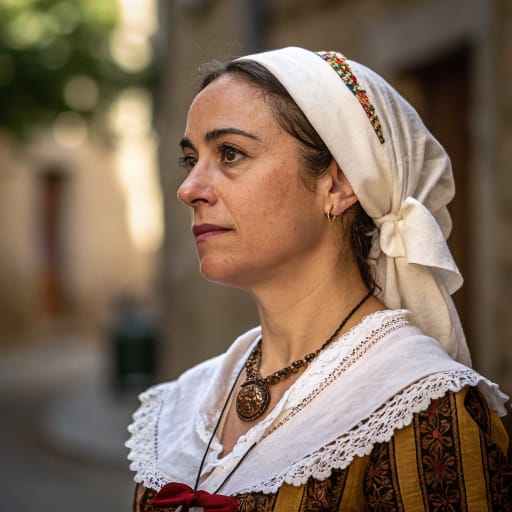
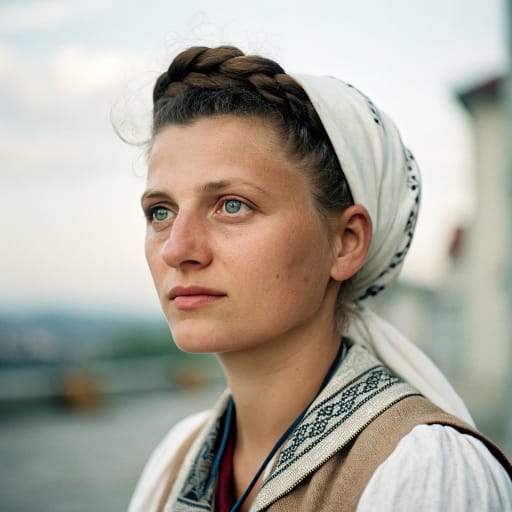
Geographic Distribution: Serbian populations across 5 countries
Each row is ranked by the group's share of that country's population, with the source citation drawn from published census and demographic surveys. Click through for the full per-country phenotype profile.
| Country | Share | Source |
|---|---|---|
| Serbia | 83.2% | Statistical Office of the Republic of Serbia 2022 Census; Serbs (~83.2%, ~5.4M+ of ~6.5M total). Predominantly Eastern Orthodox Christian (Serbian Orthodox Church) |
| Montenegro | 32.0% | Montenegro 2023 Census; Serbs (~32%, ~199,000+); the substantial Montenegrin Serb sub-population — the Montenegrin / Serb distinction is contested with substantial dual self-identification |
| Bosnia and Herzegovina | 30.5% | Bosnia 2013 Census; Bosnian Serbs (~30.5%, ~1.1M+); predominantly Eastern Orthodox Christian, concentrated in Republika Srpska (the Bosnian Serb entity) |
| Kosovo | 6.0% | Kosovo 2024 Census; Kosovar Serbs (~6%, ~95,000+); concentrated in northern Kosovo (the Mitrovica region) plus enclaves in central and southern Kosovo. Substantially reduced from pre-1999 ~200,000+ |
| Croatia | 3.2% | Croatia 2021 Census, Serbs (~3.2%, ~123,000+); declined substantially from ~12% in 1991 through the 1995 Operation Storm Croatian-Serb expulsion (~150,000-200,000+ Croatian Serbs displaced) plus continuing emigration |
Typical Serbian Phenotypes
Reference for AI generation: hair, eyes, skin, facial structure, build
Serbian Body & Anatomy Reference
Anatomy by feature, Southern European / Mediterranean phenotype
Serbian Boobs & Breasts
Serbian tits and boobs run medium-to-large cup, full, moderate-to-high projection, the classic Southern European / Mediterranean bust profile. Serbian nipples and areolas show medium-brown to dark-brown areolar pigmentation against the olive-to-light-brown skin tone, with areolar diameter typically in the 32-46mm range and forward-set positioning rather than the lighter pigmentation of the Northern European bust. Serbian breasts trend full and projecting, generally the classic Mediterranean curvy bust profile, a function of the mesomorph with full hip-and-bust deposition body habitus and the mean adult female BMI 24-28. For anatomically accurate AI-generated Serbian nudes the render preserves the medium-to-large cup, full, moderate-to-high projection shape, 32-46mm areolas with medium-brown to dark-brown pigmentation, and the torso proportions of the Southern European / Mediterranean phenotype.
Serbian Ass & Hips
Serbian hips and butt usually read as medium-to-full, moderate-to-high projection, broader hip profile. The skeletal base is medium-to-wide iliac crests, full gluteal-femoral fat distribution, the Southern European / Mediterranean pattern. Set against the slim Northern European narrow-hip pattern, the difference is easy to see, and the hip-to-waist ratio is often what identifies Serbian women in photos.
Serbian Vagina & Pussy
Expect medium-brown to dark-brown labial pigmentation, fuller labia minora on Serbian women, in keeping with Southern European / Mediterranean ancestry. The pubic hair is wavy-to-curly medium-coarse dark texture, dense distribution. Coloring should run evenly from the olive to medium skin of the thighs to the labia, and Serbian nude imagery should keep the hair's wavy-to-curly medium-coarse dark texture.
Serbian Dicks & Penis
Serbian dick and penile anatomy in adult AI generation should anchor on the regional reference data: regional mean ~13-14cm erect, moderate girth, and medium-brown shaft pigmentation. The Serbian cock profile reflects the Southern European / Mediterranean population's anthropometric measurements. The shaft pigmentation should track the surrounding olive to medium skin tone, and the pubic hair should keep its wavy-to-curly medium-coarse dark texture in the typical inverted-V escutcheon.
Serbian Body, Curves & Build
Serbian body type: mesomorph with full hip-and-bust deposition, with mean adult female BMI 24-28. This is the typical Southern European / Mediterranean build. Height range, shoulder-to-hip ratio and fat distribution all follow from it, which is what an accurate Serbian nude body should show.
Serbian Skin Tone & Hair Texture
Serbian skin tone falls in the olive to medium (Fitzpatrick III-IV) band, the surface signal most often miscalibrated by generic AI nude generators. Serbian hair texture is typically wavy-to-curly 2B-3B, dark-brown to black, characteristic of the Southern European / Mediterranean phenotype. In Serbian nude renders the skin should hold that band consistently across the body.
Explore phenotype categories
Structured taxonomy with peer-reviewed scales · 22 anatomical categories
Notable Serbian People
100 reference figures, sourced from Wikipedia
- Atanasije Nikolić, 1803-1882)
- Emilijan Josimović, 1823-1897)
- Nikola Djordjević, the 19th century)
- Aleksandar Bugarski, 1835-1891)
- Svetozar Ivačković, 1844-1924), post-Romantic architect
- Konstantin Jovanović, 1849-1923), architect who designed National assemblies of Serbia and Bulgaria…
- Milan Antonović, 1850-1929)
- Milica Krstić Čolak-Antić, 1887-1964), one of the most important female architects during the first half…
- Vladimir Nikolić, 1857-1922)
- Andra Stevanović, 1859-1929)
- Dimitrije T. Leko, 1864-1914), Serbian architect and urbanist
- Nikola Nestorović, 1868-1957)
- Danilo Vladisavljević, 1871-1923)
- Momčilo Tapavica, 1872-1949), designer of Novi Sad's Matica Srpska building; also 1st Serb to w…
- Petar Popović, 1873-1945)
- Petar Bajalović, 1876-1947)
- Branko Tanazević, 1876-1945)
- Jelisaveta Načić, 1876-1955), pioneer in women's architecture in Serbia
- Đura Bajalović, 1879-1949)
- Momir Korunović, 1883-1969)
- Dragiša Brašovan, 1887-1965), modernist architect, leading architect of the early 20th century …
- Jovanka Bončić-Katerinić, 1887-1966), architect, 1st woman engineer in Germany
- Milan Minić (architect), 1889-1961, architect
- Aleksandar Deroko, 1894-1988), architect, artist, professor and author
- Nikola Dobrović, 1897-1967)
- Milan Zloković, 1898-1965), architect, founder of the Group of Architects of Modern Expressions.
- Branislav Kojić, 1899-1986)
- Mihailo Janković, 1911-1976), architect who designed several important structures in Serbia
- Milica Šterić, 1914-1998), architect for Energoprojekt, built post World War 2 power plants
- Alexis Josic, 1921-2011), French architect
- Bogdan Bogdanović, 1922-2010), architect, urbanist and essayist, designed monumental concrete sc…
- Ivan Antić, 1923-2005), architect and academic, considered one of the former Yugoslavia's…
- Ilija Arnautović, 1924-2009), Yugoslav and Serbian architect, known for his projects during the…
- Ivanka Raspopović, 1930-2015), Serbian architect
- Predrag Ristić, 1931-2019), Serbian architect
- Ranko Radović, 1935-2005)
- Aleksandar Đokić, 1936-2002), architect known for Brutalist and postmodernist styles
- Zoran Bojović, 1936-2018), architect for Energoprojekt, worked in Africa
- Zoran Manević, 1937-2019), prominent Serbian architecture historian
- Ljiljana Bakić, 1939-2022), Serbian architect
- Jovan Prokopljević, born 1940)
- Louis and Dennis Astorino, born 1948), American architects of Serbian origin, Louis was the 1st American…
- Ksenija Bulatović, born 1967), architect
- Maja Vidaković Lalić, born 1972), architect
- Dubravka Sekulić, born 1980), architect and academic
- Petar Ubavkić, 1852-1910), recognized as the first sculptor of modern Serbia
- Đorđe Jovanović, 1861-1953), won prizes at the World Exhibitions in Paris 1889 and 1900 for th…
- Simeon Roksandić, 1874-1943), sculptor and academic, highly regarded for his bronzes and founta…
- Dragomir Arambašić, 1881-1945)
- Vukosava Velimirović, 1888-1965)
- Iva Despić-Simonović, 1891-1961)
- Risto Stijović, 1894-1974), sculptor, author of Monument to Franchet d'Esperey in Belgrade
- Sreten Stojanović, 1898-1960)
- John David Brcin, 1899-1983), Serbian American sculptor
- Yevgeny Vuchetich, 1908-1974)
- Vojin Bakić, 1915-1992), Yugoslav sculptor
- Bogosav Živković, 1920-2005)
- Jovan Soldatović, 1920-2005)
- Dragiša Stanisavljević, 1921-2012)
- Olga Jevrić, 1922-2014), awarded sculptor
- Matija Vuković, 1925-1985)
- Dušan Džamonja, 1928-2009), sculptor
- Miodrag Živković, 1928-2020)
- Slavomir Miletić, born 1930)
- Nebojša Mitrić, 1931-1989)
- Mirjana Isaković, born 1936), former professor at Faculty of Applied Arts
- Drinka Radovanović, born 1943), sculptor of many monuments to national heroes
- Slobodan Pejić, 1944-2006)
- Lilly Otasevic, born 1969), Serbian born Canadian sculptor/designer
- Mihailo Stošović, born 1971)
- Lovro Dobričević, of Kotor (c. 1420 to 1478), Venetian painter who first started to paint at th…
- Đorđe Mitrofanović, c. 1550 to 1630), Serbian fresco painter and muralist who travelled and worke…
- Joakim Marković, c. 1685 to 1757)
- Hristofor Žefarović, 1710-1753)
- Teodor Stefanov Gologlavac, 18th century)
- Janko Halkozović, 18th century)
- Jovan Četirević Grabovan, 1720-1781)
- Jakov Orfelin, early 18th century-1803)
- Vasa Ostojić, 1730-1791)
- Teodor Kračun, 1730-1781)
- Dimitrije Bačević, 1735-1770)
- Nikola Nešković, 1740-1789)
- Lazar Serdanović, 1744-1799)
- Simeon Lazović, c. 1745 to 1817)
- Teodor Ilić Češljar, 1746-1793)
- Stefan Gavrilović, c. 1750 to 1823)
- Jovan Pačić, 1771-1849)
- Pavel Đurković, 1772-1830)
- Aleksije Lazović, 1774-1873)
- Petar Nikolajević Moler, 1775-1816), revolutionary and painter
- Georgije Bakalović, 1786-1843), Serbian painter
- Konstantin Danil, 1798-1873), painter and portraitist of the 19th century
- Grigorije Davidović-Obšić, 18th century)
- Uroš Knežević, 1811-1876)
- Katarina Ivanović, 1811-1882)
- Dimitrije Avramović, 1815-1855), painter known best for his iconostasis and frescos.
- Pavel Petrović, 1818-1887)
- Novak Radonić, 1826-1890)
- Mina Karadžić, 1828-1894)
- Đura Jakšić, 1832-1878)
Erotic Poses & Sex Positions
From the pose catalog: 219 named positions with reference skeletons
Frequently asked questions about Serbian people
Where is the Serbian homeland?
The Serbian homeland is Serbia, Bosnia (Republika Srpska), Montenegro, Croatia, Kosovo, plus diaspora in Southern Europe.
What countries do Serbian people live in?
Serbian populations are documented across 5 countries: Serbia, Montenegro, Bosnia and Herzegovina, Kosovo, Croatia.






Make your own Serbian images
Five a day, free, no credits to buy. The studio starts from this group's phenotype data, so you can set body type, pose and style and keep the traits accurate.
Start with Serbian