No portrait yet
Ashkali and Balkan Egyptians Erotic
Kosovo above all (Ashkali in the center and east, Egyptians in the west), with Egyptian communities in Albania and North Macedonia and smaller numbers in Serbia and Montenegro
Albanian, Gheg and Tosk dialects (Indo-European, Albanian branch); Macedonian, Serbian or Turkish as second languages depending on locality
Predominantly Sunni Islam
Ashkali (central and eastern Kosovo) and Balkan Egyptians (western Kosovo, Albania, North Macedonia); grouped by outsiders with Roma as the RAE communities
About Ashkali and Balkan Egyptians People
The Ashkali and the Balkan Egyptians are two Albanian-speaking Muslim communities of the western Balkans who agree on one thing above all: they are not Roma. Outsiders have lumped them with Roma for centuries, and aid agencies still file all three under the acronym RAE, but neither community speaks Romani, and both trace their origins elsewhere. Egyptians say their ancestors came from the Nile, whether as soldiers in ancient armies, as Byzantine-era craftsmen, or with Ottoman garrisons. Ashkali point variously to Persia or to ancient Ashkelon. Most historians treat these accounts as origin legends and argue the two groups are Albanianized descendants of Roma. The communities reject that reading, and in a region where census categories have decided who gets burned out of a neighborhood, their self-definition is not an academic matter.
Their heartland is Kosovo. Ashkali cluster in the center and east, around Ferizaj, Fushë Kosovë, Lipjan and the Pristina hinterland. Egyptians concentrate in the west, on the Dukagjin plain around Gjakova, Peja, Istog and Deçan, with sister communities in North Macedonia (Ohrid, Struga, Bitola, Kičevo) and across Albania from Korçë to Tirana. The split between the two names is mostly geographic and organizational. The cultures overlap almost entirely. Both speak Albanian as a mother tongue, Gheg in Kosovo and Tosk in southern Albania, with Macedonian or Turkish added where neighbors require it. Nearly all are Sunni Muslims, and religion binds them to surrounding Albanians through shared mosques, holidays and wedding customs rather than setting them apart. For most of the twentieth century Yugoslav censuses counted them as Albanians or as Roma, depending on who was asking.
What set them apart was work. Egyptians were the blacksmiths and tinsmiths of Ottoman and Yugoslav market towns. Ashkali worked as landless farm laborers, musicians and craftsmen in mahalas on the edge of Albanian villages. Both organized as named communities only around 1990, as Yugoslavia broke apart and belonging to the wrong census category became dangerous. Egyptian associations formed in Ohrid and Kosovo first. Ashkali followed later in the decade. The 1999 war was the rupture. Accused by returning Albanians of siding with the Serbs, thousands were driven from their homes, and the March 2004 riots torched the Ashkali quarter of Vushtrri. Families spent years in lead-poisoned displacement camps outside Mitrovica, and thousands more were deported back from Germany during the 2010s. Today both groups hold reserved seats in the Kosovo Assembly, and Albania recognized Egyptians as a national minority in 2017, legal footing that sits awkwardly against persistent poverty and the school dropout rates of their children.
Related ethnic groups
Groups that share Ashkali and Balkan Egyptians's homeland, region, language, or religious tradition. These are likely candidates for comparative phenotype reference.
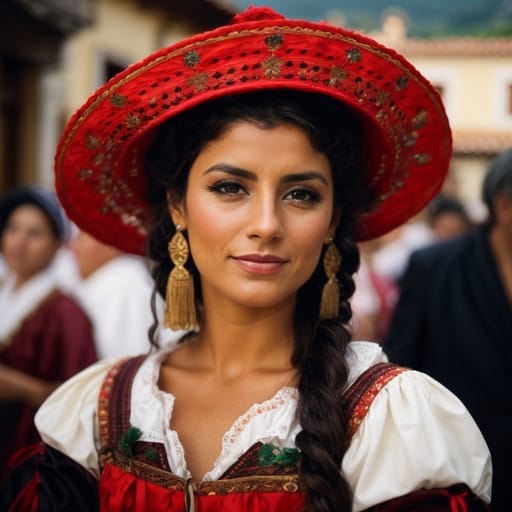
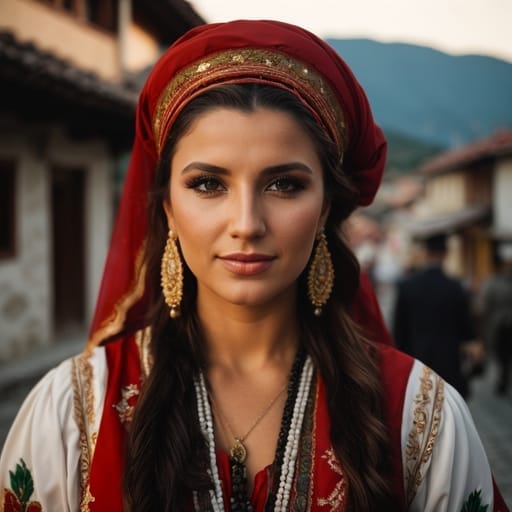
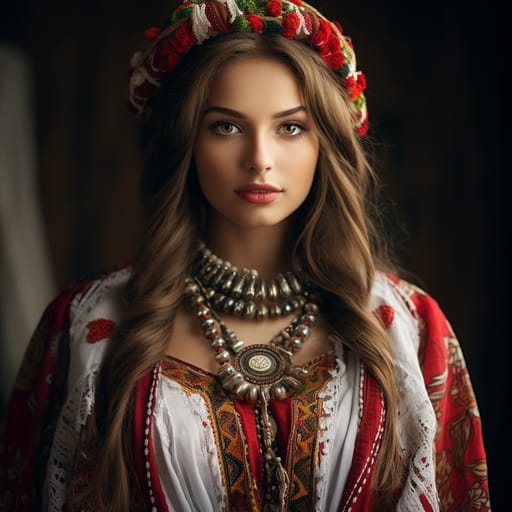
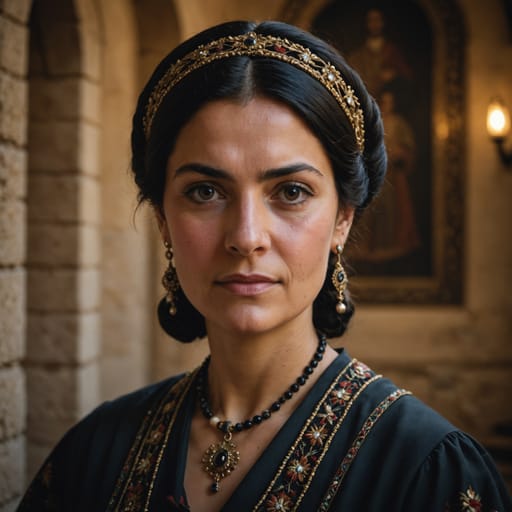
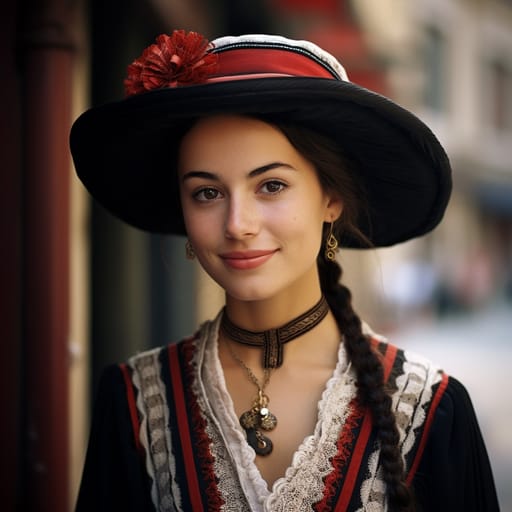
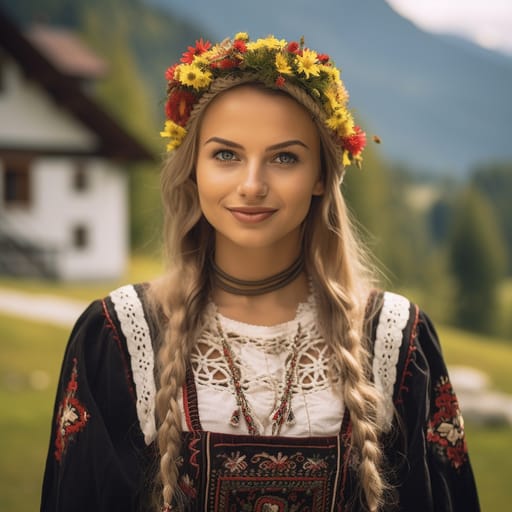
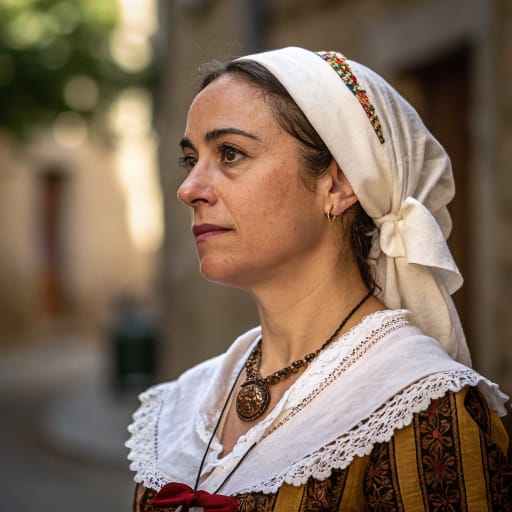
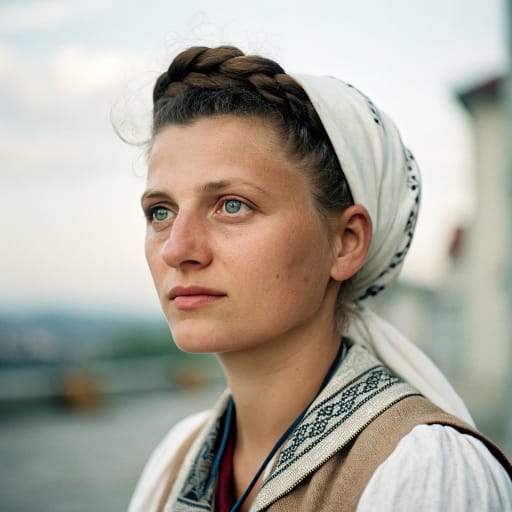
Typical Ashkali and Balkan Egyptians Phenotypes
Reference for AI generation: hair, eyes, skin, facial structure, build
Ashkali and Balkan Egyptians Body & Anatomy Reference
Anatomy by feature, Southern European / Mediterranean phenotype
Ashkali and Balkan Egyptians Boobs & Breasts
The typical Ashkali and Balkan Egyptians bust is medium-to-large cup, full, moderate-to-high projection, in line with the wider Southern European / Mediterranean pattern. Areolas usually fall in the 32-46mm range, with medium-brown to dark-brown areolar pigmentation against the olive-to-light-brown skin tone. Compared with the lighter pigmentation of the Northern European bust, Ashkali and Balkan Egyptians breasts sit forward and are generally full and projecting, generally the classic Mediterranean curvy bust profile. A faithful AI render of Ashkali and Balkan Egyptians tits keeps that shape and areola size.
Ashkali and Balkan Egyptians Ass & Hips
Butt shape among Ashkali and Balkan Egyptians women: medium-to-full, moderate-to-high projection, broader hip profile, over medium-to-wide iliac crests, full gluteal-femoral fat distribution. This follows Southern European / Mediterranean ancestry and looks quite unlike the slim Northern European narrow-hip pattern. An accurate Ashkali and Balkan Egyptians ass in adult AI imagery keeps both the silhouette and the overall build (mesomorph with full hip-and-bust deposition) instead of a generic average.
Ashkali and Balkan Egyptians Vagina & Pussy
Vulvar anatomy among Ashkali and Balkan Egyptians women: medium-brown to dark-brown labial pigmentation, fuller labia minora. Pubic hair tends to be wavy-to-curly medium-coarse dark texture, dense distribution, in the usual inverted-triangle pattern. Both follow Southern European / Mediterranean pigmentation, which is why Ashkali and Balkan Egyptians pussy renders should not fall back on a pale, sparse Western template.
Ashkali and Balkan Egyptians Dicks & Penis
The Ashkali and Balkan Egyptians cock profile, from Southern European / Mediterranean anthropometric data: regional mean ~13-14cm erect; moderate girth; medium-brown shaft pigmentation. Pubic hair has a wavy-to-curly medium-coarse dark texture and forms the usual inverted-V pattern. Whether Ashkali and Balkan Egyptians men are circumcised follows religious and cultural practice rather than phenotype.
Ashkali and Balkan Egyptians Body, Curves & Build
Build and curves among Ashkali and Balkan Egyptians women follow the Southern European / Mediterranean pattern: mesomorph with full hip-and-bust deposition, mean adult female BMI 24-28. Proportions matter as much as skin tone, so Ashkali and Balkan Egyptians figures should keep their regional height and limb ratios.
Ashkali and Balkan Egyptians Skin Tone & Hair Texture
The Ashkali and Balkan Egyptians skin range is olive to medium (Fitzpatrick III-IV), and hair tends to be wavy-to-curly 2B-3B, dark-brown to black. That combination marks the Southern European / Mediterranean phenotype, and skin tone is the trait AI generators most often get wrong for Ashkali and Balkan Egyptians women.
Explore phenotype categories
Structured taxonomy with peer-reviewed scales · 22 anatomical categories
Erotic Poses & Sex Positions
From the pose catalog: 219 named positions with reference skeletons
Frequently asked questions about Ashkali and Balkan Egyptians people
Where is the Ashkali and Balkan Egyptians homeland?
The Ashkali and Balkan Egyptians homeland is Kosovo above all (Ashkali in the center and east, Egyptians in the west), with Egyptian communities in Albania and North Macedonia and smaller numbers in Serbia and Montenegro in Southern Europe.
What language do Ashkali and Balkan Egyptians people speak?
Ashkali and Balkan Egyptians people primarily speak Albanian, Gheg and Tosk dialects (Indo-European, Albanian branch); Macedonian, Serbian or Turkish as second languages depending on locality.
What religion do Ashkali and Balkan Egyptians people practice?
The predominant religion among Ashkali and Balkan Egyptians people is Predominantly Sunni Islam.






Make your own Ashkali and Balkan Egyptians images
Five a day, free, no credits to buy. The studio starts from this group's phenotype data, so you can set body type, pose and style and keep the traits accurate.
Start with Ashkali and Balkan Egyptians