Help us get this right
Does this portrait look right for Æchilenenses?
One tap. It takes a second and it is recorded.
0 say it looks right, 1 says it looks off.
Æchilenenses Erotic
Western coast of Sardinia around the ancient city of Cornus, below the Montiferru massif, near present-day Cuglieri in the province of Oristano, Italy.
Paleo-Sardinian, also called Nuragic (unclassified, pre-Latin), with Punic (Semitic, Afroasiatic) in the towns; later Latin (Italic, Indo-European).
Indigenous Sardinian (Nuragic) cults mixed with Punic worship; Roman religion after the conquest, Christianity by late antiquity.
One of the tribes of ancient Sardinia listed by Ptolemy, also named Cornenses; part of the wider Nuragic and Sardo-Punic population of the island.
About Æchilenenses People
The Æchilenenses were an ancient people of western Sardinia, recorded in the second century AD by the geographer Ptolemy, who says they were also called the Cornenses, the people of the city of Cornus. They left no writing of their own, faded as a named group under Roman rule, and count today among the ancestors of modern Sardinians.
Nearly everything that can be said about them hangs on one line in Ptolemy's Geography and on the place it points to. Cornus stood on the island's west coast, below the old volcanic massif of Montiferru, near what is now Santa Caterina di Pittinuri in the comune of Cuglieri. Ptolemy's list sets the Æchilenenses between the Aesaronenses to the north and the Rucensi to the south. The double name is the interesting part. Cornenses is a plain Latin label, the kind an administrator gives to whoever lives around a town. Æchilenenses has the look of an older, local name that the Roman one never fully replaced, and its meaning is lost.
The country they held had been built over long before Carthage or Rome arrived. This part of Sardinia is thick with nuraghi, the stone towers of the Bronze Age islanders, and the people Ptolemy named were in all likelihood descended from those builders, layered with centuries of Punic settlement. Cornus itself was a Carthaginian foundation, and that mix mattered. In 215 BC, with Rome reeling from Cannae, a wealthy Sardo-Punic landowner named Hampsicora raised the island against Roman rule with Cornus as his base. Livy tells it: Hampsicora went inland to recruit the skin-clad Sardinians of the hills, his son Hostus gave battle too early and was routed, and when Carthaginian help finally landed the combined army was broken by Titus Manlius Torquatus. Hostus died on the field, Hampsicora killed himself on hearing of it, and Cornus fell within days. Livy calls it the chief town of the region, which puts the people around it at the center of the best-known Sardinian revolt against Rome.
After that the record goes quiet, as it does for defeated provincials. Cornus carried on as a Roman town and later gained an early Christian complex at nearby Columbaris, with basilicas and a baptistery. The local speech, a pre-Latin language surviving only in place names and scattered words, gave way to Latin, and that Latin became Sardinian. What remains of the Æchilenenses is a name in a Greek list, a ruined city above the sea, and a share in the ancestry of the people who still live under Montiferru.
Related ethnic groups
Groups that share Æchilenenses's homeland, region, language, or religious tradition. These are likely candidates for comparative phenotype reference.
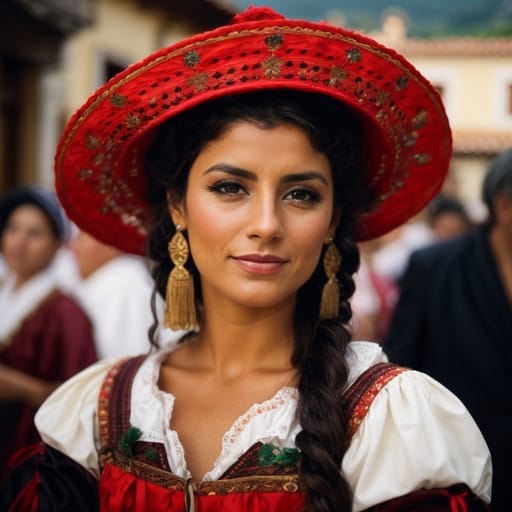
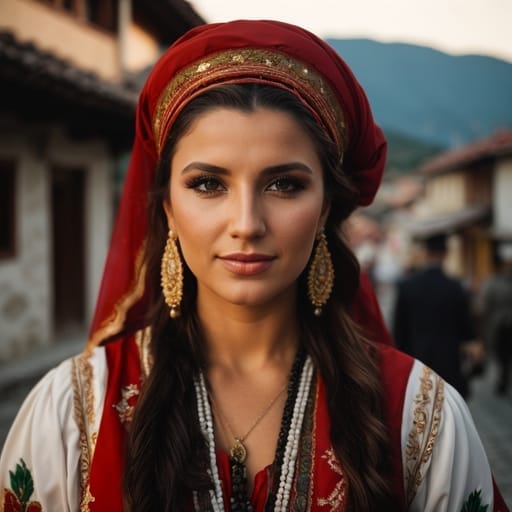
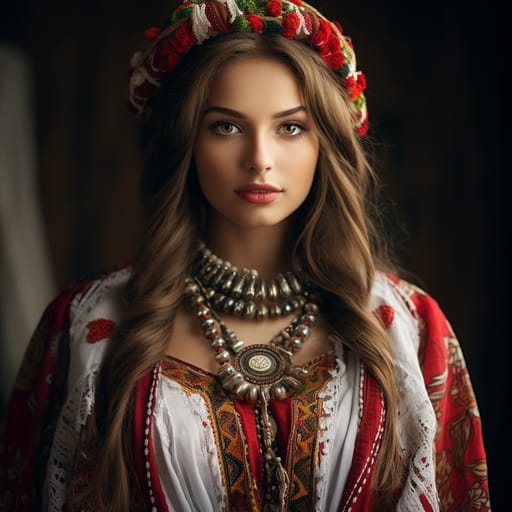
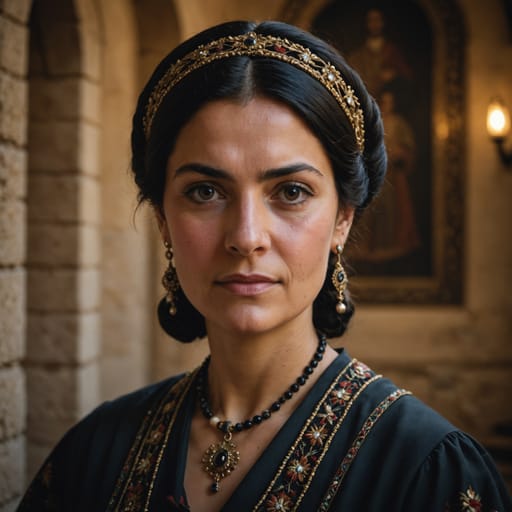
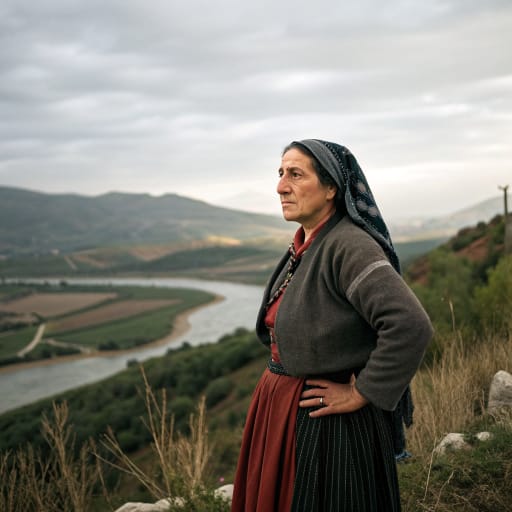
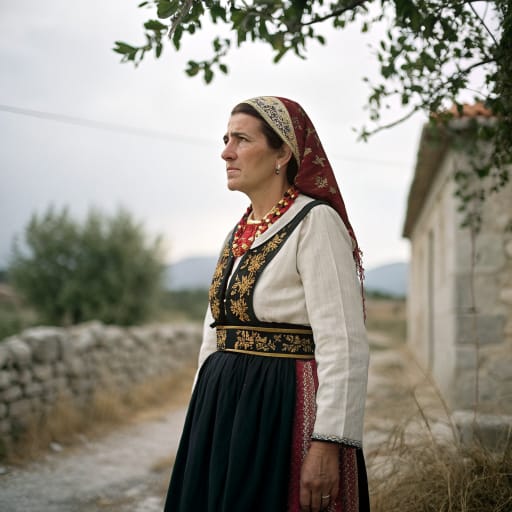
Typical Æchilenenses Phenotypes
Reference for AI generation: hair, eyes, skin, facial structure, build
Æchilenenses Body & Anatomy Reference
Per-feature anatomical profile for AI nude generation: Southern European / Mediterranean phenotype
Æchilenenses Boobs & Breasts
Bust reference for Æchilenenses women: medium-to-large cup, full, moderate-to-high projection, which is typical of Southern European / Mediterranean ancestry. Areolas measure about 32-46mm across, with medium-brown to dark-brown pigmentation. Body type (mesomorph with full hip-and-bust deposition) shapes the bust as well, so Æchilenenses tits are usually full and projecting, generally the classic Mediterranean curvy bust profile. In AI imagery, keep the forward-set shape rather than drifting toward the lighter pigmentation of the Northern European bust.
Æchilenenses Ass & Hips
The Æchilenenses ass is typically medium-to-full, moderate-to-high projection, broader hip profile, which sets it apart from the slim Northern European narrow-hip pattern. Underneath, the pelvis shows medium-to-wide iliac crests, full gluteal-femoral fat distribution, part of the Southern European / Mediterranean skeletal pattern. For Æchilenenses butt pics and AI renders, match that silhouette and the overall build (mesomorph with full hip-and-bust deposition).
Æchilenenses Vagina & Pussy
Æchilenenses pussy and vulvar anatomy presents medium-brown to dark-brown labial pigmentation, fuller labia minora, consistent with the Southern European / Mediterranean phenotype's pigmentation pattern. Æchilenenses pubic hair is typically wavy-to-curly medium-coarse dark texture, dense distribution, in the inverted-triangle pattern. For anatomically accurate Æchilenenses pussy renders the labial coloration should match the surrounding olive to medium skin tone with a continuous gradient, and the hair should keep its wavy-to-curly medium-coarse dark texture.
Æchilenenses Dicks & Penis
Æchilenenses dicks follow the Southern European / Mediterranean reference data: regional mean ~13-14cm erect; moderate girth; medium-brown shaft pigmentation. Shaft color should track the olive to medium skin tone with a smooth change toward the glans, and Æchilenenses pubic hair keeps its wavy-to-curly medium-coarse dark texture.
Æchilenenses Body, Curves & Build
Æchilenenses body type and overall build presents as mesomorph with full hip-and-bust deposition, with mean adult female BMI 24-28: the characteristic Southern European / Mediterranean habitus. Æchilenenses curves and proportions should keep the regional skeletal frame (height, shoulder-to-hip ratio, limb proportions) rather than a generic mesomorph default.
Æchilenenses Skin Tone & Hair Texture
Æchilenenses skin sits in the olive to medium (Fitzpatrick III-IV) band. Hair is typically wavy-to-curly 2B-3B, dark-brown to black, in keeping with the Southern European / Mediterranean phenotype. In nude renders the skin should stay one even tone from face to body, and body, pubic and head hair should match.
Explore phenotype categories
Structured taxonomy with peer-reviewed scales · 22 anatomical categories
Erotic Poses & Sex Positions
From the pose catalog: 219 named positions with reference skeletons
Frequently asked questions about Æchilenenses people
Where is the Æchilenenses homeland?
The Æchilenenses homeland is Western coast of Sardinia around the ancient city of Cornus, below the Montiferru massif, near present-day Cuglieri in the province of Oristano, Italy. in Southern Europe.
What language do Æchilenenses people speak?
Æchilenenses people primarily speak Paleo-Sardinian, also called Nuragic (unclassified, pre-Latin), with Punic (Semitic, Afroasiatic) in the towns; later Latin (Italic, Indo-European)..
What religion do Æchilenenses people practice?
The predominant religion among Æchilenenses people is Indigenous Sardinian (Nuragic) cults mixed with Punic worship; Roman religion after the conquest, Christianity by late antiquity..






Make your own Æchilenenses images
Five a day, free, no credits to buy. The studio starts from this group's phenotype data, so you can set body type, pose and style and keep the traits accurate.
Start with Æchilenenses