No portrait yet
Aequi Erotic
Central Apennines east of Rome: the upper Aniene, Turano and Salto valleys, across modern Lazio and Abruzzo, Italy
Aequian (Italic, probably Sabellic / Osco-Umbrian branch), attested only in names and fragments; replaced by Latin after the Roman conquest
Italic polytheism; linked in Roman tradition to the origin of the fetial rite; later Roman religion
Italic peoples, Sabellic (Osco-Umbrian) group; the Aequiculi (Aequicoli) of the Cicolano were the surviving remnant; frequent allies of the Volsci
About Aequi People
The Aequi were an ancient Italic people of the central Apennines, recorded from the early fifth century BC in the mountains east of Rome and broken as a nation by Rome in 304 BC. Their survivors were absorbed into the Roman citizen body, a small remnant called the Aequiculi held on in the upper Salto valley under a municipal government of their own into the imperial period, and the modern district of Cicolano in Lazio still carries a worn-down form of that name. Their country was the high valleys of the Aniene, Turano and Salto rivers, from around Subiaco across the Simbruini range to Carsoli and Tagliacozzo on the edge of the Fucine basin: ridges, passes and small hilltop settlements rather than cities. That geography shaped how Romans experienced them. Through most of the fifth century BC the Aequi came down each summer through the passes, often in concert with the Volsci to the south, and their forward base on Mount Algidus in the Alban Hills put raiding parties within a day's march of Rome itself. The most famous Roman parable of civic virtue, Cincinnatus called from his plow to a sixteen-day dictatorship, is a story about beating the Aequi at Algidus in 458 BC and sending the survivors under the yoke. Rome told that story for centuries. The Aequi were the shadow that made it worth telling.
Almost nothing survives in their own words. Their language was Italic and is usually placed in the Sabellic branch alongside Marsian and Sabine, but it is known only from names and scraps, and it was probably close enough to Latin that the two sides could understand each other across a battlefield. Their religion was the ordinary Italic polytheism of the highlands, with one tradition worth pausing on: Livy says Rome's fetial law, the priestly ritual for demanding satisfaction and declaring war, was borrowed from the Aequiculi. If so, the people Rome fought most stubbornly in its early years also supplied the ceremony that made those wars lawful. The end came fast. After the Aequi sided with the Samnites, Rome turned on them in 304 BC and, in Livy's account, stormed dozens of their hill towns within fifty days, burning most of them and bringing the Aequian name close to extinction. A final rising two years later was crushed, Latin colonies were planted at Alba Fucens and Carsioli to hold the passes, and land along the Aniene was carved into a new Roman voting tribe. What remains of the Aequi is a name on a map, a ritual formula, and a supporting role in one of Rome's founding myths.
Related ethnic groups
Groups that share Aequi's homeland, region, language, or religious tradition. These are likely candidates for comparative phenotype reference.
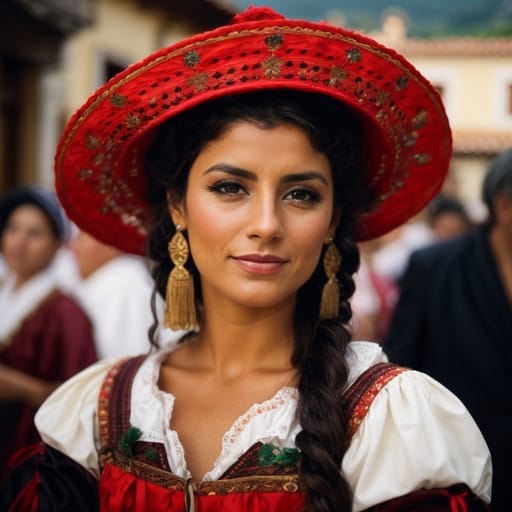
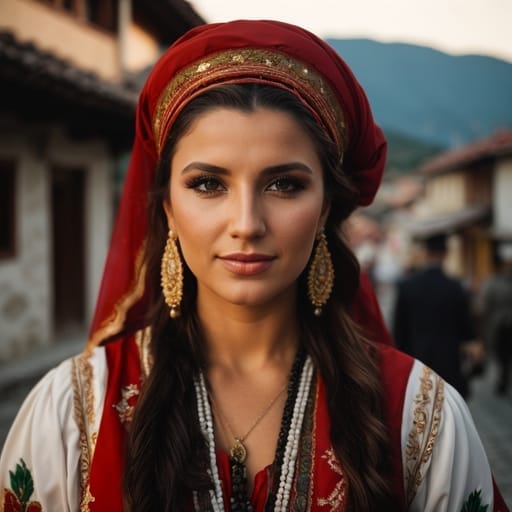
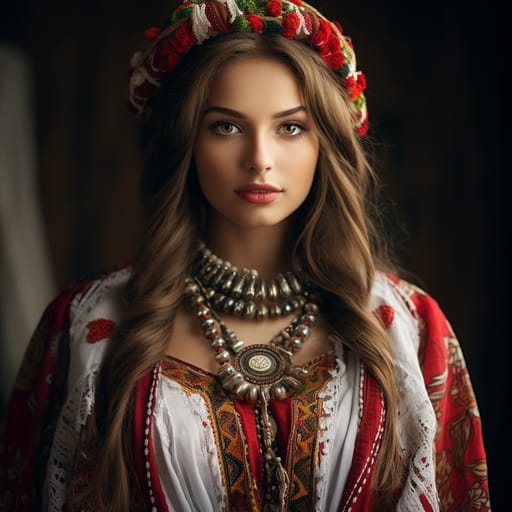
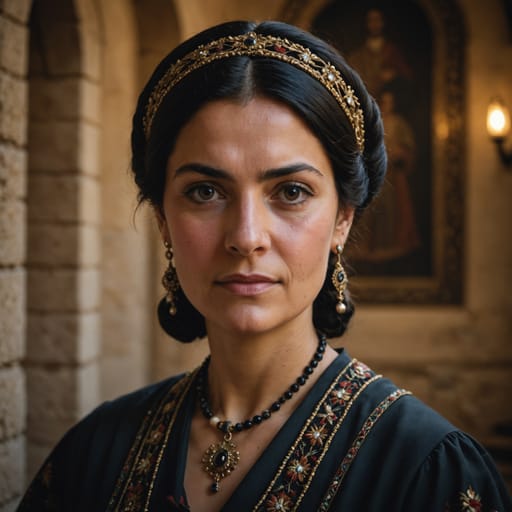
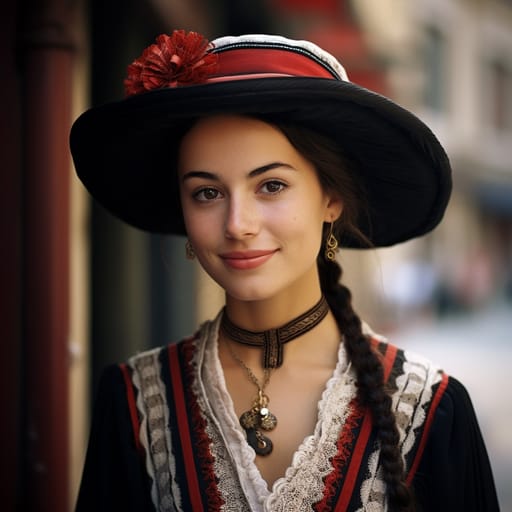

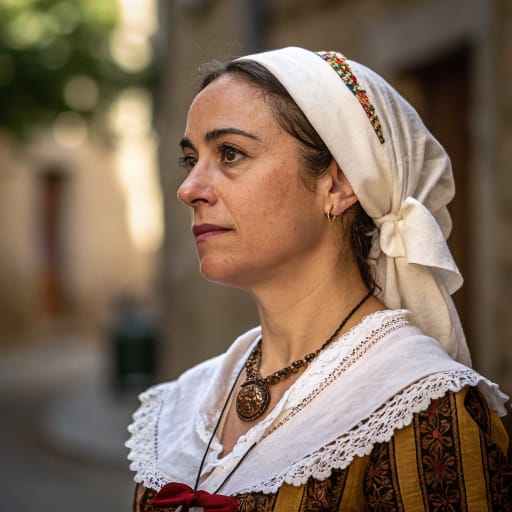
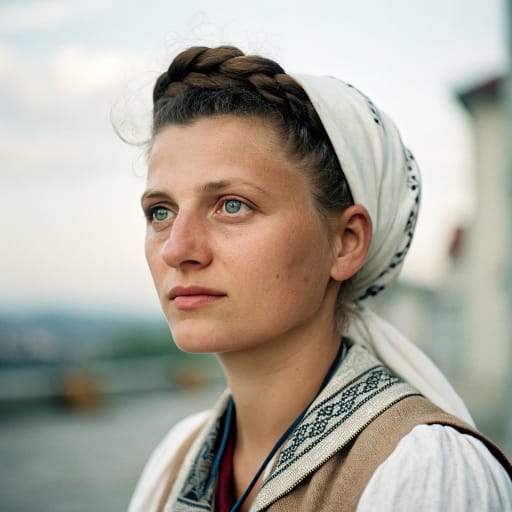
Typical Aequi Phenotypes
Reference for AI generation: hair, eyes, skin, facial structure, build
Aequi Body & Anatomy Reference
Southern European / Mediterranean phenotype: anatomy reference for AI nude generation
Aequi Boobs & Breasts
Bust reference for Aequi women: medium-to-large cup, full, moderate-to-high projection, which is typical of Southern European / Mediterranean ancestry. Areolas measure about 32-46mm across, with medium-brown to dark-brown pigmentation. Body type (mesomorph with full hip-and-bust deposition) shapes the bust as well, so Aequi tits are usually full and projecting, generally the classic Mediterranean curvy bust profile. In AI imagery, keep the forward-set shape rather than drifting toward the lighter pigmentation of the Northern European bust.
Aequi Ass & Hips
The Aequi ass is typically medium-to-full, moderate-to-high projection, broader hip profile, which sets it apart from the slim Northern European narrow-hip pattern. Underneath, the pelvis shows medium-to-wide iliac crests, full gluteal-femoral fat distribution, part of the Southern European / Mediterranean skeletal pattern. For Aequi butt pics and AI renders, match that silhouette and the overall build (mesomorph with full hip-and-bust deposition).
Aequi Vagina & Pussy
Aequi pussy and vulvar anatomy presents medium-brown to dark-brown labial pigmentation, fuller labia minora, consistent with the Southern European / Mediterranean phenotype's pigmentation pattern. Aequi pubic hair is typically wavy-to-curly medium-coarse dark texture, dense distribution, in the inverted-triangle pattern. For anatomically accurate Aequi pussy renders the labial coloration should match the surrounding olive to medium skin tone with a continuous gradient, and the hair should keep its wavy-to-curly medium-coarse dark texture.
Aequi Dicks & Penis
Aequi dicks follow the Southern European / Mediterranean reference data: regional mean ~13-14cm erect; moderate girth; medium-brown shaft pigmentation. Shaft color should track the olive to medium skin tone with a smooth change toward the glans, and Aequi pubic hair keeps its wavy-to-curly medium-coarse dark texture.
Aequi Body, Curves & Build
Aequi body type and overall build presents as mesomorph with full hip-and-bust deposition, with mean adult female BMI 24-28: the characteristic Southern European / Mediterranean habitus. Aequi curves and proportions should keep the regional skeletal frame (height, shoulder-to-hip ratio, limb proportions) rather than a generic mesomorph default.
Aequi Skin Tone & Hair Texture
Aequi skin sits in the olive to medium (Fitzpatrick III-IV) band. Hair is typically wavy-to-curly 2B-3B, dark-brown to black, in keeping with the Southern European / Mediterranean phenotype. In nude renders the skin should stay one even tone from face to body, and body, pubic and head hair should match.
Explore phenotype categories
Structured taxonomy with peer-reviewed scales · 22 anatomical categories
Erotic Poses & Sex Positions
From the pose catalog: 219 named positions with reference skeletons
Frequently asked questions about Aequi people
Where is the Aequi homeland?
The Aequi homeland is Central Apennines east of Rome: the upper Aniene, Turano and Salto valleys, across modern Lazio and Abruzzo, Italy in Southern Europe.
What language do Aequi people speak?
Aequi people primarily speak Aequian (Italic, probably Sabellic / Osco-Umbrian branch), attested only in names and fragments; replaced by Latin after the Roman conquest.
What religion do Aequi people practice?
The predominant religion among Aequi people is Italic polytheism; linked in Roman tradition to the origin of the fetial rite; later Roman religion.






Make your own Aequi images
Five a day, free, no credits to buy. The studio starts from this group's phenotype data, so you can set body type, pose and style and keep the traits accurate.
Start with Aequi