Help us get this right
Does this portrait look right for Andalusians?
Nobody has judged this one yet. You would be the first.
Andalusians Erotic
Andalusia, the eight southernmost provinces of Spain, with large diaspora communities in Catalonia, Madrid and western Europe.
Andalusian Spanish, a group of dialects of Spanish (Indo-European, Romance); Caló among some Gitano families.
Roman Catholic by tradition and public ritual, with low regular attendance and a substantial non-practicing and secular share.
Spaniards; internally split between western (Baja) and eastern (Alta) Andalusia, with a long-established Gitano (Romani) minority and a large emigrant population in Catalonia and northern Europe.
About Andalusians People
Andalusians are the people of Spain's deep south, eight provinces running from the Sierra Morena down to the Strait of Gibraltar, where fourteen kilometers of water separate Europe from Morocco. Any other Spaniard identifies them by ear before anything else. Andalusian speech drops the final s to a breath, flattens the Castilian th into an s or does the reverse depending on the town, softens consonants everywhere, and in the western provinces uses ustedes where the rest of Spain uses vosotros. It is the accent Spanish comedians reach for and Spanish broadcasters historically avoided, and it is also, by way of Seville's centuries-long monopoly on the American trade, a large part of why much of Latin America sounds the way it does. Around eight and a half million people live in Andalusia, more than in any other Spanish region, and several million more live outside it: the 1950s and 1960s emptied villages across Jaén, Almería and Granada into Barcelona, Madrid, and the factories of France, Germany and Switzerland.
The layers underneath are unusually legible. Cádiz was a Phoenician port and claims to be the oldest continuously inhabited city in western Europe, Rome called the province Baetica and got two emperors out of it, and from 711 the region was the core of al-Andalus, which is where the name comes from. Granada held out as a Muslim kingdom until 1492. What followed was resettlement from the north, the Morisco revolt in the Alpujarras, and the expulsions of 1609, so today's Andalusians largely descend from settlers who moved into a landscape someone else had built. The great estates carved up in that process left a rural underclass of landless day laborers, and helped make Spain the one country where anarchism became a mass movement. In 1980 Andalusia forced its way to full autonomy by referendum rather than accept a lesser tier, and February 28 is now its national day; its green and white flag and its anthem came from Blas Infante, a lawyer shot by Francoist militia in 1936. Catholicism here is less about Sunday attendance, which is low, than about the brotherhoods that carry the Holy Week floats through Seville and Málaga, the saeta sung raw from a balcony as they pass, and the enormous pilgrimage to El Rocío across the Doñana marshes. Flamenco was worked out in the nineteenth century in Cádiz, Jerez and Triana, largely by Andalusian Gitanos, and is still argued over rather than curated. Less exported: the verdiales bands of Málaga in their mirrored hats, the sung verse duels of the Alpujarra, and the almadraba tuna trap off Barbate, set the same way since the Phoenicians.
Related ethnic groups
Groups that share Andalusians's homeland, region, language, or religious tradition. These are likely candidates for comparative phenotype reference.
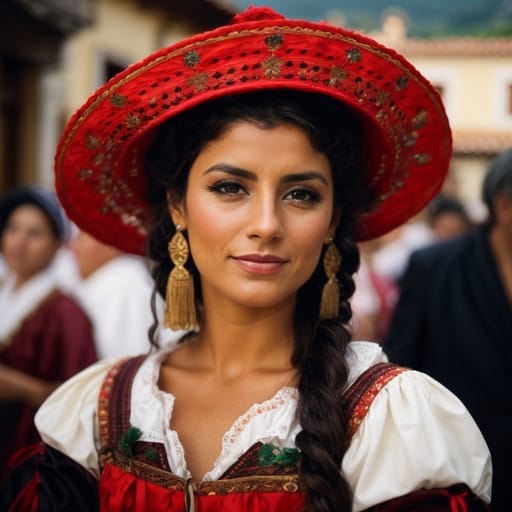
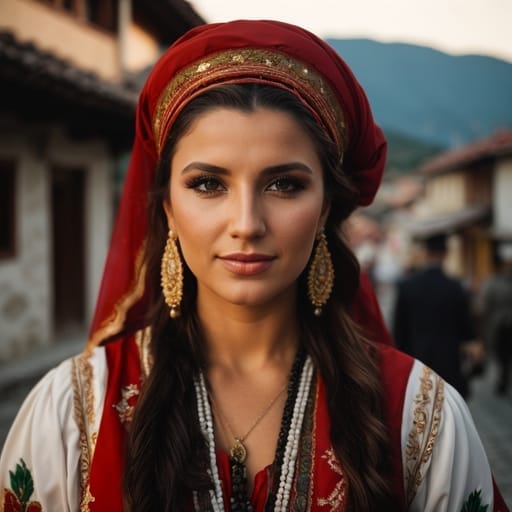
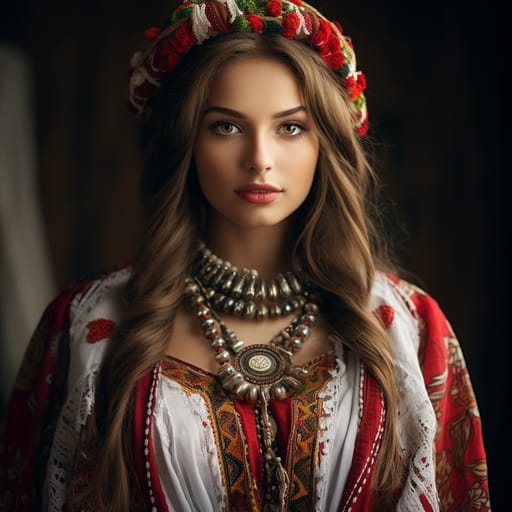
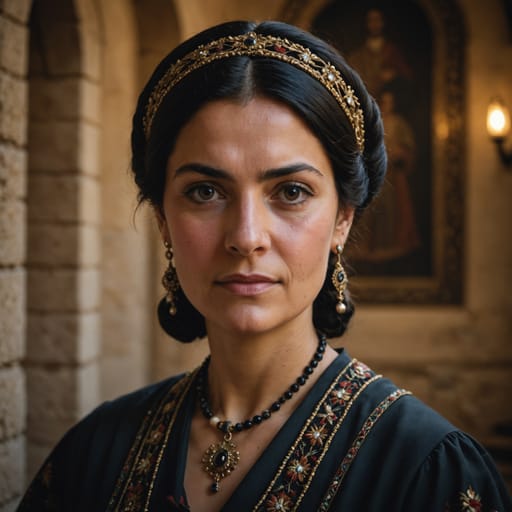
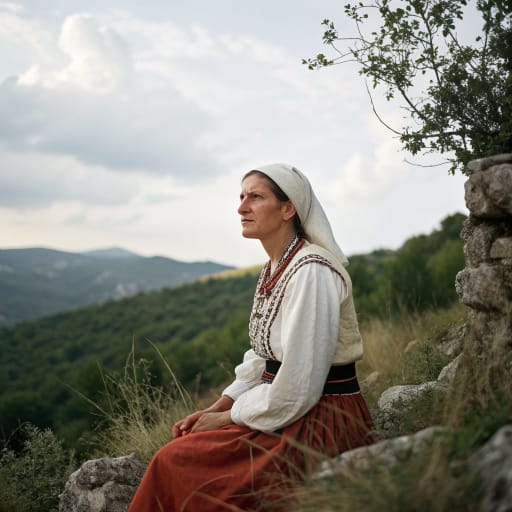
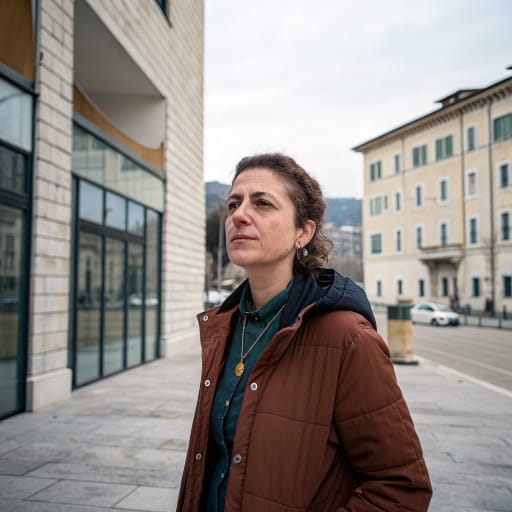
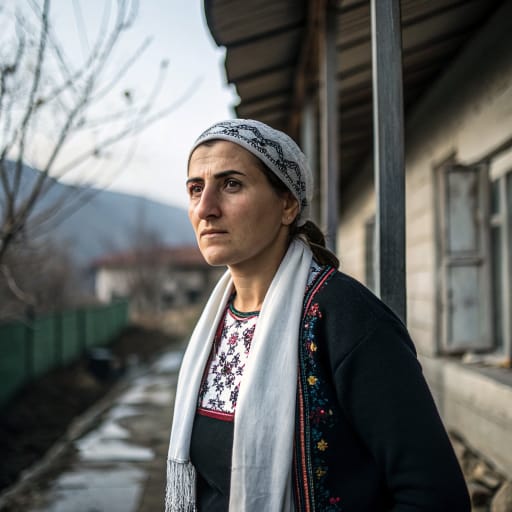
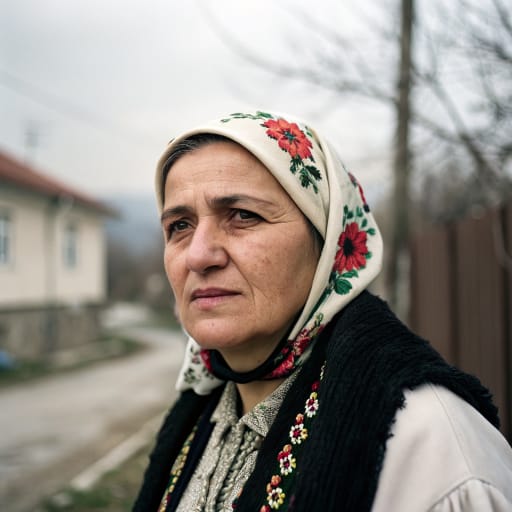
Typical Andalusians Phenotypes
Reference for AI generation: hair, eyes, skin, facial structure, build
Andalusians Body & Anatomy Reference
Per-feature anatomical profile for AI nude generation: Southern European / Mediterranean phenotype
Andalusians Boobs & Breasts
The typical Andalusians bust is medium-to-large cup, full, moderate-to-high projection, in line with the wider Southern European / Mediterranean pattern. Areolas usually fall in the 32-46mm range, with medium-brown to dark-brown areolar pigmentation against the olive-to-light-brown skin tone. Compared with the lighter pigmentation of the Northern European bust, Andalusians breasts sit forward and are generally full and projecting, generally the classic Mediterranean curvy bust profile. A faithful AI render of Andalusians tits keeps that shape and areola size.
Andalusians Ass & Hips
Butt shape among Andalusians women: medium-to-full, moderate-to-high projection, broader hip profile, over medium-to-wide iliac crests, full gluteal-femoral fat distribution. This follows Southern European / Mediterranean ancestry and looks quite unlike the slim Northern European narrow-hip pattern. An accurate Andalusians ass in adult AI imagery keeps both the silhouette and the overall build (mesomorph with full hip-and-bust deposition) instead of a generic average.
Andalusians Vagina & Pussy
Vulvar anatomy among Andalusians women: medium-brown to dark-brown labial pigmentation, fuller labia minora. Pubic hair tends to be wavy-to-curly medium-coarse dark texture, dense distribution, in the usual inverted-triangle pattern. Both follow Southern European / Mediterranean pigmentation, which is why Andalusians pussy renders should not fall back on a pale, sparse Western template.
Andalusians Dicks & Penis
The Andalusians cock profile, from Southern European / Mediterranean anthropometric data: regional mean ~13-14cm erect; moderate girth; medium-brown shaft pigmentation. Pubic hair has a wavy-to-curly medium-coarse dark texture and forms the usual inverted-V pattern. Whether Andalusians men are circumcised follows religious and cultural practice rather than phenotype.
Andalusians Body, Curves & Build
Build and curves among Andalusians women follow the Southern European / Mediterranean pattern: mesomorph with full hip-and-bust deposition, mean adult female BMI 24-28. Proportions matter as much as skin tone, so Andalusians figures should keep their regional height and limb ratios.
Andalusians Skin Tone & Hair Texture
The Andalusians skin range is olive to medium (Fitzpatrick III-IV), and hair tends to be wavy-to-curly 2B-3B, dark-brown to black. That combination marks the Southern European / Mediterranean phenotype, and skin tone is the trait AI generators most often get wrong for Andalusians women.
Explore phenotype categories
Structured taxonomy with peer-reviewed scales · 22 anatomical categories
Erotic Poses & Sex Positions
From the pose catalog: 219 named positions with reference skeletons
Frequently asked questions about Andalusians people
Where is the Andalusians homeland?
The Andalusians homeland is Andalusia, the eight southernmost provinces of Spain, with large diaspora communities in Catalonia, Madrid and western Europe. in Southern Europe.
What language do Andalusians people speak?
Andalusians people primarily speak Andalusian Spanish, a group of dialects of Spanish (Indo-European, Romance); Caló among some Gitano families..
What religion do Andalusians people practice?
The predominant religion among Andalusians people is Roman Catholic by tradition and public ritual, with low regular attendance and a substantial non-practicing and secular share..






Make your own Andalusians images
Five a day, free, no credits to buy. The studio starts from this group's phenotype data, so you can set body type, pose and style and keep the traits accurate.
Start with Andalusians