No portrait yet
Osci Erotic
Campania in southern Italy, the plain around Capua, Nola, Atella and the Bay of Naples, including Pompeii and Herculaneum
Oscan (Indo-European, Italic, Sabellic or Osco-Umbrian branch), written in a native Etruscan-derived alphabet and later in Greek and Latin letters
Italic polytheism, with deities including Mefitis, Herentas, Kerres, Mamers and Diúveí (Jupiter)
Sabellic Italic peoples; kin to the Samnites, Campanians, Lucanians, Bruttii and Frentani; identified by ancient writers with the Opici and sometimes the Ausones
About Osci People
The Osci were an ancient Italic people of Campania, the plain south of Rome around Capua, Nola and the Bay of Naples, attested from the sixth or fifth century BCE until they dissolved into the Roman citizen body after the Social War of the early first century BCE. Their name outlived them. Oscan became the label for a whole family of southern Italian speech, so that Samnites, Lucanians and Bruttii are all called Oscan speakers even though the Osci proper were a smaller, older population of the coastal lowlands. Greeks called them Opikoi, Romans Opici or Osci, and Strabo says the ground under Pompeii was Oscan before it was Etruscan, Samnite or Roman.
Language made them a people. Oscan sits in the Sabellic branch of Italic, a sibling of Latin rather than a dialect of it, with its own sounds and its own alphabet borrowed from the Etruscans and adjusted to fit. Their word for the community, touto, and their chief magistrate, the meddix tuticus, survive on bronze tablets and city walls. In the fifth century BCE highland Samnites came down and took Capua and Cumae, and the population that came out of that merger is what later writers usually mean by Oscan Campania. Capua allied with Rome in 343 BCE, went over to Hannibal in 216 and lost its self-government for it. The Social War of 91 to 87 BCE was the last stand of Oscan political identity, with rebel coins stamped Víteliú, the Oscan form of Italia. Rome won, extended citizenship, and Latin finished the job within a few generations. Oscan inscriptions were still visible on Pompeian walls when Vesuvius buried the town in 79 CE.
Their religion was Italic polytheism with a local accent: Mefitis of the sulfurous springs, Herentas for love, Kerres for grain, Mamers for war. The custom worth knowing is the Atellan farce, a masked comic theater from the Oscan town of Atella built on stock characters, the fool Maccus, the fat-cheeked Bucco, the old man Pappus, the hunchbacked schemer Dossennus, which Rome adopted wholesale and which some historians trace forward to commedia dell'arte. Warriors in Campanian tomb paintings wear the broad bronze belt that marked an Oscan man, and that belt turns up in graves across the region. Their descendants are, in plain terms, the people of Campania today, who never left.
Related ethnic groups
Groups that share Osci's homeland, region, language, or religious tradition. These are likely candidates for comparative phenotype reference.
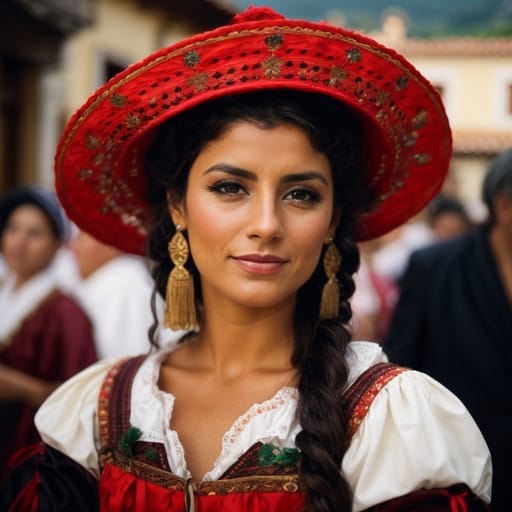
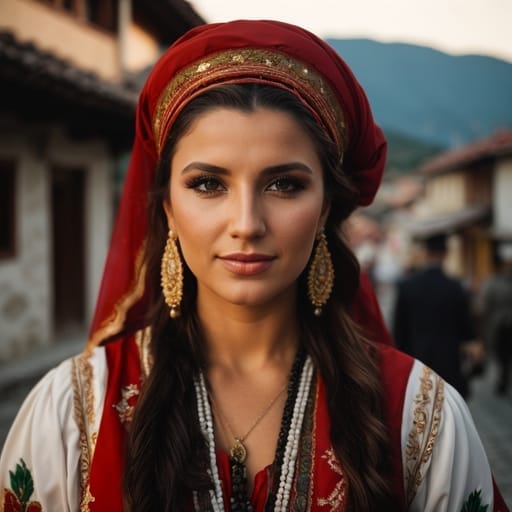
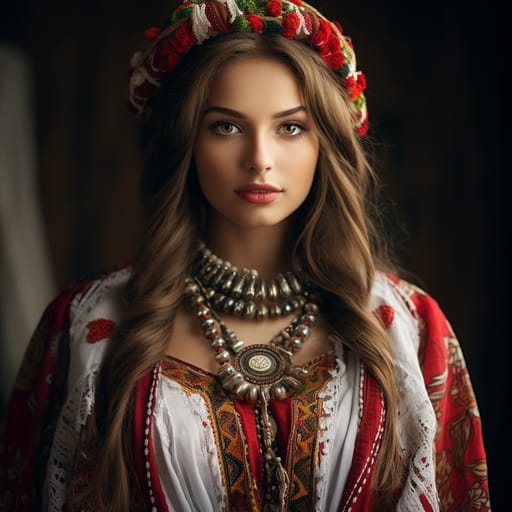
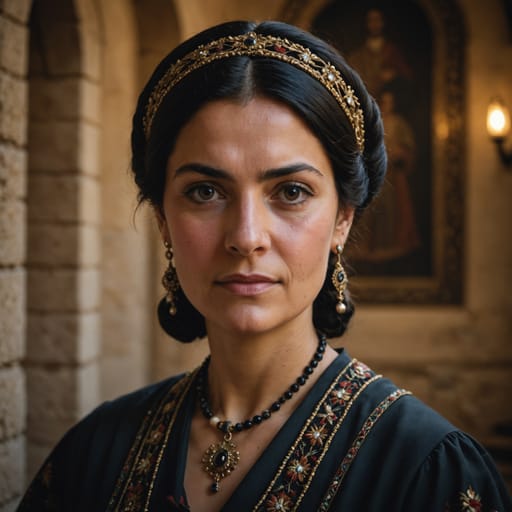
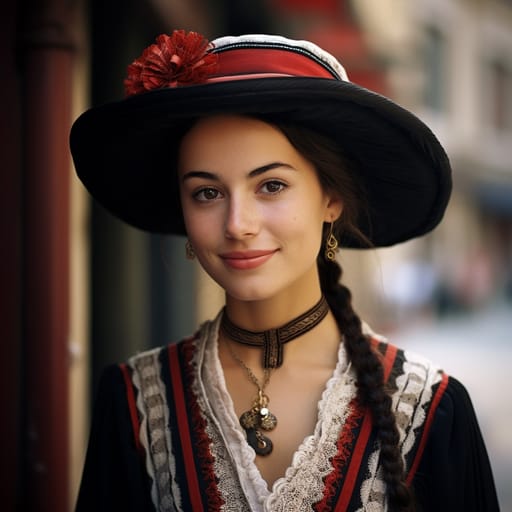
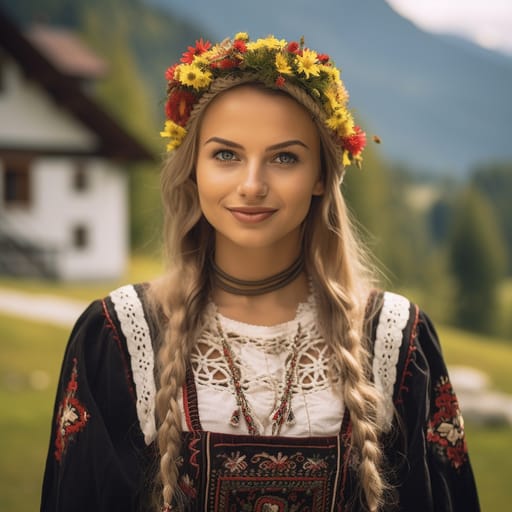
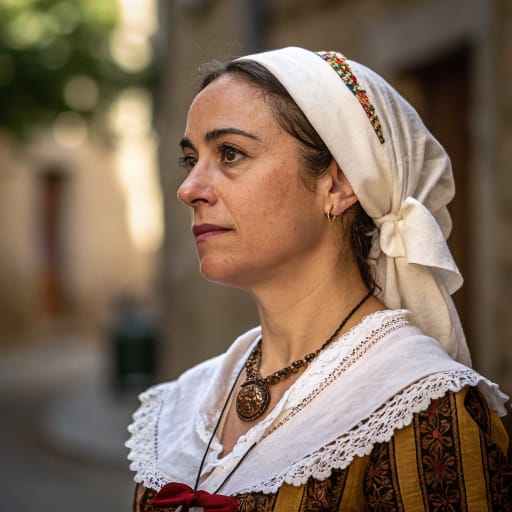
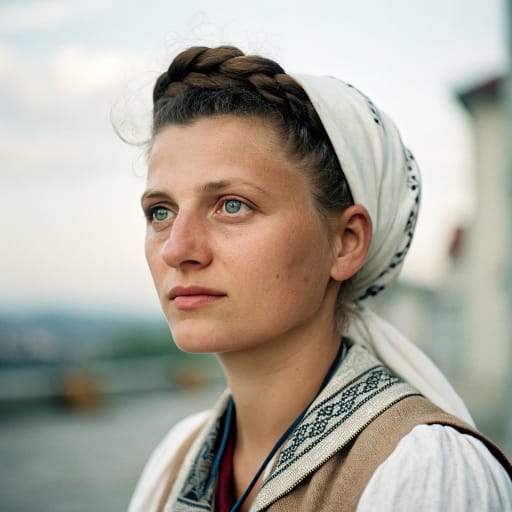
Typical Osci Phenotypes
Reference for AI generation: hair, eyes, skin, facial structure, build
Osci Body & Anatomy Reference
Per-feature anatomical profile for AI nude generation: Southern European / Mediterranean phenotype
Osci Boobs & Breasts
Osci tits and boobs run medium-to-large cup, full, moderate-to-high projection, the classic Southern European / Mediterranean bust profile. Osci nipples and areolas show medium-brown to dark-brown areolar pigmentation against the olive-to-light-brown skin tone, with areolar diameter typically in the 32-46mm range and forward-set positioning rather than the lighter pigmentation of the Northern European bust. Osci breasts trend full and projecting, generally the classic Mediterranean curvy bust profile, a function of the mesomorph with full hip-and-bust deposition body habitus and the mean adult female BMI 24-28. For anatomically accurate AI-generated Osci nudes the render preserves the medium-to-large cup, full, moderate-to-high projection shape, 32-46mm areolas with medium-brown to dark-brown pigmentation, and the torso proportions of the Southern European / Mediterranean phenotype.
Osci Ass & Hips
Osci hips and butt usually read as medium-to-full, moderate-to-high projection, broader hip profile. The skeletal base is medium-to-wide iliac crests, full gluteal-femoral fat distribution, the Southern European / Mediterranean pattern. Set against the slim Northern European narrow-hip pattern, the difference is easy to see, and the hip-to-waist ratio is often what identifies Osci women in photos.
Osci Vagina & Pussy
Expect medium-brown to dark-brown labial pigmentation, fuller labia minora on Osci women, in keeping with Southern European / Mediterranean ancestry. The pubic hair is wavy-to-curly medium-coarse dark texture, dense distribution. Coloring should run evenly from the olive to medium skin of the thighs to the labia, and Osci nude imagery should keep the hair's wavy-to-curly medium-coarse dark texture.
Osci Dicks & Penis
Osci dick and penile anatomy in adult AI generation should anchor on the regional reference data: regional mean ~13-14cm erect, moderate girth, and medium-brown shaft pigmentation. The Osci cock profile reflects the Southern European / Mediterranean population's anthropometric measurements. The shaft pigmentation should track the surrounding olive to medium skin tone, and the pubic hair should keep its wavy-to-curly medium-coarse dark texture in the typical inverted-V escutcheon.
Osci Body, Curves & Build
Osci body type: mesomorph with full hip-and-bust deposition, with mean adult female BMI 24-28. This is the typical Southern European / Mediterranean build. Height range, shoulder-to-hip ratio and fat distribution all follow from it, which is what an accurate Osci nude body should show.
Osci Skin Tone & Hair Texture
Osci skin tone falls in the olive to medium (Fitzpatrick III-IV) band, the surface signal most often miscalibrated by generic AI nude generators. Osci hair texture is typically wavy-to-curly 2B-3B, dark-brown to black, characteristic of the Southern European / Mediterranean phenotype. In Osci nude renders the skin should hold that band consistently across the body.
Explore phenotype categories
Structured taxonomy with peer-reviewed scales · 22 anatomical categories
Erotic Poses & Sex Positions
From the pose catalog: 219 named positions with reference skeletons
Frequently asked questions about Osci people
Where is the Osci homeland?
The Osci homeland is Campania in southern Italy, the plain around Capua, Nola, Atella and the Bay of Naples, including Pompeii and Herculaneum in Southern Europe.
What language do Osci people speak?
Osci people primarily speak Oscan (Indo-European, Italic, Sabellic or Osco-Umbrian branch), written in a native Etruscan-derived alphabet and later in Greek and Latin letters.
What religion do Osci people practice?
The predominant religion among Osci people is Italic polytheism, with deities including Mefitis, Herentas, Kerres, Mamers and Diúveí (Jupiter).






Make your own Osci images
Five a day, free, no credits to buy. The studio starts from this group's phenotype data, so you can set body type, pose and style and keep the traits accurate.
Start with Osci