Help us get this right
Does this portrait look right for Arvanites?
One tap. It takes a second and it is recorded.
0 say it looks right, 1 says it looks off.
Arvanites Erotic
Attica, Boeotia and the Peloponnese, Greece
Christianity (Greek Orthodox)
Albanian diaspora in Greece
About Arvanites People
Arvanites are a population group in Greece of Albanian origin, traditionally settled in Attica, Boeotia, the Peloponnese, Euboea and several islands and villages of central and southern Greece. They speak Arvanitika, a variety of Tosk Albanian within the Indo-European family, and are Greek Orthodox Christians. Having migrated southward from the late Middle Ages onward, the Arvanites are today largely assimilated into the wider Greek nation, and Arvanitika has become severely endangered.
Society and subsistence
Arvanite communities were historically farmers, herders and seafarers who settled rural districts and helped repopulate parts of the Greek mainland and islands. Over centuries they identified strongly with Orthodox Christianity and with Greek national life, and they played a prominent part in the Greek War of Independence, supplying noted fighters and naval families. Because their sense of belonging was bound up with religion and with the Greek state rather than with a separate ethnic project, the Arvanites integrated thoroughly, and use of Arvanitika retreated to older speakers and private settings.
Appearance and adornment
Arvanites are physically indistinguishable from other southern Greeks, typically with olive skin, dark hair and brown eyes. Their historic dress followed the broader regional patterns of Greece rather than a separate ethnic costume: men in earlier generations wore the white pleated fustanella kilt with sash and cap, while women wore embroidered dresses, aprons, headscarves and coin jewelry appropriate to their district. Today the Arvanites wear ordinary modern Greek clothing, and traditional costume appears mainly at folk festivals and in the context of national heritage.
Related ethnic groups
Groups that share Arvanites's homeland, region, language, or religious tradition. These are likely candidates for comparative phenotype reference.
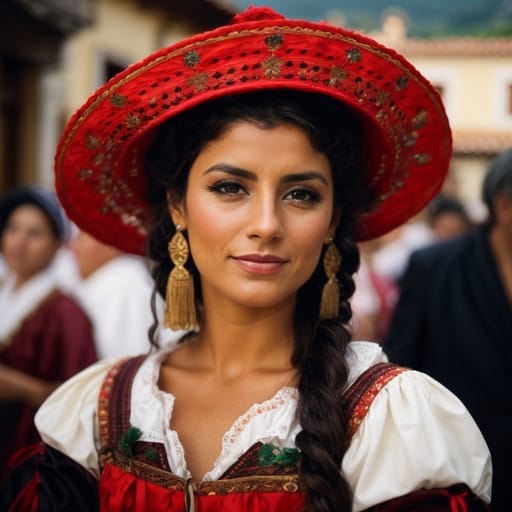
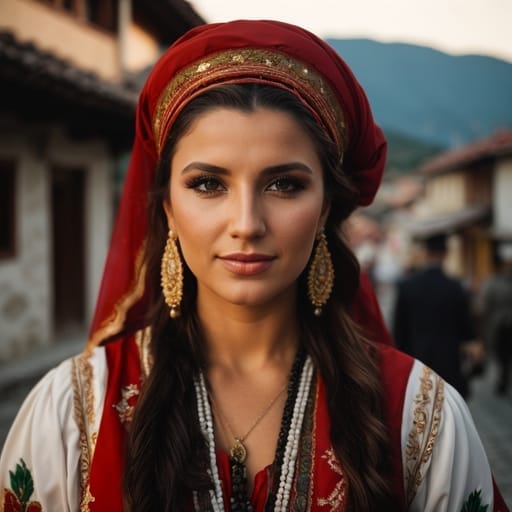
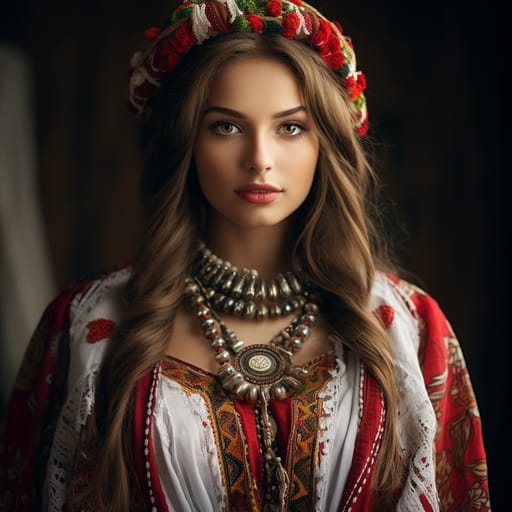
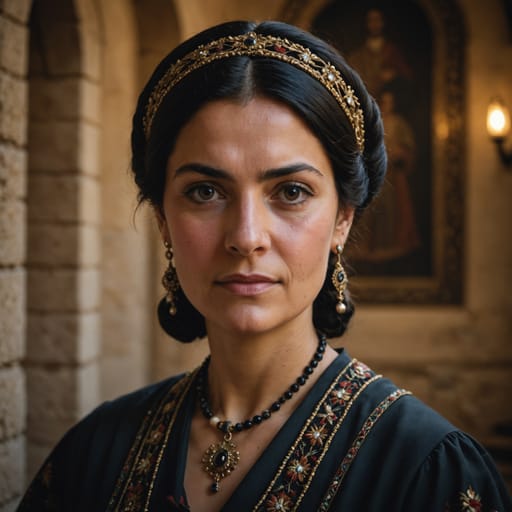
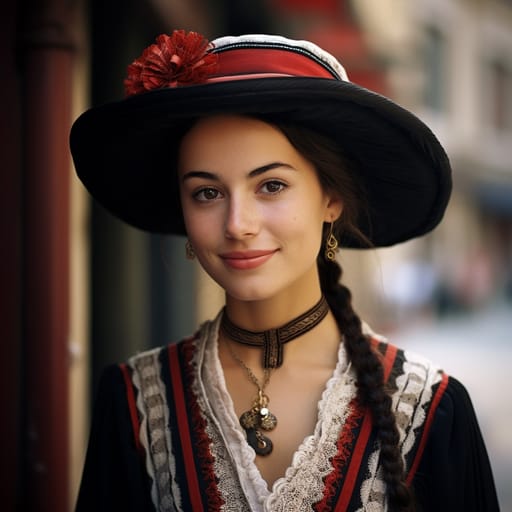
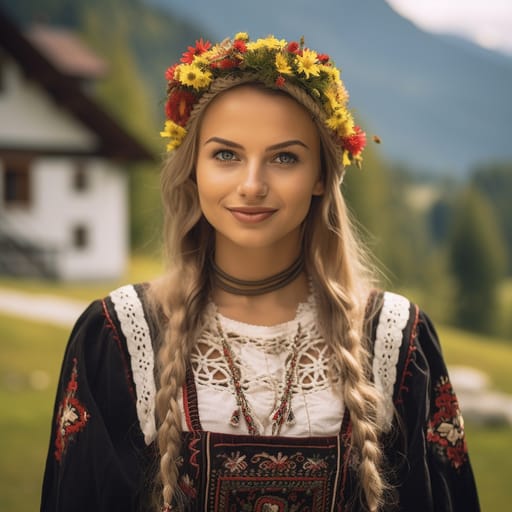
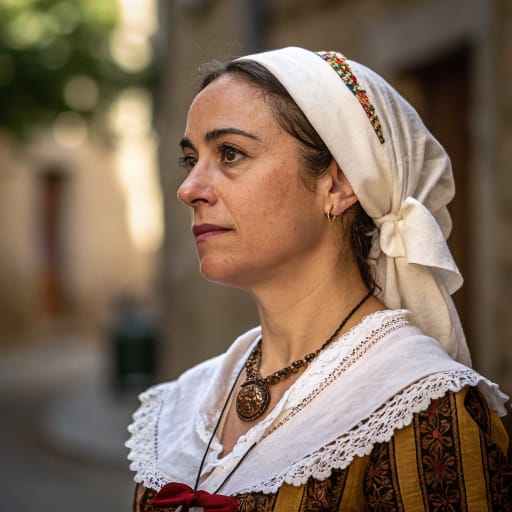
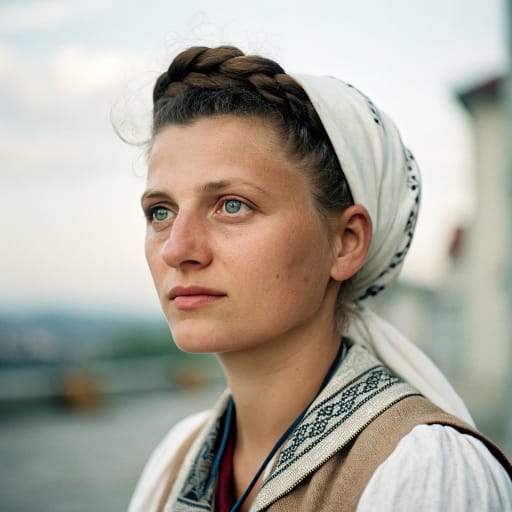
Typical Arvanites Phenotypes
Reference for AI generation: hair, eyes, skin, facial structure, build
Arvanites Body & Anatomy Reference
Anatomy by feature, Southern European / Mediterranean phenotype
Arvanites Boobs & Breasts
The typical Arvanites bust is medium-to-large cup, full, moderate-to-high projection, in line with the wider Southern European / Mediterranean pattern. Areolas usually fall in the 32-46mm range, with medium-brown to dark-brown areolar pigmentation against the olive-to-light-brown skin tone. Compared with the lighter pigmentation of the Northern European bust, Arvanites breasts sit forward and are generally full and projecting, generally the classic Mediterranean curvy bust profile. A faithful AI render of Arvanites tits keeps that shape and areola size.
Arvanites Ass & Hips
Butt shape among Arvanites women: medium-to-full, moderate-to-high projection, broader hip profile, over medium-to-wide iliac crests, full gluteal-femoral fat distribution. This follows Southern European / Mediterranean ancestry and looks quite unlike the slim Northern European narrow-hip pattern. An accurate Arvanites ass in adult AI imagery keeps both the silhouette and the overall build (mesomorph with full hip-and-bust deposition) instead of a generic average.
Arvanites Vagina & Pussy
Vulvar anatomy among Arvanites women: medium-brown to dark-brown labial pigmentation, fuller labia minora. Pubic hair tends to be wavy-to-curly medium-coarse dark texture, dense distribution, in the usual inverted-triangle pattern. Both follow Southern European / Mediterranean pigmentation, which is why Arvanites pussy renders should not fall back on a pale, sparse Western template.
Arvanites Dicks & Penis
The Arvanites cock profile, from Southern European / Mediterranean anthropometric data: regional mean ~13-14cm erect; moderate girth; medium-brown shaft pigmentation. Pubic hair has a wavy-to-curly medium-coarse dark texture and forms the usual inverted-V pattern. Whether Arvanites men are circumcised follows religious and cultural practice rather than phenotype.
Arvanites Body, Curves & Build
Build and curves among Arvanites women follow the Southern European / Mediterranean pattern: mesomorph with full hip-and-bust deposition, mean adult female BMI 24-28. Proportions matter as much as skin tone, so Arvanites figures should keep their regional height and limb ratios.
Arvanites Skin Tone & Hair Texture
The Arvanites skin range is olive to medium (Fitzpatrick III-IV), and hair tends to be wavy-to-curly 2B-3B, dark-brown to black. That combination marks the Southern European / Mediterranean phenotype, and skin tone is the trait AI generators most often get wrong for Arvanites women.
Explore phenotype categories
Structured taxonomy with peer-reviewed scales · 22 anatomical categories
Notable Arvanites People
9 reference figures, sourced from Wikipedia
- Laskarina Bouboulina, female member of Filiki Etaireia
- Georgios Kountouriotis, from Hydra, admiral (and briefly Prime Minister)
- Antonios Kriezis, also served in the Greek navy during the Revolution)
- Theodoros Pangalos, former minister of foreign affairs and deputy prime minister
- Archbishop Ieronymos II of Athens, incumbent Archbishop of Athens.
- Anastas Kullurioti, Albanian nationalist author
- Vangelis Liapis, folklorist and Albanolog
- Tasos Neroutsos, physician and scholar
- Periklis Papapetrou, architect and politician
Erotic Poses & Sex Positions
From the pose catalog: 219 named positions with reference skeletons
Frequently asked questions about Arvanites people
Where is the Arvanites homeland?
The Arvanites homeland is Attica, Boeotia and the Peloponnese, Greece in Southern Europe.
What language do Arvanites people speak?
Arvanites people primarily speak Arvanitika (Indo-European, Albanian; Tosk).
What religion do Arvanites people practice?
The predominant religion among Arvanites people is Christianity (Greek Orthodox).






Make your own Arvanites images
Five a day, free, no credits to buy. The studio starts from this group's phenotype data, so you can set body type, pose and style and keep the traits accurate.
Start with Arvanites