No portrait yet
Quraysh Erotic
Mecca and the surrounding Hejaz, in present-day western Saudi Arabia
Old Hijazi Arabic, later Classical Arabic (Semitic, Afroasiatic)
Pre-Islamic Arabian polytheism centered on the Kaaba, then Islam from the 7th century
Adnanite (northern) Arabs; clans including Banu Hashim, Banu Umayya (Abd Shams), Banu Makhzum, Banu Zuhra, Banu Taym, Banu Adi, Banu Asad, Banu Abd al-Dar, Banu Jumah and Banu Sahm, divided into Quraysh of the Hollow and Quraysh of the Outskirts
About Quraysh People
The Quraysh were the Arab tribe that ran Mecca from about the fifth century CE until the rise of Islam turned them from a merchant oligarchy into the ruling caste of an empire, and they survive today not as a community but as a lineage: the Hashemite kings of Jordan, the sayyid and sharif families scattered from Morocco to Indonesia, and anyone carrying the surname Qureshi all trace back to them. What made them a group was less blood than a town. Tradition credits an ancestor named Qusayy with gathering scattered kin into the barren valley around the Kaaba sometime in the 400s, seizing custody of the shrine from its previous keepers, and building the Dar al-Nadwa, a council house where clan elders settled disputes. From then on, being Quraysh meant living in the hollow of Mecca, holding a share in the pilgrim trade, and speaking the Hijazi Arabic that the Quran would later fix as the prestige form of the language.
The tribe was never a single bloc. Genealogists counted ten or more clans, split between the Quraysh of the Hollow, who lived close to the sanctuary, and the Quraysh of the Outskirts, who held the surrounding slopes and counted for less. Makhzum and Umayya were the money and the muscle. Hashim held the hereditary offices of feeding and watering pilgrims, prestigious but poorer. A great-grandfather of Muhammad, also named Hashim, is remembered for the ilaf, a set of safe-passage pacts with Bedouin tribes and border powers that let Meccan caravans move north to Syria in summer and south to Yemen in winter without paying protection twice. Religion served the same ends. The Quraysh organized themselves into a confraternity called the hums, marked by a stricter ritual code at the pilgrimage and a pointed refusal to stand at Arafat with outsiders, while the shrine of Hubal and the three goddesses drew in tribes whose trade Mecca then captured.
Islam split the tribe along its own fault lines. The clan of Hashim produced the Prophet, Makhzum and Umayya led the opposition at Badr and Uhud, and when Mecca surrendered in 630 the losers were absorbed rather than destroyed. Every caliph for the next six centuries was a Qurayshi, the Umayyads and then the Abbasids built dynasties on the name, and a widely cited hadith that the leaders are from Quraysh made descent from the tribe a formal qualification for rule in Sunni political theory for a thousand years. The Sharifs of Mecca, a Hashimite line, governed the Hejaz until 1925. The tribe as a residential, self-governing body dissolved into the wider Arab and Muslim world long before that, but the name still carries weight, and across Pakistan and northern India Qureshi remains one of the commonest surnames.
Related ethnic groups
Groups that share Quraysh's homeland, region, language, or religious tradition. These are likely candidates for comparative phenotype reference.
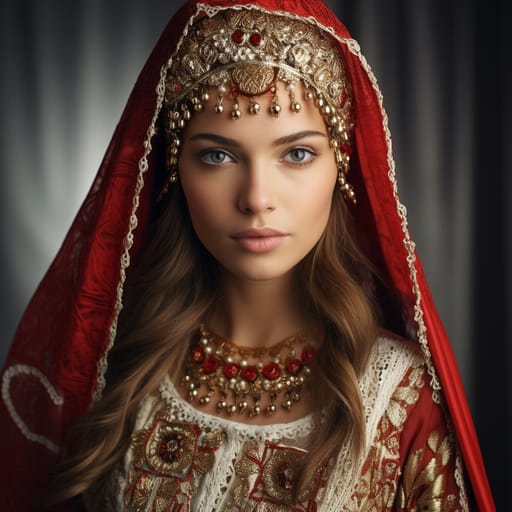
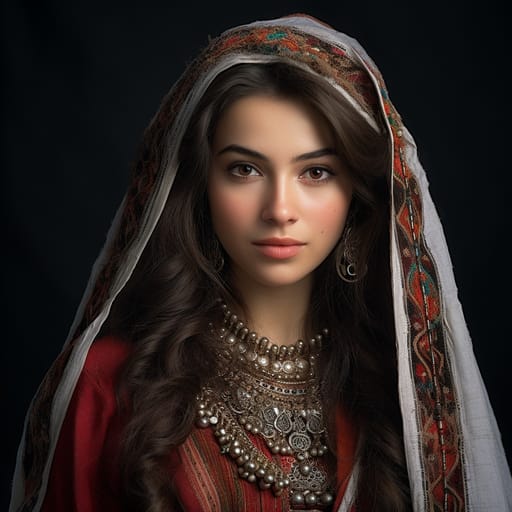
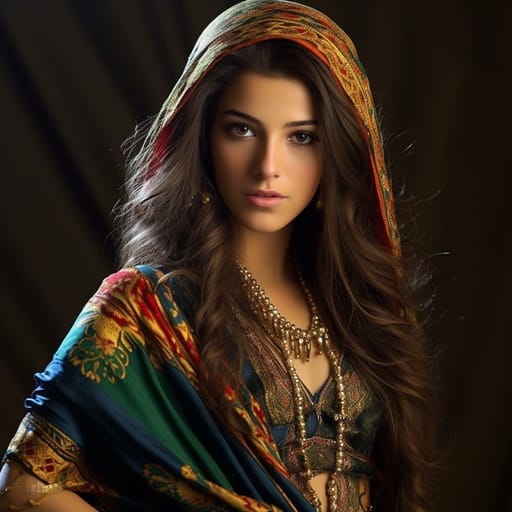
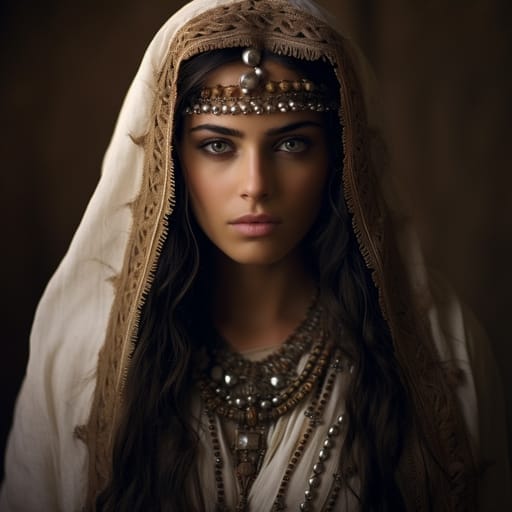
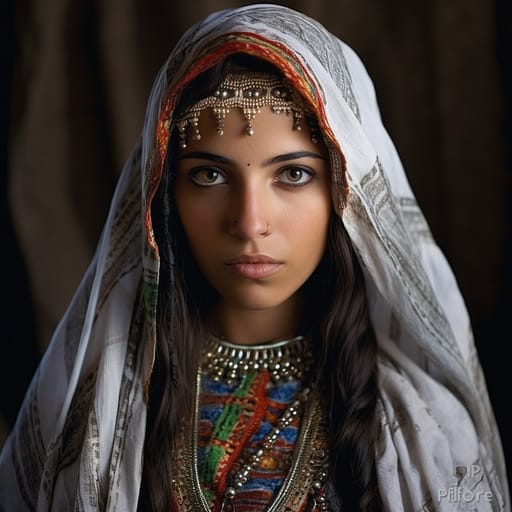
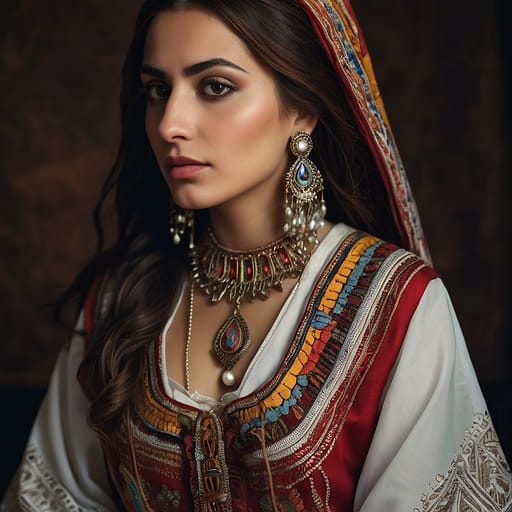
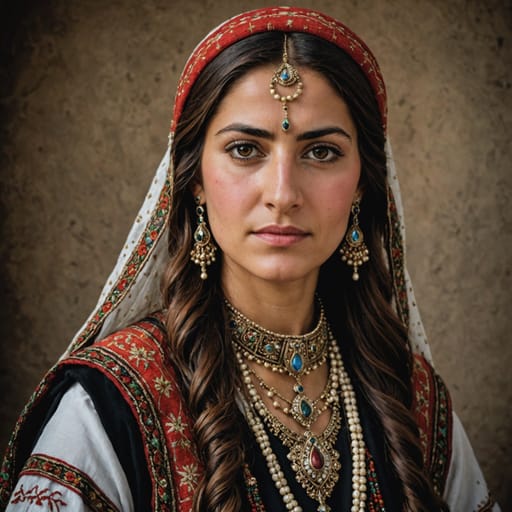
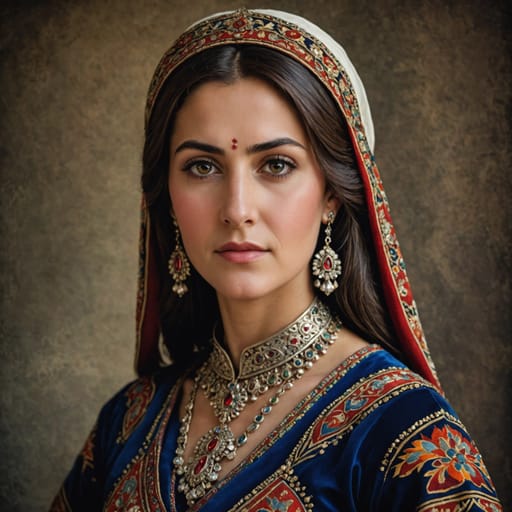
Typical Quraysh Phenotypes
Reference for AI generation: hair, eyes, skin, facial structure, build
Quraysh Body & Anatomy Reference
Levantine / Mediterranean Middle Eastern phenotype: anatomy reference for AI nude generation
Quraysh Boobs & Breasts
The typical Quraysh bust is medium-to-large cup, full, moderate-to-high projection, in line with the wider Levantine / Mediterranean Middle Eastern pattern. Areolas usually fall in the 32-46mm range, with medium-brown to dark-brown areolar pigmentation against the olive-to-light-brown skin tone. Compared with the smaller East Asian bust profile, Quraysh breasts sit forward and are generally full and soft, fuller projection than the North-African Berber norm. A faithful AI render of Quraysh tits keeps that shape and areola size.
Quraysh Ass & Hips
Butt shape among Quraysh women: medium-to-full, moderate projection, broader hip profile, over medium-to-wide iliac crests, fuller gluteal-femoral deposition. This follows Levantine / Mediterranean Middle Eastern ancestry and looks quite unlike the slim East Asian narrow-hip profile. An accurate Quraysh ass in adult AI imagery keeps both the silhouette and the overall build (mesomorph with fuller hip-and-bust deposition) instead of a generic average.
Quraysh Vagina & Pussy
Vulvar anatomy among Quraysh women: medium-brown to dark-brown labial pigmentation, fuller labia minora. Pubic hair tends to be wavy-to-coiled medium-coarse dark texture, dense distribution, in the usual inverted-triangle pattern. Both follow Levantine / Mediterranean Middle Eastern pigmentation, which is why Quraysh pussy renders should not fall back on a pale, sparse Western template.
Quraysh Dicks & Penis
The Quraysh cock profile, from Levantine / Mediterranean Middle Eastern anthropometric data: regional mean ~14cm erect; moderate-to-above-average girth; medium-brown shaft pigmentation. Pubic hair has a wavy-to-coiled medium-coarse dark texture and forms the usual inverted-V pattern. Whether Quraysh men are circumcised follows religious and cultural practice rather than phenotype.
Quraysh Body, Curves & Build
Build and curves among Quraysh women follow the Levantine / Mediterranean Middle Eastern pattern: mesomorph with fuller hip-and-bust deposition, mean adult female BMI 25-28. Proportions matter as much as skin tone, so Quraysh figures should keep their regional height and limb ratios.
Quraysh Skin Tone & Hair Texture
The Quraysh skin range is olive to medium-brown (Fitzpatrick III-V), and hair tends to be wavy-to-curly 2B-3B, predominantly dark-brown to black. That combination marks the Levantine / Mediterranean Middle Eastern phenotype, and skin tone is the trait AI generators most often get wrong for Quraysh women.
Explore phenotype categories
Structured taxonomy with peer-reviewed scales · 22 anatomical categories
Erotic Poses & Sex Positions
From the pose catalog: 219 named positions with reference skeletons
Frequently asked questions about Quraysh people
Where is the Quraysh homeland?
The Quraysh homeland is Mecca and the surrounding Hejaz, in present-day western Saudi Arabia in Western Asia.
What language do Quraysh people speak?
Quraysh people primarily speak Old Hijazi Arabic, later Classical Arabic (Semitic, Afroasiatic).
What religion do Quraysh people practice?
The predominant religion among Quraysh people is Pre-Islamic Arabian polytheism centered on the Kaaba, then Islam from the 7th century.






Make your own Quraysh images
Five a day, free, no credits to buy. The studio starts from this group's phenotype data, so you can set body type, pose and style and keep the traits accurate.
Start with Quraysh